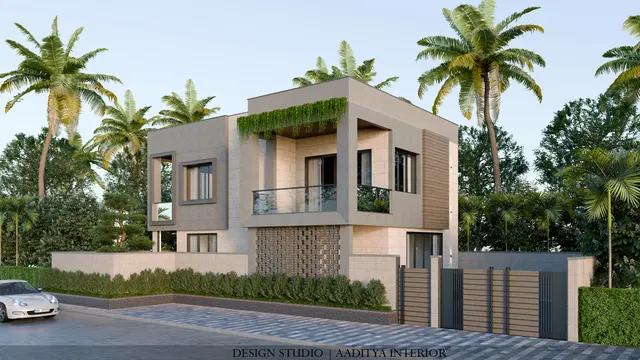
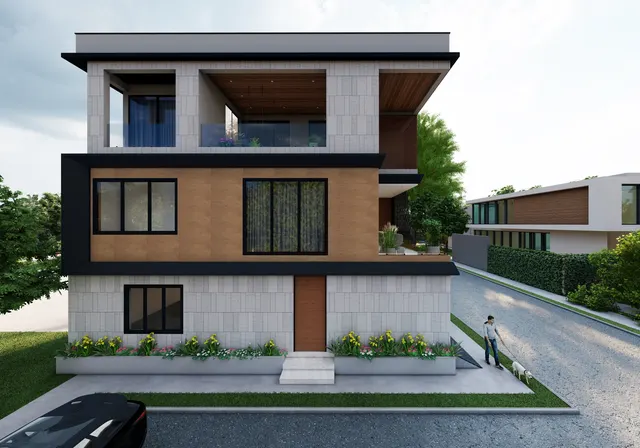
Modern architecture is often remembered as cold: white boxes, steel columns, sheets of glass and hard right angles. The Finnish architect and designer Alvar Aalto is the great exception, the figure who took the logic of modern building and made it warm. Working through the middle of the twentieth century, he kept modernism's honesty and its freedom from ornament, but replaced its steel and chrome with wood and brick, its hard lines with curves drawn from the landscape, and its flat glare with daylight carefully bounced off angled surfaces. The result is a body of work — libraries, a famous sanatorium, civic halls, houses and a great deal of furniture — that still feels humane and comfortable today, which is exactly why it is worth studying.
For an Indian homeowner or designer, Aalto matters not as a style to copy but as a set of principles to borrow. His buildings answer questions every home faces: how to bring in daylight without heat and glare, how to make a material feel warm underfoot and under the hand, how to shape a room so it feels calm rather than boxy, and how to design a chair or a handle so the body meets it kindly. These are climate-and-comfort problems, and India has them in abundance. Aalto's answers, stripped of their Finnish specifics, translate surprisingly directly into the warm, bright, often harsh conditions of Indian cities.
This article sets out the lessons rather than the biography. It looks at what Aalto actually did — the humane approach to modernism, the mastery of wood, the soft handling of daylight, the human-scaled detail, and the integrated interior where building and furniture are one idea — and turns each into something a designer can apply to an Indian home. Where a specific building or object is named it is one that is well established; no dates or quotations are invented, and the emphasis stays on principle.
Who Aalto was, in short
Alvar Aalto was a Finnish architect and designer whose career ran across the central decades of the twentieth century and whose influence spread far beyond Finland. He is counted among the masters of modern architecture, but he is set apart from the others by his refusal to let the machine aesthetic override human comfort. Among his best-known works are the Paimio Sanatorium, a tuberculosis hospital designed down to the furniture and fittings for the comfort of patients lying in bed; and the body of furniture he developed using bent and laminated wood, which he and his collaborators produced through the company Artek that he co-founded. The Savoy Vase, a free-flowing glass form, shows the same instinct in another material. Across all of it runs one idea: the needs of the human being come first.
Lesson one: natural materials and warmth
Aalto's first and most transferable lesson is material. Where the hard-line modernists reached for steel, chrome and glass, Aalto reached for wood, brick and copper, and he used them in ways that made a room feel warm to the eye and kind to the touch. Wood lined ceilings and wrapped columns; brick was left exposed and textured; handrails and door handles were shaped and often wrapped in leather or wood so that the hand met a warm material, not cold metal. The point is not that steel is wrong, but that the materials a person actually touches and stands near should feel good. In an Indian home this lesson argues for warm timber, matt stone, cane and textured plaster over an interior of all-glass, all-gloss and polished metal, and for reserving the hard, cool materials for surfaces that must take water or wear.
| Hard-line modernism | Aalto's choice | Indian-home version |
|---|---|---|
| Exposed steel columns | Wood-wrapped supports | Timber or wood-clad columns |
| Chrome handrails | Wood / leather-wrapped rails | Teak or oiled-wood handrails |
| All-glass walls | Framed, shaded openings | Shaded windows, deep reveals |
| Polished metal detail | Warm brick and copper | Matt stone, brass, textured plaster |
| Cold terrazzo throughout | Warm wood floors | Warm wood and matt stone floors |
Lesson two: bent wood and designing for the body
Aalto's furniture is the clearest demonstration of his belief that design should serve the body. He and his collaborators worked out how to bend and laminate birch into strong, springy, curved forms, producing stools, chairs and tables whose legs curve where they meet the seat and whose surfaces flex gently under weight. The famous stacking stool with its L-shaped bent leg is the simplest example: a humble, light, strong object that solved a real problem — stacking — with an elegant piece of wood engineering. The lesson for a home is twofold. First, wood can be shaped to the body and still be strong, so comfort and structure are not opposed. Second, the best design often comes from solving an ordinary problem simply and honestly rather than adding decoration. An Indian carpenter working in solid teak or in laminated ply can take both lessons directly.
Lesson three: soft, indirect daylight
Aalto's handling of light is the lesson that matters most in the Indian climate, even though his Finland is dim and cold where India is bright and hot. The principle is the same in both: do not let raw sun strike the working surface; bounce it. In his libraries Aalto used scooped roof-lights and angled wells that caught daylight and threw it off a curved white surface, so that readers received soft, even, glare-free light with no direct beam and no harsh shadow. Translated to India, where the problem is too much light and heat rather than too little, the same move pays twice: an opening that admits daylight indirectly — through a deep reveal, a shaded clerestory, a light shelf that bounces light off the ceiling, or a jaali that breaks the sun into small patches — brings in brightness while keeping out glare and much of the heat. The lesson is to design the path of the light, not just the size of the window.
Lesson four: human scale and the detail you touch
Aalto paid obsessive attention to the small points where a person meets a building — the handle, the stair rail, the edge of a table, the window a hand opens. He understood that a building is experienced through these contacts, so he shaped them to the hand and softened their edges. A door handle curved to the palm, a rail wrapped so it is warm to grip, a window seat set at the right height, a transition smoothed rather than sharp: these are what make a space feel considered. The lesson for an Indian home is to spend care and budget on the few things touched every day — the main door handle, the kitchen and wardrobe pulls, the stair rail, the switch plates, the edge of the dining table — rather than on a dramatic feature that is only ever looked at. A well-shaped handle is felt a hundred times a day; a feature wall is noticed once.
| Point of contact | Aalto's care | Practical Indian-home move |
|---|---|---|
| Main door handle | Shaped to the palm, warm material | Solid wood or brass, rounded grip |
| Stair / balcony rail | Warm, continuous, easy grip | Teak or wood-wrapped, 40-50 mm dia |
| Table and counter edge | Softened, not sharp | Rounded or chamfered edge, eased |
| Window / shutter catch | Easy to reach and work | Reachable height, smooth action |
| Switch plates | Quiet, human-scaled | Matt plates at a consistent height |
| Floor underfoot | Warm to stand on | Warm wood or matt stone in living areas |
Lesson five: the integrated interior
Aalto rarely stopped at the building. At Paimio he designed the patients' chairs, the washbasins, the light fittings and the colours, all tuned to the comfort of someone lying ill, so that the architecture and its contents were a single thought. This is the lesson of integration: a room works best when its structure, its furniture, its light and its colours are designed together rather than bought as separate layers that happen to share a space. For an Indian home this does not require designing every object from scratch; it requires planning the fixed and the loose together — deciding the wood, the light temperature, the stone and the palette once, and choosing furniture and fittings that belong to that decision, so the room reads as one idea. Aaditya Interior's own practice follows this principle, settling the material and light palette at the start so that the carpentry, the loose furniture and the lighting speak to one another.
It is worth stressing that borrowing Aalto's lessons is not the same as copying his style, and the difference matters for an Indian home. A room does not become good by adding a famous curved stool or a wavy vase; it becomes good by answering the questions those objects answered — comfort, honesty, soft light, human scale and a single idea — in its own materials and its own climate. An Indian home built on these principles might use teak and local stone where Aalto used birch and Finnish brick, jaalis and deep chajjas where he used scooped roof-lights, and warm 2700-3000K light where he caught a pale northern sun, and it would still be true to him. The lessons travel; the specifics stay local, and that is the healthiest way to learn from any master.
Six Aalto lessons as rules for an Indian home
- Use warm, natural materials — wood, brick, matt stone, cane — where people touch and stand, and keep cold hard materials for wet and wearing surfaces.
- Bounce daylight off a ceiling, light shelf, deep reveal or jaali rather than letting raw sun strike the working surface.
- Shape the things touched daily — handles, rails, edges, pulls — to the hand, and spend budget there before a show feature.
- Let comfort and structure work together: curved, well-made wood can be both strong and kind to the body.
- Solve ordinary problems simply and honestly, and resist adding ornament that serves no use.
- Decide the material, light and colour palette once, and choose furniture and fittings that belong to it, so the room reads as one idea.
- Keep daylight even and glare-free; design the path of the light, not just the size of the window.
- Favour matt, tactile surfaces over gloss and polished metal so the room feels warm rather than hard.
The integrated room in practice
Translating the lesson of integration into an ordinary flat does not mean designing every object; it means making the big decisions once and holding to them. The most useful discipline is to settle a short palette at the start — one or two timbers, one stone, one metal, one light temperature and a small family of colours — and then choose every carpentry item, every loose piece of furniture and every fitting so that it belongs to that palette. A room assembled this way reads as one calm idea even when the pieces come from many sources, because the wood tones agree, the metals agree, and the light flatters them all. A room assembled without such a decision reads as a collection of separate good things that do not speak to one another, which is the commonest reason a well-funded interior still feels restless.
Aalto's own interiors show the reward of this discipline: wood on the ceiling, wood on the furniture and wood on the handrail, all of a family, lit by warm, bounced light, so the eye moves through the room without a jolt. The same can be achieved in an Indian home at any budget, because the discipline costs nothing — it is a matter of deciding and holding, not of spending more. The elevation below shows the idea applied to a living room: one timber family, a warm bounced light, a matt stone floor and a single honest material wall, all chosen together rather than layer by layer.
Bringing Aalto's lessons home on a budget
None of Aalto's lessons require a large budget, which is part of why they have lasted. Warm materials where people touch them, bounced daylight, care for the handle and the rail, and a disciplined palette are all available to a modest home, and some of them actually save money — an external shade or a light shelf cuts cooling bills, and a short material palette avoids the cost of many competing finishes. Where money does help is in the few pieces touched or seen every day: a well-made solid-wood or bent-ply chair, a good handle, a warm-wood handrail. The indicative October 2026 ranges below show that these need not be extravagant; they are the places to spend first, ahead of a show feature. The point is to borrow Aalto's principles and apply them with an Indian carpenter and Indian materials, not to import protected designs.
| Where Aalto's lesson lands | Modest move | Indicative Oct 2026 cost |
|---|---|---|
| A well-shaped chair | Solid-wood or bent-ply dining chair | ₹3,000 - ₹15,000 each |
| A warm handrail | Teak or wood-wrapped rail | ₹900 - ₹2,500 per running ft |
| A good main-door handle | Solid wood or brass grip | ₹1,500 - ₹8,000 each |
| Bounced daylight | Light shelf / deep reveal | Mostly design, little cost |
| A warm-wood ceiling patch | Wood-clad feature over seating | ₹350 - ₹900 per sq ft |
Set against a lavish but incoherent interior, a room built on these quiet choices tends to age far better, because it was never chasing a trend in the first place. That durability — of the materials and of the idea — is Aalto's final, unspoken lesson: design so that the room is still comfortable and still makes sense in twenty years, which is a test every Indian family building a long-term home should want their interior to pass. The table below gathers the five lessons against the single question each answers, as a way of carrying them into a real project.
| Aalto lesson | The question it answers | The home test |
|---|---|---|
| Natural materials | What will people touch? | Warm wood and stone where hands go |
| Bent wood / body | Is it comfortable and honest? | Comfort and structure together |
| Soft daylight | Where does the glare go? | Light bounced, not admitted raw |
| Human scale | Is the detail cared for? | Handles, rails, edges shaped well |
| Integration | Does it read as one idea? | One palette, decided once |
Frequently asked questions
Who was Alvar Aalto?
A Finnish architect and designer counted among the masters of modern architecture, known for making modernism humane. He worked across buildings, furniture, glassware and lighting, and is remembered for works such as the Paimio Sanatorium, his bent-wood furniture produced through Artek, and the Savoy Vase.
What is Aalto best known for?
For a warm, human-centred version of modern architecture, and for his bent and laminated wood furniture — especially the stacking stool with its L-shaped leg. He is also known for his soft handling of daylight in buildings like his libraries, and for designing interiors, furniture and fittings as a single integrated whole.
How do Aalto's ideas apply to Indian homes?
Very directly. His preference for warm natural materials suits a climate where polished metal and all-glass interiors feel harsh; his bounced, indirect daylight is an answer to Indian glare and heat; and his care for the handle, rail and edge a person touches is budget well spent in any home. The style need not be copied; the principles transfer.
What is humane modernism?
It is modern architecture that keeps the honesty and simplicity of the modern movement but puts human comfort first — using warm materials, soft light, human scale and tactile detail instead of a cold machine aesthetic. Aalto is its leading figure, which is why his work still feels comfortable and current.
Can Aalto-style furniture be made in India?
Yes. His bent-wood pieces rely on laminating and bending wood, which Indian workshops in plywood and solid timber can do, and his guiding ideas — comfort, honesty, simple solutions to ordinary problems — suit a good local carpenter working in teak or laminated ply. The aim is to borrow the principles, not to reproduce specific protected designs.
Sources & standards
- Alvar Aalto Foundation / Alvar Aalto Museum — biography and catalogue of works, described generically
- Artek — history of Aalto's bent-plywood furniture, including the stacking stool, described generically
- Public museum collections (design and architecture) — holdings and descriptions of Aalto furniture, glass and the Savoy Vase
- General monographs on twentieth-century modern architecture and on Alvar Aalto, described generically
- Ernst and Peter Neufert — Architects' Data: daylighting, furniture dimensions and circulation
- Bureau of Indian Standards — National Building Code of India 2016, Part 8: natural lighting and ventilation
- Price ranges: indicative October 2026 estimates — confirm locally before budgeting