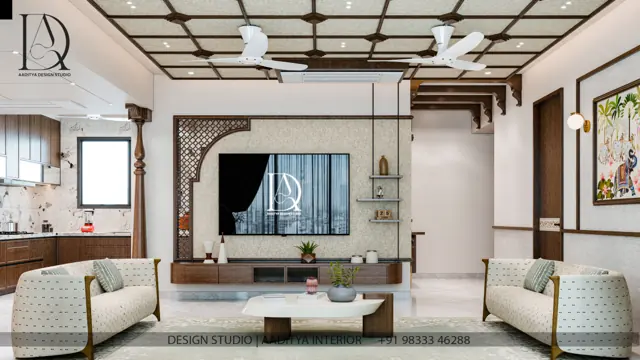
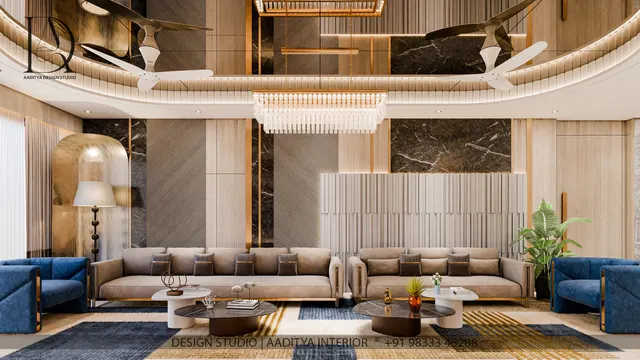
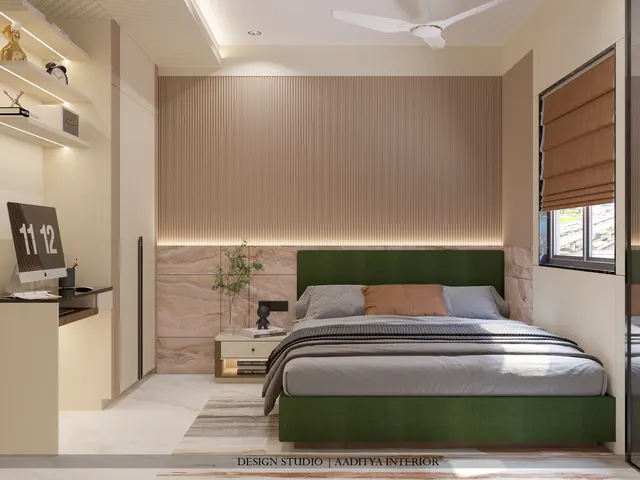
There is a kind of room that feels calm the moment you enter it. The walls are pale, the light is soft, the furniture is made of warm wood with gentle curves, and nothing in the room is trying to impress you. That feeling has a name: Biedermeier. It was the style of the Viennese middle class in the years between the Congress of Vienna in 1815 and the revolutions of 1848, when families who could not afford palaces furnished their homes with simple, well-made furniture and discovered that simplicity could be beautiful. The name itself came later, from a fictional character, Gottlieb Biedermeier, who stood for the plain, contented burgher — and the style has carried his name ever since.
Biedermeier matters today because it solves a problem that Indian homes face constantly: how to make a room feel classical and warm without making it feel heavy, expensive or old-fashioned. The carved, gilded furniture of the earlier Empire style needed a palace to look right; Biedermeier needs only a well-proportioned room, a few good pieces and light. Its furniture is made of local fruitwoods — cherry, walnut, birch and maple — with clean lines, subtle curves and almost no carving. Its rooms are light, its colours are soft, and its whole philosophy is that a home should be comfortable for the family that lives in it rather than impressive for visitors.
This article traces Biedermeier from its Viennese origins to the present day: the furniture forms that define it, the woods and craftsmanship behind it, the proportions and colours that make its rooms work, and how to use the style in a modern Indian home — including what to buy, what to avoid, how to tell a genuine antique from a reproduction, and what each piece costs in October 2026.
Vienna after 1815: the birth of a middle-class style
Biedermeier was born from politics. After the Napoleonic Wars ended, the Congress of Vienna in 1815 redrew the map of Europe, and the Austrian Empire under Metternich entered a period of conservative stability in which public life was restricted and political expression was discouraged. The middle classes of Vienna — merchants, officials, lawyers and professionals — turned their energy inward, towards the home. The drawing room, the family meal, the piano in the corner and the comfortable sofa became the centre of social life, and furniture makers responded with pieces designed for domestic comfort rather than for court ceremony.
The style that emerged was a deliberate simplification of what had come before. The Empire style of Napoleon, with its mahogany, gilt bronze and Egyptian motifs, was grand and expensive; Biedermeier kept the classical proportions but stripped away the ornament, used local fruitwoods instead of imported mahogany, and made furniture that was lighter, smaller and suited to the apartments and town houses of Vienna rather than to palaces. The period is usually dated from about 1815 to 1848, when revolutions across Europe ended the era, but its influence continued in central Europe long after, and its furniture is still collected, copied and lived with today.
| Year | Event | Effect on furniture and interiors |
|---|---|---|
| 1815 | Congress of Vienna; Napoleonic Wars end | Middle class turns to the home; demand for domestic furniture |
| 1815–1825 | Early Biedermeier | Empire forms simplified; local fruitwoods replace mahogany |
| 1820s | Style matures in Vienna | Sofas, secretaires and chairs in cherry and walnut |
| 1830s | Peak of the style | Light, curved forms; pale rooms; good proportions |
| 1840s | Late Biedermeier | Forms grow heavier; historic revival styles appear |
| 1848 | Revolutions across Europe | Era ends; furniture becomes collectible |
| 1900s onward | Rediscovery by collectors | Biedermeier recognised as a distinct style |
| Today | Reproductions and revivals | Style used in calm, classical modern interiors |
The furniture: sofas, secretaires, chairs and tables
Biedermeier furniture is defined by a small number of forms, each designed for a specific domestic use, and each made with restraint. The sofa is the centrepiece: a low, curved piece with scrolled arms, a plain back and short turned or sabre legs, upholstered in plain fabric, pale leather or a simple stripe, and sized for two or three people to sit comfortably together. The secretaire, or writing desk, is the most characteristic Biedermeier piece: a tall chest with a fall-front that opens into a writing surface, fitted inside with small drawers and pigeonholes, and made in cherry or walnut with a beautifully figured veneer. The chair is light and curved, with a shaped back, a cane or upholstered seat and sabre legs that sweep backwards — a form that the later bentwood chairs of Thonet would develop further.
The other forms are equally restrained. Dining tables are round or oval, often with a single pedestal or four sabre legs, and they extend with leaves for family meals. Wardrobes are tall and plain, with two doors, a simple cornice and almost no carving, and their beauty comes from the veneer — a book-matched cherry or walnut front that looks like a picture. Side tables, work tables and commodes follow the same logic: clean lines, gentle curves, good proportions and a fine finish, with decoration limited to a little ebonised stringing, a brass keyhole escutcheon or a subtle inlay. The furniture is never loud, and that is the point: it is designed to be lived with every day, not admired from a distance.
| Piece | Typical size (mm) | Wood | Use in the home |
|---|---|---|---|
| Three-seater sofa | 1,800–2,000 wide, 900 high, 450 seat | Cherry or walnut, upholstered | Drawing room centrepiece |
| Secretaire | 1,000–1,200 wide, 1,500–1,700 high | Cherry or walnut veneer | Writing desk and storage |
| Side chair | 450 wide, 900 high, 450 seat | Birch or cherry, cane seat | Dining and drawing room |
| Armchair | 600 wide, 950 high, 450 seat | Walnut, upholstered | Reading corner, bedroom |
| Round dining table | 1,200 diameter, 750 high | Cherry or walnut | Family meals, extends with leaves |
| Wardrobe | 1,800 wide, 2,100 high, 600 deep | Cherry or walnut veneer | Bedroom storage |
| Commode / chest | 1,000 wide, 900 high, 500 deep | Birch or maple | Hall, bedroom, drawing room |
| Work table | 700 wide, 750 high | Cherry, walnut or birch | Sewing, reading, small desk |
Woods and craftsmanship: cherry, walnut, birch and maple
The beauty of Biedermeier furniture comes from its wood, and from the way the wood was worked. The makers used local central European fruitwoods and light hardwoods — cherry with its warm red-brown colour, walnut with its rich figure, birch with its pale honey tone, and maple with its fine, even grain — and they used them as veneers over a solid carcass, book-matching the veneer so that the grain mirrored itself across a door or a drawer front like an open book. The veneer was the decoration: a well-chosen cherry front needed no carving, and the makers knew it. Ebonised wood, stained almost black, was used sparingly as stringing and edging, to frame the pale field of the veneer and give the piece definition.
The craftsmanship is quiet rather than showy. Joints are dovetailed and pegged, drawers run on wooden runners, and the finish is French polish or wax, built up in thin layers until the wood glows rather than shines. The furniture was made by small workshops in Vienna and across the Austrian Empire, often by makers whose names are now known to collectors — Josef Ulrich Danhauser is the most famous, and his workshop produced some of the finest Biedermeier furniture of the 1820s, with the factory continuing under his son into the 1830s — but most pieces were made by anonymous craftsmen working to a shared standard of proportion and finish. That shared standard is what makes Biedermeier recognisable: the pieces look related even when they were made by different hands, because they follow the same rules of proportion, the same woods and the same restraint.
| Wood | Colour | Figure | Best use | Care |
|---|---|---|---|---|
| Cherry | Warm red-brown, darkens | Fine, even grain | Sofas, secretaires, tables | Wax twice a year; avoid sun |
| Walnut | Rich brown, strong figure | Bold, varied grain | Wardrobes, dining tables | Wax; keep humidity steady |
| Birch | Pale honey, light | Subtle, soft grain | Chairs, small tables | Wipe with dry cloth |
| Maple | Pale cream, fine | Even, quiet grain | Commodes, interiors | Avoid water; wax lightly |
| Ebonised wood | Near black | Used as stringing | Edging, inlay, escutcheons | Dust gently; avoid polish build-up |
Proportions, colours and light: the Biedermeier room
A Biedermeier room works because of proportion before decoration. The furniture is low and horizontal, the walls are pale — white, cream, pale grey or a soft sage — and the floor is usually wood, often with a simple rug in muted tones. Pictures hang at eye level in plain gilt or dark wood frames, curtains are light and unlined or lined in a simple cotton, and the room is lit by daylight from generous windows, with a chandelier or a pair of lamps for the evening. Nothing competes for attention, which is why the room feels restful: the eye moves from the sofa to the secretaire to the window without being stopped by a loud colour or a heavy carving.
The colour palette is deliberately quiet. Walls in warm white or pale cream, wood in cherry or walnut, upholstery in plain linen, cotton or pale leather, and accents in soft blue, sage green or dusty rose. Gilding appears only in small touches — a mirror frame, a clock, a picture frame — and never across a whole piece of furniture. The National Building Code of India 2016 guidance on daylight applies here as it does everywhere: a room with windows of at least one-tenth of its floor area feels bright and welcoming, and a Biedermeier room depends on that brightness, because its pale palette needs light to come alive. A dark Biedermeier room is a contradiction, and a designer should plan the windows and the artificial lighting before choosing a single piece of furniture.
| Room element | Biedermeier choice | Size / detail | Notes |
|---|---|---|---|
| Walls | Warm white or pale cream | Matt emulsion | Light bounces; wood stands out |
| Floor | Wood boards or pale tile | Wood preferred | Simple rug in muted tones |
| Sofa pair | Two three-seaters facing | 1,800–2,000 wide each | 900–1,000 mm clear between |
| Secretaire | Against the side wall | 1,000–1,200 wide | Near a window for writing light |
| Lighting | Chandelier plus two lamps | Warm 2700–3000 K | Dimmer for evening use |
| Curtains | Light cotton or linen | Full length, plain | No heavy pelmets or swags |
| Pictures | Plain gilt or dark frames | Eye level, 1,500 centre | Few, well chosen, not crowded |
Biedermeier in a modern Indian home
Biedermeier adapts to Indian homes more easily than most European historical styles, because its principles — light rooms, warm wood, simple furniture, family comfort — are the same principles that Indian families ask for. A Biedermeier sofa in cherry veneer works in a Surat living room beside a modern television, provided the television is mounted quietly and the room is not filled with competing styles. A secretaire in a bedroom makes a beautiful writing desk and a practical store for papers, medicines and valuables. A set of Biedermeier side chairs around a round dining table gives a dining room a classical note without the heaviness of carved rosewood, and the chairs are light enough to move for a family gathering.
The Indian climate needs two adjustments. The first is humidity: fruitwood veneer and French polish dislike damp, so Biedermeier furniture should be kept out of bathrooms and away from open balconies in the monsoon, and the room should be ventilated rather than sealed with air conditioning running day and night, which dries the wood and cracks the veneer. The second is dust: pale upholstery and light wood show dust quickly in Indian cities, so loose covers that can be washed, and a weekly dusting routine with a soft cloth, are practical necessities rather than niceties. With those two precautions, a Biedermeier piece can be used daily for decades, which is exactly what its makers intended.
Buying, restoring and caring for Biedermeier furniture
Buying Biedermeier in India means choosing between three kinds of piece. A genuine antique, made in Vienna or the Austrian Empire between about 1815 and 1848, is a collector's object: it is sold through specialist dealers and auctions, its price depends on maker, condition and provenance, and a good secretaire or sofa can cost several lakhs of rupees, with restoration extra. A good reproduction, made by a skilled workshop in India or Europe to Biedermeier proportions in cherry or walnut veneer, costs far less — about ₹40,000 to ₹1,50,000 for a sofa, ₹35,000 to ₹1,20,000 for a secretaire, and ₹8,000 to ₹25,000 for a side chair — and it can be used daily without worrying about damaging a historical object. A poor copy, with wrong proportions, thick varnish and chipboard under the veneer, is the one to avoid: it looks Biedermeier in a photograph and wrong in a room.
Restoration should be left to a specialist. A genuine piece with loose joints, lifting veneer or a damaged finish needs a restorer who understands traditional construction, and a bad restoration — modern glue, polyurethane varnish, replaced veneer in the wrong wood — can destroy both the value and the appearance of an antique. Indicative October 2026 restoration costs in India run about ₹15,000 to ₹50,000 for a chair or small table, and ₹50,000 to ₹1,50,000 for a secretaire or wardrobe, depending on the damage. For daily care, dust with a soft dry cloth, wax the wood twice a year with a good beeswax polish, keep the furniture out of direct sun, and wipe up water immediately — the three rules that keep fruitwood beautiful for generations.
| Buying option (Oct 2026) | Indicative price (₹) | What you get | Watch out for |
|---|---|---|---|
| Genuine antique secretaire | ₹2,00,000 – ₹8,00,000+ | Vienna, 1815–1848; maker and provenance | Condition, restoration, authenticity papers |
| Genuine antique sofa | ₹1,50,000 – ₹6,00,000+ | Original frame, re-upholstered | Frame soundness; re-upholstery quality |
| Good reproduction sofa | ₹40,000 – ₹1,50,000 | Correct proportions, cherry/walnut veneer | Chipboard carcass; thick varnish |
| Good reproduction secretaire | ₹35,000 – ₹1,20,000 | Working fall-front, fitted interior | Drawer runners; veneer matching |
| Good reproduction side chair | ₹8,000 – ₹25,000 each | Sabre legs, cane or upholstered seat | Joint strength; cane quality |
| Restoration (chair/table) | ₹15,000 – ₹50,000 | Joints, veneer, French polish | Use a specialist, not a general carpenter |
| Restoration (secretaire/wardrobe) | ₹50,000 – ₹1,50,000 | Full structural and finish work | Get a written estimate first |
Where Biedermeier goes next
Biedermeier has survived two centuries because its idea is timeless: a home should be calm, comfortable and honestly made, and a room does not need ornament to be beautiful. Contemporary designers return to it whenever interiors become too loud — after the excess of one decade, the next rediscovers pale walls, warm wood and good proportions. In India, where homes are often filled with competing styles and heavy furniture, the Biedermeier lesson is especially useful: choose fewer pieces, choose them well, give them light and space, and let the wood and the proportions do the work. A single Biedermeier secretaire in a well-lit room can change the feeling of a whole home, and that is the quiet power of the style.
Seven rules for a Biedermeier interior
- Choose fewer, better pieces: one good sofa and one secretaire beat a room full of mediocre furniture.
- Keep walls pale — warm white, cream or pale grey — so the cherry and walnut wood stands out.
- Give every piece light and space: 900–1,000 mm clear between facing sofas, and no crowding.
- Use plain fabrics — linen, cotton or pale leather — and avoid heavy patterns and gilt excess.
- Buy reproductions to Biedermeier proportions, and check the veneer, joints and finish before paying.
- Keep fruitwood out of damp and direct sun, wax twice a year, and wipe up water immediately.
- Leave restoration of genuine antiques to a specialist, and get a written estimate before work begins.
Frequently asked questions
What is Biedermeier style?
Biedermeier is the style of the Viennese middle class from about 1815 to 1848, named after the fictional burgher Gottlieb Biedermeier. It is characterised by simple, well-proportioned furniture in local fruitwoods — cherry, walnut, birch and maple — with gentle curves, almost no carving, pale walls and rooms designed for comfortable family life rather than for display.
How is Biedermeier different from Empire style?
Empire style, from Napoleon's France, is grand and expensive: mahogany, gilt bronze, Egyptian motifs and heavy carving, made for palaces and ceremony. Biedermeier kept the classical proportions but removed the ornament, used local fruitwoods instead of imported mahogany, and made lighter, smaller furniture suited to middle-class apartments and town houses.
What wood is used in Biedermeier furniture?
Mainly central European fruitwoods and light hardwoods: cherry with its warm red-brown colour, walnut with its rich figure, birch with its pale honey tone, and maple with its fine even grain. The wood was usually used as veneer over a solid carcass, book-matched so the grain mirrored itself, with ebonised wood used sparingly as stringing and edging.
Is Biedermeier furniture suitable for Indian homes?
Yes, with two precautions. Keep it out of damp rooms and away from open balconies in the monsoon, because fruitwood veneer and French polish dislike moisture, and protect it from direct sun, which fades the wood. With ventilation, weekly dusting and waxing twice a year, Biedermeier furniture can be used daily for decades in an Indian home.
How much does Biedermeier furniture cost in India?
In October 2026, a good reproduction sofa costs about ₹40,000–1,50,000, a secretaire about ₹35,000–1,20,000, and a side chair about ₹8,000–25,000. Genuine antiques from 1815–1848 cost far more — several lakhs for a good secretaire or sofa — and should be bought through specialist dealers with provenance.
How do I care for Biedermeier wood furniture?
Dust weekly with a soft dry cloth, wax twice a year with a good beeswax polish, keep the furniture out of direct sunlight and away from damp, and wipe up any water immediately. Never use silicone sprays or harsh cleaners on French polish, and leave any structural repair or re-polishing of a genuine antique to a specialist restorer.
Sources & standards
- UNESCO World Heritage Centre — Historic Centre of Vienna (inscribed 2001); Bauhaus and its Sites (for the wider classical tradition)
- Museum of Applied Arts, Vienna (MAK) — Biedermeier collection and furniture history
- Josef Ulrich Danhauser (1780–1829) — workshop furniture, Vienna, 1820s (the factory continued under his son until 1838)
- Ernst Neufert — Architects' Data, 4th edition (seating dimensions, room proportions and daylight)
- Time-Saver Standards for Architectural Design Data (furniture dimensions and residential planning)
- National Building Code of India 2016, Part 8 (Building Services — lighting and ventilation)
- Price ranges: indicative October 2026 estimates — confirm locally before budgeting