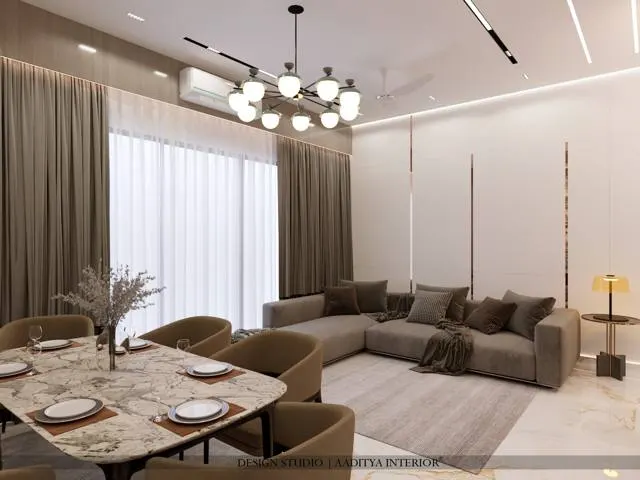
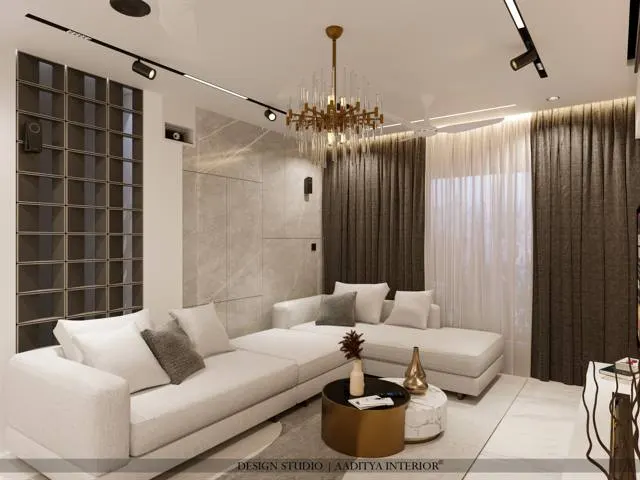
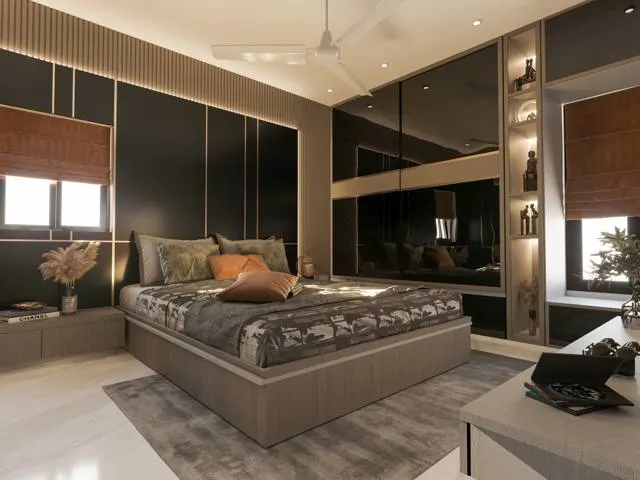
Brass has returned to Indian interiors with unusual force. After two decades in which chrome and brushed steel were the default for taps, handles and light fittings, designers and homeowners have rediscovered the warm, golden tone of brass — on cabinet handles, tap sets, light fixtures, mirror frames, inlay lines in stone and wood, and the thin shadow-gap trims that finish a joinery edge. The appeal is easy to understand: brass is warm where steel is cold, it ages rather than simply wears, and it carries a long association with Indian homes, where brass vessels, lamps and door fittings were everyday objects for centuries.
The trouble is that the single word brass is used for at least three different things, and the difference decides everything about how a finish ages and what it should cost. There is solid brass, an alloy of copper and zinc all the way through. There is brass-plated metal, where a thin layer of brass is electroplated over cheaper steel or zinc. And there is PVD brass, a brass-coloured coating applied to stainless steel by physical vapour deposition, which is not brass at all but often outlasts it. A handle sold as brass might be any of these, at wildly different prices, and a buyer who does not ask will not be told.
On top of that sits the question of finish: whether the brass is left bright and lacquered to stay golden, brushed to a satin sheen, or deliberately aged to an antique or patina finish with a darker, mottled surface. Each choice changes the look, the maintenance and the way the metal behaves over years. This article separates these ideas, explains how brass and antique finishes are actually made and specified, shows where they work in a home, and sets out how to care for them so that a finish chosen for its warmth does not become a chore of polishing.
Why brass is back
Fashion explains part of the revival, but not all of it. Brass suits the warmer, more layered interiors that have replaced the cool minimalism of the 2000s: against fluted wood, terrazzo, stone and deep colours, a golden metal reads as considered rather than flashy. It also photographs well, which matters in an age when interiors are shared as images. But the deeper reason brass endures is that it is forgiving. A small brass handle or a thin inlay line lifts an otherwise plain surface, and unlike a bold colour or a loud material, metal trim rarely dates badly because it reads as jewellery for the room rather than its main statement.
There is also a practical pull. The arrival of PVD coating meant that the brass look could be put onto stainless steel in a way that resists tarnish and scratching far better than real brass, removing the main objection to brass in wet and high-touch areas such as bathrooms and kitchens. That technology let designers use the warm tone in places where solid brass would have dulled or spotted within months. The result is that brass is no longer a maintenance-heavy indulgence confined to dry, decorative spots; with the right specification it can go almost anywhere.
A short history of brass in Indian homes
Brass is one of the oldest worked alloys in the subcontinent, and its presence in the Indian home long predates any fashion for it. Cooking vessels, water pots, temple lamps, bells, door knockers and ritual objects were made of brass for generations, valued for being durable, repairable and, in the case of cooking, mildly antibacterial. The metalworking towns of Moradabad and the brass and bell-metal traditions of several regions built reputations on this craft. In these objects brass was always solid, kept bright by regular hand-polishing with tamarind, ash or lime, and its slow darkening between polishes was simply accepted as part of living with the metal.
When modern fitted kitchens and bathrooms arrived, brass carried over into taps and door hardware, usually lacquered to hold its shine. But through the 2000s chrome and brushed stainless steel took over almost completely, read as cleaner and more modern, and brass retreated to traditional and heritage interiors. Its recent return is therefore a revival rather than an invention, and it brings the old knowledge with it: that solid brass is beautiful but needs care, that it darkens if left alone, and that the darkening — the patina — can itself be beautiful if it is wanted rather than merely tolerated.
Solid, plated and PVD: three very different things
The single most useful thing a buyer can learn is to ask which kind of brass is being quoted. Solid brass is the alloy throughout; it is heavy, it can be re-polished indefinitely because there is no thin layer to wear through, and it will tarnish and patina if unlacquered. Electroplated brass is a thin brass layer deposited over a cheaper base such as steel, zinc alloy or even plastic; it looks right when new and costs far less, but the plating is thin and wears through at high-touch points such as handle grips, after which the base metal shows and it cannot be re-polished. PVD brass is a brass-coloured ceramic-like coating applied to stainless steel in a vacuum chamber; it is extremely hard, tarnish-proof and scratch-resistant, and it is the right answer for taps and high-use hardware, but it cannot be re-polished and, if ever damaged, must be re-coated.
Weight and price are the quick tells. Solid brass feels notably heavier in the hand than a plated piece of the same size, and it costs several times more. A handle that feels light and is priced very low is almost certainly plated. PVD pieces feel like the stainless steel they are and carry a premium over plating but often less than solid brass, while outlasting both in wet areas. None of the three is wrong; each suits a different place and budget. The error is paying a solid-brass price for a plated piece, or putting unprotected plated brass somewhere it will be gripped a hundred times a day and wear through within a year.
| Type | What it is | Ages by | Re-finish? | Best use |
|---|---|---|---|---|
| Solid brass | Copper-zinc alloy throughout | Tarnish and patina (unless lacquered) | Yes — re-polish indefinitely | Handles, inlay, lamps, statement hardware |
| Electroplated brass | Thin brass over steel/zinc/plastic | Plating wears through at touch points | No — base metal shows once worn | Low-touch decorative pieces on a budget |
| PVD brass-look | Brass-coloured coating on stainless steel | Barely — tarnish and scratch resistant | No — must be re-coated if damaged | Taps, kitchen and bathroom hardware, wet areas |
| Lacquered solid brass | Solid brass with a clear protective coat | Lacquer can yellow or flake in years | Yes — strip, polish, re-lacquer | Bright-gold fittings in dry rooms |
| Antique/patinated brass | Solid brass chemically darkened | Deepens gently over time | Yes — re-patina or polish back | Traditional and heritage-style interiors |
Antique, patina and brushed finishes
Beyond the question of what the metal is sits the question of how its surface is treated. A bright polished finish is brass at its most reflective, almost mirror-like, and usually lacquered to hold that shine. A brushed or satin finish is polished with a fine abrasive to a soft, directional sheen that hides fingerprints and small scratches far better than a mirror finish, which is why it is popular on handles and taps. An antique or patina finish is brass deliberately darkened — chemically, with controlled oxidation, or by hand — to a deeper bronze-brown with highlights on the raised edges, giving the look of metal that has aged gracefully for decades.
The antique finish is as much a philosophy as a technique. Instead of fighting brass's natural tendency to darken, it embraces it, fixing the metal at a pleasing stage of age and often leaving it unlacquered so it continues to deepen gently with use. Highlights where hands touch stay a little brighter, which looks natural rather than worn. This is the finish that reads as heritage and suits traditional Indian interiors, carved wood, stone and rich colour; a bright lacquered brass in the same setting can look brash by comparison. A living finish of this kind is best explained to the client in advance, because its changing surface is a feature, not a fault.
Where brass works best in a home
Brass earns its place as an accent, not a field. The surfaces where it works hardest are the ones a hand or an eye meets often: cabinet and wardrobe handles, where a warm metal transforms a plain shutter; tap sets and bathroom hardware, best specified in PVD for durability; light fixtures and pendant lamps, where brass glows against warm bulbs; mirror and frame trims; and thin inlay lines routed into stone counters, wooden panels or terrazzo floors. In a pooja space brass sits naturally, echoing traditional lamps and bells. The common thread is restraint — brass reads as precious when used sparingly and cheap when sprayed across every surface.
Consistency of tone matters as much as placement. Brass comes in many shades, from a pale champagne gold to a deep antique bronze, and mixing shades across one room reads as a mistake. The sensible discipline is to choose one brass tone and one finish per space and carry it across handles, taps, lights and trim, so the metal looks like a deliberate family rather than a collection of near-misses. Where solid brass and PVD brass must sit together — a solid handle beside a PVD tap, say — they should be matched for shade on actual samples under the room's lighting, because a tone that matches in the showroom can clash under warm domestic light.
| Where | Suggested type | Finish | Why |
|---|---|---|---|
| Kitchen and bathroom taps | PVD brass-look on steel | Brushed or matt | Tarnish-proof and scratch-resistant in wet, high-use areas |
| Cabinet and wardrobe handles | Solid brass | Brushed or antique | Heavy, re-polishable, warm to the touch |
| Light fixtures and pendants | Solid or plated brass | Bright or antique | Glows against warm light; low-touch, so plating is acceptable |
| Inlay lines in stone/wood | Solid brass strip | Polished flush | Thin lines must be solid to polish level with the surface |
| Mirror and panel trims | Solid brass or PVD | To match the room | Frames a surface; keep one tone across the room |
| Pooja space fittings | Solid brass | Antique / traditional | Echoes traditional lamps and bells |
Care, tarnish and lacquer
How a brass finish is cared for follows directly from what it is. Lacquered bright brass should only be dusted and wiped with a soft, damp cloth; polishing it with metal polish strips the lacquer and causes patchy tarnish beneath, so once the lacquer eventually yellows or flakes the right fix is to strip, polish and re-lacquer, not to keep rubbing. Unlacquered solid brass, whether bright or antique, can be polished back whenever wanted, but an antique finish is usually left alone to deepen; a quick buff on the highlights is enough. PVD brass needs the least care of all — a wipe with a soft damp cloth keeps it perfect, and abrasive cleaners or scouring pads must never be used, as they are among the few things that can dull its hard coating.
The one rule that protects every brass finish is to keep abrasives and harsh chemicals away. Acidic cleaners, scouring powders and rough pads damage lacquer, plating and PVD alike. For solid unlacquered brass that has tarnished more than wanted, a mild paste of lemon and salt or a dedicated brass polish restores the shine, followed by a thorough rinse and dry; but this is for solid brass only, never for plated or PVD pieces, where it would wear or dull the thin surface. Setting these expectations with the client at handover prevents the most common damage, which is a well-meaning deep clean that ruins a finish within months.
| Finish | Routine care | Never do this |
|---|---|---|
| Lacquered bright brass | Dust and wipe with a soft damp cloth | Do not use metal polish — it strips the lacquer |
| Unlacquered solid brass | Polish back with brass polish when wanted | Do not expect it to stay bright on its own |
| Antique / patina brass | Light dusting; buff highlights only | Do not polish the whole piece back unless re-doing it |
| PVD brass-look | Soft damp cloth only | Never use abrasives or scouring pads |
| Electroplated brass | Gentle dusting, keep dry | Do not rub grips hard — the plating wears through |
Costs
Prices depend on the piece, the metal and the finish, but indicative October 2026 ranges give a sense of scale. Solid brass hardware such as handles runs from about ₹400 to ₹2,500 per piece depending on size and design, with statement handles higher. A PVD brass-look finish on a stainless steel sheet or screen runs about ₹1,200 to ₹3,500 per square foot, consistent with premium metal finishes generally, while an electroplated brass finish on sheet is far cheaper at roughly ₹300 to ₹700 per square foot. A brass inlay line, supplied and installed, runs about ₹120 to ₹400 per running foot depending on width and substrate, and clear lacquering adds roughly ₹80 to ₹200 per square foot. Brass light fixtures span a very wide band, from about ₹2,500 for a simple pendant to ₹25,000 and well beyond for large decorative pieces.
| Item | Indicative cost (Oct 2026) | Notes |
|---|---|---|
| Solid brass handle (per piece) | ₹400 – ₹2,500 | Statement handles higher |
| PVD brass-look on steel (per sq ft) | ₹1,200 – ₹3,500 | Durable, wet-area finish |
| Electroplated brass on sheet (per sq ft) | ₹300 – ₹700 | Low-touch decorative use only |
| Brass inlay line (per running foot) | ₹120 – ₹400 | Supplied and set, varies with width |
| Clear lacquering (per sq ft) | ₹80 – ₹200 | Protects bright brass |
| Antique / patina hand finish (per sq ft) | ₹150 – ₹400 | Added over solid brass |
| Brass light fixture (per piece) | ₹2,500 – ₹25,000+ | Very wide band by design and size |
Where brass finishes are going
The clear direction is durability without losing warmth. PVD coating continues to improve and widen in colour, so brass tones that once meant solid metal and regular polishing can now be had in hard, tarnish-proof form on steel, suitable for the wettest and busiest parts of a home. At the same time there is a counter-movement back towards honest, unlacquered solid brass that is allowed to patina, valued precisely because it changes and feels real. These two trends are not in conflict: the practical answer in most homes is PVD where the metal gets wet and handled hard, and solid brass where its weight, warmth and ability to age are wanted. Aaditya Interior generally specifies exactly this split, matching the two for tone so the room reads as one material.
Rules for specifying brass and antique finishes
- Always ask whether a piece is solid, plated or PVD — the word brass alone means nothing for price or ageing.
- Use PVD brass-look on steel for taps and wet, high-touch hardware; it resists tarnish and scratches.
- Use solid brass where weight, warmth and the ability to re-polish matter — handles, inlay, lamps.
- Keep plated brass to low-touch decorative pieces; it wears through at grips and cannot be re-polished.
- Choose one brass tone and one finish per room and carry it across handles, taps, lights and trim.
- Match solid and PVD pieces for shade on real samples under the room's own lighting before ordering.
- Decide lacquered-bright versus living-patina up front, and tell the client how each will age.
- Never clean PVD or plated brass with abrasives; polish only solid, unlacquered brass.
- Make inlay lines from solid brass strip set in a clean groove, bedded in adhesive and polished flush.
- Seal groove edges on stone before polishing so compound does not stain the surrounding surface.
Frequently asked questions
How can you tell solid brass from brass-plated?
Weight is the quickest test: solid brass is noticeably heavier than a plated piece of the same size, and it costs several times more. A magnet also helps — solid brass is not magnetic, while brass plated over steel will attract a magnet through the thin coating. If a handle feels light and is very cheap, it is almost certainly plated.
Does brass tarnish, and is that a problem?
Unlacquered solid brass does tarnish and darken over time, which is natural. Whether it is a problem depends on the look wanted: for a bright gold finish it is kept at bay with lacquer or occasional polishing, while for an antique or patina look the darkening is welcomed and the metal is left to age. PVD brass-look does not tarnish, which is why it suits taps and wet areas.
Is PVD brass better than real brass?
For durability in wet, high-use places such as bathrooms and kitchens, yes — PVD is far more resistant to tarnish and scratching than solid brass, and it never needs polishing. But it cannot be re-polished if damaged and lacks the heft and living quality of solid metal. The best homes use PVD where the metal is handled hard and gets wet, and solid brass where its weight and ageing are the point.
Which brass finish needs the least maintenance?
PVD brass-look needs the least: a wipe with a soft damp cloth keeps it looking new for years, with no polishing and no lacquer to fail. Antique unlacquered solid brass is next, because it is meant to age and needs only occasional buffing of highlights. Bright lacquered brass needs the most attention over the long term, because the lacquer eventually yellows or flakes and must be renewed.
Can brass be used in a bathroom?
Yes, provided the right type is chosen. PVD brass-look on stainless steel is excellent for bathroom taps and hardware because it resists tarnish and water spotting. Solid brass can be used but will tarnish in the damp unless lacquered and dried, and plated brass should be avoided on anything frequently gripped, as the plating wears through.
Sources & standards
- Bureau of Indian Standards — IS 288 (brasses: ingots and castings) and related non-ferrous metal standards
- Indian Institute of Metals and standard metallurgical references — composition and properties of copper-zinc alloys
- National Building Code of India 2016, Part 6 — Structural Design and material sections on metals in buildings (general reference)
- Manufacturer technical data — physical vapour deposition (PVD) coatings on stainless steel, typical coating thickness and hardness (generic ranges)
- Craft and heritage records of brass metalworking centres such as Moradabad (general historical reference)
- Price ranges: indicative October 2026 estimates — confirm locally before budgeting