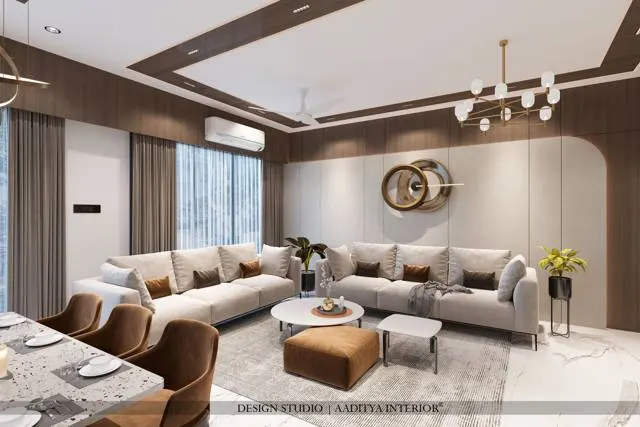
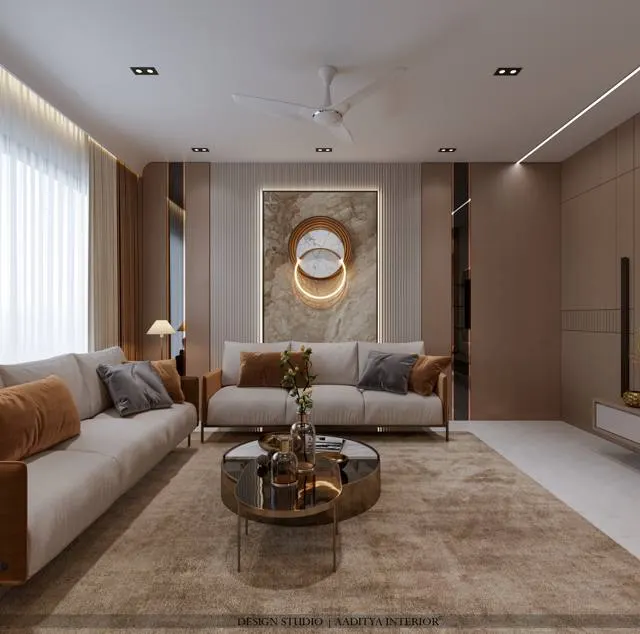
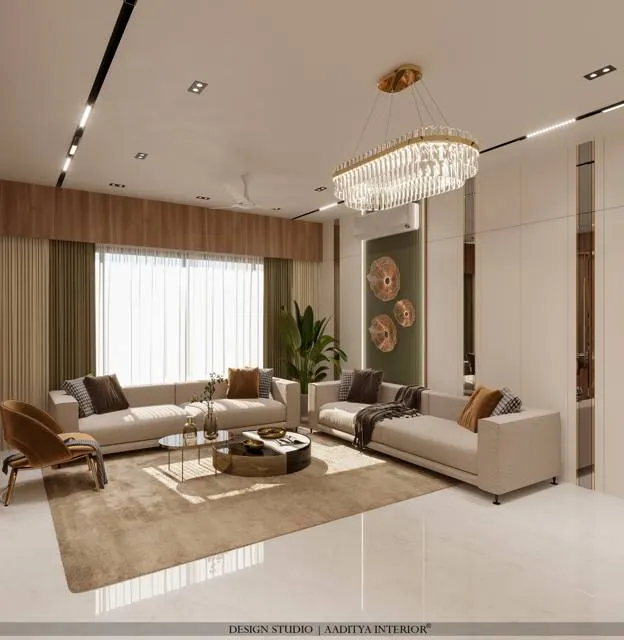
Few interior materials have spread through Indian homes as quickly as the charcoal panel. Within a short time, flexible sheets in wood, marble, gold and fabric prints, and slim louvre strips with a fluted face, have appeared on TV walls, bed backs, ceilings, café counters and salon walls in every city. The appeal is easy to see: a feature wall that looks like fluted timber or Italian marble, installed in a day or two, at a fraction of the cost of veneer, stone or PU-painted fluted MDF.
The questions that follow are just as common. What is a charcoal panel actually made of — is there charcoal in it? Is it waterproof, termite-proof, fireproof? Will it look cheap in five years? Does it purify the air, as some sellers claim? How much does it cost per square foot, and how should it be fixed so that it does not bubble, bow or peel? Because the product is new, sold under many brand names and often installed by general labour rather than trained fitters, good answers are hard to find.
This article explains the material honestly: how the sheets and louvres are built, their typical sizes, the real advantages and the real limitations, how they compare with fluted MDF, veneer, laminate, WPC and texture paint, how to detail and install them, and what they cost in October 2026. Brand datasheets vary, so the figures below are typical ranges to check against the specific product.
What charcoal panels and louvres actually are
Two product families are sold under the charcoal name in India. Both are factory-made composites with a plastic binder, and both get their appearance from a decorative film on the face rather than from the core material.
Charcoal sheets
Charcoal sheets are flat or slightly flexible boards, most commonly sold in 2440 × 1220 mm (8 × 4 ft) sizes, with thicknesses typically in the region of 5–8 mm. The core is a PVC-based composite that manufacturers describe as containing bamboo charcoal or wood fibre powder as a filler; it is laminated with a printed or textured film — wood grain, marble, stone, fabric, leather, solid matt colours, high-gloss, metallic and mirror finishes — and often a clear protective layer. Thinner grades bend gently, which lets them wrap large-radius curves and columns.
Charcoal louvres
Charcoal louvres are long extruded strips with a fluted, ribbed or grooved face, sold in lengths of about 2.7–3.0 m (often quoted as 9.5 ft) and widths commonly around 120–200 mm. They interlock edge to edge with a tongue-and-groove or are held with concealed clips, and are fixed vertically for height or horizontally for width. Visually, they are the low-cost answer to fluted timber, fluted MDF and wooden battens.
What the charcoal in the name means
The word is mostly a trade name. The filler in the core may include charcoal or carbonised bamboo powder, but the panel's behaviour — its weight, its water resistance, its response to heat and fire — is decided mainly by the plastic binder, which is usually PVC. The charcoal is sealed inside the composite and under a decorative film, so it is not in meaningful contact with room air. That matters when evaluating marketing claims, discussed below. A buyer should ask for a datasheet stating the composition, thickness, density and fire test results, and compare products on those, not on the name.
| Product | Typical size | Typical thickness / depth | Finishes | Usual fixing |
|---|---|---|---|---|
| Flexible charcoal sheet | 2440 × 1220 mm (8 × 4 ft) | ≈ 5–8 mm | Wood, marble, stone, fabric, solid, gloss | Adhesive on a flat, dry substrate; trims at edges |
| Metallic or mirror-finish sheet | 2440 × 1220 mm | ≈ 5–8 mm | Gold, rose gold, silver, smoked mirror | Adhesive; very flat substrate essential |
| Charcoal louvre strip | ≈ 2.7–3.0 m long × 120–200 mm wide | ≈ 10–25 mm depth | Wood grains, solid matt, two-tone | Clips or screws to battens, or adhesive to board |
| Trims and profiles | ≈ 2.4–3.0 m lengths | Matching sheet thickness | Matching colours, aluminium | Adhesive or screw; finishes edges and corners |
| Comparable: PVC wall panel | Varies (strip or sheet) | ≈ 5–10 mm | Prints, solids | Clips or adhesive |
| Comparable: WPC louvre | ≈ 2.7–3.0 m lengths | Often deeper, more rigid | Wood grains | Screws or clips to battens |
How we got here: a short history of wall panelling
Panelling a wall is an old idea. Timber wainscoting and full-height panelling lined European and colonial interiors for warmth and to protect plaster; Indian palaces and havelis used carved timber, inlaid stone and mirror work on walls. In twentieth-century Indian homes, the practical version was plywood with veneer or, later, decorative laminate — a robust but carpentry-heavy job. PVC wall and ceiling panels arrived as a cheap, washable option for bathrooms and shops, and WPC brought plastic-bound wood composites into doors, frames and louvres.
The recent turn came through fashion. Fluted and ribbed surfaces — fluted MDF, slatted timber, ribbed glass — became the signature look of Instagram-era interiors, and fluted MDF finished in PU paint or veneer was expensive and slow to make. Charcoal sheets and louvres arrived as a faster, cheaper way to get the look: factory-printed, ready to stick, no polishing. Their success says more about speed and price than about longevity, which is why it is worth understanding their limits before covering a wall.
Pros and cons, honestly
Charcoal panels are neither a miracle nor a cheap trick. They solve some problems very well and create others. The table sets the main points side by side.
| Aspect | Advantage | Limitation | What to do about it |
|---|---|---|---|
| Cost | Among the cheapest ways to get a fluted or marble look | Cheap grades look plastic under side light | See a full sheet under the room's actual lighting before buying |
| Speed | A TV wall can be clad in a day or two | Fast work tempts labour to skip substrate preparation | Insist on a flat, dry, primed wall or a board backing |
| Water | Plastic core resists water and does not swell like MDF | Water behind the panel (seepage) gets trapped and causes mould | Fix the seepage first; never use panels to hide damp |
| Termites | Plastic composite is not food for termites | Timber battens behind it still can be | Use treated battens or aluminium/PVC framing |
| Weight | Light — easy to handle and lift to ceilings | Thin sheets dent and telegraph wall unevenness | Use board backing on uneven walls |
| Finish range | Wide range of prints, metallics, solids | Prints repeat; cannot be re-polished or refinished | Choose quieter prints and plan where repeats fall |
| Heat | Fine at normal room temperatures | Expands with heat; can bow near lamps, stoves or in direct sun | Leave expansion gaps; keep away from heat sources and outdoor sun |
| Fire | Some products carry fire-retardant claims and test reports | PVC-based cores burn and produce dense smoke once alight | Ask for test reports; check NBC Part 4 for commercial use |
| Repair | Single strips or sheets can be replaced | Matching an old print later can be impossible | Buy a few spare pieces from the same batch |
The air-purifying claim
Some sellers describe charcoal panels as air-purifying or odour-absorbing because activated charcoal can adsorb some gases. Aaditya Interior advises treating this claim with caution. In a panel, the charcoal filler is bound in plastic and sealed behind a film, so very little of it is exposed to room air, and any adsorbent material saturates over time. No widely recognised independent standard or study supporting a meaningful room-level effect from such panels has been presented by the industry, so the claim should not influence the choice. Ventilation, low-VOC adhesives and paints, and air purifiers with tested performance are the reliable routes to cleaner indoor air.
Fire behaviour
Most charcoal sheets and louvres are plastic-based, and plastics behave differently from gypsum, stone or metal in a fire. Some products are formulated with fire retardants and are tested for surface spread of flame; others are not. In homes, the practical rules are simple: keep panels away from cooktops, pooja diyas and lamps, heaters and electrical panels, and make sure switch and socket boxes are properly enclosed rather than surrounded by cut panel edges. In offices, shops, restaurants, hotels and clinics, interior finishes fall under the National Building Code of India 2016, Part 4, which classifies materials by surface spread of flame (tested under IS 12777) and limits what may be used on escape routes and in certain occupancies. Ask the supplier for the classification and keep the report with the project file; the local fire authority may ask for it.
Charcoal versus the alternatives
The right comparison is not charcoal versus nothing; it is charcoal against the other ways to finish the same wall. The table below compares the main options on cost, durability and repairability, using this blog's established October 2026 rates where they exist.
| Option | Indicative installed cost (₹ per sq ft of wall) | Look up close | Moisture | Repair and refinish | Life in a living room |
|---|---|---|---|---|---|
| Charcoal sheet | ₹110–250 | Printed; good from 2 m, plastic at arm's length in cheap grades | Good (core) | Replace sheet; cannot refinish | Moderate — prints date |
| Charcoal louvres | ₹150–320 | Fluted shadow reads well; print visible close up | Good (core) | Replace strip; cannot refinish | Moderate |
| Laminate on plywood panelling | ≈ ₹250–450 | Good laminates are convincing | Fair with BWR ply | Replace laminate on panel | Long |
| Veneer panelling (on ply) | ≈ ₹700–1,300 | Real wood grain | Fair; must be sealed | Can be re-polished | Long, ages well |
| Fluted MDF, PU painted | ₹1,000–1,800 | Crisp, seamless paint finish | Poor (MDF must stay dry) | Repaint possible | Long if dry |
| WPC louvres | Verify locally | Wood-grain film or paint | Good | Replace strip | Moderate to long |
| Texture or designer paint | ₹40–150+ | Real texture, no joints | Fair | Poor — patches never blend | Moderate |
The comparison explains both the popularity and the risk. On a TV wall of about 85–90 sq ft, charcoal cladding costs a small fraction of PU-painted fluted MDF. But fluted MDF can be repainted and veneer can be re-polished; a charcoal panel that is scratched, faded or simply out of fashion has to be replaced. For a rented home, a commercial fit-out with a five-year life, or a room where the budget is better spent on furniture, that trade is often sensible. For a long-term family home's main wall, it should be a deliberate choice rather than a default.
Planning the layout: sheets, louvres and joints
The most common reason charcoal walls look cheap is not the material; it is the layout. Joints fall wherever the sheet ended, prints repeat at eye level, switchboards are cut into the middle of a marble vein, and the edges are finished with mismatched trims. A good layout is drawn before the material is ordered, with the sheet module, louvre width and every cut-out shown on an elevation.
| Layout rule | Typical figure | Why |
|---|---|---|
| Sheet module | 1220 mm wide, 2440 mm long | Plan joints on the module, not wherever the sheet ends |
| Horizontal joint on full-height walls | Above eye level, about 1800–2100 mm | Joints at eye level are seen first |
| Louvre runs | Whole number of strips per run | Avoid a thin sliver at a corner or a door frame |
| Expansion gap at edges | About 3–5 mm, hidden under trims (check datasheet) | Plastic composites move with temperature |
| Distance from heat sources | Keep well clear of cooktops, diyas, heaters and halogen lamps | Heat bows panels and is a fire risk |
| Cut-outs for switches and sockets | Box fixed flush before cladding; plate covers the cut edge | Ragged cut edges look cheap and expose the core |
| Wastage allowance | About 10–15 % extra | Cuts, print matching, breakage in handling |
Installation that lasts
Charcoal panels fail for predictable reasons: a damp or dusty wall, an uneven surface, too little adhesive, no expansion gap, and heat. Installation is quick, but the preparation determines whether the wall still looks right in three years.
The sequence on site should be: repair any seepage and let the wall dry; check flatness with a straight edge and fill or board-line where needed; remove dust and loose paint and apply a primer; fix electrical boxes, conduits and the TV bracket backing; let the panels sit in the room for a day or so to reach room temperature; dry-lay the sheets or strips to confirm the layout and print direction; then fix from one reference line with the specified adhesive or clips, leaving expansion gaps at the edges under trims. On walls with any doubt about moisture or flatness, a batten frame or a thin moisture-resistant board backing is worth the extra day.
Ceilings deserve extra care. Charcoal sheets on a ceiling must be fixed mechanically as well as bonded, or fixed to a board backing, because adhesive alone can creep in heat. Avoid them close to lights that run hot and directly above cooking areas, and leave access panels for any junction boxes or drivers behind.
What charcoal panels and louvres cost in 2026
Prices vary with brand, thickness, finish and city, and many listings quote per sheet or per strip rather than per square foot. The figures below convert to per square foot of wall covered and are indicative October 2026 ranges, excluding GST. Installed rates include adhesive or clips, standard trims and labour on a prepared wall; wall repair, board backing, battens and electrical work are extra.
| Item | Indicative material price | Indicative installed cost (₹ per sq ft of wall) | Notes |
|---|---|---|---|
| Charcoal sheet, standard prints (8 × 4 ft) | ≈ ₹1,600–4,500 per sheet (≈ ₹50–140 per sq ft) | ₹110–250 | Thickness and film quality drive the range |
| Charcoal sheet, metallic or mirror finish | Higher than standard prints; verify locally | Quote per sheet | Needs a very flat substrate |
| Charcoal louvre strips | ≈ ₹70–180 per sq ft of coverage | ₹150–320 | Depth, rigidity and print decide price |
| Trims and profiles | ≈ ₹20–80 per running ft | Included in installed rates for simple walls | Aluminium trims cost more than PVC |
| Batten frame or board backing | Verify locally | Extra over the rates above | Worth it on uneven or doubtful walls |
| Labour only (where material is client-supplied) | — | ≈ ₹25–60 | More for ceilings, curves and many cut-outs |
Where to use them, and where not to
| Location | Suitability | Why | Better alternative if unsuitable |
|---|---|---|---|
| TV wall in a living room | Good | Dry, indoor, seen from 2–4 m; easy to update later | Veneer or PU fluted MDF for a long-term statement |
| Bed back wall | Good | Dry; soft lighting flatters the print | Upholstered panel for touch and acoustics |
| Café, salon or retail feature wall | Good, with fire report | Fast fit-out, short refresh cycles | Fire-rated boards or metal on escape routes |
| Ceilings (living, bedroom) | Fair | Light, but must be mechanically fixed and kept from hot lights | Gypsum with paint, or slat raft |
| Bathroom dry zones | Fair to good | Core resists moisture; edges and adhesive must suit wet rooms | Tiles, PVC panels, stone |
| Shower or wet zone | Avoid | Constant water, heat and cleaning chemicals | Tiles or stone |
| Kitchen backsplash near the hob | Avoid | Heat and grease; fire risk | Tiles, quartz, glass, steel |
| Exterior walls or sunlit balconies | Avoid | UV fading and heat movement | Exterior-grade cladding, WPC rated for outdoor use |
| Walls with seepage or rising damp | Avoid until repaired | Moisture trapped behind causes mould and delamination | Repair waterproofing first |
| Escape corridors and stairs in commercial buildings | Check code | Surface spread of flame limits under NBC Part 4 | Non-combustible finishes |
Care, maintenance and lifespan
Day to day, charcoal panels are easy to keep: dust with a dry microfibre cloth and wipe marks with a damp cloth and mild soap. Avoid abrasive pads, solvent cleaners and scraping, which dull or cut the film. Louvres collect dust in their grooves; a soft brush or vacuum attachment every few weeks keeps them crisp. Keep furniture backs and door handles from rubbing the surface, and use felt pads where chairs touch the wall.
Life depends on use and quality. In a dry, shaded living room, a good product correctly installed can look acceptable for many years; in sunlight, near heat or under heavy use, films fade, scratch and edges lift sooner. Because the surface cannot be sanded or polished, the realistic plan is replacement rather than renewal — which is why buying a few spare pieces from the same batch is worthwhile.
Where the product is heading
The category is evolving quickly. Manufacturers are offering thicker, more rigid cores, better wear layers, more realistic textured films that follow the printed grain, and products with fire-retardant formulations and published test reports. Matt finishes and quieter, solid colours are replacing the high-gloss gold and mirror prints that dominated the first wave. At the same time, designers are pairing charcoal panels with real materials — a veneer shelf, a stone console, a metal trim — so the panel becomes background rather than the star. Buyers can expect better products, but also more variation between brands, which makes datasheets and samples more important, not less.
Rules for buying and using charcoal panels
- Treat the name as a trade name: compare datasheets for thickness, density, composition and fire test results.
- See a full-size sample under the room's actual lighting, at arm's length as well as from across the room.
- Use charcoal panels only on dry walls; repair seepage first and never use them to hide damp.
- Draw an elevation with sheet joints, louvre counts and every cut-out before ordering.
- Keep joints above eye level and avoid slivers at corners by adjusting the central panel.
- Leave expansion gaps under trims and keep panels away from cooktops, diyas, heaters and hot lamps.
- Use the adhesive or clip system the manufacturer specifies; batten-fix on uneven walls and on ceilings.
- Ask for surface-spread-of-flame classification for any commercial project and check it against NBC 2016 Part 4.
- Order 10–15 per cent extra from one batch and keep spares for future repairs.
- Ignore air-purifying claims when choosing; choose on appearance, durability and fire behaviour.
Frequently asked questions
What is a charcoal panel made of?
Typically a PVC-based composite core containing a filler described as bamboo charcoal or wood powder, laminated with a printed or textured decorative film and a clear wear layer. Composition varies by brand, so ask for the datasheet.
Are charcoal panels waterproof?
The core resists water much better than MDF or plywood and does not swell, but the installation is not waterproof: water behind the panel from seepage gets trapped, and adhesives and edges can fail in constant wetness. Use them in dry areas and dry zones of bathrooms, not in showers.
Do charcoal panels purify air?
There is no reliable evidence of a meaningful room-level effect. The charcoal is bound in plastic and sealed under a film, and adsorbents saturate over time. Choose the panel for its look and durability, and rely on ventilation and tested purifiers for air quality.
What is the price of a charcoal sheet in 2026?
Standard prints commonly cost about ₹1,600–4,500 per 8 × 4 ft sheet, roughly ₹50–140 per sq ft, with metallic and mirror finishes higher. Installed on a prepared wall, sheets typically cost ₹110–250 per sq ft and louvres ₹150–320 (indicative October 2026, excluding GST).
Charcoal louvres or fluted MDF — which is better?
PU-painted fluted MDF gives a crisper, more refined finish and can be repainted, but costs about ₹1,000–1,800 per sq ft and must stay dry. Charcoal louvres cost a fraction of that and resist moisture better, but cannot be refinished and look plastic up close in cheaper grades. For a long-term main wall, fluted MDF or veneer; for a fast, budget or short-life fit-out, charcoal.
Are charcoal panels safe near a pooja unit?
Keep them well away from diyas, incense and any open flame, as the plastic core is combustible. Use stone, metal, tiles or a fire-safe backing directly behind lamps, and use charcoal panels only on surrounding areas away from the flame.
Sources & standards
- Bureau of Indian Standards — National Building Code of India 2016, Part 4 (Fire and Life Safety): interior finishes and surface spread of flame
- Bureau of Indian Standards — IS 12777: Fire safety — Flame spread of products — Method for classification
- World Health Organization — WHO Guidelines for Indoor Air Quality: Selected Pollutants (2010)
- Manufacturers' published datasheets for PVC-composite decorative sheets and louvres (composition, thickness, sizes, fixing and fire test reports) — described generically
- Aaditya Interior guides — Wallpaper vs Paint vs Texture Paint vs Wall Panels; Living Room Partition Ideas: Jaali, Glass and Fluted; WPC vs Plywood for Doors and Frames
- Price ranges: indicative October 2026 estimates — confirm locally before budgeting