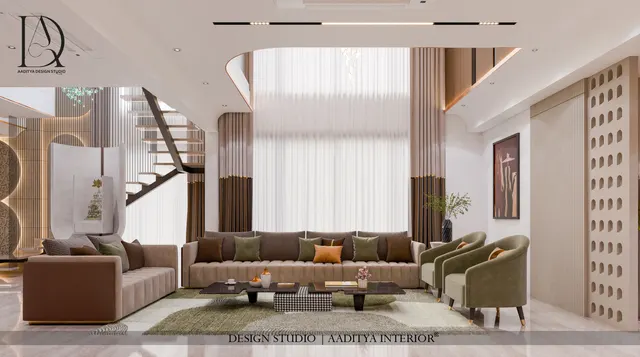
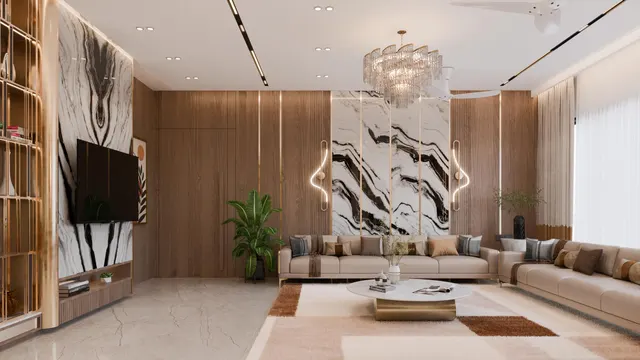
Edwardian interior design is the brief, bright interval between the heavy Victorian room and the modern movement, and it is the most liveable of all the historic styles. The Edwardian era in Britain ran from 1901 to 1910, the reign of Edward VII, but the style it names began in the 1890s and lasted into the 1920s. Its rooms are lighter than Victorian rooms in every sense: lighter wood, lighter colour, lighter furniture and more light. Where a Victorian drawing room is dark, crowded and upholstered to the point of suffocation, an Edwardian drawing room is pale, airy and arranged so that the windows, the garden and the daylight are part of the decoration. That lightness is the reason the style suits India so well.
Indian homes are bright by nature, and a style that works with brightness rather than against it has a natural advantage. An Edwardian room uses pale walls to reflect the sun, light wood to keep the furniture from looking heavy, and tall windows or a bay window to bring the outside in. It is also a style that forgives small rooms, because its furniture is slim and its colours are pale, so a flat of 900 sq ft can carry an Edwardian drawing room without feeling cramped. The style is not about antiques or about money; it is about choosing light over dark, slim over bulky, and a few good pieces over a crowded room.
The mistakes are the same as with any period style, but they have an Edwardian shape. The first is using dark Victorian furniture and calling it Edwardian, so the room stays heavy and the light wood that defines the style never appears. The second is over-furnishing: an Edwardian room has space around its furniture, and a room filled wall to wall with cabinets and sofas is Victorian, whatever the colour of the wood. The third is the wrong white — a cold, blue-white paint that makes light oak look yellow and the room feel like a clinic. This article explains the history, the materials, the dimensions and the costs of doing Edwardian properly in an Indian home.
The past: how Victorian weight became Edwardian light
The Edwardian style did not arrive by royal decree; it grew out of a change in taste that was already under way in the 1890s. The Arts and Crafts movement had argued for honest materials, simple furniture and rooms that were pleasant to live in, and the new middle class, living in suburban houses with gardens, wanted rooms that were bright and comfortable rather than grand. Edward VII himself was a sociable, pleasure-loving king, and the houses built in his reign reflect that mood: large windows, conservatories, garden rooms, and drawing rooms designed for conversation rather than for ceremony. The heavy mahogany and dark reds of the Victorian era gave way to pale oak, satinwood and inlaid mahogany, and the crowded Victorian interior gave way to rooms with space in them.
The architecture of the period tells the same story. Edwardian houses are usually detached or semi-detached, with a hall that runs through the house, a bay window on the front, and a garden at the back. The rooms are generous but not grand, the ceilings are high but not lofty, and the woodwork is painted white or left in a light, natural finish. In India the equivalent is the independent house or the large flat with a balcony, where the Edwardian plan translates directly: a hall as the spine of the home, a living room with the largest window, and a dining room that opens towards the garden or the balcony. The style was never a palace style; it was a comfortable middle-class style, and that is why it still feels like home.
Light wood: oak, satinwood and pale mahogany
Light wood is the single most important Edwardian material, and it is the test by which any Edwardian room should be judged. The favoured timbers were pale oak, satinwood and mahogany in a light, polished finish, often inlaid with fine lines of a darker wood or with small floral motifs in marquetry. The furniture is slim: a dining table with tapered legs, a sideboard with a light, inlaid top, a chair with a slender back and a small, shaped splat. The wood is never painted dark and never stained to look like ebony; it is allowed to be pale, and the paleness is the point. In Indian terms the nearest timbers are light teak, white ash, maple veneer and pale sheesham, all of which take a clear polish well and stay light in a bright room.
The joinery follows the same logic. Edwardian woodwork — doors, skirting, architraves — is painted white or cream, with slim mouldings rather than the deep, heavy profiles of the Victorian era. A door is panelled but the panels are shallow, and the skirting is 150 mm rather than the 250 mm of a grander house. The fireplace is often in pale marble or in painted timber, with a simple surround and a mirror above it, rather than the dark stone and heavy carving of the previous generation. The effect is a room where the woodwork frames the pale walls without competing with them, and where the furniture, in light wood, reads as part of the architecture rather than as a set of dark objects in a pale box.
| Timber | Edwardian use | Indian equivalent | Finish |
|---|---|---|---|
| Pale oak | Tables, sideboards, floors | Light teak, white ash | Clear polish, matt |
| Satinwood | Inlay, small cabinets | Maple veneer | Clear polish, satin |
| Light mahogany | Dining furniture | Pale sheesham | Light stain, polish |
| Painted pine | Doors, skirting, panels | MDF or pine, painted | White or cream, eggshell |
| Pale marble | Fireplace surround | Indian marble, pale | Honed, not polished |
The bay window and the plan: light as the main material
The bay window is the Edwardian room's best feature, and it is worth understanding properly. A bay is a window that projects from the wall, usually in three parts, giving a room more light, more air and a small extra space that can hold a window seat, a pair of chairs or a writing table. In the Edwardian house the bay belonged to the drawing room, and the seating was arranged to face it, so that the room's attention was on the light and the garden rather than on a fireplace. The bay also gives the room its plan: the sofa sits opposite the bay or at right angles to it, the chairs flank it, and the sideboard goes on the solid wall. In Indian flats a bay is rare, but the principle is the same — the largest window is the focus of the room, and the furniture should be arranged to enjoy it, not to turn its back on it.
The Edwardian plan is also a social plan. The hall is wide and welcoming, with a staircase that is visible but not grand, and the drawing room and dining room open off it. The dining room is close to the kitchen but separate from it, and the bedrooms are upstairs, quiet and plain. In an Indian flat the hall is often the living room itself, and the Edwardian solution is to give the entrance a defined space — a console, a mirror and a rug — so that the home has a threshold rather than a door that opens straight into the sofa. The garden, so important to the Edwardian house, becomes in India the balcony, and the Edwardian lesson is to treat the balcony as a room: plant it, furnish it lightly, and let the living room open onto it with full-height curtains rather than a blocked doorway.
Colour and fabric: floral, pale and restrained
Edwardian colour is pale and floral, but it is restrained in a way that surprises people who expect a chintz explosion. The walls are cream, pale yellow, soft green or pale blue, and the woodwork is white. The floral pattern appears in the curtains and the upholstery, usually as a small, regular print — a rose, a lilac, a trailing vine — on a pale ground, and it is used on one or two pieces only, not on every surface. The carpet is pale, often with a small pattern, and the cushions pick up one colour from the curtains. The effect is fresh rather than busy, and it is the opposite of the Victorian habit of patterning every surface. In Indian homes the floral can come from a handloom cotton or a block print, which gives the same freshness at a fraction of the cost of an imported chintz.
The discipline is in the count. An Edwardian room has one floral fabric, one plain fabric and one stripe or check, and no more. The curtains are the floral, the sofa is plain, and the chairs carry the stripe. The rug is plain or has a small border pattern. When this discipline is kept, the room feels light and coherent; when it is broken, with three florals competing, the room feels like a fabric shop. Lighting follows the same logic: a central pendant or chandelier in brass or glass, wall lights in pairs, and table lamps with fabric shades, all in warm white at 2700–3000 K. The Edwardian room is lit to be lived in, not to be displayed, and a dimmer on the main light is worth more than a second chandelier.
| Element | Edwardian choice | Indian adaptation | Notes |
|---|---|---|---|
| Wall colour | Cream, pale yellow, soft green | Premium emulsion, warm white | ₹20–30 per sq ft |
| Floral fabric | Small print, pale ground | Handloom cotton, block print | One floral per room |
| Sofa fabric | Plain, pale | Plain cotton or linen | Washable covers help |
| Rug | Pale, small pattern | Handloom or cotton dhurrie | Centred, not wall to wall |
| Curtains | Full length, lined | Cotton or linen, lined | Hung from the ceiling line |
Furniture: slim, elegant and made to be used
Edwardian furniture is slim, light and practical, and it is the easiest period furniture to live with. A dining table is 1800 by 900 mm for six, with tapered legs and a light top; a sideboard is 1500 mm long and 450 mm deep, with inlaid panels; a drawing-room chair is 550 mm wide with a slender back and a seat at 450 mm. The furniture is designed to be moved — a chair pulled up to the fire, a small table brought to the sofa — and it is not so heavy that it cannot be. In India the equivalent is carpenter-made furniture in light teak or ash, with simple tapered legs and a clear polish, which costs about the same as ordinary modern furniture and lasts far longer. A dining set for six in light teak typically costs about ₹60,000–1,20,000 in October 2026, and a sideboard about ₹35,000–70,000.
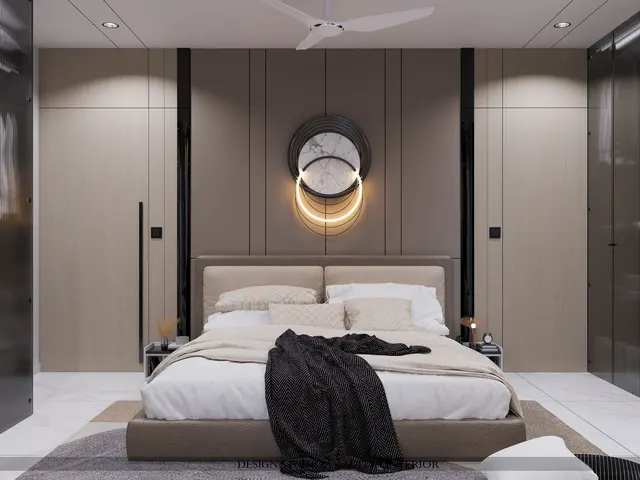
The bedroom follows the same rules. The bed is a simple panelled or brass bed, 1800 mm wide for a queen, with plain bedding in white or cream and a single coloured throw. The wardrobe is built in, painted white, with slim panelled doors, and the dressing table is small, with a mirror and two drawers, not a large vanity. The room is kept pale and uncluttered, with a rug beside the bed and full-length curtains. The Edwardian bedroom is a room for sleeping, not for storage, and the storage is kept in the dressing area or the passage. A bedroom that follows this rule feels restful, and a bedroom that fills every wall with cupboards feels like a storeroom, however elegant the cupboards are.
| Piece | Edwardian dimension | Indicative October 2026 range | Notes |
|---|---|---|---|
| Dining table, six | 1800 × 900 mm | ₹60,000–1,20,000 | Light teak, tapered legs |
| Sideboard | 1500 × 450 mm | ₹35,000–70,000 | Inlaid top, slim legs |
| Drawing-room chair | 550 wide, seat 450 mm | ₹12,000–25,000 each | Slender back, plain fabric |
| Sofa, three-seater | 1900 mm long | ₹35,000–70,000 | Plain fabric, washable covers |
| Bed, queen | 1800 × 2000 mm | ₹40,000–90,000 | Panelled or brass, plain bedding |
| Dressing table | 1200 × 450 mm | ₹18,000–35,000 | Small, with mirror |
Dimensions and clearances for an Edwardian room
The dimensions of an Edwardian room are generous but not grand, and they translate well to Indian flats. A drawing room of 6600 by 4500 mm is a good Edwardian size; a dining room of 4800 by 3600 mm works for six; a bedroom of 4200 by 3600 mm is comfortable. The sofa is 1900 mm long, the chairs are 550 mm wide, and the walkway in front of the sofa is 900 mm, with 750 mm between the sofa and the coffee table. The dining table needs 900 mm of chair pull-out on each side, and the sideboard needs 600 mm of clear space in front of it. The bay window, where it exists, projects about 600 mm from the wall and is about 3000 mm wide, with a window seat 450 mm high and 450 mm deep.
The ceiling in an Edwardian house is typically 3000–3300 mm, with a slim cornice of 75–100 mm and a ceiling rose for the pendant. In Indian flats, where the ceiling is usually 3000 mm, the same effect is achieved by keeping the cornice slim and the pendant at the right height — 750–900 mm above a dining table, and about 2100 mm from the floor in a drawing room, so that it lights the room without hanging in the eyeline. The doors are 2100 mm high and 900 mm wide, with four shallow panels, and the skirting is 150 mm. These numbers are not fussy; they are the reason the room feels right, and a room that ignores them will feel either cramped or empty, however good its furniture is.
| Element | Edwardian dimension | Indian flat note | Why it matters |
|---|---|---|---|
| Drawing room | 6600 × 4500 mm | 5400 × 3600 mm also works | Sofa scales with the room |
| Dining room | 4800 × 3600 mm | Six diners, 900 mm pull-out | Chairs must pull out fully |
| Bay window | 3000 wide, 600 mm deep | Balcony as the bay | Light is the focus |
| Sofa | 1900 mm long | Same | Slim, not bulky |
| Walkway | 900 mm clear | 900 mm minimum | Room must be walkable |
| Pendant height | 2100 mm from floor | 750–900 mm above table | Lights the room, not the eyes |
Costs and phasing: an Edwardian room in October 2026
An Edwardian drawing room is a mid-range Indian project, and the money goes on furniture and fabric rather than on joinery, because the style needs less panelling than Georgian and less carving than Tudor. For a drawing room of about 300 sq ft, a full Edwardian scheme — paint, a light-teak dining or drawing set, curtains, a rug and lighting — typically costs about ₹2,50,000–5,00,000 in October 2026. The largest items are the sofa and the dining set, and the most important single purchase is the rug, because a pale room with a bare floor feels cold. The work should be phased in the right order: paint first, then the large furniture, then the curtains and the rug, and finally the lamps and the pictures, so that each layer is chosen against the one before it.
The cheapest way into the style is to start with colour and light. Paint the walls a warm cream, hang full-length curtains in a pale floral, and replace a dark, bulky sofa with a slim, light one. Those three changes alone will make a room read as Edwardian, and they cost less than a single piece of period furniture. The most expensive mistake is buying dark furniture and trying to lighten the room with paint alone; the furniture is the weight in the room, and no wall colour can lift it. Buy light, buy slim, and let the room breathe. Aaditya Interior recommends ordering a timber sample and a fabric sample together, and seeing them in the actual room, before committing to either.
The future: Edwardian lightness in modern Indian homes
Edwardian design has aged better than almost any other historic style, because its values — light, air, slim furniture and pale colour — are the values of modern living. Contemporary Indian homes borrow it constantly, often without knowing the name: the pale living room, the light-wood dining set, the full-length curtains, the balcony treated as a garden room. The style also suits the way Indian families live now, with smaller households, more light and less formal entertaining; a room designed for conversation and for daylight is a room that works for a family, not just for guests. The materials will keep changing — engineered timber, LED lighting, washable fabrics — but the idea will not, because it is not a fashion. It is a preference for lightness, and lightness does not go out of date.
The future of the style in India is likely to be a blend: Edwardian planning with Indian craft. Light teak from a local carpenter, a handloom cotton in a small floral print, a brass pendant from Moradabad, a dhurrie on the floor — all of these give the Edwardian feeling without importing a single piece. The homes that will feel freshest in twenty years are likely to be the ones that were painted pale, furnished slim and lit well, because those are the rooms that age gracefully. The Edwardian lesson is a simple one, and it is worth remembering whenever a room feels heavy: take something out, let the light in, and see if the room does not immediately feel better.
| Approach | Cost signal | Best for | Risk |
|---|---|---|---|
| Full Edwardian room | ₹2,50,000–5,00,000 | Drawing room, 300 sq ft | Dark furniture by mistake |
| Colour and light only | ₹60,000–1,50,000 | Rented home | Cold white paint |
| Furniture only | ₹1,50,000–3,00,000 | Good bones, bad furniture | Bulky modern sofa |
| Edwardian + Indian craft | ₹2,00,000–4,50,000 | Teak, handloom, brass | Too many florals |
Eight rules for an Edwardian room
The whole article comes down to eight rules. Follow them in order, and the room will feel light and elegant without needing a single antique.
- Choose light wood first: pale oak, light teak or ash, with a clear polish — never dark stain.
- Paint the walls a warm cream or pale yellow, and the woodwork white; avoid cold blue-white.
- Make the largest window the focus of the room, and arrange seating to enjoy it.
- Use one floral fabric per room, one plain and one stripe — never three florals.
- Keep furniture slim and movable: tapered legs, a 1900 mm sofa, chairs 550 mm wide.
- Hang curtains full-length from the ceiling line, lined, in a pale floral or plain fabric.
- Light with warm white at 2700–3000 K, a central pendant and wall lights in pairs, on a dimmer.
- Leave space around the furniture: 900 mm walkways and 750 mm between sofa and table.
Frequently asked questions
What is Edwardian interior design?
Edwardian interior design is the British style of roughly 1901–1910, the reign of Edward VII, characterised by light wood, pale walls, bay windows and elegant, slim furniture. It is lighter and airier than Victorian design, with floral fabrics used sparingly and rooms planned around daylight and the garden.
What is the difference between Edwardian and Victorian design?
Victorian rooms are dark, heavy and crowded, with dark mahogany, deep reds and a great deal of pattern and ornament. Edwardian rooms are pale, light and spacious, with light oak or satinwood, cream walls, floral fabrics used sparingly and furniture that is slim and movable. The test is simple: if the room feels heavy, it is Victorian in spirit; if it feels light, it is Edwardian.
What wood is used in Edwardian interiors?
Pale oak, satinwood and light mahogany were the favoured timbers, often inlaid with fine lines of darker wood. In India the nearest equivalents are light teak, white ash and maple veneer, all of which take a clear polish well and stay pale in a bright room. Dark stain should be avoided, because it defeats the whole purpose of the style.
Can Edwardian style work in a small Indian flat?
Yes, and it suits small flats particularly well, because pale walls and slim furniture make a room feel larger. A drawing room of 5400 × 3600 mm works if the sofa is kept to 1900 mm, the furniture is slim, and the curtains are hung full-length. The style needs light and space around the furniture, not a large floor area.
How much does an Edwardian living room cost in India?
For a drawing room of about 300 sq ft, a full Edwardian scheme typically costs about ₹2,50,000–5,00,000 in October 2026, including paint, light-teak furniture, curtains, a rug and lighting. A dining set for six in light teak costs about ₹60,000–1,20,000 and a sideboard about ₹35,000–70,000. Prices vary by city and should be confirmed locally before budgeting.
Sources & standards
- National Building Code of India 2016, Part 3 (Development Control Rules and General Building Requirements) and Part 8 (Building Services, Section 1: Lighting and Natural Ventilation) — Bureau of Indian Standards
- Bureau of Indian Standards — IS 303 (plywood for general purposes), IS 710 (marine plywood) and IS 12406 (medium density fibreboard)
- Neufert, Architects' Data — standard dimensions for living rooms, dining rooms and bedrooms
- Time-Saver Standards for Interior Design and Space Planning — residential layouts, clearances and furniture dimensions
- English Heritage — guidance on Edwardian houses and historic interiors
- Energy Conservation Building Code (ECBC) and Bureau of Energy Efficiency (BEE) — lighting efficiency guidance
- Price ranges: indicative October 2026 estimates — confirm locally before budgeting