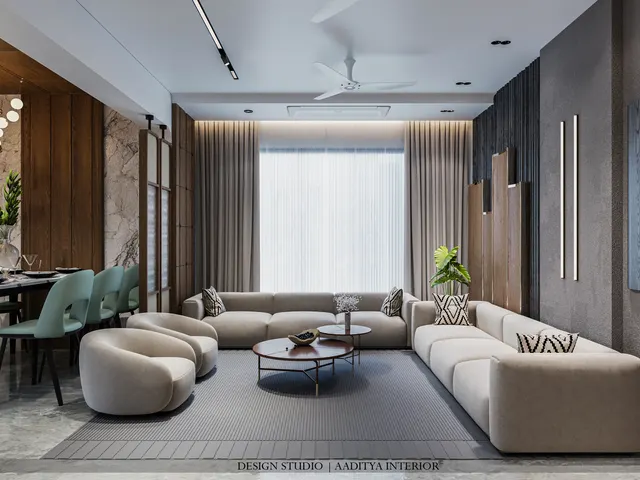
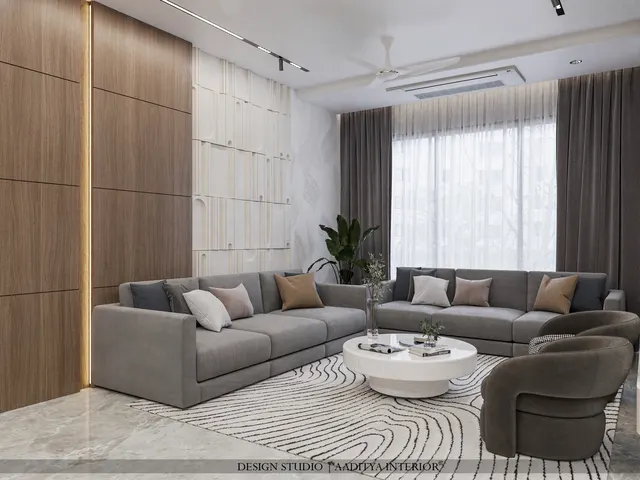
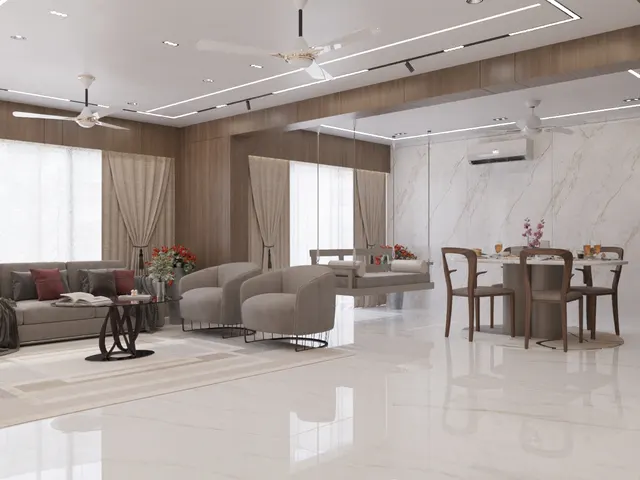
For most of the 2010s, the aspirational Indian home was grey. Open-plan, hard-edged, built around a large television and a slab of engineered stone, finished in greige upholstery and cool white walls, it photographed beautifully and felt, to a growing number of people who lived in it, slightly cold. Grandmillennial design is the considered reaction to that decade. The name joins grand — as in grandmother — with millennial, and it describes younger homeowners bringing back the pattern, colour, trim and comfort their grandparents' homes had, which minimalism had stripped out. It is also called new traditional, or more playfully, granny chic.
What makes it a distinct style rather than simple nostalgia is the editing. A grandmillennial room is not a grandmother's house reproduced wholesale, with every surface draped and every shelf crowded. It is a modern, well-planned room into which a confident number of traditional elements are placed deliberately: a chintz floral on the curtains, a skirted side table, a scalloped lampshade, a gallery wall of framed prints, blue-and-white porcelain, a needlepoint cushion. The layout, the lighting and the proportions are current; the ornament and the pattern are heritage. Done well, the result feels collected, personal and warm. Done carelessly, it tips into clutter — which is why rules matter.
This article traces where the style came from, sets out its signature elements and the restraint that keeps them from becoming fussy, and translates the look into practical choices for Indian homes: how to mix patterns without chaos, which pieces to invest in, how it borrows naturally from India's own rich tradition of block prints and decorative craft, and roughly what it costs. Prices are indicative October 2026 ranges and should be confirmed locally.
Where grandmillennial style came from
Grandmillennial design did not appear from nowhere. It sits in a long cycle in which decorating styles swing between ornament and restraint roughly every generation. The heavily patterned, trimmed and layered interiors of the mid-twentieth century — chintz sofas, swagged curtains, display cabinets of china, needlepoint and fringe — gave way, by the 2000s and 2010s, to their opposite: the pared-back, neutral, hard-surfaced minimalism of open-plan flats and social-media styling. That minimalism dominated for long enough that a younger generation, who had grown up with it, began to find it impersonal and to look back fondly at the warmth of their grandparents' homes.
The revival gathered a name and momentum towards the end of the 2010s, as design writers noticed younger homeowners deliberately buying the very things their peers had discarded — floral chintz, ruffled lampshades, skirted tables, antique brown furniture that the market had written off as unfashionable. What distinguished these homeowners from simple traditionalists was their irony and their editing: they understood minimalism's discipline and kept it, applying heritage ornament as a deliberate layer rather than a default. Grandmillennial is therefore best understood not as a rejection of modern design but as modern design that has decided to be warm, personal and pattern-rich again.
The signature elements of a grandmillennial room
Grandmillennial style is recognised by a vocabulary of recurring elements, drawn from traditional decorating but used selectively. None is compulsory, and using all of them at once is the surest way to overdo the look; most well-balanced rooms pick four or five and let the rest of the room stay calm. The recurring pieces are chintz and floral prints on curtains or an armchair; skirted tables, where a round table is draped to the floor in fabric; scalloped edges on lampshades, headboards, trays and linen; passementerie, the trims, fringes and tassels on cushions and curtains; blue-and-white china and other collected ceramics; antique or vintage wooden furniture, often inherited; needlepoint and embroidery; wallpaper, frequently floral or chinoiserie; and dense, personal gallery walls of framed art and family photographs.
| Signature element | What it is | Where it works | Restraint tip |
|---|---|---|---|
| Chintz / florals | Glazed floral-print cotton | Curtains, one armchair, cushions | Pick one hero floral per room |
| Skirted table | Round table draped to the floor | Bedside, lamp table, console | One per room; keep the fabric quiet if the walls are busy |
| Scalloped edges | Wavy trim on shades, linen, trays | Lampshades, headboard, napkins | A little goes far; avoid scalloping everything |
| Passementerie | Fringe, tassels, braid trim | Cushion edges, curtain leading edges | Use as an accent line, not all over |
| Blue-and-white china | Ginger jars, plates, bowls | Mantel, console, open shelving | Group in odd numbers; leave breathing space |
| Antique brown furniture | Inherited or vintage wood | Chest, writing desk, side table | One or two anchor pieces, not a whole suite |
| Needlepoint / embroidery | Hand-stitched cushions, stools | Accent cushions, a footstool | Mix with plain textures so it reads special |
| Gallery wall | Dense grid of framed art | Stair wall, behind a sofa | Relate the frames; vary the art |
The thread running through all of these is that they are personal and collected rather than bought as a matching set. A grandmillennial room looks as though it was assembled over years — an inherited chest here, a flea-market lamp there, a cushion someone stitched — even when it was styled in a season. That collected quality is the point, and it is what a showroom set of matching furniture can never reproduce. It also makes the style unusually friendly to inherited Indian furniture and heirlooms, which fit its spirit far better than they fit a minimalist flat.
Mixing patterns without chaos: the one skill that matters
If grandmillennial has a single technical skill, it is pattern mixing. A room that combines a floral curtain, a striped cushion, a checked chair and a patterned rug can look either beautifully collected or like a jumble, and the difference comes down to three disciplines: varying the scale of the patterns, tying them together with a shared colour, and resting the eye with plain areas in between. The reliable formula designers use is to combine one large-scale pattern, one medium-scale pattern and one small-scale pattern, so the eye can tell them apart, and to make sure at least one colour runs through all three so they read as a family rather than a fight.
The same logic applies to the quieter decisions. Solid, plain surfaces — a sofa in a single colour, a plain wall, a sisal or plain rug — are not failures of nerve; they are the rests between the patterned notes, and a room with no plain areas quickly exhausts the eye. The restraint that defines good grandmillennial work is mostly this: knowing when to stop adding pattern, and letting a few carefully chosen traditional elements stand out against calm.
Palette: the colours that carry the look
Grandmillennial palettes are warm and often drawn from the natural and floral world rather than the cool greys of the previous decade. The most recognisable combinations are blue and white (the colour of the china that anchors so many of these rooms), soft greens with warm neutrals, and dusty or faded pinks and corals used as accents. Warm wood tones from antique furniture and the glow of lamplight rather than cool overhead light complete the feeling. The table below gives workable palettes; none is a rule, and the surest way to keep a pattern-rich room coherent is to agree the palette first and buy patterns that stay within it.
| Palette | Base | Accent | Reads as |
|---|---|---|---|
| Classic blue-and-white | Warm white, soft cream | China blue, indigo | Fresh, timeless, easy to collect for |
| Garden green | Warm neutral, oatmeal | Sage to deep green, touches of pink | Calm, botanical, restful |
| Faded rose | Cream, soft taupe | Dusty pink, coral, soft red | Romantic, feminine, warm |
| Chinoiserie | Ivory, pale celadon | Blue, coral, gold, black line | Decorative, layered, collected |
| Warm heritage | Buttery cream, camel | Mustard, terracotta, brown wood | Cosy, suited to Indian light |
Grandmillennial in the Indian home
The style translates unusually well to Indian homes, for two reasons. First, India has never fully abandoned ornament: block-printed fabrics, hand-embroidered textiles, brass and inherited teak and rosewood furniture are part of ordinary life, and these are exactly the collected, crafted, pattern-rich elements grandmillennial prizes. A Sanganeri or Bagru block print, a kantha or phulkari throw, a set of brass or blue-pottery pieces, and an inherited wooden chest are grandmillennial anchors that happen to be Indian. Second, Indian homes often already hold heirloom furniture that a strictly modern scheme has no place for, and this style gives those pieces a natural home.
There are practical adjustments for Indian conditions. Heavy swagged curtains and deep upholstery suit cooler climates better than Surat or Chennai summers, so lighter cottons, block prints and breathable weaves replace thick chintz where heat and humidity are high. Pale skirted-table fabrics near floor level attract dust in Indian cities and benefit from being washable. And the dense, layered look must be balanced against the reality of monsoon damp and dust, which reward washable covers, glass-fronted display for china, and fabrics that can be laundered. Aaditya Interior tends to introduce the style to Indian clients through textiles and collected objects first — curtains, cushions, a skirted table, a gallery wall — which deliver most of the warmth without committing a whole room to pattern. The second figure shows how these layers build up on a single wall.
What to invest in and what to find cheaply
Because the style depends on a collected look, it rewards a mix of a few good pieces and many inexpensive or second-hand finds, which also makes it kinder to a budget than its rich appearance suggests. The pieces worth spending on are the ones that anchor a room and are used daily: a well-made sofa or a pair of armchairs, good curtains in a hero fabric, and one genuine antique or quality vintage wooden piece. Almost everything else — china, lamps, trays, frames, smaller side tables, cushions — can come from flea markets, family stores, inherited sets and budget decorating ranges, and often looks better for being genuinely old rather than new. Scalloped lampshades, trims and cushion covers can be made inexpensively by a local tailor, which is one of the style's quiet advantages in India.
| Piece | Invest or save | Indicative Oct 2026 cost | Note |
|---|---|---|---|
| Sofa / pair of armchairs | Invest | ₹35,000–1,20,000+ | Used daily; quality frame and fabric pay back |
| Hero curtains (floral / chintz) | Invest | ₹1,200–3,500 per running metre, made up | The room's main pattern statement |
| One antique / vintage wood piece | Invest or inherit | ₹8,000–60,000+ (or free, inherited) | Anchors the collected look |
| Skirted table | Save | ₹3,000–8,000 (base + fabric + tailoring) | A plain round base and a tailored cloth |
| Scalloped lampshades | Save | ₹600–2,500 each | Often tailor-made locally |
| Blue-and-white china / ceramics | Save / collect | ₹300–3,000 per piece | Flea markets and family cupboards |
| Gallery-wall frames and art | Save | ₹200–1,500 per frame | Mix prints, textiles and photographs |
| Cushions, trims, needlepoint | Save | ₹400–2,000 each | Tailor-made trims add a lot for little |
Room by room: where to apply the style
Grandmillennial elements do not have to appear everywhere; most homes read best when the style is concentrated in the social and restful rooms and kept lighter in the working ones. The living room carries the hero pattern — a floral curtain or an armchair — and the collected display of china and gallery art. The bedroom leans into comfort: a scalloped or upholstered headboard, a skirted bedside table, layered pattern on the bed. A study or home office is a natural home for antique brown furniture, a lamp and a dense gallery wall. Kitchens and bathrooms take the lightest touch — a scalloped valance, a block-printed blind, a few ceramics — because moisture, heat and cleaning make heavy pattern impractical there. The table below suggests where each element earns its place.
| Room | Lead element | Supporting layers | Keep light |
|---|---|---|---|
| Living room | Hero floral curtain or armchair | China display, gallery wall, trimmed cushions | One patterned rug at most |
| Bedroom | Scalloped / upholstered headboard | Skirted bedside table, layered bed linen | Keep one wall plain behind the bed |
| Dining | Blue-and-white china on a dresser | Skirted side table, framed prints | Let the table and chairs stay simple |
| Study / office | Antique wooden desk | Dense gallery wall, brass lamp | Plain practical seating |
| Entry / hallway | Skirted console with lamp | Mirror, a small gallery cluster | One focused moment, not a corridor of pattern |
| Kitchen / bath | Scalloped valance or blind | A few ceramics, a block-print towel | No floor-length skirts near water |
A useful sequence for an Indian home new to the style is to begin with textiles and collected objects, which are reversible and inexpensive, and only later commit to wallpaper or a reupholstered sofa once the palette and the level of pattern feel right. Scalloped edges — on a lampshade, a cushion, a headboard or table linen — are one of the quickest and cheapest signatures to add, because a local tailor can produce them from an offcut of fabric, and the detail reads as considered far beyond its cost. The drawing below shows the geometry a tailor needs to set a scallop out evenly.
Grandmillennial tomorrow: where the style is going
Styles that begin as reactions usually mature into something quieter and more permanent, and grandmillennial is following that path. Its early, most photographed form was maximal — every surface patterned, scalloped and trimmed — but the direction of travel is towards a more restrained, liveable version in which a few heritage elements sit within otherwise calm rooms. The deeper shift it represents is likely to outlast the name: a move away from disposable, matching, trend-led furnishing towards collected, repairable, often inherited and locally made pieces, and towards pattern and craft as a normal part of a modern home rather than an indulgence. For India, with its living craft traditions, that direction is natural, and the style's lasting contribution may simply be that it made ornament and inheritance fashionable again.
Nine rules for a grandmillennial room that works
- Start from a calm, well-planned modern room; add heritage elements deliberately rather than filling every surface.
- Agree a palette first, then buy patterns and objects that stay within it.
- Mix patterns by scale — one large, one medium, one small — and tie them with at least one shared colour.
- Leave plain rests: a solid sofa, a quiet wall, a plain rug, so the eye can pause.
- Choose four or five signature elements per room, not all of them at once.
- Favour collected and inherited pieces over matching sets; the collected look is the whole point.
- Invest in the daily, anchoring pieces — sofa, curtains, one antique — and save on the decorative extras.
- Adapt for Indian conditions: lighter washable fabrics, glass-fronted china display, block prints in place of heavy chintz.
- Light the room with lamps and warm light, not cool overhead light, to carry the cosy feeling.
Frequently asked questions
What is the difference between grandmillennial and maximalism?
Maximalism is about abundance for its own sake — more colour, more pattern, more objects, across any style. Grandmillennial is narrower and more specific: it revives traditional, grandmother-era decorating elements in particular, and it is defined as much by editing and restraint as by pattern. A grandmillennial room can be quite restrained; a maximalist room, by definition, is not.
Is grandmillennial the same as cottagecore?
They overlap but are not the same. Cottagecore is a rural, romantic aesthetic centred on nature, simplicity and a pastoral fantasy. Grandmillennial is more urban and more formal, rooted in classic decorating — chintz, china, antiques and gallery walls — rather than in country cottages. Both value craft and comfort, which is why they are often confused.
Does grandmillennial work in a small flat?
Yes, and often better than in a large one, because the style thrives on layering a few meaningful objects rather than filling vast spaces. In a small flat the approach is to pick a single corner or wall — a skirted lamp table with a gallery wall above, say — and let it carry the style, keeping the rest of the room calm. Washable, lighter fabrics and glass-fronted display keep a small, pattern-rich room from feeling cluttered or hard to clean.
How do I use grandmillennial with Indian furniture?
Very naturally. Inherited teak or rosewood chests, brass objects, block-printed textiles and embroidered throws are exactly the collected, crafted, pattern-rich elements the style is built on. The approach is to treat an inherited wooden piece as the room's anchor, add block prints and embroidery as the textile layer, and group brass or ceramic pieces as the collected display, all within one agreed palette.
Will grandmillennial date quickly?
Its most extreme, heavily styled form will date as any trend does, but its underlying ideas — collected over matching, inherited and repairable over disposable, pattern and craft as normal — are classic and long-lived. Building the look from genuine, well-made and inherited pieces rather than trend-led purchases is the surest way to keep a grandmillennial room looking considered rather than dated.
Sources & standards
- Time-Saver Standards for Interior Design and Space Planning — colour, pattern and textile principles
- Neufert Architects' Data — furniture dimensions, seating and room layout references
- National Institute of Design and Indian handloom / handicraft board references — block printing (Sanganeri, Bagru), kantha, phulkari traditions
- Victoria and Albert Museum — historic chintz and chinoiserie collections and their decorative history
- General interior-design press coverage that named and defined the grandmillennial / new traditional style in the late 2010s
- Bureau of Indian Standards — IS furnishing-textile standards relevant to upholstery and curtain fabrics
- Price ranges: indicative October 2026 estimates — confirm locally before budgeting