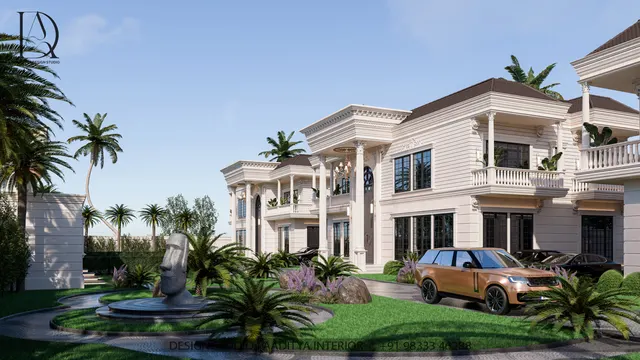
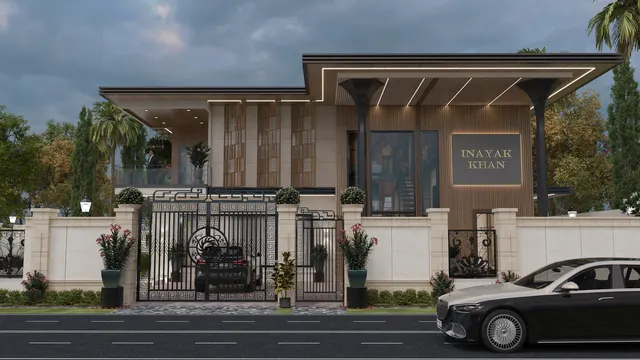
Few building materials are as bound up with the image of a place as sandstone is with Rajasthan. The honey-gold walls of Jaisalmer, the red ramparts of Agra and Delhi, the carved screens of Rajput palaces and the endless pavements of government buildings across north India are all, in the end, the same family of stone: layers of ancient sand, pressed and cemented over millions of years, quarried from the beds of Rajasthan and the neighbouring tracts. It is one of India's great building materials — abundant, workable, durable and beautiful — and understanding it turns a vague idea of nice stone into the specific knowledge a designer or a homeowner needs to use it well.
That knowledge matters because sandstone is often specified carelessly. A client asks for red sandstone or Dholpur stone without knowing that each variety has a different strength, porosity and colour behaviour; a slab is laid without sealing in a wet area and stains within a season; a thin tile is used where a thick slab was needed, or a heavy carved panel is fixed to a wall that cannot carry it. The stone that has stood for five centuries on a Mughal fort can fail in five years on a modern house, not because the stone changed but because the detailing did. This article aims to give the background that prevents those mistakes.
It traces the stone from its geological origin through its great historical uses to its place in building today: how sandstone forms and why it splits so cleanly into slabs, the main Rajasthani varieties and their colours, how it was used from the Mughal forts to the Rajput havelis, and the modern realities of sizes, fixing details, finishes and indicative costs. It treats the stone as both a piece of history and a practical material, because in India it is still very much both.
How sandstone forms, and why it matters to a builder
Sandstone is a sedimentary rock: it began as sand — mostly grains of quartz — deposited in ancient rivers, deltas, dunes and shallow seas, then buried, compressed over geological time and cemented together by minerals carried in groundwater. The nature of that cement decides much of how the stone behaves. Where the grains are bound by silica the stone is very hard and durable; where they are bound by softer iron or clay minerals it is easier to carve but more porous and more vulnerable to weather. The iron in the cement is also what gives the stone its colour: red and pink sandstones are coloured by iron oxides, yellows and buffs by other iron and clay minerals, and the pale beiges by a cleaner, lower-iron content. This is why a single quarry district can yield slabs of different colours, and why colour alone is not a reliable guide to strength.
Because sandstone was laid down in layers, it carries natural planes of weakness called bedding planes, and this single fact shapes everything about how it is used. The stone splits most easily along these beds, so quarrymen cleave it into slabs parallel to the bedding, which is why sandstone is naturally a slab-and-flagstone material rather than a blocky one like granite. A good mason lays the stone the way it formed — bedding planes horizontal in a wall or floor, so that weather and load press across the layers rather than prising them apart. Stone laid the wrong way, with its beds vertical and facing the weather, will eventually delaminate and flake, a defect called face-bedding that is one of the commonest causes of sandstone failing on a facade.
The varieties of Rajasthan sandstone
Rajasthan and its neighbouring districts produce several distinct sandstones, known in the trade largely by the place they come from. The deep red and pink stones of the Dholpur and Bharatpur region in eastern Rajasthan are the classic Mughal building stones, hard, even-grained and carving beautifully. The warm beige and buff Dholpur stones from the same belt are the pale, creamy sandstones seen on countless Indian facades and floors. Jodhpur in the west yields a famous red-pink stone used throughout that city and its forts, dense and durable. Jaisalmer, further west in the desert, produces the golden-yellow stone that gives the city its name as the Golden City, its fort and havelis glowing at sunset. Other buffs, greys and browns come from across the region and from neighbouring states. The table below sets out the main types a buyer will meet; colours vary within each and should be chosen from physical samples, not names alone.
| Variety | Typical source area | Colour | Character and common use |
|---|---|---|---|
| Dholpur beige / buff | Dholpur–Bari belt, eastern Rajasthan | Cream to pale buff | Even, fine grain; flooring, cladding, carving |
| Red / pink sandstone | Dholpur, Bharatpur, Karauli | Deep red to pink | The Mughal stone; forts, cladding, carved work |
| Jodhpur red / pink | Jodhpur region, western Rajasthan | Red-pink, salmon | Dense and durable; buildings and paving of Jodhpur |
| Jaisalmer yellow | Jaisalmer, desert west | Golden yellow | The Golden City stone; fort, havelis, screens |
| Agra red (adjacent belt) | Around Agra, Uttar Pradesh | Deep red | The Red Fort and Fatehpur Sikri stone |
| Grey / brown sandstone | Various Rajasthan quarries | Grey, brown, mottled | Rustic paving, boundary walls, landscape work |
From Mughal forts to Rajput havelis: the stone in history
Sandstone built some of India's most famous architecture, and tracing it shows what the stone can do. The Mughals, building across north India from the sixteenth century, used the deep red sandstone of the Agra and Dholpur belt as their everyday monumental material, reserving white marble for the most sacred or imperial parts. The great forts of Agra and Delhi — the latter literally the Red Fort, Lal Qila — are red sandstone; Fatehpur Sikri, Akbar's planned city near Agra, is almost entirely red sandstone, carved into screens, brackets and whole palaces. The contrast of red sandstone and white marble became a signature of Mughal building, seen most famously where marble inlay meets sandstone ground. The stone's even grain let carvers cut the fine jaali screens and sharp mouldings that define the style.
In Rajasthan itself the stone built the Rajput world. Jodhpur's Mehrangarh Fort rises from and is built of the local red-pink sandstone; Jaisalmer's fort and its merchant havelis are the golden stone, their facades carved into astonishingly intricate jharokhas, balconies and screens that are among the finest stone carving anywhere. These havelis show the stone at its most expressive: because sandstone carves cleanly and deeply yet holds a crisp edge, generations of silawat carvers covered facades in lacework of brackets, eaves, lattices and floral panels. That tradition of carving survives today, and modern buyers can still commission hand-carved sandstone jaalis, brackets and fountains from Rajasthani workshops, which is one of the stone's enduring attractions.
Using sandstone in a modern building
Today sandstone appears in Indian building in four main roles, each with its own rules. As flooring, it is laid as tiles or slabs on a mortar bed, honed or machine-polished smooth for interiors or left natural and riven for a rustic look; it is cool underfoot, hard-wearing and repairable, but porous, so it must be sealed in kitchens and bathrooms or it will stain. As wall cladding, it dresses facades, compound walls and feature walls, either wet-fixed in mortar for low walls or mechanically fixed with stainless-steel anchors over a cavity for anything tall, where mortar alone would eventually fail. As paving, thick riven flags make durable, handsome driveways, courtyards and garden paths. And as carved and ornamental work — jaalis, brackets, columns, fountains and whole facades — it continues the Rajasthani carving tradition in both restoration and new luxury building. The finish chosen, from natural riven to honed to a leather or sandblasted texture, changes both the look and the slip resistance and should be matched to the use.
Two practical cautions follow from the stone being porous and layered. First, sealing: a penetrating stone sealer keeps oil, water and stains out of floors and kitchen surfaces and must be reapplied periodically; an unsealed sandstone floor in a dining area will carry the memory of the first spilt curry. Second, weight and fixing: sandstone is heavy, and a carved panel or a tall cladding run must be fixed to a structure that can carry it — anchored into reinforced concrete or a properly tied wall, never merely stuck to brick infill with adhesive. A structural check is worth its small cost for any large or elevated stone. Aaditya Interior treats sandstone as a material to be detailed, not merely selected, for exactly these reasons.
Finishes, and where each suits
The same sandstone can be given very different surfaces, and the finish changes both the appearance and the safety of the floor or wall. A natural, riven or split finish leaves the stone with its cleaved texture, warm and slip-resistant, ideal for paving, driveways and rustic floors. Honing grinds the surface flat and smooth with a matt, non-reflective finish that suits interior floors. A sandblasted or shot-blasted finish gives a fine, even roughness with good grip for steps and wet external areas. A brushed or leather finish softens a honed surface slightly while keeping some grip. Sandstone is rarely given a high mirror polish, because its grain does not take one well and a polished sandstone floor becomes slippery. Matching the finish to the use — grip where water or feet demand it, smoothness only where it is safe — matters as much as choosing the variety.
| Finish | Look | Best use | Grip |
|---|---|---|---|
| Natural / riven | Cleaved texture, rustic | Paving, driveways, rustic floors | High |
| Honed | Flat, matt, smooth | Interior floors, treads indoors | Medium |
| Sandblasted | Fine even roughness | External steps, wet areas | High |
| Brushed / leather | Softly textured | Feature floors and walls | Medium |
| Sawn / machine-cut edge | Clean straight edge | Cladding joints and copings | Not applicable |
Deciding where sandstone belongs in a particular home is easier with a plain map of its strengths and weaknesses. It excels on facades, paving, feature walls and carved ornament, and it makes a handsome, cool interior floor when sealed. It is a poor choice, by contrast, for a kitchen countertop, where granite or quartz resists heat and staining far better, and it needs real care in a bathroom, where it must be well sealed, drained and ventilated. The table below sets out the common locations and the verdict for each.
| Location | Verdict | Condition for success |
|---|---|---|
| Facade cladding | Excellent | Dry-fix on anchors over a drained cavity |
| Boundary / feature wall | Excellent | Wet-fix at low height; lay beds horizontal |
| Interior flooring | Good | Seal against stains; honed finish |
| Driveway / paving | Excellent | Thick riven flags; natural finish for grip |
| Bathroom floor and walls | Use with care | Seal well; ensure drainage and ventilation |
| Kitchen countertop | Avoid | Granite or quartz resists heat and stains better |
| Upper-floor carved panel | Good with checks | Structural check; anchor into slab or beam |
A last practical point concerns colour consistency. Because sandstone is natural and its colour comes from iron and other minerals in the bed, slabs vary from piece to piece and even across a single slab, and the colour can deepen or lighten slightly as the stone weathers and as a sealer is applied. This natural variation is part of the material's character and should be embraced rather than fought, but it means a buyer should see and approve the actual lot being supplied, dry-lay a floor or a cladding run to blend the tones before fixing, and order a little extra from the same batch, since a later batch may not match.
What sandstone costs
The indicative October 2026 ranges below cover the supply and, where noted, the installed cost of Rajasthan sandstone in metros and tier-2 cities. They vary widely with the variety, the thickness, the finish, the distance from the quarry and the complexity of any carving, and they exclude GST; they should be confirmed with a local supplier before budgeting. In broad terms the raw stone is inexpensive compared with marble or imported stone, but the cost of laying, finishing, sealing and especially carving can exceed the cost of the stone itself, so a realistic budget prices the finished job, not just the slab.
| Item | Indicative Oct 2026 cost | Notes |
|---|---|---|
| Sandstone slab / tile, supply | ₹35–120 per sq ft | Varies by variety, thickness and finish |
| Sandstone flooring, laid | ₹90–250 per sq ft | Includes mortar bed and basic finishing |
| Wet-fixed cladding (low walls) | ₹120–300 per sq ft | Mortar-fixed; boundary and feature walls |
| Dry / mechanically fixed cladding | ₹250–550 per sq ft | Stainless anchors and cavity; tall facades |
| Riven paving flags, laid | ₹110–280 per sq ft | Driveways, courtyards, garden paths |
| Hand-carved jaali / screen | ₹600–2,500+ per sq ft | Depends heavily on pattern and depth |
| Carved bracket / column / fountain | Quote-only | Priced per piece by the workshop |
| Penetrating stone sealer (material) | ₹40–120 per sq ft | Reapplied periodically; essential in wet areas |
A rulebook for specifying sandstone
- Choose the variety from physical samples, not from a name — colour and strength vary within every type.
- Lay the stone as it formed, with bedding planes horizontal; avoid face-bedding on any exposed surface.
- Match thickness to use: thick slabs for paving and load, medium tiles for floors, thin tiles only where backed.
- Seal floors and surfaces in kitchens, bathrooms and dining areas, and plan to reapply the sealer periodically.
- Wet-fix only low cladding; hang any tall or elevated cladding on stainless-steel anchors over a drained cavity.
- Get a structural check before fixing heavy carved panels or stone on an upper floor.
- Pick the finish for the job — riven or textured where slip matters, honed indoors — not for the showroom look alone.
- Price the finished job, including laying, sealing and carving, not just the cost of the raw slab.
Where sandstone is heading
Sandstone's future in Indian building looks secure, and in some ways is being modernised. Diamond-wire saws and CNC routers now cut and even carve sandstone faster and more precisely than hand tools alone, lowering the cost of patterned screens and complex profiles while the traditional hand-carving workshops continue for the finest work. Mechanical cladding systems and better sealers are making the stone more reliable on tall modern facades, where it is increasingly chosen as a durable, low-energy alternative to glass and metal. And a broader revival of regional, climate-appropriate materials — stone that is quarried within a few hundred kilometres rather than imported across oceans — is bringing sandstone back into contemporary architecture on its environmental merits as much as its beauty. The stone that built the forts is, quietly, a material of the future as well as the past.
Frequently asked questions
Is Dholpur stone the same as sandstone?
Yes. Dholpur stone is sandstone from the Dholpur belt of eastern Rajasthan, available in both a pale beige or buff and a red or pink variety. The name refers to the source, not to a different material. When someone asks for Dholpur stone they usually mean the creamy beige sandstone widely used for floors and facades.
Does sandstone stain easily?
Sandstone is porous, so an unsealed surface can absorb oil, water and coloured liquids and stain. This is easily prevented by applying a penetrating stone sealer and reapplying it periodically, especially in kitchens, bathrooms and dining areas. Sealed sandstone resists everyday staining well; unsealed stone in a wet area will stain quickly.
Which is better, sandstone or granite?
They suit different purposes. Granite is harder, denser, almost non-porous and very low-maintenance, which makes it ideal for kitchen countertops and heavy-wear floors. Sandstone is softer, warmer in colour, easier to carve and cooler underfoot, which makes it the natural choice for facades, paving, carved ornament and a traditional Indian look. Neither is simply better; the use decides.
Can sandstone be used outdoors in heavy rain?
Yes, and it has stood on forts for centuries, but the detailing matters. Outdoors it should be laid with its beds horizontal, fixed to a structure that can carry it, drained so water does not sit on or behind it, and sealed where appropriate. Properly detailed sandstone weathers beautifully; poorly laid or face-bedded stone flakes and fails.
Why is Jaisalmer called the Golden City?
Because it is built almost entirely of the local golden-yellow sandstone, which glows warm gold in the desert sunlight, especially at sunrise and sunset. The fort, the city walls and the carved merchant havelis are all the same honey-coloured stone, giving the whole city its distinctive golden appearance.
Sources & standards
- Archaeological Survey of India — monument notes on the Red Fort (Delhi), Agra Fort and Fatehpur Sikri (red sandstone construction)
- UNESCO World Heritage Centre — Hill Forts of Rajasthan (inscribed 2013) and Jaipur City (2019): official descriptions
- Geological Survey of India — occurrences and classification of sandstone in Rajasthan
- Bureau of Indian Standards — IS 1123 (identification, classification and selection of natural building stones) and related stone standards
- Neufert Architects' Data and Time-Saver Standards — natural stone flooring, cladding and fixing details
- Price ranges: indicative October 2026 estimates — confirm locally before budgeting