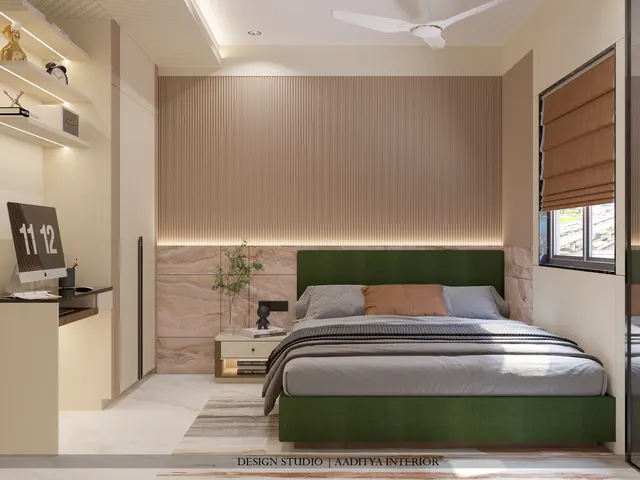
WPC and PVC panels have taken over Indian wall and ceiling finishes in a few short years. Fluted WPC accent walls behind the television, PVC panels on kitchen and bathroom ceilings, WPC louvers framing a foyer, charcoal sheets on a bedroom wall — they are quick to fix, dry to install, and far cheaper than veneer or solid wood. But because they are sold as low-maintenance, they are often given no maintenance at all, and that is where they disappoint. Dust settles in the deep grooves of a fluted panel, kitchen grease films the ceiling panels, and an outdoor louver screen fades on its sunny side, and the owner concludes the material was poor when in fact it was simply never cleaned correctly.
The second common failure is wrong cleaning. Because the panels look like plastic, people attack them with whatever is under the sink: a scouring pad, a strong solvent, a bathroom acid, or a jet of water. WPC and PVC do not thank any of these. Abrasives scratch the printed or laminated surface, solvents can soften or cloud it, acids attack the finish, and water forced behind the panels sits in the cavity and encourages warping or smell. The panels ask for gentle treatment, and reward it with years of service.
This article sets out exactly how to look after WPC and PVC panels: what the two materials are and how they differ, the safe and unsafe cleaning agents, a maintenance schedule from weekly dusting to a yearly check, the expansion gaps and fixing details that decide whether a panel stays flat, how to deal with common problems, and when a panel is better replaced than repaired. The guidance applies to wall panels, ceiling panels, louvers and fluted sheets alike.
What WPC and PVC panels are
PVC (polyvinyl chloride) panels are made entirely from plastic, usually hollow with internal ribs, printed or laminated on the face. They are light, fully waterproof, and the cheapest of the panel family, which makes them popular for bathroom and kitchen ceilings and for budget wall cladding. Their weakness is that the thin hollow walls dent and crack under a knock, and the printed surface can look flat and plasticky in strong light. They are a servant material: excellent where water and budget rule, less convincing as a feature finish in a living room.
WPC (wood plastic composite) panels mix wood flour or fibre with a plastic binder and additives, producing a denser, more solid board that can be moulded into deep fluted and louvered profiles. WPC takes a laminate or a realistic wood-grain finish well, feels more substantial than hollow PVC, and is the material behind most of the fashionable fluted accent walls. It is water-resistant rather than fully waterproof — better than wood, not as indifferent to water as pure PVC — and its wood content means strong, direct sun can fade or slightly bow an unshaded outdoor panel over time. The cleaning and care below differ slightly between the two, and the tables note where.
Safe and unsafe cleaning agents
The rule for both materials is gentle. For routine cleaning, a soft dry or barely-damp microfibre cloth removes dust and light marks. For a proper clean, a few drops of mild dish soap or a neutral household cleaner in warm water, applied with a soft cloth and then wiped dry, handles grease and grime without harming the surface. That is almost always enough. What must be avoided is a long list of things people reach for by habit: abrasive scouring pads and powders that scratch the finish; strong solvents, thinners and acetone that can cloud or soften the surface; acidic bathroom cleaners and bleach at full strength that attack the finish and colour; and steel wool, which leaves permanent scratches and rust specks.
Water itself needs judgement. PVC panels are waterproof and tolerate a damp wipe freely, but even they should not have water forced behind them, because the cavity holds it. WPC is water-resistant, not waterproof, so a damp cloth is fine but soaking, high-pressure jets and standing water are not — water sitting in a joint or behind a panel is the main cause of warping and odour. Outdoors, a gentle hose-down of a louver screen is acceptable, but a pressure washer can drive water into joints and strip the finish, and should not be used.
| Agent / method | WPC | PVC | Note |
|---|---|---|---|
| Soft dry / damp microfibre cloth | Safe | Safe | The everyday method |
| Mild dish soap in warm water | Safe | Safe | For grease and grime; wipe dry after |
| Neutral (pH-balanced) cleaner | Safe | Safe | Avoid strongly acidic or alkaline |
| Abrasive pad / scouring powder | Avoid | Avoid | Scratches the printed or laminated face |
| Solvent, thinner, acetone | Avoid | Avoid | Can cloud or soften the surface |
| Bleach / strong acid cleaner | Avoid | Caution | Attacks finish and colour |
| High-pressure water jet | Avoid | Avoid | Drives water into joints and cavities |
A maintenance schedule that keeps panels looking new
Panels fail slowly and invisibly, so a light routine beats an occasional heavy clean. Weekly, dust the panels — a soft brush or a vacuum with a brush attachment along the grooves of fluted and louvered panels, where dust gathers unseen. Monthly, wipe the panels with a barely-damp microfibre cloth and dry them; in a kitchen, add the mild-soap wipe to lift the thin grease film that settles on nearby panels and ceilings. Quarterly, check the joints, edges and trims for any lifting, and clean the tops of louvers and the deep flutes thoroughly. Yearly, inspect fixings and expansion gaps, touch up any loose trim, and on outdoor panels check the sun-facing side for fading and the joints for water ingress.
| Frequency | Task | Tool | Applies to |
|---|---|---|---|
| Weekly | Dust faces and grooves | Soft brush / vacuum brush | All panels; louvers especially |
| Monthly | Damp wipe and dry | Microfibre cloth, mild soap | All; kitchen panels need the soap wipe |
| Quarterly | Deep-clean flutes, check trims | Cloth over spatula, soft brush | Fluted and louvered panels |
| Yearly | Inspect fixings and gaps | By hand / visual | All; outdoor panels in full |
| After a spill | Wipe immediately and dry | Cloth | All — do not let liquid sit in joints |
Expansion gaps and fixing: why panels stay flat or warp
WPC and PVC expand and contract with temperature, and a panel fixed with no room to move is a panel that will bow. Good installation leaves a small expansion gap at the ends of each panel and at the perimeter — commonly a few millimetres, as the manufacturer specifies — hidden behind the skirting, the ceiling trim or the end profile. Panels are fixed to a sound, flat, dry substrate or to battens with the recommended adhesive and mechanical fixings; fixing a panel over a damp wall, or gluing it hard at both ends with no gap, is what causes the lifting and waviness blamed on the material. Maintenance includes respecting these gaps: never caulk a panel solidly end to end in a way that removes its room to move.
Fixing common problems
Most panel complaints have simple causes and simple remedies. A fluted panel that looks dull and dark is usually just dust packed into the grooves; a thorough brush-out along the flutes revives it. A greasy kitchen ceiling panel wants the mild-soap wipe followed by a dry cloth. A panel that is lifting at an edge has usually lost a fixing or was glued over a damp or uneven wall; it can be re-fixed if the substrate is sound and dry. A warped panel generally means no expansion gap or trapped moisture, and a badly warped panel is best replaced rather than forced flat. Fading on the sun-facing side of an outdoor louver is UV ageing; it cannot be cleaned out, only prevented by shading or accepted and eventually replaced.
| Problem | Likely cause | Remedy |
|---|---|---|
| Dull, dark fluted panel | Dust packed in the grooves | Brush out the flutes; damp wipe and dry |
| Greasy film on kitchen panels | Cooking grease | Mild-soap wipe, then dry cloth |
| Edge lifting | Lost fixing / glued over damp wall | Re-fix on a sound, dry substrate |
| Waviness or bowing | No expansion gap or trapped moisture | Relieve the gap; replace if badly warped |
| Uneven fading (outdoor) | UV on the sun-facing side | Shade to prevent; replace if severe |
| Musty smell behind panel | Water trapped in the cavity | Dry out; fix the water source; re-fix |
Indoor versus outdoor care
The same panel asks for different care depending on where it lives. Indoors, the enemies are dust and, in the kitchen, grease; the routine of weekly dusting and a monthly damp wipe handles both, and the panel's finish stays fresh for years because it is never attacked by sun or rain. A bathroom ceiling in PVC meets humidity but not pressure water, so a wipe and good ventilation keep it clean and mould-free. Indoor panels rarely fail from the material itself — they fail from being fixed over a damp wall, from a missing expansion gap, or from someone reaching for a solvent.
Outdoors, the picture changes. A WPC louver screen on a balcony or a facade meets direct sun, rain, dust storms and temperature swings that an interior panel never sees. The wood content in WPC means ultraviolet light slowly bleaches the sun-facing side, and driving rain can find its way into joints if the detailing is poor. Outdoor care therefore adds two tasks to the indoor routine: a gentle rinse to clear the grime and pollen that a city deposits, and a seasonal check of the joints, end caps and fixings for water ingress and movement. A pressure washer is still forbidden — it drives water into the joints and can strip the surface — so a soft brush and a low-pressure hose are the tools. Choosing UV-stabilised grades for exposed locations, and shading the fiercest afternoon sun where the design allows, slows the fading that no cleaning can reverse.
The tops of louvers and the horizontal ledges of a rafter screen deserve special mention, indoors and out, because they are the surfaces nobody sees and everybody forgets. Dust and, outdoors, leaf litter settle on these upward faces and, left there, hold moisture against the panel. A quarterly run along the tops with a brush — and, for a tall screen, a brush on an extension — keeps these hidden ledges clean and stops the staining and the musty smell that neglected louver tops develop. It is the single most overlooked task in panel maintenance and the easiest to build into a quarterly clean.
Why panels took over, and where they are going
It is worth understanding why WPC and PVC panels spread so fast, because it explains both their appeal and their limits. They arrived as a dry, quick, affordable answer to finishes that used to be slow and wet: a fluted feature wall that once meant carpentry in solid wood or a plastered-and-painted surface can now be fixed in a day from factory-made boards, at a fraction of the cost and with a predictable, repeatable finish. For a market building and renovating at speed, that combination of low cost, dry installation and a convincing wood look was irresistible, and the fluted WPC wall became the signature finish of the era.
Where the materials go next is towards better durability and honesty of finish. UV-stabilised grades are extending outdoor life; denser composites and co-extruded surfaces resist scratching and fading better than the early boards; and the printed finishes are becoming more realistic and more varied. The sensible expectation for a buyer is not that the panel is indestructible, but that a good grade, correctly installed with proper gaps on a dry substrate and given the light, regular care described here, will give many years of service and can be renewed panel by panel when fashion or damage calls for it. Treated as the practical, maintainable finish it is — rather than as a fit-and-forget miracle — the panel earns its popularity.
Costs, lifespan and when to replace
Prices below are indicative October 2026 ranges, excluding GST, for supply and fixing, and vary with profile, finish and brand. Kept dusted and wiped, and installed with proper gaps on a dry substrate, interior WPC and PVC panels hold their look for many years and outlast the fashion that chose them. The moment to replace rather than clean is when a panel is cracked, badly warped, or faded through — cosmetic damage that cleaning cannot reach. Because panels are modular, a single damaged board in a fluted wall can often be swapped without disturbing the rest, provided a few spares were kept from the original batch for colour match.
| Panel / finish | Indicative price (₹, supply + fix) | Note |
|---|---|---|
| PVC ceiling / wall panel | ₹60 – ₹180 per sq ft | Fully waterproof; budget cladding |
| WPC wall panel (plain / laminated) | ₹150 – ₹350 per sq ft | Denser; realistic finishes |
| WPC fluted panel | ₹200 – ₹450 per sq ft | Feature walls; dust in grooves |
| WPC louver / rafter | ₹250 – ₹500 per sq ft | Screens and foyers; shade outdoors |
| Spare panels for future repair (reference) | Keep from original batch | Ensures colour match later |
Rules for long panel life
- Dust weekly, especially the grooves of fluted and louvered panels where dirt hides.
- Clean with a soft cloth and mild soap in warm water; wipe dry afterwards.
- Never use abrasive pads, scouring powder, solvents, thinners, bleach or strong acids.
- Never use a high-pressure water jet or force water behind the panels.
- Respect the maker's expansion gaps at ends and perimeter; do not glue panels hard end-to-end.
- Fix panels only to a flat, dry, sound substrate or battens — never over a damp wall.
- Shade outdoor WPC panels from the fiercest direct sun to slow UV fading.
- Wipe spills immediately and never let liquid stand in a joint or cavity.
- Keep a few spare boards from the original batch for a future colour-matched repair.
Frequently asked questions
How do I clean fluted WPC panels in the grooves?
Use a soft long-bristle brush or a vacuum with a brush attachment run along the direction of the flutes to lift dust from the bottom of each groove, then wipe the faces with a barely-damp microfibre cloth and dry them. For a stubborn groove, wrap a microfibre cloth over a thin spatula to reach the base. Avoid pushing a stiff or abrasive tool into the grooves, which scratches the finish.
Can WPC and PVC panels get wet?
PVC panels are fully waterproof and tolerate damp wiping and bathroom ceilings freely; WPC is water-resistant rather than waterproof, so a damp cloth is fine but soaking, standing water and high-pressure jets are not. In both cases, water must never be forced behind the panels, because the cavity holds it and leads to warping and smell.
Why has my WPC panel warped?
Warping almost always means the panel had no room to expand — it was glued hard end-to-end with no expansion gap — or moisture became trapped behind it, often from fixing over a damp or uneven wall. Relieving the expansion gap can help a mild case, but a badly bowed panel is best replaced on a sound, dry substrate with the correct gaps left.
Do outdoor WPC panels fade?
Yes, the wood content in WPC means strong, direct sun gradually fades and can slightly bow an unshaded outdoor panel over the years. Fading cannot be cleaned out; it is slowed by shading the panels from the fiercest afternoon sun and by choosing UV-stabilised grades for exposed locations. Eventually a badly faded outdoor panel is replaced rather than restored.
How long do WPC and PVC wall panels last?
Indoors, with regular dusting and gentle cleaning and correct installation, WPC and PVC panels hold their look for many years and usually outlast the design that chose them. Outdoors, life is shorter and depends on sun and weather exposure. Because panels are modular, a single cracked or faded board can often be swapped out, so the finish is renewed in pieces rather than replaced whole.
Sources & standards
- Bureau of Indian Standards — National Building Code of India 2016, Part 5 (Building Materials) and Part 6 (Structural Design): internal wall and ceiling finishes
- Bureau of Indian Standards — standards for PVC and wood-polymer composite building products
- Manufacturer care and installation guidance for WPC and PVC wall, ceiling and louver panels (expansion gaps and cleaning described generically)
- Neufert, Architects' Data — internal finishes and maintenance
- Central Public Works Department (CPWD) specifications — finishing and maintenance practice for composite panels
- Price ranges: indicative October 2026 estimates — confirm locally before budgeting