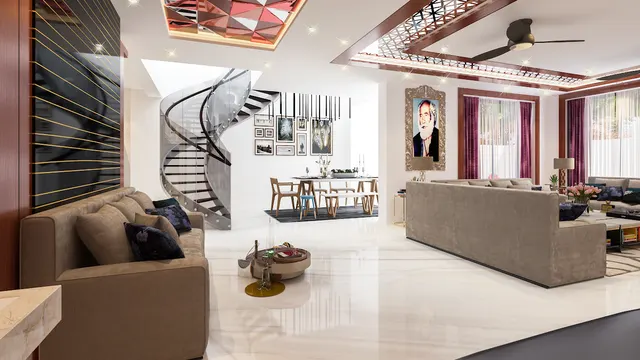
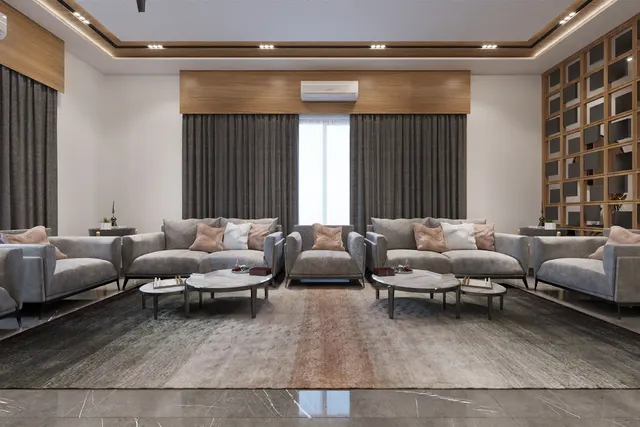
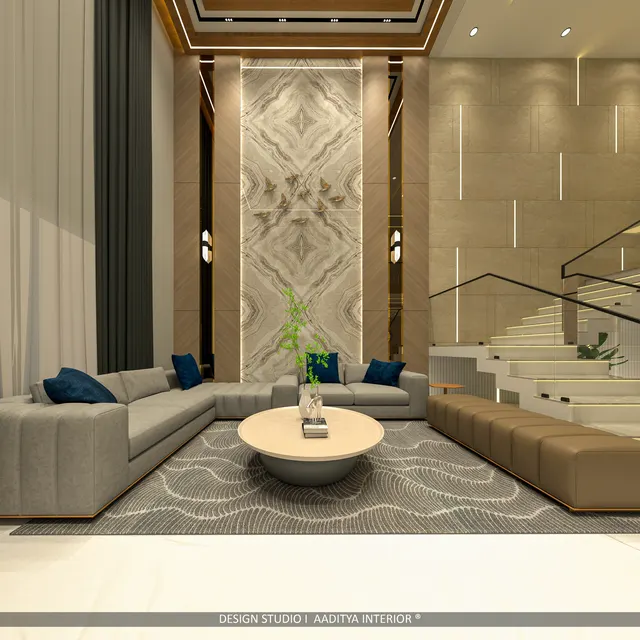
"Italian marble" is one of the most powerful phrases in Indian interiors. It signals a premium home in a builder's brochure, it is the first request in many villa briefs, and it is the material most often chosen for living-room floors, TV walls, foyers and bathrooms in high-end projects across Surat, Ahmedabad, Mumbai and Delhi. Yet many buyers walk into a stone yard in Kishangarh, Silvassa or Udaipur and are shown dozens of slabs labelled Statuario, Carrara, Botticino, Calacatta and more, at prices that vary by a factor of five, with little explanation of what separates them.
The confusion has real consequences. A slab sold as Statuario may actually be a lower-grade Carrara; a beautiful slab may be heavily resin-filled; an "Italian" stone may come from Turkey, Greece or Vietnam; and even genuine premium marble can disappoint if it is laid without book-matching, polished poorly, or used on a kitchen counter where lemon and tea etch it within weeks. Most of these mistakes come from not knowing what each type is supposed to look like and how it behaves.
This article explains the three names Indian clients ask for most — Statuario, Carrara and Botticino — with Calacatta as the important fourth, and compares their colour, veining, origin, uses, slab sizes and indicative October 2026 prices. It then covers how to inspect slabs, book-matching, laying and polishing, care, and when Indian marble or a marble-look alternative is the better choice. Prices stay consistent with the broader flooring and material articles in this series: Indian marble at roughly ₹150–600 per sq ft and imported marble at roughly ₹500–3,000+ per sq ft for material.
What marble is, and why Italian marble became the benchmark
Marble is a metamorphic rock: limestone that has been recrystallised by heat and pressure deep in the earth into a dense mass of calcite (and sometimes dolomite) crystals. Pure calcite marble is white; the grey, gold, green and black veins are traces of other minerals and impurities that were present in the original limestone or that flowed through cracks during metamorphism. Those veins are what give every slab its character, and their colour, width, density and direction are the main way different marbles are recognised and graded.
Italy's reputation rests above all on the quarries of the Apuan Alps around Carrara in Tuscany, which have been worked since Roman times. Renaissance sculptors prized Carrara's white stone for its fine grain and its slight translucency, which makes carved skin seem to glow; Michelangelo's David was carved from Carrara marble. Over the centuries Italy also built a strong industry of cutting, finishing and trading stone, so that "Italian" came to stand for both the stone and the quality of processing. Today Italian slabs reach India both directly and through processing hubs, and Indian stone markets have become major centres for imported marble.
Statuario: the bright white with bold veins
Statuario takes its name from statuary — sculpture — because its pure white, fine-grained stone was historically chosen for statues. It is quarried in the Carrara area. Its defining features are a very bright white ground and bold, well-defined grey veins, sometimes dramatic and sweeping, sometimes in sparser lines across a clean field. It has a slight translucency that makes polished slabs look luminous under good light. Because high-grade blocks are scarce, Statuario is one of the most expensive marbles in the Indian market.
Statuario is usually chosen where the stone itself is the feature: a book-matched TV or bed-back wall, a foyer floor, a statement bathroom, a dining-table top or a staircase in a villa. Grades vary enormously. The best slabs have a clean white ground with few patches, crisp veining and no resin-filled faults on the face; lower grades show greyer grounds, broken or muddy veins and more filling. Some yards also sell "Statuarietto" — a term used for slabs with Statuario-like character but greyer grounds or less pronounced veining, at lower prices. The name on the slab matters less than what the slab looks like.
Calacatta: the warm, rare cousin
Calacatta is often confused with Statuario, and both come from the same region. The usual distinction is that Calacatta has a slightly warmer, creamier white ground and thicker, more dramatic veins that can be grey, beige or gold, while Statuario is cooler and brighter with grey veins. Calacatta Gold and Calacatta Oro are names given to slabs with golden veining. High-grade Calacatta is at least as rare and expensive as Statuario. In practice, traders' labels overlap, and the choice between the two should be made by comparing actual slabs against the room's lighting, wood tones and metal finishes: Calacatta's warmth suits brass, walnut and warm 3000 K lighting, while Statuario's crisp white suits cool greys, black metal and neutral 4000 K light.
Carrara: the classic, affordable Italian white
Carrara — often sold as Bianco Carrara — is the most abundant and the most familiar Italian white. Its ground is white to light grey, and its veining is fine, soft and feathery, spread evenly across the slab rather than concentrated in bold lines. It looks calmer and more uniform than Statuario, and it is considerably more affordable, which is why it is widely used for floors, bathroom walls, vanity tops and large areas where an even look is wanted.
Carrara's evenness is also its practical strength. Because the veining is fine and distributed, slabs match each other more easily, wastage is lower, and small repairs or replacements blend in. Its weakness is that lower grades can look greyish or dull, particularly under warm light or in rooms with little daylight, so samples should always be seen in conditions similar to the final room. Arabescato, another stone from the same region, sits between Carrara and Statuario in character, with a white ground and dramatic, often branching grey veins.
Botticino: the warm beige classic
Botticino comes from a different part of Italy altogether: the area around the town of Botticino near Brescia in Lombardy. It is a compact limestone-type marble in warm beige to cream tones, with soft, wavy veins and small darker specks and spots. Botticino has been used for centuries in Italian architecture and is widely associated with the Vittoriano monument in Rome. It is more dense and less translucent than the white Carrara marbles, and its warm colour makes it a natural partner for wood, brass and traditional interiors.
In Indian homes, Botticino suits living rooms and dining areas in classic or neoclassical interiors, temple rooms, staircases, and wall cladding where a warm, quiet background is wanted rather than a dramatic feature. It hides dust and footprints better than bright white marble, which makes it practical for floors in dusty cities. Botticino Classico and Botticino Fiorito are trade names for variants — the classic with an even cream ground, the fiorito with more pronounced veining. As always, the actual slab matters more than the label.
| Feature | Statuario | Calacatta | Carrara | Botticino |
|---|---|---|---|---|
| Origin (region) | Carrara area, Tuscany | Carrara area, Tuscany | Carrara area, Tuscany | Botticino, near Brescia, Lombardy |
| Ground colour | Bright white, cool | Warm white to cream | White to light grey | Beige to cream |
| Veining | Bold, well-defined grey | Thick, dramatic grey or gold | Fine, soft, feathery grey | Soft wavy veins, small specks |
| Look in a room | Dramatic, luminous | Dramatic, warm | Calm, even | Warm, classic, quiet |
| Matching slabs | Needs careful selection and book-matching | Needs careful selection and book-matching | Easier; lower wastage | Easier; consistent tone |
| Availability of top grades | Scarce | Scarce | Abundant | Steady |
| Indicative material cost (₹/sq ft, Oct 2026) | ₹1,500–3,000+ | ₹1,500–3,000+ | ₹500–1,200 | ₹500–900 |
| Best uses | Feature walls, foyers, statement bathrooms | Feature walls, islands, luxury bathrooms | Floors, bathrooms, vanities, large areas | Living and dining floors, temples, stairs, cladding |
Slabs, thickness and treatments: what is actually being bought
Imported marble arrives in India mostly as slabs cut from large quarry blocks. Typical slab sizes run about 2500–3200 mm long and 1600–2000 mm wide, varying with the block; thickness is usually 16–20 mm, with 18 mm common. Indian traders usually sell slabs by the square foot of slab area, and a buyer purchases whole slabs, so the effective cost includes the cutting waste. A slab of 18 mm marble weighs roughly 48–50 kg per square metre, so a large slab can weigh several hundred kilograms and needs proper handling.
Many imported slabs are treated at the processing plant. Resin is applied to the face and pressed into natural pores, small cracks and veins, then cured and polished, which strengthens the slab and gives a more even polished surface. A fibreglass mesh is often glued to the back of slabs that are fragile or have natural faults, so that they survive cutting and transport. Both treatments are normal and acceptable in moderation. They become a problem when heavy resin hides structural cracks or large faults, or when resin-filled areas look plastic and dull next to the natural stone. Buyers should look at slabs at a low angle under strong light to see filled areas, and ask what treatment has been applied.
How to select slabs in a stone yard
Buying marble is not like buying tiles from a catalogue. Each slab is unique, and the slabs from one block — called a lot or bundle — are the only ones that will match each other. Good practice is to measure the areas first, convert them into a slab count with a cutting layout, and then select a complete lot with a few spare slabs from the same block. The slabs should be numbered in the order they were cut, so that they can be laid or book-matched in sequence.
| What to check | How to check | Red flag |
|---|---|---|
| Origin and name | Ask the trader for the country and quarry region in writing | Vague answers; 'Italian' used for any imported stone |
| Lot consistency | View all slabs of the lot side by side, in sequence | Slabs from different blocks mixed in one lot |
| Ground colour | Compare in daylight and under the room's planned light | Patchy grey or yellow zones on a white stone |
| Cracks and faults | Look at the face at a low angle; check edges and the back | Long cracks through the slab, heavy filling over faults |
| Resin treatment | Look for areas with a plastic or different sheen | Large resin patches on visible areas |
| Thickness | Measure at several points along the edges | Variation of more than a few mm; under 16 mm |
| Polish quality | Check reflection of a straight line across the slab | Wavy reflection, dull patches, scratches |
| Quantity | Count slabs against the cutting layout plus spares | No spare slabs from the same block |
Book-matching and layout
The most beautiful use of Italian marble is the book-matched wall or floor. Two slabs cut consecutively from the block are opened like the pages of a book, so that one is the mirror image of the other and the veins meet along the joint in a symmetrical pattern. Four slabs can be matched in a quad pattern for a large wall or a floor medallion. Slip-matching, where consecutive slabs are laid side by side without mirroring, gives a repeating flow of veins. Book-matching costs more, because it requires sequential slabs, careful cutting and more wastage, but on a TV wall, a bed-back wall or a foyer it transforms the result.
Laying and polishing marble floors
Marble floors in India are usually laid on a semi-dry cement-sand mortar bed of about 25–50 mm over the structural slab, with joints as fine as about 1 mm, or on a levelled screed with a polymer-modified tile adhesive for large-format slabs. Light-coloured marbles such as Statuario and Carrara should be laid with white cement or a white adhesive, because grey cement can show through or stain translucent stone. After laying and curing, the floor is ground flat to remove lippage between pieces and then polished in stages with progressively finer abrasives to the required gloss, often finished with diamond polishing and a penetrating sealer.
| Item | Typical specification | Indicative cost (October 2026) | Notes |
|---|---|---|---|
| Statuario / Calacatta (material) | 16–20 mm slabs, selected lot | ₹1,500–3,000+ per sq ft | Top book-matched lots can go well beyond |
| Arabescato (material) | 16–20 mm slabs | ₹800–2,000 per sq ft | Dramatic grey veining; lot selection critical |
| Carrara (material) | 16–20 mm slabs | ₹500–1,200 per sq ft | Even look; lower wastage |
| Botticino (material) | 16–20 mm slabs | ₹500–900 per sq ft | Warm, consistent tone |
| Indian white marble — Makrana, Ambaji, Banswara, Morwad (material) | 15–20 mm slabs and tiles | ₹150–600 per sq ft | Local, durable; different character |
| Laying labour (floor) | Mortar bed or adhesive, fine joints | ₹45–90 per sq ft | Higher for book-matching and patterns |
| Grinding and polishing after laying | Multi-stage, diamond finish | ₹25–50 per sq ft | Re-polish every few years in busy areas |
| Marble-look vitrified tiles (alternative) | 600 × 1200 mm and larger | ₹60–120+ material plus ₹25–40 laying | Consistent, low maintenance; not natural stone |
For a sense of the total, an 18 × 14 ft living room (about 252 sq ft) in Carrara needs about 300 sq ft of slab allowing for wastage. At ₹500–1,200 per sq ft that is roughly ₹1.5–3.6 lakh in material, plus roughly ₹11,000–23,000 for laying and ₹6,000–13,000 for polishing. The same room in Statuario at ₹1,500–3,000 per sq ft would need roughly ₹4.5–9 lakh in material alone, and more if a book-matched layout raises wastage. These are indicative October 2026 figures; quotations depend on the actual lot, transport, and installer.
Care: why marble etches and stains
Marble is made of calcite, which is soft (about 3 on the Mohs scale) and reacts with acids. Lemon juice, vinegar, tomato, tamarind, some cleaning products and even cola dissolve the polished surface on contact and leave dull marks called etches. Separately, marble is slightly porous, so oil, turmeric, tea, coffee and hair dye can soak in and stain, especially on light Italian whites. A good penetrating sealer slows staining but does not prevent etching. That is why Aaditya Interior generally advises against Statuario or Carrara as a primary kitchen countertop in Indian cooking, and suggests quartz or granite for the working counter, with marble used for an island top, a backsplash panel away from the hob, or a dining table where spills are wiped quickly.
| Use | Suitability of Italian white marble | Better practice |
|---|---|---|
| Living and dining floors | Excellent | Seal; use felt pads under furniture; re-polish every few years |
| Feature walls (TV, bed-back, foyer) | Excellent | Book-match; mechanical fixing plus adhesive on tall walls |
| Bathroom walls and vanity tops | Good with care | Seal; wipe soap and toiletries; avoid acidic cleaners |
| Shower floors | Fair | Honed or leathered finish for grip; good drainage |
| Kitchen working counter | Poor for Indian cooking | Quartz or granite for the working area; marble for islands or tables |
| Outdoor paving | Poor | Use granite, Kota or sandstone; polished marble is slippery when wet |
Daily care is simple: sweep or vacuum grit, which scratches polish; mop with clean water and a pH-neutral stone cleaner; wipe spills promptly; and never use acid-based bathroom or floor cleaners, bleach-based products in concentrated form, or abrasive powders. Rugs at entrances catch grit. In busy homes, floors are typically re-polished every few years, and a professional can remove most etches and light scratches during that cycle.
Italian versus Indian marble, and other alternatives
India has excellent marbles of its own. Makrana in Rajasthan, the stone of the Taj Mahal, is a dense, durable white marble; Ambaji in Gujarat, Banswara and Morwad in Rajasthan supply white and off-white marbles used widely in homes and temples. Indian marbles are usually harder-wearing and much cheaper than Italian whites, though they tend to have a different character — often a more crystalline, sometimes more uniform or more patchy look, and less of the luminous translucency of top Italian slabs. For floors in large homes, temples and commercial spaces, Indian marble often gives the best value; Italian marble is best kept for the areas where its veining will be seen and appreciated.
Imported marble from other countries is also sold in India: white marbles from Greece, Turkey, Vietnam and elsewhere, some of which look similar to Carrara or Statuario at lower prices. There is nothing wrong with these stones, but they should be sold under their real names. Marble-look porcelain and vitrified slabs are a different category again: consistent, stain-resistant and lower in maintenance, but printed rather than natural. They are a sensible choice for kitchens, rental flats and heavy-traffic areas. The best projects often combine materials — Italian marble on a book-matched feature wall, Indian marble or large-format porcelain on the main floor.
Where marble design is heading
Several shifts are visible. Honed, leathered and brushed finishes are becoming more common alongside high polish, because they show etches less and give better grip. Thinner, larger and resin-backed slabs make big book-matched walls lighter and easier to fix. Digital templating and CNC and waterjet cutting allow precise inlays, fluted marble panels and seamless wrapped edges. And the market is becoming more transparent, with more buyers asking for origin, lot photographs and treatment details before purchase. For homeowners, the lasting principle is unchanged: choose the stone by looking at the real slabs in good light, plan the layout before cutting, and use each marble where its strengths matter.
Rules for choosing and using Italian marble
- Choose by the actual slabs, not by the name, a sample tile or a photograph.
- Ask for the country and region of origin and the treatment applied, in writing.
- Buy a complete lot from one block, numbered in cutting sequence, with a few spare slabs.
- Prepare a cutting layout before buying, especially for book-matched walls and patterned floors.
- Use white cement or white adhesive under Statuario, Calacatta and Carrara.
- Keep Italian white marble off the main Indian kitchen working counter; use quartz or granite there.
- Seal after polishing, clean with pH-neutral products, and plan re-polishing every few years.
- Spend on Italian marble where it is seen — feature walls, foyers, statement bathrooms — and consider Indian marble or porcelain for large floors.
Frequently asked questions
What is the difference between Statuario and Carrara marble?
Both come from the Carrara region of Tuscany. Statuario has a brighter white ground with bold, well-defined grey veins and is rarer and more expensive. Carrara has a white to light-grey ground with fine, soft, feathery veining spread evenly across the slab, and is more abundant and affordable.
Which Italian marble is best for flooring?
For large floors, Carrara and Botticino are often the most practical: their even veining and tone make slabs easier to match, wastage is lower, and they hide daily marks better than bright Statuario. Statuario is usually reserved for foyers and feature areas where its veining can be appreciated.
Is Italian marble better than Indian marble?
Not better, but different. Top Italian whites have a distinctive luminous look and dramatic veining; Indian marbles such as Makrana and Ambaji are durable, widely available and far cheaper. Many good projects use Italian marble for feature areas and Indian marble for large floors.
Can Italian marble be used for kitchen countertops?
It can, but it etches with acids such as lemon, tomato and tamarind, and stains with oil and turmeric. For an Indian working kitchen, quartz or granite is more practical for the main counter, with marble for an island, a table or a backsplash away from the hob.
How can I tell real Italian marble from look-alikes?
Ask for the origin and supplier documents, look at the full lot rather than a sample, and compare the ground colour, translucency and veining with known slabs. Natural marble varies across a slab and between slabs; printed porcelain repeats its pattern. Imported marbles from other countries can look similar and should be sold under their own names.
Sources & standards
- Bureau of Indian Standards — IS 1130 (marble — blocks, slabs and tiles)
- Bureau of Indian Standards — National Building Code of India 2016, Part 5 (Building Materials) and Part 6 (Structural Design) for loads
- Neufert, Architects' Data — natural stone floors and wall cladding
- Time-Saver Standards for Interior Design and Space Planning — stone finishes
- Manufacturer and trade standard ranges for imported marble slab sizes, resin treatment and mesh backing, described generically
- Price ranges: indicative October 2026 estimates — confirm locally before budgeting