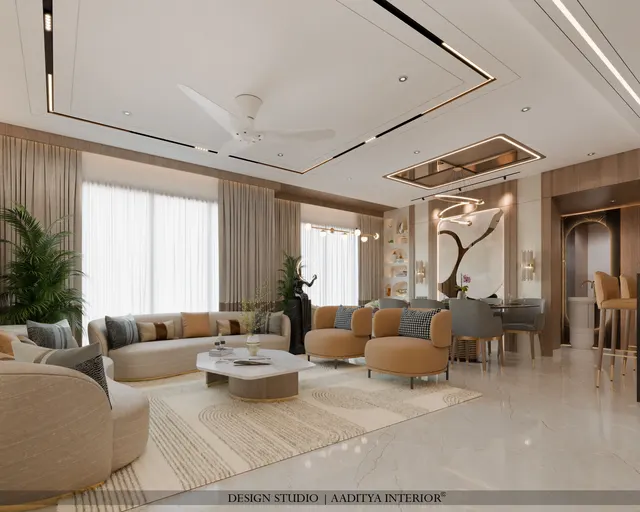
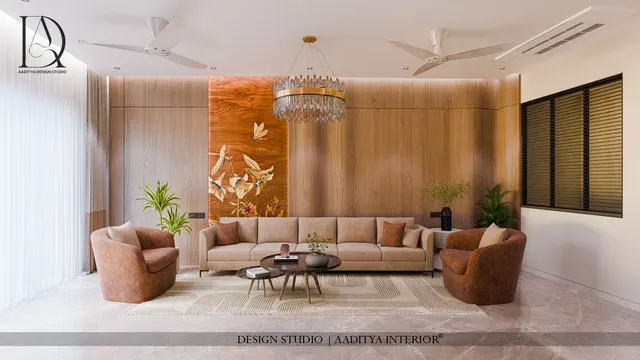
Stand in a laminate showroom and the choice looks purely aesthetic: the glossy panel glows, the matte panel sits quiet. Live with them for a year and the choice turns out to be practical. Glossy shutters in a busy Indian kitchen collect every fingerprint, every wipe mark, every tiny scratch — and then broadcast all of it under the tube light. Matte shutters hide the fingerprints but can look dull and chalky in a poorly lit room, and cheap matte laminates stain. The finish is not decoration; it is the surface the family will touch, clean and look at every single day.
The physics is simple. A glossy surface reflects light in one sharp direction (specular reflection), which is why it looks deep and mirror-like — and why every smudge breaks that mirror visibly. A matte surface scatters light in all directions (diffuse reflection), which hides smudges and scratches but also flattens depth and colour. Between them sits a newer category: super-matte or anti-fingerprint laminates and acrylics, engineered with a micro-texture that scatters light like matte but resists the finger oils that mark ordinary matte.
This article compares fingerprints, light behaviour, scratch visibility and cleaning effort across the real finish options — laminate, membrane, acrylic, PU paint, veneer and glass — and ends with a room-by-room verdict on where each finish genuinely works.
A note on how to read this article: finishes must be judged in the room, not the showroom. Showroom downlights are bright, cool and directional — they flatter gloss and punish matte. The home's warm, dimmer, multi-directional light does the opposite. Every claim below about reflection, fingerprints and perceived spaciousness assumes residential lighting; the honest move is to carry samples home and look at them under the actual bulbs, at the actual times of day, before ordering.
The full comparison
| Parameter | Matte / super-matte | Glossy |
|---|---|---|
| How it reflects light | Scatters light (diffuse) — soft, even, no glare | Mirrors light (specular) — deep, bright, can glare under direct light |
| Fingerprints | Ordinary matte shows oils as dark patches; super-matte anti-fingerprint grades resist them well | Shows every fingerprint clearly — the classic glossy complaint |
| Scratch visibility | Hides fine scratches well; deep scratches show as light lines on dark colours | Shows every fine scratch as a bright line in reflected light |
| Cleaning effort | Wipe with damp cloth; textured mattes can trap grime in the grain | Wipes clean easily, but needs wiping far more often to look clean |
| Stain resistance | Cheap matte laminates can absorb turmeric and oil stains; branded grades resist better | Good — the sealed surface resists most household stains |
| Best material partners | Super-matte laminate, matte acrylic, matte PU, matte membrane | High-gloss acrylic, high-gloss PU, lacquered glass, polished veneer |
| Effect on room feel | Calm, premium, contemporary; can look flat in dark rooms | Bright, spacious, glamorous; can look busy in small rooms |
| Durability of the look | Ages gracefully — wear is gradual and even | Ages visibly — micro-scratches accumulate into a hazy look over years |
| Typical service tier | Long-lasting where the grade resists staining | Long-lasting; the gloss itself does not fade, but the scratch record shows |
| Relative cost | Super-matte grades cost more than ordinary matte laminate | High-gloss acrylic and PU are among the priciest shutter finishes |
Plate 1 — what light does on each surface
The whole matte-versus-glossy debate is one diagram: parallel light rays hitting a smooth surface bounce off together and carry every imperfection to the eye; the same rays hitting a micro-textured surface scatter and the imperfections disappear into the noise. Super-matte anti-fingerprint finishes engineer that texture at a microscopic scale — matte to the eye, resistant to finger oils to the touch.
Scratch and stain behaviour, honestly
Two different enemies attack the two finishes. Glossy surfaces lose to abrasion: every wipe with a dry cloth, every sliding steel dabba, leaves micro-scratches that are invisible individually but accumulate into a hazy, tired look over a few years — brightest and most obvious on dark glossy colours. Matte surfaces lose to absorption: cheap matte laminates drink in turmeric, oil and ink, and once a stain sets into the texture it does not wipe out. The defence in both cases is grade, not finish: branded super-matte laminates resist staining far better than unbranded matte, and acrylic gloss resists scratching better than cheap glossy laminate.
Cleaning discipline matters more than the brochure admits. Glossy shutters wipe clean easily — the sealed surface releases grime — but they demand wiping constantly, because everything shows. Matte shutters forgive infrequent wiping, but textured mattes need a soft brush or a microfibre cloth worked along the grain; scrubbing across the texture grinds dirt in. Households that wipe daily suit gloss; households that wipe weekly suit matte.
Shutter dimensions and finish planning
Finish choice meets carpentry at the shutter: standard wall-unit shutters run about 600 mm wide by 720 mm high (a common module; wall units are 300–350 mm deep and 400–700 mm high per metric data standards), tall-unit shutters run full height, and every exposed edge needs 2 mm edge banding in a matching finish — a glossy shutter with a matte edge strip looks like a mistake from across the room. The plate dimensions a typical wall-unit shutter with its edge detail.
Detail — the fingerprint test you can do in the showroom
Brochures claim "anti-fingerprint" freely; the showroom test takes ten seconds. Press a thumb firmly on the sample, wait five seconds, then look at it under the showroom's brightest downlight from an angle. On ordinary matte the print sits as a dark smudge; on genuine super-matte it is faint or invisible; on gloss it is a perfect mirror of the crime. Then wipe once with a dry microfibre cloth: super-matte should release the print, gloss will too but the next touch re-marks it. Do this test on the exact colour being ordered — dark colours punish every finish, light colours forgive all of them.
Lighting decides what the finish does
Gloss needs light to justify itself. In a bright room with a window, a glossy shutter throws back daylight and the room feels larger — the classic small-kitchen trick. In a dim passage or a north-facing bedroom, the same gloss has little to reflect; it reads as flat grey-green under warm LEDs and shows every fingerprint with nothing gained. Matte behaves inversely: it looks intentional and calm in dim rooms, and in very bright rooms it can look chalky where direct sun hits it. The finish and the room's light are one decision, not two.
Colour temperature matters too. Warm light (2700–3000 K, the common Indian residential choice) deepens warm mattes and makes cool greys go muddy; cool white light sharpens gloss edges and exposes orange-peel texture in PU. Dark colours punish every finish and forgive none — a dark glossy shutter is a fingerprint billboard, a dark matte shutter shows every dust wipe as a sheen mark. Order samples in the exact colour, take them home, and look morning, noon and night before committing.
- Carry samples home and check them under the actual bulbs, morning and evening — showroom light flatters gloss and lies about matte.
- Dark colours punish every finish; test the exact colour being ordered, not a lighter sample.
Plan the finish by touch zone, not by room. The shutters around handles, the drawer fronts at hip height, the wardrobe doors grabbed daily — these are high-touch zones where fingerprints and wear concentrate, and where super-matte or gloss-with-discipline earns its place. High, decorative, rarely-touched shutters can carry any finish, including the dramatic dark matte that would be a maintenance burden at handle height. The honest specification mixes finishes within one kitchen: forgiving where hands land, expressive where eyes land.
Ceilings deserve a mention: gloss on a ceiling doubles every light source and every imperfection in the POP finish — most designers specify matte or eggshell overhead for exactly this reason. The one exception is a low, dark passage where a satin ceiling can borrow light, but even there the surface preparation must be flawless.
The cost reality
Finish pricing in India is quoted per square foot of shutter, and the finish can cost more than the board underneath — PU paint on cheap MDF can exceed the price of laminate on good plywood. The indicative October 2026 listing bands below are material rates per sq ft; labour, edge banding and hardware sit on top.
| Shutter finish | Indicative ₹ / sq ft | Matte or glossy? |
|---|---|---|
| Laminate (material, mid range) | ₹350–650 | Both — the widest range of matte and gloss textures |
| Decorative laminate 1.0 mm sheet (branded) | ₹42–56 (₹1,350–1,800 per sheet) | Both; super-matte grades at the higher end |
| Membrane / foil shutter | ₹500–850 | Mostly matte and textured; soft-touch options |
| Natural veneer shutter | ₹600–1,100 | Usually matte/satin polish; high-gloss polish possible |
| Glass / mirror shutter | ₹700–1,400 | Glossy by nature — lacquered or mirrored |
| Acrylic shutter | ₹900–1,500 | High-gloss mostly; matte acrylic exists at premium |
| PU paint shutter | ₹1,000–1,800 | Both — matte PU and mirror-gloss PU from the same paint |
Where each finish works — room by room
- Kitchens (high-touch): super-matte — fingerprints are the daily enemy; gloss here is a cleaning contract.
- Wardrobes in bedrooms: matte or super-matte — large flat areas; gloss shows every touch and every scratch.
- Living-room feature walls and TV units: either — low-touch zones where gloss can add drama safely.
- Small, dark rooms: glossy or satin — bounce light around; matte can look flat where light is scarce.
- Dining and crockery units: glossy accents welcome — display zones, low handling.
- Kids' rooms: matte — hides the evidence of daily life far better.
- Bathroom vanities: matte or textured — water spots show less; avoid high-gloss dark colours.
Sources & standards
- Shutter finish rates — PRICE-REFERENCE.md, indicative Oct 2026 listings
- Wall-unit dimensions (300–350 deep, 400–700 high) — metric data standard
- Reflection behaviour — standard optics, commonly cited
- Super-matte performance — manufacturer literature; verify claims with showroom testing