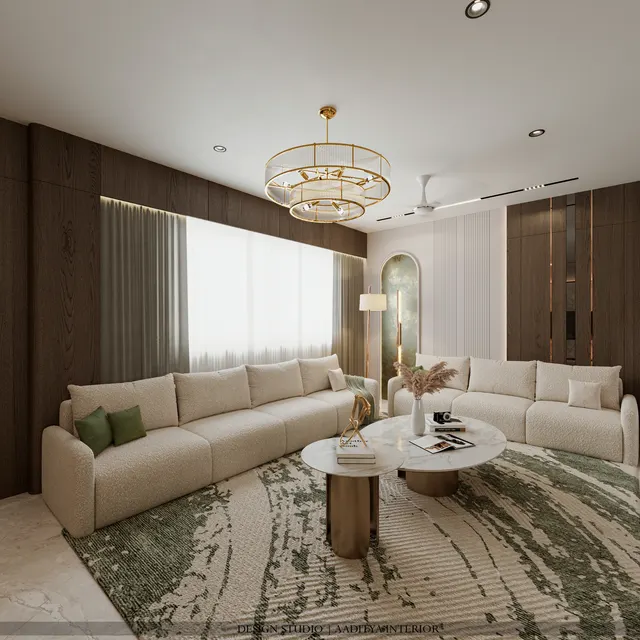
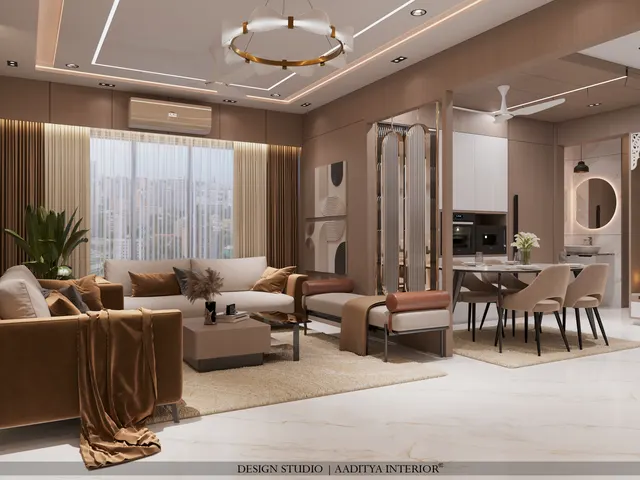
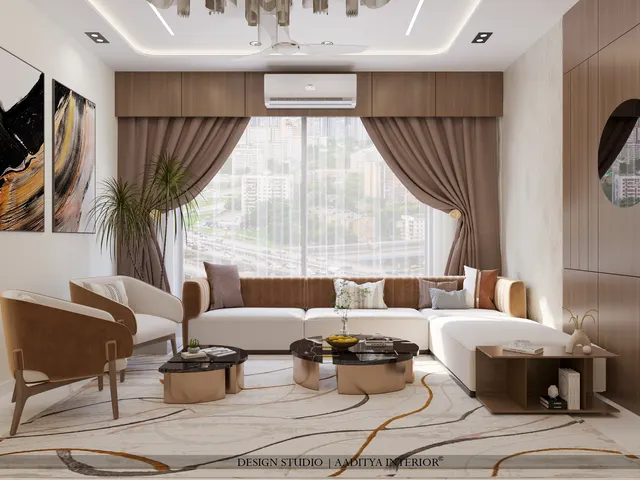
Ordinary emulsion gives a wall a single, even colour that looks the same from every angle and under every light. Metallic and pearl finish paints do something quite different: they carry tiny reflective particles — metal or mica flakes — suspended in the paint, so the surface catches and scatters light. Walk past a metallic wall and it glimmers and shifts; a pearl wall glows with a soft, satiny lustre that seems to change with the time of day. This is why these finishes have become a favourite for accent walls behind a bed, a sofa or a television, where a single wall is meant to carry the drama of a room while the others stay quiet.
But the same quality that makes these paints beautiful makes them unforgiving. A reflective surface shows every flaw in the wall beneath it — a roller mark, a trowel line, a patch of uneven putty, a lap where one day's work met the next — because light grazing across the surface reveals what a matte finish would hide. A metallic or pearl wall is therefore only as good as the preparation under it and the hand that applies it. Chosen for the wrong wall, applied over poor plaster, or laid by someone unused to reflective paints, the result looks patchy and cheap rather than rich; done properly, it is one of the most striking things a tin of paint can do.
This article explains how metallic and pearl paints work, how the coats are built up from the wall outward, the techniques used to lay them, and how sheen, durability and cost compare with ordinary and textured finishes. It keeps the guidance practical and Indian — the humidity and dust of a city like Surat, the walls these paints suit, and the indicative October 2026 costs — so a reader can decide whether a shimmer wall is right for their room and what it will take to get it looking the way the showroom promised.
How metallic and pearl paints work
Both finishes work by adding reflective particles to a paint base, but the particles differ, and so does the effect. Metallic paints carry fine flakes of aluminium or similar metal; these act as tiny mirrors that reflect light directly, giving a bright, directional sparkle and the look of brushed or liquid metal — gold, bronze, copper, silver or pewter. Pearl, or pearlescent, paints instead use mica flakes coated with thin mineral layers; these do not mirror light so much as refract and scatter it, producing a soft, multi-tonal lustre that shifts gently in hue, like the inside of a shell. Metallic reads as shine and shimmer; pearl reads as glow and depth.
Because the particles are reflective, the direction they lie in matters enormously. As the paint is applied, the flakes orient themselves with the stroke, so the way the roller or brush is worked across the wall becomes part of the finish — a random, cross-hatched application scatters the flakes and gives an even shimmer, while a one-direction stroke produces visible banding. This is the root of every rule that follows: the base colour, the application pattern and the preparation all exist to make those flakes sit evenly and catch light the same way across the whole wall. A metallic or pearl finish is really a managed field of tiny reflectors, and management is the whole skill.
The coat build-up, from wall to shimmer
A metallic or pearl wall is a small system of coats, each with a job. It starts with a sound substrate — plaster that is cured, dry and crack-free — because moisture or movement behind the paint will eventually show through. Over that go two coats of wall putty, sanded smooth, to give the dead-flat surface a reflective finish demands; a textured or wavy wall will glint unevenly no matter how good the top coat. A primer seals the putty and gives the base coat something to grip. The base coat is a solid emulsion tinted close to the final colour, so that if the metallic layer thins anywhere, the eye sees a matching colour rather than a pale patch.
On top of the base goes the metallic or pearl coat itself, usually in two thin passes rather than one thick one, because the flakes lie flatter and more evenly in thin coats. Many systems finish with a clear protective sealer, which deepens the lustre slightly and, more importantly, makes the wall wipeable and more resistant to scuffing. The whole build is only a fraction of a millimetre thick, yet the order and quality of the coats decide everything: skip the second putty coat and the wall ripples under light; rush the base coat and the shimmer looks blotchy; miss the sealer and the finish marks the first time someone brushes past it in a narrow room.
| Coat | Job it does | Skipped or rushed |
|---|---|---|
| Substrate (plaster) | Sound, cured, crack-free base | Moisture and cracks show through later |
| Wall putty (two coats) | Dead-flat surface, sanded smooth | Wall ripples and glints unevenly |
| Primer | Seals the putty, gives grip | Base coat sits poorly and patches |
| Tinted base coat | Colour match under the shimmer | Thin spots read as pale patches |
| Metallic / pearl coat | The reflective finish, two thin passes | Blotchy, banded shimmer |
| Protective sealer | Wipeable, scuff-resistant surface | Marks at the first brush-past |
Application: four ways to lay the finish
How the reflective coat is applied is as important as the paint itself, and there are four common methods, each giving a distinct look. A roller lays the fastest, most even field and suits large walls, but must be worked in a random, overlapping pattern so the flakes do not band; a good painter keeps a wet edge and never lets one area dry before blending into the next. A brush, used in deliberate cross-hatched strokes, gives a more hand-worked, directional sheen that some designers want for a crafted look. A trowel or spatula, used with thicker metallic plasters, produces bold, cloud-like movement and the most dramatic, artisanal result. Spray gives the smoothest, most uniform mirror-like coat but needs skill, masking and equipment, and is usually a workshop or specialist job.
Whatever the tool, three disciplines separate a good job from a poor one. The wall is done in one continuous session so there is no visible lap between a dry area and a fresh one. The application pattern is kept consistent across the whole wall, because the flakes record the direction of the stroke. And the lighting the wall will finally live under is considered during application, since a finish that looks even under flat workshop light can reveal banding under a grazing wall-washer. Aaditya Interior treats a metallic or pearl wall as a specialist finish rather than ordinary painting, and samples it on a board under the room's real lighting before committing to the wall.
| Method | Tool | Look it gives | Best for |
|---|---|---|---|
| Roller | Short-nap roller, random pattern | Even, consistent field | Large walls, subtle shimmer |
| Cross-brush | Brush, cross-hatched strokes | Hand-worked directional sheen | Crafted, textured accent |
| Trowel | Spatula with metallic plaster | Bold cloud-like movement | Dramatic statement walls |
| Spray | Spray gun, masked wall | Smoothest, mirror-like coat | Specialist or workshop jobs |
Which walls suit a shimmer finish
A metallic or pearl finish is an accent, not a whole-room treatment, and choosing the right single wall is half the design. The best candidate is a wall the eye naturally lands on — behind the headboard in a bedroom, behind the sofa or television in a living room, or a feature wall in an entrance foyer — and one that is flat, unbroken and well lit from the side so the shimmer has something to catch. A wall with many switches, frames, niches or a door interrupts the field and breaks the effect. Covering all four walls of a room in metallic overwhelms the space and loses the contrast that makes the finish special; the shimmer reads as luxury only because the rest of the room is calm around it.
Some walls should be left alone. A wall in a damp or poorly ventilated spot — behind a kitchen platform, in a bathroom, on an external face prone to seepage — is a poor place for any premium paint, because moisture lifts and dulls the finish. A wall in a narrow passage where people constantly brush past will scuff faster than the sealer can protect. And a wall lit only flatly, head-on, gives the flakes no grazing light to play with, so the expensive shimmer barely shows. Matching the finish to a flat, dry, well-lit feature wall is the single decision that most determines whether the money spent looks like money well spent.
Sheen, light and how the wall changes
The defining feature of these paints is that the wall is never quite the same twice. Because the finish reflects rather than simply absorbs light, its appearance depends on where the light comes from and where the viewer stands. Light raking across the surface from the side lights up the flakes and brings the shimmer to life; light hitting it flat, head-on, flattens the effect and the wall looks closer to an ordinary satin colour. Through the day a metallic wall near a window shifts from a bright morning sparkle to a deeper evening glow, and under warm artificial light it reads warmer and richer. This liveliness is the whole point — but it also means the finish must be judged in the room's real light, not a showroom's.
Pearl and metallic sit at different points on the sheen scale and suit different moods. Pearl's softer, satiny lustre is subtle and forgiving, flattering in a bedroom and less demanding of a perfect surface; metallic's brighter, more directional shine is bolder and more glamorous, better for a statement living or foyer wall but more revealing of any flaw beneath. Neither is a true mirror, and buyers expecting a literal gold-mirror wall are usually happier with the real effect — a shifting, light-catching surface with depth. The diagram below shows why the same wall can look so different depending simply on where the light falls.
| Property | Metallic paint | Pearl paint | Plain premium emulsion |
|---|---|---|---|
| Reflective particle | Metal (aluminium) flakes | Mica flakes | None |
| Effect | Bright, directional sparkle | Soft, shifting lustre | Even, matte-to-satin colour |
| Flaw tolerance | Low — shows everything | Moderate | High |
| Best use | Statement living / foyer wall | Bedroom accent wall | Whole rooms |
| Side light needed | Yes, to show best | Helpful | No |
Durability, cleaning and cost
A sealed metallic or pearl wall is reasonably durable for an interior accent, but it is not a hardwearing surface and should not be treated like one. The sealer makes it wipeable with a soft, slightly damp cloth, and light dusting keeps the shimmer clear in a city like Surat where fine dust settles on every surface. What it does not tolerate well is abrasion, scuffing and knocks — which is why it belongs on a feature wall out of the main traffic rather than in a passage. Touch-up is the honest weak point: because the finish depends on an even field of flakes applied in one session, a patched repair rarely blends perfectly, and a badly damaged wall is usually best recoated in full.
Cost sits well above ordinary paint and varies with the product and the method. As an indicative October 2026 guide, a pearl or light metallic emulsion finish runs roughly ₹60–120 per sq ft all-in, material plus application, while bolder metallic and troweled metallic-plaster finishes run ₹120–220+ per sq ft, and specialist sprayed or imported systems climb higher still. For comparison, premium plain emulsion is about ₹20–30 per sq ft and texture or designer paint ₹40–150+. The premium buys the shimmer and the specialist labour, not a larger area, so these finishes are best spent on one carefully chosen wall rather than spread thin. All figures should be confirmed with a local applicator before budgeting, since reflective finishes are priced on skill as much as material.
| Finish | Indicative cost (₹/sq ft, all-in) | Notes |
|---|---|---|
| Plain premium emulsion (reference) | ₹20 – ₹30 | Whole-room colour; covered elsewhere |
| Texture / designer paint (reference) | ₹40 – ₹150+ | Textured accent; for comparison |
| Pearl / light metallic emulsion | ₹60 – ₹120 | Roller or brush; subtle lustre |
| Bold metallic / metallic plaster | ₹120 – ₹220+ | Trowel or multi-coat; dramatic shimmer |
| Specialist sprayed / imported system | ₹220+ (verify locally) | Workshop skill; priced on labour |
Where decorative paint is heading
Decorative wall finishes are moving steadily toward richer, more tactile and more individual surfaces, and metallic and pearl paints sit at the centre of that shift. Manufacturers now offer wide ranges of ready metallic and pearlescent emulsions in Indian markets, along with lime-based and mineral metallic plasters that bring depth and a hand-crafted quality once reserved for specialist studios. Water-based and lower-odour formulations are replacing older solvent-heavy products, which matters in closed, air-conditioned Indian homes. The direction of travel is clear: fewer flat, uniform walls and more walls with light, movement and texture, used sparingly as accents.
For a homeowner the lesson is to treat these finishes as what they are — a specialist accent that rewards preparation, the right wall and a skilled hand, and punishes shortcuts. A single pearl wall behind a bed or a metallic wall behind a sofa can lift a whole room at a cost that, concentrated on one surface, stays reasonable. Spread carelessly, applied over poor plaster or chosen for a badly lit wall, the same paint disappoints. The shimmer is real and lasting when the fundamentals are right, which is the quiet theme running through every good finish: the magic is mostly in the preparation.
Rules for a metallic or pearl accent wall
- Use the finish on one accent wall the eye lands on, never on all four walls of a room.
- Choose a flat, unbroken, dry wall lit from the side, so the shimmer has grazing light to catch.
- Prepare obsessively — two coats of putty sanded flat, then primer; a reflective finish shows every flaw.
- Tint the base coat close to the top colour, so any thin spot reads as colour, not bare wall.
- Keep the application pattern consistent and finish the wall in one continuous session to avoid lap lines.
- Apply the reflective coat in two thin passes rather than one thick one, so the flakes lie evenly.
- Seal the finish for a wipeable, scuff-resistant surface, and keep it out of high-traffic passages.
- Sample on a board under the room's real lighting before committing to the wall.
Frequently asked questions
What is the difference between metallic and pearl paint?
Metallic paint carries metal flakes that mirror light for a bright, directional sparkle and a liquid-metal look. Pearl paint uses mica flakes that refract and scatter light for a softer, shifting lustre like the inside of a shell. Metallic is bolder and more revealing of flaws; pearl is subtler and more forgiving. Both are reflective and change with the light and the viewing angle.
Can metallic paint be used on all the walls of a room?
It is better not to. These finishes work as accents because the shimmer contrasts with calm surfaces around it; covering every wall overwhelms the room and loses the effect, as well as multiplying the cost. The standard approach is one feature wall in metallic or pearl, with the remaining walls in a coordinating plain emulsion so the accent wall stands out.
Why does my metallic wall look patchy?
Patchiness almost always comes from preparation or application, not the paint. An uneven or poorly sanded wall shows through a reflective finish; an inconsistent stroke pattern bands the flakes; and letting one area dry before blending the next leaves lap lines. The fixes are two sanded putty coats, a tinted base coat, a consistent random application pattern, and finishing the wall in a single continuous session.
Is metallic paint more expensive than normal paint?
Yes, considerably. As an indicative October 2026 guide, pearl and light metallic finishes run about ₹60–120 per sq ft all-in and bold or troweled metallic finishes ₹120–220+, against roughly ₹20–30 for premium plain emulsion. The premium pays for the reflective material and, mostly, the specialist labour. Because it is spent on one accent wall rather than a whole room, the overall cost stays manageable. Confirm rates locally.
How do you clean and maintain a metallic wall?
Dust it lightly and regularly, and wipe a sealed finish with a soft, slightly damp cloth when needed; avoid harsh scrubbing and abrasive cleaners, which dull the flakes. Keep the wall out of high-traffic passages where it will be scuffed. Because a patched repair rarely blends into a reflective field, protect the wall from knocks; serious damage usually needs the wall recoated in full rather than touched up.
Sources & standards
- Bureau of Indian Standards — IS 15489 (interior emulsion / plastic emulsion paints) and related decorative-coating standards
- National Building Code of India 2016, Part 6 (Structural) and general finishing practice for plastered surfaces
- Manufacturer technical data for metallic and pearlescent decorative emulsions and metallic plasters, described generically
- Neufert, Architects' Data — interior finishes and surface preparation
- Time-Saver Standards for Interior Design and Space Planning — wall finishes
- Price ranges: indicative October 2026 estimates — confirm locally before budgeting