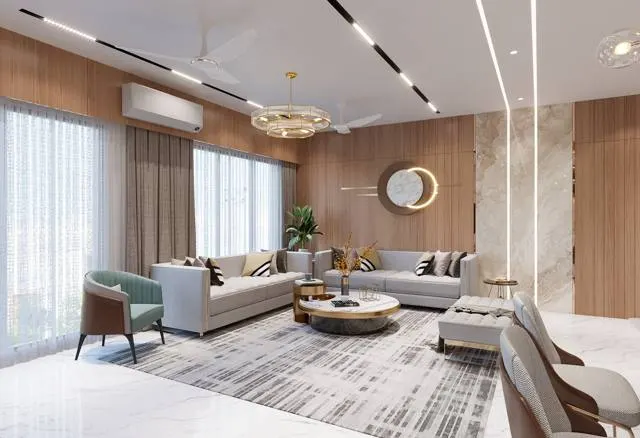
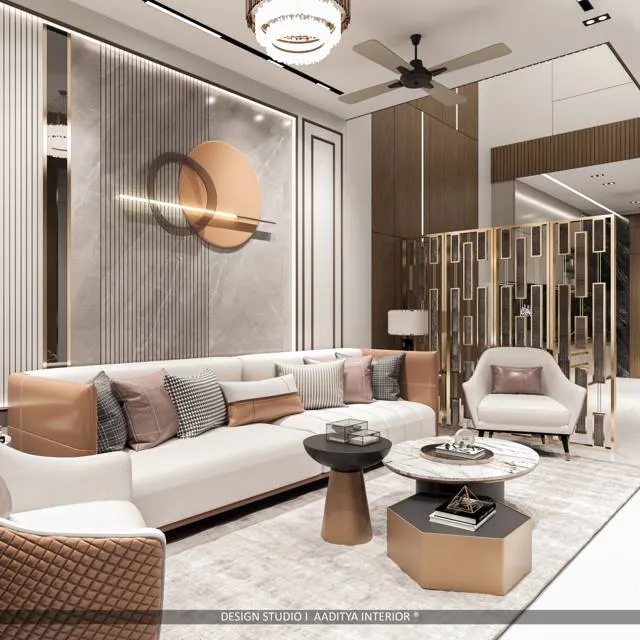
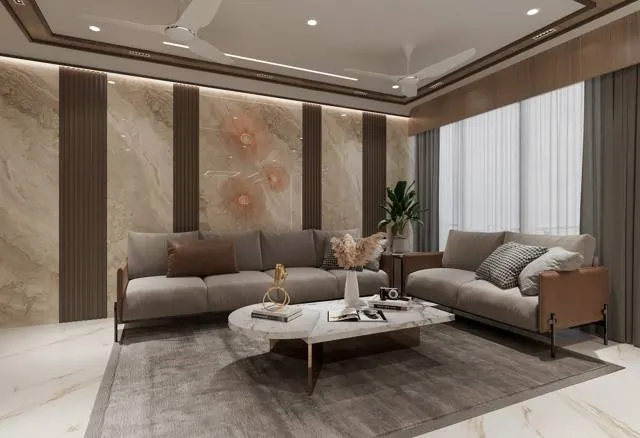
Metal has moved from the workshop into the living room. Table and chair frames, bed bases, shelving, consoles, planters, partition frames, loft ladders and the hidden brackets behind floating furniture are increasingly made of metal rather than wood, because metal is strong in thin sections, stable in humidity, and suits the clean industrial and contemporary looks that are popular now. But metal in furniture is not one material. The three in common use — mild steel, stainless steel and aluminium — behave so differently that choosing the wrong one produces furniture that rusts on a balcony, bends under load, or costs twice what it needed to.
The confusion is understandable, because the three look similar once painted or powder coated. A black powder-coated frame could be mild steel or aluminium; a bright metal leg could be stainless steel or chrome-plated mild steel. Yet underneath, their strength, weight, corrosion resistance and cost differ widely, and so does the right way to join and finish them. A fabricator who works mostly in mild steel will quote mild steel for everything; a client who asks for stainless because it sounds premium may be paying for corrosion resistance a dry bedroom will never need. The sensible approach is to match the metal to the job.
This article compares mild steel, stainless steel and aluminium on the properties that decide furniture: strength and stiffness, weight, corrosion resistance, the finishes each takes, the section sizes used, and how each is joined. It then turns the comparison into clear guidance on which metal to use where, and sets out indicative fabrication costs so the price difference is visible. The goal is furniture that is strong enough, lasts in its location, and does not cost more than its job requires.
Why the metal choice matters
The three metals start from very different places. Mild steel is an iron-carbon alloy that is strong, stiff and cheap, and it welds easily, which is why it is the workshop default; its one great weakness is that it rusts the moment bare steel meets moisture, so it must be coated and the coating must stay intact. Stainless steel is steel with chromium added, which forms an invisible passive layer that resists corrosion, so it survives wet and even coastal conditions, but it is heavier, harder to work and several times more expensive. Aluminium is a light, soft, corrosion-resistant metal that needs no coating to survive outdoors and is a third of the weight of steel, but it is less stiff and strong for the same section, dents more easily, and costs more than mild steel.
These differences are not academic; they show up as furniture that succeeds or fails. A mild steel chair frame in a dry living room, powder coated, will last for decades. The same frame on an open balcony in a humid coastal city, where the coating gets chipped, will bleed rust within a year. A stainless steel frame in that balcony survives, but on a large piece its weight becomes a handling problem and its cost a budget problem. An aluminium frame is ideal for that balcony's weight and corrosion, but if it is asked to carry a heavy load in a thin section it flexes. Knowing where each metal belongs is the whole skill.
The three metals explained
Mild steel, often called MS, is the most used metal in Indian furniture fabrication. It is strong and stiff, takes welding and bending readily, and is the cheapest of the three. Because it rusts, it is always finished — powder coated, painted or plated — and the quality of that finish, and whether it is kept unbroken, decides how long the furniture lasts. For indoor furniture in dry rooms this is no limitation at all: a well powder-coated MS frame indoors effectively never rusts. The risk is only where the coating is chipped and moisture is present, such as balconies, bathrooms and coastal air.
Stainless steel, usually grade 304 for interiors and 316 for coastal or marine conditions, resists corrosion through its chromium passive layer, so it can be used bare with a brushed or mirror finish and will not rust in normal interior or even most outdoor conditions. It is prized for its looks and durability in kitchens, bathrooms and premium furniture, and takes a PVD colour coating well. Its drawbacks are weight — it is as heavy as mild steel — and cost, several times that of MS, along with being harder to cut and weld, which raises fabrication cost further. Grade matters: 202, a cheaper stainless, corrodes more than 304 and is a common hidden downgrade.
Aluminium is the lightweight of the group, about one-third the weight of steel, and naturally corrosion resistant because it forms its own oxide skin, so it thrives outdoors and in wet areas without coating. It extrudes into complex profiles easily, which suits modular and knock-down furniture, and anodises into durable colours. Its limitations are that it is softer and less stiff than steel, so it dents and flexes more in thin sections and must be used in larger or thicker profiles to match steel's rigidity; it is also harder to weld well and costs more than mild steel. For light, movable, outdoor or wet-area furniture, though, it is often the best answer.
| Property | Mild steel (MS) | Stainless steel (SS 304) | Aluminium |
|---|---|---|---|
| Relative strength/stiffness | High | High | Lower for same section |
| Weight | Heavy | Heavy | Light (about 1/3 of steel) |
| Corrosion resistance | Poor — must be coated | Excellent (316 for coastal) | Very good, bare |
| Weldability | Easy | Moderate, specialised | Harder, needs skill |
| Needs a coating? | Yes, always | No (can be left bare) | No (often anodised for colour) |
| Relative cost | Lowest | Highest | Middle to high |
| Best for | Indoor frames, hidden structure | Kitchens, wet areas, premium | Outdoor, wet, light movable pieces |
Corrosion and finishes
The finish is not decoration alone; on mild steel it is survival. Powder coating — a dry powder electrostatically applied and baked into a tough, even film — is the standard furniture finish for both mild steel and aluminium, available in any colour and texture and far more durable than wet paint. On mild steel it must cover every surface, because a single chip lets rust start and creep under the coating. For harsher conditions, mild steel can be galvanised (zinc coated) before powder coating, which protects even where the top coat is damaged. Wet-sprayed paint and automotive-style finishes are also used but chip more easily than powder coat.
Stainless steel is usually left bare in a brushed (satin) or mirror finish, both of which are the metal itself, or given a PVD colour coating — gold, black, rose, bronze — which is hard and durable, the same technology discussed for brass finishes. Aluminium is most often anodised, an electrochemical process that thickens its natural oxide into a hard, integral, coloured layer that cannot peel because it is part of the metal, or it is powder coated like steel. The key point is that each metal has a finish suited to it: powder coat or galvanising-plus-powder for MS, bare or PVD for SS, anodising or powder coat for aluminium. Choosing the finish is part of choosing the metal.
| Finish | Metal it suits | How it works | Durability |
|---|---|---|---|
| Powder coating | Mild steel, aluminium | Baked dry-powder film, any colour | Tough, but a chip on MS lets rust start |
| Galvanising + powder | Mild steel | Zinc layer under the coat | Protects even where the top coat is damaged |
| Anodising | Aluminium | Thickened, coloured oxide layer | Integral, cannot peel |
| Brushed / mirror (bare) | Stainless steel | The metal's own surface | Permanent; the passive layer protects |
| PVD colour coat | Stainless steel | Hard vacuum-applied colour | Very hard, tarnish and scratch resistant |
| Clear lacquer | Mild steel (indoor) | Clear coat over raw steel | Only for dry rooms; will rust if damp |
Section sizes and stiffness
The size and shape of the metal section matter as much as the metal. Hollow tube gives the most stiffness for its weight and is the workhorse of furniture frames; a 25 mm square tube suits light chairs and small tables, 40 mm suits larger tables and shelving uprights, and rectangular tube such as 50 × 25 mm suits rails and beams that carry load in one direction. Round tube is used for legs and rails where a softer look is wanted, and flat bar and angle for brackets, feet and connections. Wall thickness of 1.2 to 2.0 mm is common; thicker walls add strength and make welding easier but add weight and cost.
Stiffness rises steeply with tube size, so increasing a frame from 25 to 40 mm square tube stiffens it far more than merely thickening the wall of the smaller tube. This is why a well-designed metal frame uses the right size rather than simply more metal. Because aluminium is less stiff than steel, an aluminium frame generally needs a larger or thicker profile than a steel one to feel equally solid, which partly offsets its weight advantage. A good fabricator sizes sections to the load and the span, not by habit, and a frame that wobbles is almost always one whose tube was too small for its height.
| Section | Typical size | Used for | Note |
|---|---|---|---|
| Square tube | 25–50 mm, wall 1.2–2.0 mm | Chair and table legs, uprights | Best stiffness for weight |
| Rectangular tube | 50×25 mm | Rails and beams carrying load one way | Deeper dimension takes the load |
| Round tube | dia 25–50 mm | Legs and rails, softer look | Common in chairs and stools |
| Angle | 25×25 mm and up | Brackets, feet, edge frames | Cheap, easy to bolt |
| Flat bar | various | Connections, straps, feet | Simple to drill and weld |
Joinery and repair
How a metal is joined affects both strength and the look of the furniture. Mild steel is usually welded — the joints fused and then ground smooth and powder coated, giving a seamless, strong, monolithic frame that is the reason MS is so popular for furniture. Stainless steel is also welded, but it needs more skill and care to avoid discolouration and to keep the corrosion resistance intact at the joint, which raises cost. Aluminium is harder to weld well and is often joined instead by bolting, bracketing or mechanical connectors, which suits knock-down and modular furniture that must be shipped flat and assembled on site.
Repairability follows from this. A welded mild steel frame can be re-welded and re-coated almost indefinitely, which makes it very long-lived if looked after. A bolted aluminium frame can be taken apart and a damaged member replaced, which suits modular systems. Stainless steel repairs need a skilled hand to preserve both the finish and the corrosion resistance. For furniture meant to last and be maintained, a welded steel frame is the most forgiving; for furniture meant to be moved, dismantled and reconfigured, a bolted aluminium system is more practical.
Choosing the metal for the piece
The decision comes down to three questions: how much load the piece carries, where it lives, and how it must look and move. For load-bearing indoor furniture in dry rooms — dining tables, beds, shelving, consoles — mild steel, welded and powder coated, is strong, cheap and effectively rust-free indoors, and it is the default. For anything wet or near water — bathroom and kitchen furniture, outdoor tables, balcony and terrace pieces — stainless steel or aluminium is safer, with stainless where strength and a metal finish are wanted and aluminium where light weight matters. For coastal homes, stainless should be grade 316 and aluminium is excellent; mild steel in coastal air is a short-lived mistake unless galvanised and very well coated.
Weight and movement tilt the balance too. Furniture that must be lifted, carried or frequently rearranged — folding chairs, light outdoor seating, modular shelving — favours aluminium for its lightness and easy bolted assembly. Heavy, permanent furniture favours steel. And where the metal is on show as a bright finish rather than painted, stainless steel's brushed or PVD surface is the natural choice, since mild steel would have to be plated to look similar and the plating can wear. Matching these factors to the metal, rather than defaulting to whatever the fabricator knows best, is what separates furniture that lasts and suits its place from furniture that fights its environment.
Costs
Fabrication cost is where the three metals separate most sharply, and it is best expressed per kilogram of finished, powder-coated or polished furniture, since that is how fabricators price. Indicative October 2026 ranges put a fabricated and powder-coated mild steel frame at roughly ₹120 to ₹220 per kg, a fabricated stainless steel 304 piece at about ₹350 to ₹650 per kg, and a fabricated aluminium piece at about ₹300 to ₹500 per kg. Expressed as a finished metal surface, as for a screen or partition, mild steel runs about ₹450 to ₹1,000 per square foot, aluminium about ₹550 to ₹1,200, and stainless with a PVD finish about ₹1,200 to ₹3,500 — the same premium metal-finish band seen elsewhere. These are material-plus-fabrication figures excluding GST and vary with design complexity.
| Metal | Fabricated cost (per kg) | As a finished surface (per sq ft) | Note |
|---|---|---|---|
| Mild steel (powder coated) | ₹120 – ₹220 | ₹450 – ₹1,000 | Cheapest; indoor default |
| Stainless steel 304 | ₹350 – ₹650 | ₹1,200 – ₹3,500 (PVD) | Premium; wet and coastal |
| Aluminium (powder/anodised) | ₹300 – ₹500 | ₹550 – ₹1,200 | Light; outdoor and movable |
| Stainless steel 316 | Higher than 304 | Higher than 304 | For coastal/marine conditions |
| Galvanised MS + powder coat | Above plain MS | Above plain MS | MS made safer for damp areas |
Where metal furniture is going
Metal furniture is becoming more modular and more honest. Bolted, knock-down aluminium and steel systems that ship flat and assemble on site suit the way homes are furnished now, and they make repair and reconfiguration easy. Powder-coat colours and textures have widened so that metal no longer means black or grey, and PVD on stainless brings warm metallic tones into kitchens and premium furniture. There is also a quiet return to leaving metal visible and unpainted — raw mild steel sealed with a clear lacquer for an industrial look, or brushed stainless left bare — which only works when the right metal is chosen for the location, because a clear-lacquered mild steel piece in a damp room will still rust. The direction, as with every material, rewards matching the metal to the job rather than hiding the wrong choice under paint.
Rules for choosing furniture metal
- Use mild steel, welded and powder coated, for load-bearing furniture in dry indoor rooms.
- Use stainless steel or aluminium for anything wet — bathrooms, kitchens, balconies, outdoors.
- In coastal air, specify stainless grade 316 or aluminium; avoid plain mild steel.
- Confirm the stainless grade in writing — 304 for interiors, 316 for coastal; beware a 202 downgrade.
- Choose aluminium where light weight and bolted, knock-down assembly matter.
- Size the tube to the load and span — going up a tube size stiffens a frame more than thickening its wall.
- On mild steel, insist the powder coat covers every surface; galvanise first for damp locations.
- Leave stainless bare (brushed or PVD) where a metal finish is wanted; do not plate mild steel to fake it.
- Weld steel for a seamless, repairable frame; bolt aluminium for modular, shippable furniture.
- Match the finish to the metal: powder coat for MS, bare or PVD for SS, anodising for aluminium.
Frequently asked questions
Will a mild steel frame rust indoors?
In a dry indoor room, a well powder-coated mild steel frame effectively does not rust, because the coating keeps moisture off the steel. Rust is only a risk where the coating is chipped and moisture is present, such as on balconies, in bathrooms or in coastal air. For those locations, stainless steel or aluminium is the safer choice, or mild steel galvanised before coating.
Is stainless steel always better than mild steel for furniture?
No. Stainless resists corrosion and can be left bare, which is valuable in wet and coastal areas, but it costs several times more, is heavier and is harder to fabricate. For load-bearing furniture in a dry room, a powder-coated mild steel frame is just as durable in practice and far cheaper. Paying for stainless where it is not needed is a common and avoidable overspend.
How can you tell SS 304 from a cheaper stainless like 202?
It is hard to tell by eye, which is why it should be confirmed in writing and from a reputable fabricator. Grade 202 contains less chromium and nickel, corrodes more readily and can show rust spots in damp or coastal conditions where 304 would not. A simple way to reduce the risk is to buy from a source that states the grade and, for the most critical uses, to ask for a material test certificate.
Why is aluminium furniture sometimes wobbly?
Aluminium is less stiff than steel, so an aluminium frame made in the same slim section as a steel one will flex more. The fix is to use a larger or thicker aluminium profile, which restores rigidity while keeping much of the weight advantage. A wobbly aluminium frame usually means the section was undersized for its height and load, not that aluminium is unsuitable.
Which metal is best for a balcony or terrace?
Aluminium is often the best balcony choice because it is light to move, rust-free without coating, and easy to live with outdoors. Stainless steel also works well and is stronger, especially grade 316 in coastal air. Plain mild steel should be avoided outdoors unless it is galvanised and very well coated, because chipped coating in the open quickly leads to rust streaks.
Sources & standards
- Bureau of Indian Standards — IS 2062 (hot rolled medium and high tensile structural steel) and IS 1161 (steel tubes for structural purposes)
- Bureau of Indian Standards — IS 6911 (stainless steel plate, sheet and strip) and grade designations 304, 316, 202
- Bureau of Indian Standards — IS 733 and IS 1285 (wrought aluminium alloy bars and extruded sections)
- Manufacturer technical data — powder coating, anodising and PVD processes and typical coating thicknesses (generic ranges)
- National Building Code of India 2016, Part 6 — Structural Design, Section 6 (steel) for general material properties
- Price ranges: indicative October 2026 estimates — confirm locally before budgeting