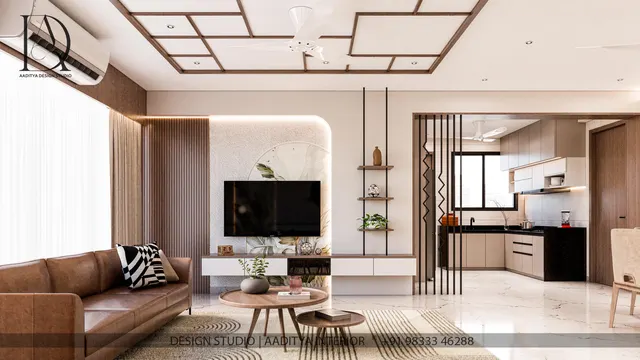
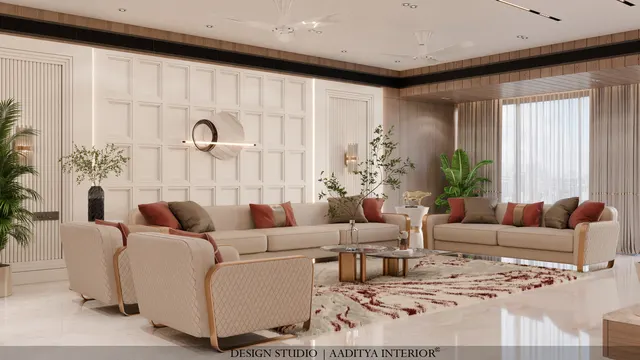
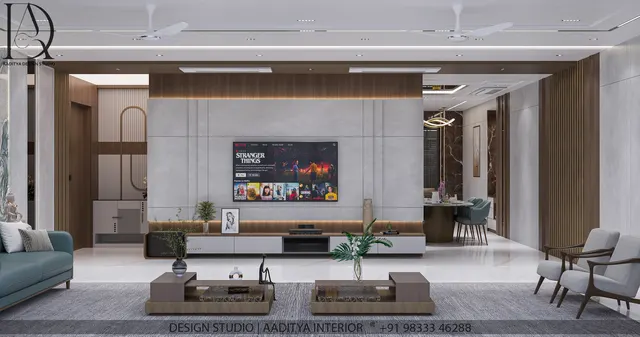
A villa is not a bigger house; it is a house with more decisions. A two-bedroom house has one bathroom to choose fittings for and one living room to floor. A villa in Nagpur, with four bedrooms, a double-height living room, a home theatre or a study, a large kitchen and three or four bathrooms, has the same decisions multiplied, and every decision is a choice between a basic product and a premium one. The difference between the two budgets is not a single number. It is the sum of fifty small choices, each of which looks reasonable on its own and together adds up to the price of another house. That is why a villa budget needs a comparison, not a single rate.
Nagpur adds its own conditions. The city is hot for much of the year, with summer temperatures that make a west-facing glass wall a liability and a shaded courtyard an asset. The soil in many new layouts is filled or black cotton, and the water in several localities is hard, which affects the plumbing, the fittings and the water treatment. The villa layouts along Wardha Road, Amravati Road and the outer ring road are large, often 2,400 to 5,000 sq ft of plot, which gives room for a garden, a porch and a compound, and each of those is a cost. A villa that is designed for Nagpur uses the shade, the breeze and the orientation to keep the house cool, and spends the premium money where it is felt every day: the kitchen, the bathrooms, the flooring and the light.
This article compares the basic and the premium villa budget in Nagpur, package by package, so that a homeowner can decide where the extra money is worth spending and where it is not. It gives the per-square-foot rates for both budgets in October 2026, compares the materials, the finishes, the services and the joinery, and explains which premium upgrades hold their value and which are best left for later. All prices are indicative October 2026 estimates and must be confirmed locally before budgeting, because the rates move with the brand, the size of the villa and the season.
Basic and premium: what the two budgets actually buy
A basic villa in Nagpur is a well-built house with standard finishes. The structure is a reinforced concrete frame with brick walls, the flooring is vitrified tile at about ₹85 to ₹160 per sq ft installed, the paint is emulsion with putty at about ₹20 to ₹30 per sq ft, the doors are flush with laminate, the windows are aluminium or UPVC, and the sanitary ware and the switches are standard Indian brands. The kitchen has a granite platform with a sink, and the bathrooms have standard fittings. The house is comfortable, durable and easy to maintain, and it costs about ₹1,650 to ₹2,000 per sq ft in October 2026. For a 3,000 sq ft villa, that is roughly ₹50 lakh to ₹60 lakh for the construction, before the compound, the connections and the approvals.
A premium villa is the same structure with a different skin and different services. The flooring is large-format tile or imported stone at about ₹250 to ₹425 per sq ft and higher, the paint is a designer finish, the doors are teak or designer, the windows are large UPVC or aluminium systems with double glazing, and the sanitary ware, the switches and the lights are designer brands. The kitchen is a full modular kitchen with a quartz counter, the bathrooms have rain showers, wall-hung closets and designer fittings, and the house has a false ceiling throughout, home automation points and a provision for solar panels. The premium villa costs about ₹2,800 to ₹4,200 per sq ft, or roughly ₹84 lakh to ₹1.26 crore for the same 3,000 sq ft. The structure is only slightly more expensive; the finishes and the services are where the money goes.
The important point is that the two budgets are not two different houses. They are the same house with different choices, and the homeowner can mix them. The structure, the waterproofing and the plumbing should always be premium, because they are expensive to change. The flooring in the living room can be premium while the flooring in the bedrooms is mid-range. The master bathroom can be designer while the guest bathroom is standard. A room-by-room budget, made before the construction begins, is the most practical way to control a villa cost, and it is the method this article recommends. A single rate for the whole house hides these choices; a package-by-package comparison shows them.
The structure: where the two budgets are closest
The structure of a villa, meaning the foundation, the frame, the brickwork and the plaster, costs about the same in both budgets, and the difference is small. A basic villa structure costs about ₹1,050 to ₹1,350 per sq ft, and a premium villa structure costs about ₹1,200 to ₹1,550 per sq ft, with the difference coming from a deeper foundation, a larger column and beam size for the double-height spaces, and a better grade of concrete and steel. The premium villa may also use ready-mix concrete and machine-made blocks, which give a more consistent strength, and a waterproofing admixture in the concrete. These are worth the small premium, because the structure is the part of the house that cannot be changed later.
The roof and the waterproofing deserve the same attention in both budgets. A villa roof in Nagpur needs insulation, because the summer sun heats a bare slab to a temperature that no air conditioner can comfortably overcome. A light-coloured roof finish, a layer of insulation and a proper slope for rainwater cost a small amount and reduce the cooling load for the life of the house. The terrace waterproofing, at about ₹60 to ₹120 per sq ft, and the bathroom waterproofing, at about ₹45 to ₹80 per sq ft, should be specified with the product name and the number of coats in both budgets. A premium tile on a leaking slab is a waste of money, and a basic tile on a dry slab is a sensible house.
The external walls are another place where the two budgets meet. A 230 mm external wall with cement plaster is the standard in both, and the premium budget adds a stone cladding or a texture finish on the front elevation, which is a visual choice rather than a structural one. The windows are where the difference appears: a premium villa uses larger windows with better frames and double glazing, which cost more but reduce the heat and the noise. A homeowner who wants the premium look without the premium price can spend on the front elevation and the living room windows, and keep the side and rear windows standard. The structure is the foundation of the budget, and it should be decided first, before any finish is chosen.
| Package | Basic villa | Premium villa | Difference |
|---|---|---|---|
| Structure per sq ft | ₹1,050–1,350 | ₹1,200–1,550 | About ₹150–200 |
| External walls | 230 mm brick, plaster | 230 mm brick, cladding | Cladding extra |
| Roof insulation | Basic, light finish | Insulation + light finish | Small premium |
| Waterproofing | Standard, 2 coats | Branded, 3 coats | About ₹15–30 per sq ft |
| Windows | Aluminium / UPVC | Large, double-glazed | ₹200–400 per sq ft |
| Total structure share | About 60% of cost | About 40% of cost | Finishes dominate premium |
Finishes: where the two budgets split apart
Finishes are where the premium budget doubles the basic budget. Flooring is the largest single finish: standard vitrified tiles cost about ₹85 to ₹160 per sq ft installed, designer vitrified or ceramic tiles cost more, and large-format or imported tiles cost about ₹250 to ₹425 per sq ft and higher. A villa with 3,000 sq ft of flooring spends about ₹3 lakh to ₹5 lakh on basic tiles and about ₹8 lakh to ₹13 lakh on premium tiles, and the difference is visible in every room. The laying cost is also higher for large-format tiles, because they need a levelled bed and careful cutting, and the wastage is higher. A homeowner who wants the premium look can use the large-format tile in the living room and the entrance, and a standard tile in the bedrooms, and save a large amount without losing the impression.
Paint and wall finishes follow the same pattern. Emulsion with putty costs about ₹20 to ₹30 per sq ft, and a designer finish, a texture or a wallpaper costs two to four times as much. A premium villa often has one feature wall in the living room with stone, wood or a designer texture, and plain emulsion elsewhere, which gives the premium feel at a fraction of the cost of finishing every wall. The false ceiling is another finish that separates the budgets: a basic villa has a false ceiling in the living room only, while a premium villa has a false ceiling throughout, with cove lighting and designer profiles. A gypsum ceiling costs about ₹80 to ₹180 per sq ft, and the premium villa spends two to three times as much on ceilings as the basic villa.
Doors and joinery are the third finish group. A flush door with laminate costs about ₹8,000 to ₹15,000 fitted, a designer door costs ₹20,000 to ₹45,000, and a teak main door with a frame and hardware costs ₹25,000 to ₹60,000. A villa has more doors than a flat, and the difference adds up quickly. The wardrobes follow the same logic: a basic wardrobe in laminate costs about ₹1,340 to ₹1,800 per sq ft of cabinetry, and a premium wardrobe in veneer or PU finish costs more. A practical approach is to spend on the main door and the living room joinery, and to keep the bedroom doors and wardrobes at a mid-range level, upgrading them later if the budget allows.
| Finish | Basic choice | Premium choice | Cost effect |
|---|---|---|---|
| Flooring | Vitrified ₹85–160 | Large-format ₹250–425+ | About 2–3x |
| Paint | Emulsion ₹20–30 | Designer / texture | About 2–4x |
| False ceiling | Living room only | Throughout, cove light | About 2–3x |
| Doors | Flush ₹8,000–15,000 | Teak / designer ₹20,000+ | About 2–3x |
| Wardrobes | Laminate ₹1,340–1,800 | Veneer / PU finish | About 1.5–2x |
| Main door | Designer ₹20,000–35,000 | Teak ₹35,000–60,000 | About 1.5–2x |
Kitchen and bathrooms: the rooms that decide the budget
The kitchen is the most concentrated cost in a villa, and the difference between the two budgets is largest here. A basic kitchen has a granite platform, a sink, a hob and a chimney, with a few wall cabinets, and it costs about ₹1,50,000 to ₹2,70,000 for a villa kitchen. A premium kitchen is a full modular kitchen with a quartz counter at about ₹250 to ₹425 per sq ft, tall units, a pantry, a built-in hob and chimney, and designer hardware, and it costs about ₹4,00,000 to ₹8,00,000. The carcass in BWR plywood with laminate shutters costs about ₹1,340 to ₹1,800 per sq ft of cabinetry in both budgets; the premium difference comes from the shutters, the hardware, the counter and the appliances. A homeowner who wants a premium kitchen should spend on the hardware and the counter, because those are the parts that are used every day and are expensive to change.
The bathrooms follow the same pattern. A basic bathroom with standard sanitary ware, a mixer and a shower costs about ₹15,000 to ₹35,000 for the fittings, plus the tiling and the plumbing. A premium bathroom with a wall-hung closet, a rain shower, a designer mixer and a vanity costs about ₹60,000 to ₹1,50,000 for the fittings alone. A villa has three or four bathrooms, so the difference between the two budgets on bathrooms alone can be ₹2 lakh to ₹4 lakh. The practical approach is to make the master bathroom premium and the other bathrooms mid-range, and to spend on the waterproofing and the plumbing in every bathroom, because a leak in a basic bathroom costs as much to repair as a leak in a premium one.
The services behind the kitchen and the bathrooms are the same in both budgets and should not be economised. The plumbing should use CPVC or PPR pipes with a proper pressure test, the drainage should have a clear slope and accessible clean-outs, and the electrical work should have a point for every appliance, including the chimney, the hob, the microwave, the refrigerator and the water purifier. A premium villa adds a water softener or a filter where the water is hard, a hot water line to the kitchen and the bathrooms, and a provision for a dishwasher and a washing machine. These services are cheap during construction and expensive afterwards, and they are the difference between a kitchen that works and a kitchen that is fought with every day.
| Room | Basic budget | Premium budget | Worth upgrading? |
|---|---|---|---|
| Kitchen | ₹1,50,000–2,70,000 | ₹4,00,000–8,00,000 | Yes: hardware, counter |
| Master bathroom | ₹15,000–35,000 fittings | ₹60,000–1,50,000 fittings | Yes: shower, closet |
| Other bathrooms | ₹15,000–35,000 fittings | ₹35,000–60,000 fittings | Mid-range is enough |
| Plumbing + drainage | Standard, tested | Premium pipes, softener | Yes: pipes, testing |
| Electrical points | Standard points | Point per appliance | Yes: plan early |
Services, automation and the garden
A premium villa spends more on services than a basic villa, and the services are the part of the house that is felt every day. Air conditioning is the largest service cost: a basic villa uses split air conditioners in the bedrooms and the living room, while a premium villa uses a ducted or a VRV system, which costs two to three times as much but gives even cooling and a cleaner look. The electrical work in a premium villa includes a home automation system for the lights, the fans and the curtains, a video door phone, and a provision for solar panels on the terrace. The automation adds about ₹1,50,000 to ₹3,00,000, and it should be planned before the wiring, because the wiring for automation is different from the wiring for a standard switch.
The garden and the compound are the part of a villa budget that is most often forgotten. A villa plot of 2,400 to 5,000 sq ft has a compound wall, a gate, a porch, a driveway and a garden, and together they cost about ₹3 lakh to ₹8 lakh depending on the size and the finish. The boundary wall costs about ₹1,200 to ₹2,000 per running foot, the gate costs ₹25,000 to ₹60,000, the driveway paving costs about ₹120 to ₹250 per sq ft, and the landscaping with plants, lighting and a drip system costs about ₹1,50,000 to ₹4,00,000. A basic villa keeps the compound simple, with a plastered wall and a simple gate, while a premium villa uses stone cladding, a designer gate and a landscaped garden with lighting. The garden should be planned with the house, because the levels, the drainage and the water supply are decided during construction.
The water supply and the drainage deserve the same attention in both budgets. Nagpur's water in several localities is hard, and a water softener or a filter protects the fittings, the geyser and the washing machine. A borewell, where municipal water is not reliable, costs about ₹40,000 to ₹90,000, and a rainwater harvesting system costs about ₹25,000 to ₹60,000. The septic tank or the sewer connection costs about ₹25,000 to ₹60,000. None of these appear in a per-square-foot rate, and together they add ₹1 lakh to ₹2,50,000 to the total. A homeowner should ask the contractor to list them separately, so that the comparison between the basic and the premium budget is a comparison of the same house, not of two different lists.
Timeline and the decisions that must be made early
A villa of 3,000 sq ft in Nagpur typically takes twelve to sixteen months from excavation to handover, and the timeline is set by the size of the house and the number of finishing trades. The structure takes four to five months, the brickwork and plaster take two to three months, and the finishes, including the flooring, the painting, the joinery and the fittings, take four to five months. A premium villa takes a month or two longer than a basic villa, because the finishes are more detailed and the joinery is made to order. The monsoon slows the work, and a villa started in June will usually take a month longer than one started in October. The contractor should give a month-by-month schedule, and the homeowner should check the progress against it at each stage.
The decisions that cost the most when they are made late are the ones that should be made at the design stage. The size and the position of the windows, the height of the living room, the position of the kitchen and the bathrooms, the number of electrical points and the provision for air conditioning and automation are all decisions that are cheap on paper and expensive in concrete. A tile changed on paper costs nothing; a tile changed after it is laid costs the tile, the labour and the removal. A window moved on paper costs nothing; a window moved after the wall is built costs the wall, the lintel and the plaster. The homeowner should freeze the specification before the structure begins, and should treat every change after that as a written variation with a price and a date.
The payment schedule for a villa should follow the work, not the calendar, and it should be linked to visible stages. A fair pattern is 10 per cent on signing, 15 per cent on completion of the plinth, 20 per cent on completion of the ground-floor slab, 20 per cent on completion of the first-floor slab and brickwork, 15 per cent on completion of plaster and flooring, 10 per cent on completion of painting and fittings, and the final 10 per cent on handover after the snag list is cleared. A retention of 5 per cent for three to six months after handover protects the homeowner against defects that appear only after the house is occupied. The agreement should also state the measurement method, the specification, the brands and the defect liability period, and it should be signed before the advance is paid.
| Stage | Basic villa | Premium villa | Decision that must be frozen |
|---|---|---|---|
| Design | 2–3 months | 3–4 months | Spec, brands, window sizes |
| Structure | 4–5 months | 5–6 months | Heights, openings, services |
| Brickwork + plaster | 2–3 months | 2–3 months | Wall finishes, niches |
| Finishes | 3–4 months | 4–5 months | Tiles, paint, ceiling |
| Joinery + fittings | 1–2 months | 2–3 months | Kitchen, wardrobes, sanitary |
| Handover | 2–4 weeks | 2–4 weeks | Snag list, retention |
Where the premium money is worth it, and where it is not
The premium money is worth it on the structure, the waterproofing, the plumbing, the kitchen hardware and the master bathroom, because those are the parts that are used every day and are expensive to change. It is worth it on the living room flooring and the main door, because those are the parts that are seen every day and set the impression of the house. It is worth it on the roof insulation and the window quality, because those reduce the cooling bill for the life of the house. It is worth it on the water treatment where the water is hard, because it protects every fitting in the house. These are the upgrades that pay for themselves, either in comfort, in durability or in the electricity bill.
The premium money is not worth it on every wall, every door and every bathroom at once. A designer finish on a wall that is behind a wardrobe is invisible. A premium door on a store room is a waste. A designer fitting in a guest bathroom that is used twice a year is a luxury that can wait. A premium villa that spends the same amount on every room is not a well-planned villa; it is a villa that has run out of judgement. The room-by-room budget, made before the construction begins, is the tool that keeps the judgement in the plan. The homeowner should walk through the villa, room by room, and decide for each room whether it is basic, mid-range or premium, and write the decision down.
The future of the villa budget is the same as the future of the house: the structure and the services will matter more, and the finishes will be easier to change. The demand for energy-efficient villas is growing in Nagpur, with thicker walls on the west, smaller windows on the hot side, a roof with insulation and a provision for solar panels. The demand for home automation is growing, with lights, fans and curtains controlled from a phone, and the wiring for automation should be planned now even if the system is bought later. A villa that is built with a good structure, good services and a flexible finish can be upgraded room by room over the years, and the budget can follow the family's needs rather than the contractor's schedule.
Rules for budgeting a villa in Nagpur
- Make a room-by-room budget before construction, and decide for each room whether it is basic, mid-range or premium.
- Spend premium money on the structure, the waterproofing, the plumbing and the kitchen hardware, because they are expensive to change.
- Use premium flooring in the living room and the entrance, and mid-range flooring in the bedrooms, to get the impression at a lower cost.
- Freeze the specification, the window sizes and the electrical points before the structure begins, and treat every later change as a written variation.
- Ask for the compound, the gate, the connections and the landscaping as separate lines, so the basic and premium totals describe the same house.
- Pay by completed stage, keep the final 10 per cent for handover, and hold 5 per cent retention for three to six months.
- Plan the provision for air conditioning, automation and solar panels now, even if the systems are bought later.
- Compare the total cost of a finished, occupied villa, including the approvals and GST, not only the per-square-foot rate.
Frequently asked questions
What is the villa construction cost per sq ft in Nagpur in 2026?
A villa in Nagpur typically costs about ₹1,650 to ₹2,000 per sq ft for a basic finish and about ₹2,800 to ₹4,200 per sq ft for a premium finish in October 2026. For a 3,000 sq ft villa that is roughly ₹50 lakh to ₹60 lakh basic and ₹84 lakh to ₹1.26 crore premium, before the compound, the connections, the approvals and GST. The rate depends on the plot, the design and the specification, and it should be confirmed locally before budgeting.
How much more does a premium villa cost than a basic villa?
A premium villa typically costs about 60 to 110 per cent more than a basic villa of the same size, because the finishes, the kitchen, the bathrooms and the services are upgraded. The structure differs by only about ₹150 to ₹200 per sq ft. The largest differences are in the flooring, which can cost two to three times as much, the kitchen, which can cost two to three times as much, and the bathrooms, where designer fittings cost several times the standard fittings.
Is a double-height living room expensive to build?
A double-height living room adds cost in the structure, the taller columns and beams, the larger windows and the cooling, because the volume to be cooled is larger. It also needs a clear height of about 5,500 to 6,000 mm and a plan for a large fan or ventilation. The extra cost is usually a few lakh rupees on a villa, and it is worth it only if the family values the volume and the light. The decision should be made at the design stage, because the height cannot be changed later.
What does a modular kitchen cost in a Nagpur villa?
A basic villa kitchen with a granite platform and a few cabinets costs about ₹1,50,000 to ₹2,70,000. A full premium modular kitchen with a quartz counter, tall units, a pantry and designer hardware costs about ₹4,00,000 to ₹8,00,000. The carcass in BWR plywood with laminate shutters costs about ₹1,340 to ₹1,800 per sq ft of cabinetry, and the premium difference comes from the shutters, the hardware, the counter and the appliances.
How long does it take to build a villa in Nagpur?
A villa of about 3,000 sq ft typically takes twelve to sixteen months from excavation to handover, including the structure, the brickwork, the plaster and the finishes. A premium villa takes a month or two longer than a basic villa, because the finishes are more detailed and the joinery is made to order. The monsoon adds time, and a villa started in June will usually take about a month longer than one started in October.
Sources & standards
- National Building Code of India 2016 (SP 7), Part 3 — Development Control Rules and General Building Requirements; Part 8 — Building Services
- BIS IS 456:2000 — Plain and Reinforced Concrete: Code of Practice
- BIS IS 1200 (Parts 1–18) — Method of Measurement of Building and Civil Engineering Works
- Neufert, Architects' Data, 4th edition — standard dimensions, clearances and room sizes
- Time-Saver Standards for Architectural Design Data — residential planning and services data
- Energy Conservation Building Code (ECBC) 2017 and BEE guidelines for efficient homes
- IGBC Green Homes Rating and GRIHA guidelines for resource-efficient residential construction
- Price ranges: indicative October 2026 estimates — confirm locally before budgeting