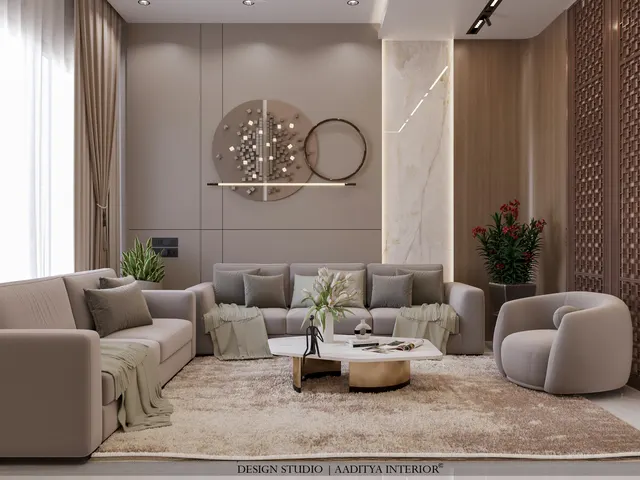
More Indian families than ever share their homes with a dog or a cat, and most of those homes were never designed for an animal. The result is a familiar list of frustrations: scratched floors, shredded sofa corners, fur that will not leave the upholstery, a balcony that is a constant worry, and nowhere obvious to put the food bowl, the litter tray or the pet's bed. None of this means a home has to look like a kennel. It means the home should be designed, from materials to layout, around the simple facts of living with an animal: claws and paws scratch, fur and accidents stain, and pets need safe places that are their own.
Pet-friendly design is really just durable, practical design with a few animal-specific additions. The materials that survive a dog or a cat — scratch-resistant floors, washable performance fabrics, wipeable walls — are the same materials that survive children and heavy family use, so the choices rarely look institutional. The additions are a handful of considered details: a floor the animal can grip, a balcony the animal cannot slip through, a feeding and litter zone that is easy to clean, and a corner that belongs to the pet. Get these right and the home works better for everyone in it.
This article sets out the material choices, the safety details and the spatial zones that make an Indian flat or bungalow genuinely pet-friendly. It gives the flooring and fabric comparisons that matter most, the dimensions for balcony grilles and feeding stations, and a room-by-room checklist, so that a home can be adapted for a pet without sacrificing the way it looks.
Start with the floor: the most important decision
Flooring is the single most important pet-friendly choice, because it takes the most punishment: claws scratch it, accidents stain it, wet paws make it slippery, and spilled water sits on it. The ideal pet floor is hard enough to resist scratches, sealed enough to resist stains, textured enough to give an animal grip, and easy to wipe clean. Few materials do all four perfectly, so the choice is about trade-offs. Polished natural stone and glossy vitrified tiles look beautiful but can be dangerously slippery for a running dog; soft timber and laminate scratch; and anything that absorbs liquid will eventually smell. The table below ranks the common Indian options on the measures that matter for a pet.
| Flooring | Scratch resistance | Stain resistance | Grip for paws | Indicative installed cost (₹/sq ft) | Verdict for pets |
|---|---|---|---|---|---|
| Matt vitrified / porcelain tile | Very good | Excellent (glazed) | Good (choose matt, not gloss) | ₹85–160+ | Among the best all-round choices |
| Granite (honed / leather finish) | Excellent | Very good (sealed) | Good when honed | ₹125–375+ installed | Very durable; avoid high-polish for grip |
| Kota stone (honed) | Very good | Good (needs sealing) | Good | ₹90–160 installed | Tough, affordable, naturally matt |
| Polished marble | Fair (scratches, etches) | Fair (porous, stains) | Poor (slippery) | Varies — confirm locally | Beautiful but high-maintenance with pets |
| Laminate flooring | Fair (scratches show) | Fair (seams swell if wet) | Fair | Above mid-range vitrified | Workable for cats; risky for large dogs |
| Engineered / solid wood | Poor–fair (scratches) | Poor (stains, swells) | Fair | Premium — confirm locally | Warm but vulnerable; needs tough finish |
| Luxury vinyl / SPC plank | Good | Very good (waterproof core) | Good | Confirm locally | Warm underfoot, waterproof, forgiving |
For most Indian homes with a pet, a matt vitrified or porcelain tile is the sensible default: it resists scratches and stains, wipes clean in seconds, and in a matt finish gives enough grip to stop a dog sliding. Honed granite and honed Kota stone are excellent where a natural-stone look is wanted. Where warmth underfoot matters — a bedroom, a pet's own corner — luxury vinyl or SPC plank gives a waterproof, forgiving surface that is kinder to joints than tile. Highly polished marble and glossy tiles are the materials to avoid in a pet household: they scratch, etch, stain and, most importantly, offer a running animal no grip. Prices above are indicative October 2026 installed ranges and should be confirmed locally.
Fabrics and furniture that survive a pet
After the floor, upholstery is where pets do the most visible damage. The three problems are fur that clings, claws that snag and pull threads, and stains that soak in. The materials that resist all three share two qualities: a tight, flat weave that gives claws nothing to catch, and a surface that wipes rather than absorbs. Loose, looped or chunky weaves — chenille, boucle, linen with a slub — are the worst offenders, because a claw hooks into the loop and pulls. Smooth, tightly woven performance fabrics, faux leather and genuine leather are far more forgiving. Leather in particular wipes clean and, while it can scratch, those scratches often blend into the patina rather than standing out as damage.
| Upholstery | Resists claws | Resists fur | Resists stains | For pet homes |
|---|---|---|---|---|
| Tight-weave performance fabric | Good | Good (brushes off) | Very good (treated) | A strong default; check the weave is flat |
| Faux leather / rexine | Good | Excellent (wipes) | Very good | Easy to clean; can crack over years |
| Genuine leather | Fair (scratches patina) | Excellent (wipes) | Good | Durable and forgiving; scratches blend in |
| Microfibre / suede-look | Good | Good | Good | Comfortable and reasonably tough |
| Chenille / boucle / looped weave | Poor (claws snag) | Poor (fur clings) | Fair | Avoid — loops catch and pull |
| Linen / cotton (loose weave) | Poor | Fair | Poor (stains) | Pretty but high-maintenance with pets |
Beyond the fabric itself, a few furniture choices make a large difference. Removable, washable covers turn any sofa into a practical one. Raised furniture legs let robot vacuums and brooms reach the fur that gathers underneath. Darker or patterned upholstery hides stray hairs far better than a plain pale fabric. And a scratching post or pad for a cat, placed near the furniture it would otherwise attack, redirects the behaviour that ruins sofa corners. The aim is not to pet-proof by making the home hard and cold, but to choose the forgiving version of every soft surface.
Safety: balconies, kitchens and stairs
The most serious pet-design issue in Indian homes is the balcony. Flats are often on high floors, and standard balcony railings are designed to stop an adult from falling, not to stop a cat squeezing through or a dog pushing its head between the bars. A pet-safe balcony needs its railing infilled so that the gap an animal could pass through is small — a vertical grille, a mesh panel or a toughened-glass infill. As a practical guide, keeping clear gaps to roughly 75 mm or less prevents most cats and small dogs from slipping through, and a full mesh is safest for climbing cats. The infill must be fixed securely to the existing railing, because an animal will lean and push against it.
The kitchen and the staircase carry their own risks. In the kitchen, a pet should be kept away from the hob and from open bins; a pull-out bin behind a cabinet door, raised storage for anything toxic, and a baby gate at the kitchen entrance all help. On stairs, an open riser or a wide baluster gap can trap a paw or let a small animal fall; a mesh or infill on the balustrade, and a non-slip nosing on each tread, make a staircase safe for an animal to use. Trailing electrical wires, which some pets chew, should be run inside conduit or cable management rather than left loose along the skirting.
| Zone | The risk | The design fix |
|---|---|---|
| Balcony railing | Pet slips through or climbs over | Mesh or vertical grille infill; clear gaps ≤ 75 mm |
| Kitchen | Hob, open bins, spilled food, toxins | Gate at entry; concealed bin; raised toxic storage |
| Staircase | Paw trapped in gap; slip on tread | Infill wide gaps; non-slip nosing on each step |
| Loose wiring | Chewing hazard and damage | Run cables in conduit or cable management |
| Windows | Fall from height when open | Grille or restrictor on openable windows |
| Glass doors | Pet runs into clear glass | Add a visible decal or frosted band at pet height |
Zones: feeding, litter, sleeping and grooming
A pet-friendly home gives the animal places of its own, which keeps the rest of the home tidy. Four zones matter. The feeding zone — food and water bowls on a wipeable mat — belongs on hard flooring near the kitchen but out of the main walkway, so spills are easy to clean and the bowls are not kicked. The litter zone, for cats, needs privacy, ventilation and distance from the food; a utility area or a bathroom corner suits it well, and a louvred cabinet can hide the tray while letting air through. The sleeping zone — the pet's bed or crate — should sit in a calm, draught-free corner with a view of the family but out of the traffic. The grooming zone, ideally near a tap and a drain, makes bathing a muddy dog far less of an ordeal.
Plants and materials to keep away from pets
Several common Indian houseplants are toxic to cats and dogs if chewed, and a pet-friendly home either keeps them out of reach or replaces them. Among the plants to be careful with are money plant (pothos), areca and other palms vary, aloe vera, snake plant (sansevieria), lily varieties (especially dangerous to cats), philodendron and dieffenbachia. Safer choices that still green a room include areca where confirmed pet-safe, spider plant, parlour palm, boston fern and many herbs. Because toxicity varies by species and by how much is eaten, the safe rule is to verify a specific plant before bringing it into a home with a curious animal, and to keep any uncertain plant physically out of reach.
Materials matter too. Some cleaning products, essential-oil diffusers and pest treatments are hazardous to pets, so finishes and maintenance routines should lean towards pet-safe, low-toxicity products. Small decorative objects, loose cords on blinds, and foods left on low tables are everyday hazards that good storage and placement quietly remove. None of this requires a clinical home — only an awareness, built into the design, of what sits within an animal's reach.
| Keep out of reach / avoid | Why | Pet-friendlier alternative |
|---|---|---|
| Lily varieties | Highly toxic, especially to cats | Spider plant, parlour palm |
| Money plant (pothos), philodendron | Irritant if chewed | Boston fern, many culinary herbs |
| Aloe vera, snake plant | Can cause stomach upset | Calathea (keep uncertain plants raised) |
| Loose blind cords | Strangulation and chewing hazard | Cordless blinds or cord tidies |
| Scented diffusers, strong cleaners | Some are toxic to pets | Pet-safe, low-toxicity products |
| Small decorative objects on low tables | Swallowing hazard | Display on higher shelves |
Walls, corners and everyday wear
Below knee height, a pet home takes a particular kind of punishment that ordinary decor ignores: muddy paws and wagging tails mark the lower walls, claws scuff the corners, and a dog that waits by the door wears a patch into the wall beside it. Designing for this is straightforward. A washable emulsion or a wipeable finish on the lower part of high-traffic walls lets marks be cleaned rather than repainted, and a dado — a harder, wipeable band of panelling, tile or wainscot up to roughly 900 mm to 1 metre — protects the zone that takes the most contact while adding a design feature. External corners, which claws and leads scuff most, can be protected with a rounded or metal corner bead, so the plaster edge does not chip away over time.
Doors, skirtings and the bottoms of wardrobes are the other wear points. A scratch-prone pet will mark a painted door that it paws to be let through, so a wipeable laminate or a tougher finish on the lower door panel, or a simple kick-plate, saves the surface. Skirtings in a durable, wipeable material take the brush of a passing animal and the swing of a mop without marking. None of this makes a home look institutional; a dado band, a corner bead and a kick-plate are ordinary, attractive details that happen also to defend the surfaces a pet wears hardest. Planned in at the design stage, they cost little and save years of touch-ups.
Where pet-friendly design is going
As pet ownership becomes a bigger part of urban Indian life, homes are starting to design for animals from the outset rather than adapting afterwards. Builders and interior studios increasingly include a dedicated pet corner, a wash point near the entrance for muddy paws, and durable, washable materials as standard in family homes. Smart pet technology — automatic feeders, water fountains, cameras and app-controlled doors — is moving from novelty into mainstream use, and it has design consequences: power points and a little cabinetry planned for the pet station. The direction is clear: the pet is becoming a member of the household that the plan acknowledges, with its own place, its own services and materials chosen with it in mind.
Nine rules for a pet-friendly home
- Choose a matt, scratch and stain-resistant floor with grip — matt vitrified, honed stone or SPC plank — not glossy marble.
- Upholster in tight-weave performance fabric, faux or genuine leather; avoid looped weaves that snag claws.
- Use removable, washable covers and raise furniture legs so floors can be cleaned underneath.
- Infill balcony railings and openable windows so clear gaps are about 75 mm or less.
- Add non-slip nosings and balustrade infill to stairs, and run loose wires inside conduit.
- Give the pet its own zones — feeding near the kitchen, litter away from food, a calm sleeping corner.
- Plan a grooming or wash point near a tap and drain to make bathing easy.
- Keep toxic plants and products out of reach, and verify any plant before bringing it home.
- Favour darker or patterned upholstery and finishes that hide fur and wipe clean.
Frequently asked questions
What is the best flooring for a home with a dog?
A matt vitrified or porcelain tile is the best all-round choice: it resists scratches and stains, wipes clean, and in a matt finish gives a dog enough grip to stop it sliding. Honed granite and honed Kota stone are excellent natural-stone alternatives. Where warmth underfoot matters, an SPC vinyl plank is waterproof and forgiving. Glossy tiles and polished marble are best avoided, because they offer a running dog no grip and scratch and stain easily.
How do I stop my cat from scratching the sofa?
Combine the right fabric with the right alternative. Upholster in a tight, flat weave or leather that gives claws nothing to hook into, and place a scratching post or pad right beside the furniture the cat would otherwise target. Cats scratch to mark and to stretch, so the aim is to redirect the behaviour to an acceptable surface rather than to stop it.
How can I make my balcony safe for a pet?
Infill the existing railing so the gaps an animal could pass through are small — a vertical grille, a mesh panel or a toughened-glass infill — keeping clear gaps to roughly 75 mm or less, with a full mesh being safest for a climbing cat. Fix the infill securely to the railing, because animals lean and push against it, and add a restrictor or grille to any openable window on the same floor level.
Which houseplants are safe to keep with pets?
Spider plant, parlour palm, boston fern and many culinary herbs are generally safer choices, while lilies (especially for cats), pothos, philodendron and dieffenbachia should be kept well out of reach or avoided. Because toxicity varies by species and quantity, verify any specific plant before bringing it home, and keep uncertain plants physically beyond an animal's reach.
Does designing for a pet make a home look clinical?
No. The materials that survive pets — durable tiles, performance fabrics, wipeable walls — are the same ones that survive children and heavy family use, and they come in warm, attractive finishes. Pet-friendly design is mostly ordinary good design plus a few considered details, so a well-planned pet home looks like any comfortable family home, not like a kennel.
Sources & standards
- The Kennel Club of India and ASPCA general pet-care guidance — household hazards and toxic plant lists (verify each species)
- National Building Code of India 2016, Part 4 (Fire and Life Safety) — balustrade and guard requirements adapted for pet safety
- Bureau of Indian Standards — IS 15622 (pressed ceramic tiles) and stone flooring references for durability and finish
- Neufert Architects' Data — circulation clearances and furniture planning dimensions
- Time-Saver Standards for Interior Design and Space Planning — materials, upholstery and maintenance
- Price ranges: indicative October 2026 estimates — confirm locally before budgeting