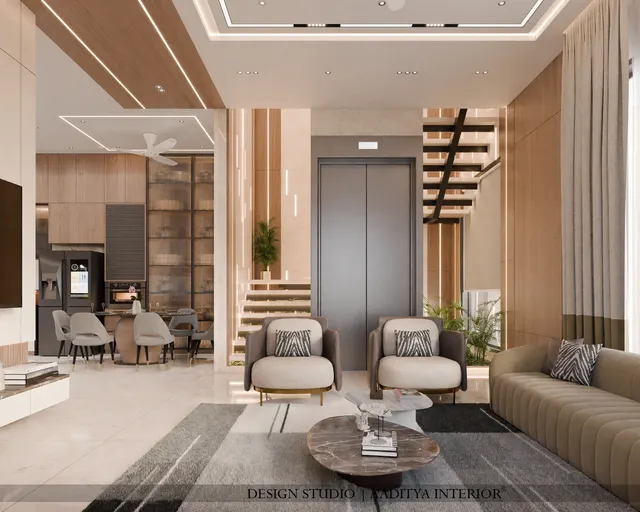
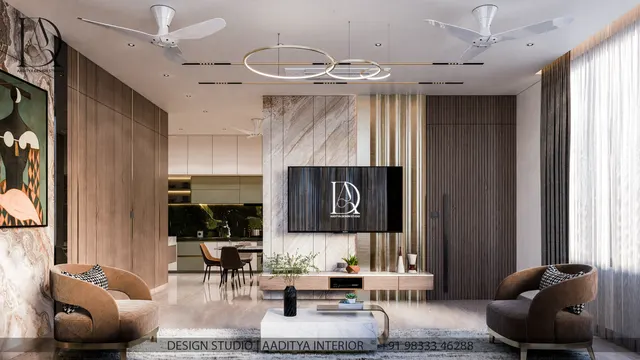
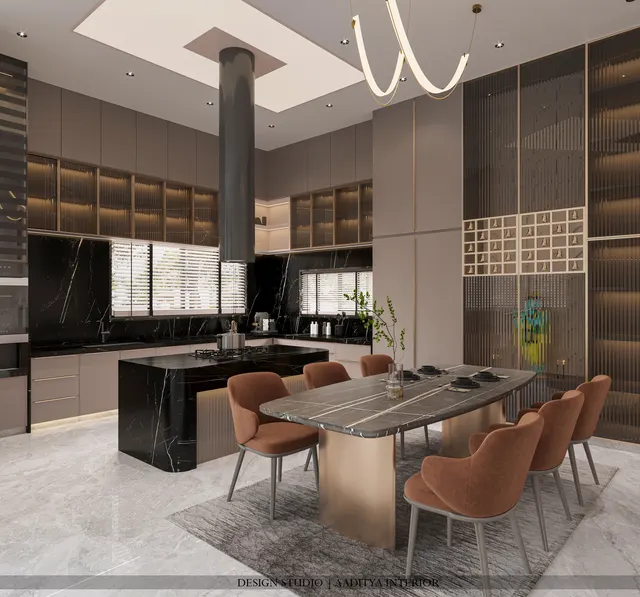
A painting that is badly lit might as well not be on the wall. In many Indian homes, a treasured artwork — a family portrait, a miniature painting, a contemporary canvas bought in a gallery in Mumbai or Delhi, a framed textile or a photograph — hangs under a ceiling light that throws a glare across the glass, or in a corner where it is never properly seen. The colours look dull, the detail disappears, and the frame casts a shadow on the wall. A picture light changes all of that with a single small fitting: a slim bar mounted above the frame that washes the artwork evenly from top to bottom, so the colours are true, the texture is visible, and the picture becomes the focus of the room.
A picture light is a narrow, low-profile light fitting, usually 300 to 900 mm long, fixed to the wall just above a picture frame or to the frame itself, with a shade that directs the light downwards onto the artwork and hides the lamp from the eye. It is one of the oldest forms of accent lighting, and it is still the most reliable way to light a single picture in a home, because it puts the light exactly where it is needed and nowhere else. In India it is used in living rooms, passages, studies, hotel lobbies, galleries and restaurants, and it suits everything from a small framed print to a large canvas, provided the size, the distance from the wall and the colour of the light are chosen correctly.
This article explains picture lights for Indian homes: how they work, which size suits which frame, how far the light should sit from the wall, which colour temperature makes paintings look their best, how to avoid glare on glass, and how to wire and control them. It covers traditional paintings, photographs, mirrors and framed textiles, and it gives dimensioned figures, comparison tables and a checklist that can be used against any quotation. The dimensions follow Indian practice and the relevant lighting standards, and the prices are indicative October 2026 ranges.
Why art needs its own light
The eye reads a painting by its surface, and the surface needs even light. A ceiling light sits far from the wall and high above the picture, so the top of the frame is bright, the bottom is dim, and the glass reflects the bulb as a bright spot that hides the paint underneath. A downlight in a false ceiling can do better, but only if it is placed at exactly the right distance from the wall; a few centimetres too close and the top of the picture is over-lit, a few centimetres too far and the light misses the picture altogether. A picture light avoids all of this by sitting close to the picture and shining down its face, so the light is even from top to bottom and the reflection is thrown down and away from the eye.
Indian homes add their own conditions. Many living rooms have high ceilings and a single central light, so a picture on the wall is lit only by spill light. Marble and polished plaster walls reflect light, while dark wood panelling absorbs it, so the same picture can look very different on two walls in the same house. Daylight from a large window can be beautiful on a painting in the morning and damaging by afternoon, because ultraviolet light fades pigments and paper, especially in the strong sun of Gujarat and Rajasthan. A picture light, used in the evening, gives the owner control: the art is lit when it is being looked at, and it is protected from sun during the day by a curtain or a blind.
There is also a question of atmosphere. A room in which one picture is lit and the rest of the room is softly lit feels calm and considered, while a room in which everything is lit equally feels flat. Designers use picture lights to create a focal point, to guide the eye along a passage, or to make a small room feel like a gallery. In a hotel lobby or a restaurant, a row of lit pictures can define the character of the whole space. In a home, a single well-lit painting above a console or a sofa can anchor the room, and it costs very little to achieve.
A short history: from candle sconces to the LED picture light
Before electric light, pictures were lit by candles and oil lamps in sconces fixed beside the frame, and later by gas brackets. The light was warm, flickering and uneven, and it left soot on the frame, but it was the only light there was, and it taught an important lesson: art looks best in warm light that comes from close above. In the nineteenth century, galleries in Europe began to use skylights, which give beautiful even daylight, and the picture light as a fitting appeared in wealthy homes, first as a brass arm with a small electric bulb and a shade, fixed above the frame.
The twentieth century made the picture light a standard product. Incandescent and then halogen lamps gave a warm, high-quality light that made colours look true, but they were hot, they used a lot of power, and the heat could damage a painting if the fitting was too close. The LED changed that: a slim bar of diodes gives the same warm light with almost no heat, uses a few watts, and can be made thin enough to sit discreetly above a frame. Modern picture lights are available in brass, bronze, black, nickel and white, in lengths from 300 mm to 1,200 mm, and many have a built-in dimmer or a remote control.
In India, picture lights were once found mainly in hotels, galleries and the homes of collectors, but they are now common in ordinary living rooms, because LED fittings are inexpensive and because more families are buying original art, prints and photographs. The future points towards lights that are smaller still, that run on a battery and can be fitted without wiring, and that can be controlled from a phone, but the principle — a warm, even wash of light from just above the frame — has not changed since the candle sconce, and it is unlikely to change now.
| Picture light type | Length | Light source | Best for |
|---|---|---|---|
| Small brass bar | 300–450 mm | LED, 5–8 W | Small prints, photographs |
| Standard bar | 450–600 mm | LED, 8–12 W | Most paintings, 600–900 mm wide |
| Large bar | 750–900 mm | LED, 12–18 W | Large canvases, 1,200–1,800 mm wide |
| Twin-arm / double | 2 × 450 mm | LED, 12–20 W | Very wide or tall pictures |
| Battery picture light | 300–600 mm | LED, rechargeable | No wiring, rented homes |
| Frame-mounted | To suit frame | LED strip | Mirrors, slim frames |
Size, distance and angle: the numbers that make it work
The length of the picture light should be about half to two-thirds the width of the frame. A fitting that is too short leaves the corners of the picture dark; a fitting that is as long as the frame, or longer, looks clumsy and throws light onto the wall beyond the frame. For a frame 600 mm wide, a light of 300 to 400 mm is right; for a frame 900 mm wide, a light of 450 to 600 mm; for a frame 1,200 mm wide, a light of 600 to 750 mm; and for a frame wider than 1,500 mm, two lights or a twin-arm fitting gives a more even wash than one very long bar. The fitting should be centred on the frame, not offset to one side.
The distance from the wall matters as much as the length. The light should sit 100 to 200 mm out from the wall, so the beam reaches the bottom of the picture, and the centre of the fitting should be 100 to 150 mm above the top of the frame. If the fitting is too close to the wall, only the top of the picture is lit; if it is too far out, the light spills onto the floor and the picture looks dim. Many fittings have an adjustable arm or a shade that can be tilted, so the angle can be tuned after the picture is hung. The test is simple: stand where the picture will be viewed from, usually 2 to 3 metres away, and check that the whole surface is evenly lit, with no bright band at the top and no dark band at the bottom.
The height at which the picture hangs decides the height of the light. The centre of a picture should be at eye level, about 1,450 to 1,550 mm from the floor, for a person standing. The picture light then sits just above the frame, usually 1,700 to 1,900 mm from the floor for a standard picture. In a passage, where people walk past, the picture should be hung slightly lower, and the light should be checked from the angle of a person walking, not just from straight ahead, because glare on glass is worst when the viewer is moving.
Colour, brightness and glare: making paintings look true
Colour temperature is the most important choice after size. Warm white at 2700 to 3000 kelvin suits most paintings, because it makes reds, golds and wood tones glow, and it matches the warm light of an Indian living room in the evening. Neutral white at 4000 kelvin suits photographs, black-and-white prints and contemporary art with cool colours, because it is more neutral. Cool white above 5000 kelvin should be avoided on art, because it makes colours look cold and flat. The colour rendering index should be 90 or above for art, because a low index makes colours look wrong even if the light is bright; a fitting with a colour rendering index of 95 is worth paying more for if the picture is valuable.
Brightness should be modest. A picture light of 5 to 18 watts, giving 300 to 1,200 lumens, is enough for most pictures in a home, and a dimmer is essential, because the right brightness depends on the picture, the wall colour and the other lights in the room. A very bright light on a small picture in a dark room looks harsh; a dim light on a large picture in a bright room is invisible. The aim is for the picture to be about twice as bright as the wall around it, so it stands out without dazzling. A light that is too bright can also damage a painting over time, especially a work on paper, so the owner should use the lowest brightness that looks good.
Glare on glass is the most common complaint with picture lights. Glass reflects the light source as a bright spot, and the spot moves as the viewer moves. The answers are to use non-reflective or museum glass, which is more expensive but removes most of the reflection; to tilt the picture light so the reflection is thrown downwards, out of the viewer's eye line; and to hang the picture where it is not opposite a window or a bright lamp. A picture without glass, such as an oil painting on canvas, has no glare problem, but it needs protection from dust and from direct sun. A good framer can advise on glass, and the choice should be made before the light is bought, not after.
| Frame width | Picture light length | Power | Distance from wall |
|---|---|---|---|
| 300–450 mm | 300 mm | 5–8 W | 100–150 mm |
| 450–600 mm | 300–450 mm | 5–10 W | 100–150 mm |
| 600–900 mm | 450–600 mm | 8–12 W | 150–200 mm |
| 900–1,200 mm | 600–750 mm | 12–15 W | 150–200 mm |
| 1,200–1,800 mm | 750–900 mm or twin | 15–20 W | 150–200 mm |
| Over 1,800 mm | Two fittings | 2 × 12–15 W | 150–200 mm |
Picture lights for photographs, mirrors, textiles and sculpture
Photographs need a cooler, more neutral light than oil paintings, because their colours are already fixed and a warm light can make them look yellow. A neutral white light at 4000 kelvin with a colour rendering index above 90 is the usual choice, and the light should be dimmable, because a photograph under glass is more prone to glare than a canvas. Black-and-white photographs look best under a neutral light with no colour cast, and they should never be lit with a warm light that turns the whites cream. The frame for a photograph should be slim, so the light bar does not overwhelm it.
A picture light above a mirror is a different job: it lights the person, not the mirror. A bar above a mirror in a passage or a dressing area gives a soft light on the face, but it must be checked for glare, because the mirror will reflect the fitting itself. A better answer for a mirror is often a pair of lights on either side, or a light with a frosted diffuser that hides the diodes. Framed textiles, such as a pashmina, a kalamkari panel or an embroidered hanging, need a very gentle light, because the fibres fade in strong light and in ultraviolet. A low-wattage warm light, used for a few hours in the evening, is safe, but the textile should not be lit all day, and it should never be in direct sun.
Sculpture and objects need a different approach again. A small sculpture on a console is better lit by a small spotlight from the side, which shows the form and the shadow, than by a picture light from above, which flattens it. A picture light can work for a shallow relief or a framed object, but the fitting should be placed so that the light rakes across the surface and shows the texture. In a home with a collection of objects, a combination of picture lights for flat art and small spotlights for three-dimensional work gives the best result, and both should be on dimmers so the balance can be adjusted.
Wiring, dimmers and battery options
A wired picture light needs a power point above the picture, usually 100 to 150 mm above the top of the frame, and the cable should be hidden in the wall or in a slim conduit painted to match the wall. In a new home or during renovation, the point should be planned when the pictures are planned, because adding a point to a finished wall means cutting a channel and making good the paint. The light should be on its own switch or on a dimmer, not on the same switch as the ceiling light, so the art can be lit on its own in the evening. A dimmer is worth the small extra cost, because it lets the owner tune the brightness for each picture and for the time of day.
Battery picture lights are a useful answer for rented homes, for pictures that move often, or for walls where wiring is not possible. A rechargeable LED bar fixes to the wall with a bracket or to the frame itself, runs for 8 to 20 hours on a charge, and is charged by a USB cable. The light is slightly less bright than a wired fitting, and the battery needs recharging every few days if the light is used every evening, but for a single picture in a bedroom or a passage it is a practical and inexpensive solution. A remote control, which many battery lights include, is convenient, because the light is often out of easy reach.
Smart controls are becoming common. A picture light can be connected to a smart plug or a smart dimmer, so it switches on at dusk, dims at bedtime, and can be controlled from a phone. In a home with several pictures, a single scene — for example, an evening scene that lights the pictures and dims the ceiling lights — can be set once and used every day. The wiring for a smart system is the same as for an ordinary system, but the switch should be chosen to suit the smart platform the home already uses, so the owner is not left with two different systems.
| Option | Cost per fitting | Wiring needed | Best for |
|---|---|---|---|
| Wired LED, Indian make | ₹1,500–₹4,000 | Point above picture | Permanent, most homes |
| Wired LED, branded | ₹4,000–₹12,000 | Point above picture | Valuable art, galleries |
| Battery LED, rechargeable | ₹1,200–₹3,500 | None, USB charge | Rented homes, no wiring |
| Designer brass / bronze | ₹8,000–₹25,000 | Point above picture | Heritage and luxury homes |
| LED strip, frame-mounted | ₹800–₹2,500 | Low-voltage driver | Mirrors, slim frames |
| Smart dimmer / plug | ₹1,000–₹3,000 | At the switch | Multiple pictures, scenes |
Costs in India, and how to choose a fitting
A wired LED picture light from an Indian manufacturer costs roughly ₹1,500 to ₹4,000, a branded fitting costs ₹4,000 to ₹12,000, and a designer fitting in brass or bronze costs ₹8,000 to ₹25,000. A battery picture light costs ₹1,200 to ₹3,500, and a dimmer or a smart plug costs ₹1,000 to ₹3,000. Wiring a new point above a picture during construction costs very little; adding a point to a finished wall costs ₹800 to ₹2,000 in labour, plus making good the paint. A complete job for three pictures in a living room, with three wired fittings and a dimmer, typically costs ₹8,000 to ₹25,000, depending on the fittings chosen. These are indicative October 2026 prices.
When choosing a fitting, the buyer should check the length against the frame, the colour temperature and the colour rendering index in writing, and the finish against the frame and the wall. Brass suits traditional frames and warm walls; black suits contemporary art and dark walls; nickel suits modern interiors; white suits a painted wall where the fitting should disappear. The fitting should be tested on the actual picture, at night, before it is bought in quantity, because a fitting that looks good in a shop can show glare or uneven light on a real painting. A good shop will allow a trial, and a good designer will insist on one.
The cheapest fitting is rarely the best value for art. A fitting with a colour rendering index below 80 will make colours look wrong, and a fitting with no dimmer will be too bright or too dim for the room. A good fitting has a colour rendering index of 90 or above, a dimmer or a compatible dimmer switch, a shade that hides the diodes, and a warranty of at least two years. The owner should also keep the model number, because a replacement fitting for a matching pair must be the same model and the same colour temperature. Aaditya Interior recommends buying the fitting and the frame together where possible, so the length, the finish and the colour of the light are chosen as one decision.
Common mistakes, and the checklist before buying
The most common mistake is to buy a picture light that is too long or too short for the frame, so the corners are dark or the wall is lit beyond the frame. The second is to choose a cool white light for a warm painting, which makes the colours look cold. The third is to hang the picture too high, so the light is out of reach and the picture is viewed from below. The fourth is to forget the dimmer, so the light is either too bright or too dim and cannot be adjusted. The fifth is to place the picture opposite a window, so daylight causes glare and fading during the day. Each of these is cheap to avoid and expensive to live with.
A second set of mistakes concerns the wall and the wiring. The power point is placed in the wrong place, so the cable hangs visibly beside the picture. The fitting is fixed to a wall that is not strong enough, so it sags. The picture is hung on a damp wall, so the frame and the painting suffer. And the light is left on all day, which fades the picture and wastes power. A picture light should be used in the evening, when the art is being looked at, and switched off or dimmed at other times, and the picture should be checked once a year for fading, damp or insect damage.
- Measure the frame first, and choose a light half to two-thirds the frame width.
- Centre the light on the frame, 100–150 mm above the top, 100–200 mm out from the wall.
- Hang the picture centre at 1,450–1,550 mm from the floor, at eye level.
- Choose warm white 2700–3000 K for paintings, neutral 4000 K for photographs, CRI 90 or above.
- Fit a dimmer, and test the light at night from the usual viewing distance.
- Use museum or non-reflective glass on framed work under glass, and tilt the shade down.
- Plan a power point above each picture before painting, and keep the cable hidden.
- Light art in the evening only, and keep pictures out of direct sun.
Frequently asked questions
What size picture light do I need?
About half to two-thirds the width of the frame. For a 600 mm frame, a 300 to 400 mm light; for a 900 mm frame, a 450 to 600 mm light; for a 1,200 mm frame, a 600 to 750 mm light. A light that is too short leaves the corners dark, and a light as long as the frame looks clumsy and spills light onto the wall.
Warm white or cool white for paintings?
Warm white at 2700 to 3000 kelvin for most paintings, because it makes reds, golds and wood tones glow. Neutral white at 4000 kelvin suits photographs and contemporary art with cool colours. Cool white above 5000 kelvin should be avoided on art, because it makes colours look cold and flat.
How do I stop glare on the glass?
Use non-reflective or museum glass, tilt the picture light so the reflection is thrown downwards, and hang the picture where it is not opposite a window or a bright lamp. A picture without glass, such as an oil painting on canvas, has no glare problem, but it should be kept out of direct sun.
Can I fit a picture light without wiring?
Yes. A battery picture light fixes to the wall or the frame, runs for 8 to 20 hours on a charge, and is charged by USB. It is slightly less bright than a wired fitting, but it is a practical answer for rented homes, for pictures that move often, or for walls where wiring is not possible.
Will a picture light damage my painting?
A modern LED picture light produces almost no heat and very little ultraviolet light, so it is safe when it is used for a few hours in the evening and dimmed to the lowest brightness that looks good. The main risks are direct sun, which fades pigments, and a very bright light left on all day. Keep art out of direct sun and switch the light off when the room is not in use.
| Finish | Best with | Care |
|---|---|---|
| Brass | Traditional frames, warm walls | Polish in humid rooms |
| Matt black | Contemporary art, dark walls | Shows dust, wipe often |
| Nickel / chrome | Modern interiors, cool art | Fingerprints show |
| White | Painted walls, slim frames | Disappears on white walls |
| Bronze | Heritage and gallery rooms | Keep dry, wax yearly |
Sources & standards
- National Building Code of India 2016, Part 8, Section 1 — Lighting and Natural Ventilation
- IS 3646 (Part 1): 1992 — Code of Practice for Interior Illumination, Bureau of Indian Standards
- IS 10322 (Part 5) — Luminaires: Particular Requirements, Bureau of Indian Standards
- Neufert, Architects' Data, 4th edition — Stair, circulation and lighting clearances
- Time-Saver Standards for Architectural Design Data — Stair and lighting design data
- Energy Conservation Building Code (ECBC) 2017, Bureau of Energy Efficiency — Lighting power density
- IGBC Green Homes Rating System — Daylight, lighting efficiency and outdoor light pollution credits
- Price ranges: indicative October 2026 estimates — confirm locally before budgeting