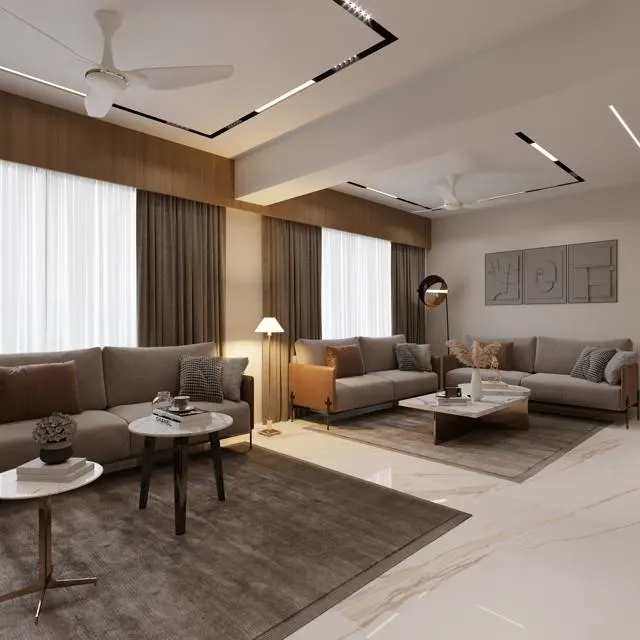
Rubberwood and MDF are the two materials Indian furniture buyers most often weigh against each other, and the two they most often misunderstand. Both are sold as sensible, affordable, reasonably eco-friendly alternatives to expensive solid teak and to cheap particle board, and both turn up in flat-pack furniture, modular wardrobes, beds, dining tables and cabinets. But they are completely different kinds of material — one a natural hardwood, the other an engineered board — and they behave differently enough that choosing the wrong one for a given job leads to sagging shelves, swollen edges or furniture that fails years early.
The confusion is made worse by marketing. Rubberwood is sold under names like plantation hardwood, Malaysian hardwood or simply solid wood, which makes it sound more exotic and premium than it is; MDF is sold as engineered wood, which makes it sound more natural than it is. A buyer comparing a solid wood bed with an engineered wood wardrobe may think they are comparing a hardwood with a composite, when in fact rubberwood is a genuine timber and MDF is a resin-bonded fibre board, with opposite strengths. Knowing what each actually is turns a confusing choice into a straightforward one.
This article compares the two head to head on the things that decide furniture quality — strength and load, moisture behaviour, screw and joint holding, finish, weight and sustainability — and then says plainly where each one belongs. It uses Indian trade sizes and indicative October 2026 prices, and it treats both materials with respect, because each is excellent in the right place and a mistake in the wrong one. Studios such as Aaditya Interior specify both routinely, often in the same piece of furniture, choosing each for the part of the job it does best.
What rubberwood is
Rubberwood is the timber of the Pará rubber tree, Hevea brasiliensis — the same tree tapped for natural latex across plantations in Kerala, the north-east, Southeast Asia and beyond. When a rubber tree stops yielding latex economically, at around 25 to 30 years, it is felled and the wood is used for furniture, which is why rubberwood is marketed as an environmentally sensible choice: it is a by-product of latex farming rather than timber from felled forest. It is a pale, straight-grained, medium-density hardwood, genuinely a solid wood, usually sold as finger-jointed and edge-glued boards and panels because the tree gives short, knotty lengths that are cut and joined into usable sizes.
As a solid hardwood, rubberwood is strong, takes screws and joinery well, and can be planed, moulded and polished like any timber. Its weaknesses are specific to its origin. Fresh rubberwood is full of sugars and starch that attract fungi and borer insects, so it must be properly kiln-dried and chemically treated — seasoned and preservative-treated — before use; untreated rubberwood is notorious for borer attack. It is also only moderately durable outdoors and swells and moves with humidity like any solid wood, so it needs a good finish and is not a marine timber. Treated and finished well, it makes sound, long-lasting furniture; treated poorly, it fails.
What MDF is
MDF — medium-density fibreboard — is an engineered board made by breaking wood down into fine fibres, mixing them with resin, and pressing the mix under heat into a dense, perfectly uniform sheet with no grain, no knots and no voids. That uniformity is its defining quality: nothing routes, carves, moulds or paints as smoothly, which is why MDF is the natural material for fluted panels, CNC-cut jaali fronts, moulded shutter profiles and flawless matte-painted surfaces. It comes in standard 2440 by 1220 mm sheets in thicknesses from about 6 mm up, with 12 to 18 mm usual for furniture and 25 mm for heavy tops.
MDF's weaknesses are the mirror of its strengths. Because it is made of fibre and resin, it has no grain to grip a screw along, so screws driven into the face or especially the edge hold poorly and can split the board unless pre-drilled and supported with proper fittings. And because it is absorbent fibre, MDF swells irreversibly on contact with water — a swollen MDF edge never recovers its shape — which rules it out of kitchens' wet zones, bathroom vanities and any damp exposure. It is also heavy for its size. Used dry, decorative and well-fixed, MDF is superb; used near water or asked to carry heavy loads on long unsupported spans, it disappoints.
Head to head: the comparison that decides furniture
Put side by side, the two materials trade strengths cleanly. On strength and load, rubberwood wins: as a solid hardwood it carries load across a span without sagging and makes sturdy frames, legs and rails, where MDF shelving sags over long unsupported spans and MDF legs are not used structurally. On moisture, rubberwood is better but not waterproof — it moves with humidity and needs a good finish, while MDF fails outright on water contact. On screw and joint holding, rubberwood takes screws, dowels and traditional joinery; MDF needs pre-drilling and special fittings and should never be screwed blind into its edge.
On finish, MDF wins decisively: its flawless, grainless face takes paint, PU and lacquer to a perfect smoothness that solid wood's grain and finger-joints cannot match, and it routes into fluted and carved fronts that would be laborious in timber. On weight, rubberwood is lighter for the same strength, making larger pieces easier to move, while MDF is dense and heavy. On sustainability both have a good story — rubberwood as a latex by-product, MDF as a board made from wood waste and fast-grown fibre — provided the resins and preservatives used are of good quality. The table sets this out.
| Property | Rubberwood (solid hardwood) | MDF (engineered board) |
|---|---|---|
| Strength / load | Strong; good for frames, legs, spans | Weak in bending; shelves sag over long spans |
| Moisture behaviour | Moves with humidity; not waterproof | Swells irreversibly on water contact |
| Screw / joint holding | Holds screws, dowels, joinery well | Poor edge grip; needs pre-drilling and fittings |
| Finish quality | Grain and finger-joints show through | Flawless for paint, PU, routing, fluting |
| Weight | Lighter for the same strength | Dense and heavy |
| Insect / treatment need | Must be seasoned and borer-treated | Not attacked by borers; resin-bonded |
| Best role | Structure — frames, legs, rails, tops | Surface — painted shutters, panels, fronts |
Where rubberwood is the right choice
Rubberwood belongs wherever furniture must carry load or take stress through joints. Bed frames and slats, dining and study table legs and aprons, chair frames, sofa frames, the structural members of cabinets, and solid tops that will be used and knocked about all suit rubberwood, because it behaves like the timber it is — it holds joints, resists denting better than board, and can be repaired, sanded and refinished. It is also the better choice where the furniture will be moved, since it is lighter than MDF for the same strength. Finished with a good sealer it takes a warm, natural wood look that suits beds, dining sets and occasional furniture.
The non-negotiable with rubberwood is treatment. It must be bought kiln-dried, seasoned and borer-treated from a reliable source, because untreated rubberwood invites borer and fungal attack that destroys it from inside. A good finish all over, including the undersides and backs, keeps moisture out and movement down. Bought treated and finished properly, rubberwood is a sound, affordable solid wood; bought cheap and untreated, it is a false economy that powders within a few monsoons. This is the single most important thing a buyer can check.
Where MDF is the right choice
MDF belongs on the surface and in the dry, decorative work where its flawless face is the whole point. Painted and PU-finished shutters, CNC-cut jaali and lattice fronts, fluted wall and shutter panels, moulded and routed shutter profiles, decorative wall panelling in air-conditioned rooms, and lightweight non-load cabinet parts are all MDF's natural territory. In these roles its smoothness beats solid wood and it costs less, which is why the best-looking painted furniture in the country is MDF under the paint. It is also fine for dry, low-touch storage such as loft and wardrobe internals away from any water.
The non-negotiable with MDF is water. It must be kept out of kitchens' wet zones, bathroom vanities, utility areas and anywhere it may be splashed or stand in damp, because it swells on contact and never recovers. Where a humid or occasionally damp exposure is unavoidable but not a wet zone — a kitchen shutter near, but not at, the sink — the denser, more moisture-tolerant HDHMR board is specified instead of plain MDF. And its edges and screw points must be detailed properly: pre-drilled, supported with inserts or fixed into a solid sub-frame, never trusted to grip a screw driven blind into the raw edge.
Sizes and indicative costs
The two materials are sold in different ways, which reflects what they are. MDF comes in standard 2440 by 1220 mm (8 by 4 ft) sheets, and its price is quoted per square foot or per sheet: indicatively in October 2026, plain 18 mm MDF runs about ₹55 to ₹75 per square foot, or roughly ₹1,760 to ₹2,400 per sheet, excluding GST — cheaper than plywood and far cheaper than solid wood, which is part of its appeal for painted work. Rubberwood, being solid timber, is sold as finger-jointed boards and panels and is often priced by volume as well as by panel, running higher than MDF per equivalent area.
Indicatively, finger-jointed rubberwood furniture-grade boards run roughly ₹140 to ₹260 per square foot for an 18 mm equivalent, and solid rubberwood sections for frames and legs are quoted by the cubic foot, commonly around ₹1,500 to ₹2,500 per cubic foot, all figures excluding GST and varying with section, grade, treatment and city. The order of cost is clear: MDF is cheaper than rubberwood per area, rubberwood is cheaper than teak and good ply for structure, and both are far above particle board. But cost should follow the job — MDF where the finish rules, rubberwood where the load rules — rather than the headline rate alone.
| Material (18 mm, indicative Oct 2026) | ₹ per sq ft | Sold as / note |
|---|---|---|
| MDF (plain) | ₹55–75 | 2440 × 1220 mm sheet (≈ ₹1,760–2,400 each) |
| HDHMR (denser, humidity-tolerant) | ₹90–120 | Use where plain MDF would meet occasional damp |
| Rubberwood board (finger-jointed) | ₹140–260 | Furniture-grade panel; verify locally |
| Rubberwood section (frames, legs) | ₹1,500–2,500 per cft | Solid timber priced by volume; treated |
| Particle board (reference) | ₹25–45 | Cheapest; low load, dry only |
| Material | Common furniture thickness | Sheet / section | Grain |
|---|---|---|---|
| MDF | 12–18 mm; 25 mm for heavy tops | 2440 × 1220 mm sheet | None — uniform both faces |
| HDHMR | 12–18 mm | 2440 × 1220 mm sheet | None — denser, moisture-tolerant |
| Rubberwood board | 18–25 mm | Finger-jointed panel | Real grain; finger-joints visible |
| Rubberwood section | By cross-section | Solid timber, cut to size | Real grain along the length |
Common mistakes and how to avoid them
Two mistakes account for most failures. The first is MDF near water: an MDF bathroom vanity, an MDF kitchen base cabinet at the sink, an MDF panel in a damp utility — all swell, bubble and crumble, often within a year. The fix is to never use plain MDF in a wet zone, to use BWR or BWP plywood for kitchen and bathroom carcasses, and to use HDHMR where a shutter faces humidity but not direct water. The second is untreated rubberwood: a cheap rubberwood bed or table bought without proper seasoning and borer treatment powders from borer attack within a few seasons. The fix is to buy rubberwood only kiln-dried and preservative-treated, from a source that will say so.
Two smaller mistakes matter too. Screwing into MDF edges blind splits the board — always pre-drill and use proper inserts, cam fittings or a solid sub-frame. And finishing rubberwood on only the visible faces leaves the back and underside open to moisture, so it cups and moves — seal all faces. None of these is exotic; they are the everyday details that separate furniture that lasts from furniture that fails, and they are exactly what a careful carpenter or studio checks before the piece is built, not after it warps.
| Furniture part | Best material | Reason |
|---|---|---|
| Bed frame, slats, legs | Rubberwood | Carries load and takes joints; lighter to move |
| Dining / study table legs and apron | Rubberwood | Structural; resists knocks and refinishes |
| Painted or PU shutters | MDF | Flawless, grainless face for paint |
| Fluted / CNC-cut fronts | MDF | Routes and carves cleaner than solid wood |
| Kitchen base cabinet at sink | BWR / BWP plywood | Wet zone — rules out plain MDF |
| Loft and wardrobe internals (dry) | MDF or plywood | Dry, low-touch; MDF is economical |
Where these materials are heading
Both materials are improving at the edges. MDF is diversifying into moisture-resistant and fire-retardant grades and into the denser HDHMR board that tolerates humidity far better, widening where engineered board can safely go; low-emission boards with better resins are addressing indoor-air concerns. Rubberwood supply is growing as plantation latex yields age out, and better kiln-drying and treatment are making consistent, well-seasoned rubberwood more widely available, which is the main thing that has held its reputation back. Both are being marketed harder as sustainable choices, which is broadly fair as long as the treatment and resin quality are real.
The likely future is more combination, not a winner. Good furniture already uses each material for what it does best — rubberwood or ply frames carrying the load, MDF fronts carrying the finish — and that pairing is spreading as buyers get more informed. The question stops being rubberwood or MDF and becomes which part of this piece is each, which is how a studio such as Aaditya Interior specifies furniture in the first place. Understood that way, the two are not rivals but partners, and the only real mistake is using either one in the place meant for the other.
Seven rules for choosing between rubberwood and MDF
- Choose rubberwood for structure — frames, legs, rails, slats and hard-used solid tops that carry load.
- Choose MDF for surface — painted and PU shutters, fluted and CNC panels, moulded fronts, dry wall panelling.
- Never use plain MDF in a wet zone; use BWR/BWP plywood there and HDHMR where a shutter meets humidity.
- Buy rubberwood only kiln-dried, seasoned and borer-treated, and seal all its faces including backs and undersides.
- Pre-drill and use proper inserts or a sub-frame for any screw into MDF; never drive blind into its raw edge.
- Avoid long unsupported MDF shelf spans; support them or use a stronger board to stop sagging.
- Let the job decide, not the headline price — and combine both materials in one piece where that is best.
Frequently asked questions about rubberwood and MDF
Is rubberwood better than MDF?
Neither is simply better — they are good at opposite things. Rubberwood, a solid hardwood, is stronger, holds screws and joints, and suits frames, legs and tops. MDF, an engineered board, has a flawless face for paint, fluting and CNC work but is weak in bending and swells on water. Use rubberwood for structure and MDF for finished surfaces; the best furniture uses both.
Is rubberwood real wood?
Yes. Rubberwood is genuine solid timber from the Pará rubber tree, used after the tree stops yielding latex, usually sold as finger-jointed and edge-glued boards. It is marketed as plantation or Malaysian hardwood. It must be kiln-dried and borer-treated, because untreated rubberwood is prone to borer and fungal attack, but treated well it is a sound, affordable hardwood.
Can MDF be used in a kitchen?
Only away from water. Plain MDF swells irreversibly on contact with water, so it must not be used for kitchen base cabinets at the sink or any wet zone — use BWR or BWP plywood there. For shutters that face kitchen humidity but not direct water, the denser, more moisture-tolerant HDHMR board is used instead of plain MDF. MDF is fine for dry decorative kitchen elements.
Which lasts longer, rubberwood or MDF furniture?
In the right place, both last well; in the wrong place, both fail fast. Well-treated, well-finished rubberwood used for structure lasts for decades and can be repaired and refinished. Well-fixed MDF used dry for painted and decorative surfaces also lasts for years. Rubberwood fails if left untreated, and MDF fails if it meets water — so longevity depends on matching each to its job.
Is MDF cheaper than rubberwood?
Yes, per unit area. Indicatively in October 2026, 18 mm plain MDF is about ₹55 to ₹75 per square foot, while finger-jointed rubberwood board is roughly ₹140 to ₹260 per square foot, both excluding GST. But cost should follow the job: MDF is the economical choice for painted surfaces, while rubberwood earns its higher price where strength and screw-holding are needed.
Sources & standards
- Bureau of Indian Standards — IS 12406 (medium density fibreboard), IS 303 (plywood for general purposes) and IS 710 (marine plywood), for board grades
- Indian Council of Forestry Research and Education / Rubber Board publications — Hevea brasiliensis rubberwood properties, seasoning and preservative treatment
- Bureau of Indian Standards — IS 401 (preservation of timber) — seasoning and treatment of rubberwood against borer and fungal attack
- Neufert, Architects' Data, and Time-Saver Standards — furniture materials, board sizes and fixing details
- Board and panel manufacturers' technical data (generic Indian market) — MDF, HDHMR and finger-jointed rubberwood sheet sizes and grades
- Price ranges: indicative October 2026 estimates — confirm locally before budgeting