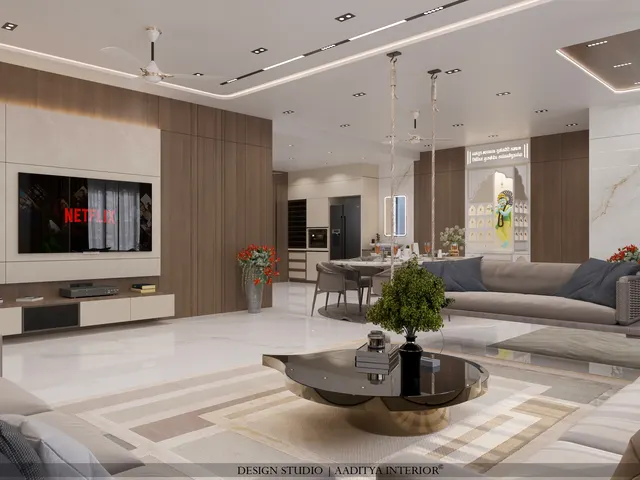
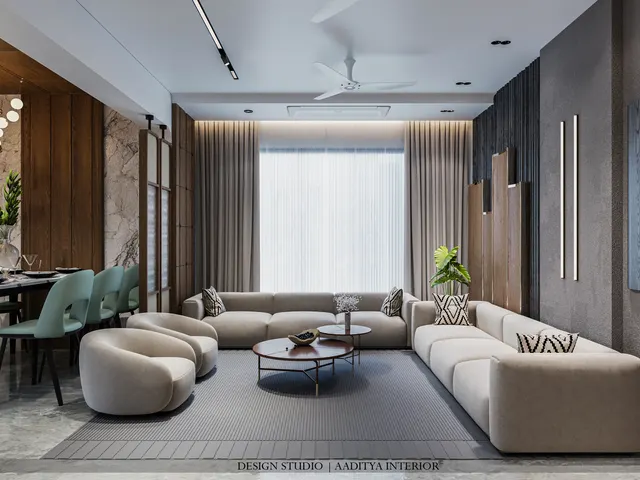
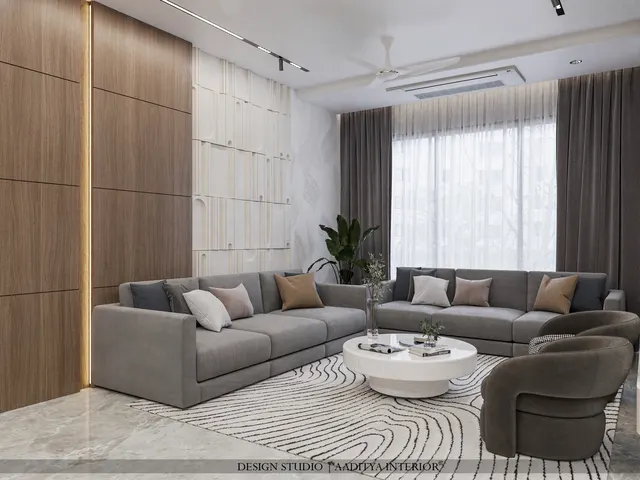
Scandinavian and Japandi are the two most asked-for looks in the calm, minimal end of interior design, and they are constantly confused. Both are light, both are wooden, both are uncluttered, and both promise the same thing: a peaceful home that feels bigger and cleaner than it is. Browse enough mood boards and the two blur into one pale, plant-filled, beige-and-wood picture. Yet they come from different places, follow different rules, and feel genuinely different to live in. Choosing the wrong one for a home — or mixing them without understanding either — is why so many minimal rooms end up looking like a showroom rather than a home.
The confusion is understandable, because Japandi is literally a hybrid of the two: the word blends Japanese and Scandinavian. But a hybrid is not the same as its parents, and knowing where each idea comes from is what lets a designer dial a room warmer or cooler, busier or barer, with intention. For Indian homes the stakes are practical as well as aesthetic: one of these styles copes far better with bright sun, dust and colourful daily life than a literal Nordic copy does, and knowing which is half the battle.
This article separates the two clearly: where each comes from, the handful of variables that actually distinguish them — colour temperature, wood tone, contrast, texture and how much is on show — and then which one suits an Indian home, with indicative October 2026 costs and a set of rules for getting either right.
Where each style comes from
Scandinavian style grew out of the Nordic countries — Denmark, Sweden, Norway, Finland — and above all out of their light. For much of the year the north has very little daylight, so homes evolved to catch and hold every bit of it: pale walls, pale wood, white-painted floors, large windows and light fabrics that bounce light around a room. The long dark winters also gave the style its emotional core, the idea of hygge — cosiness, comfort and warmth against the cold — expressed in soft wool throws, candles, sheepskins and layered textures. The famous mid-century Scandinavian furniture added honest craftsmanship and gentle organic curves. The result is a look that is light and airy but also soft and cosy, never cold.
Japanese design comes from an almost opposite climate and a much older philosophy, but arrives at a surprisingly similar calm. Its roots are in Zen restraint, the tea ceremony and the idea of wabi-sabi — finding beauty in simplicity, imperfection and the marks of age. Traditional Japanese interiors are low to the ground, built on natural materials — wood, paper, tatami, stone — and kept almost empty, with a single carefully chosen object given space to be noticed. Where Scandinavian design fills a room with cosy texture, Japanese design empties it until only the essential remains. Japandi takes the warmth and function of the Scandinavian home and the restraint, darker wood and lower lines of the Japanese one, and tries to hold both in balance.
The real variables that separate them
Once the origins are clear, the differences become measurable rather than vague. Five variables do almost all the work. Colour temperature: Scandinavian leans cool and bright — crisp whites, cool greys, pale blues — while Japandi leans warm and muted — greige, clay, soft black, muted green. Wood tone: Scandinavian loves the palest woods, ash, birch and whitened oak; Japandi mixes pale with deliberately darker woods, walnut and stained oak, for contrast. Contrast: Scandinavian keeps contrast low and even; Japandi uses stronger contrast, especially a little black, to create calm tension. Texture and layering: Scandinavian piles on soft cosy layers — throws, cushions, sheepskins, rugs; Japandi strips back to a few textures and more empty surface. And styling density: a Scandinavian room is pleasantly full, a Japandi room is deliberately bare.
| Variable | Scandinavian | Japandi |
|---|---|---|
| Colour temperature | Cool and bright — white, cool grey, pale blue | Warm and muted — greige, clay, soft black |
| Wood tone | Palest woods — ash, birch, whitened oak | Pale mixed with dark — walnut, stained oak |
| Contrast | Low and even | Stronger; a little black for tension |
| Texture | Many cosy layers — wool, sheepskin, rugs | Few textures, more bare surface |
| Styling density | Pleasantly full | Deliberately sparse |
| Overall feeling | Light, warm, cosy | Calm, grounded, restrained |
Which suits an Indian home?
For most Indian homes, Japandi is the easier and more forgiving of the two, for several practical reasons. First, light: Indian daylight is strong and warm, and the cool, bright Scandinavian palette can read as stark or clinical under it, whereas Japandi's warmer, muted tones settle beautifully in that light. Second, wood: India's own furniture tradition is in warmer and darker woods such as teak and sheesham, which sit naturally in a Japandi scheme but fight the pale-blond Scandinavian ideal. Third, dust and life: a sparse Japandi room with few surfaces on show is easier to keep clean than a Scandinavian room layered with throws, cushions and open shelving, which collect dust quickly in Indian cities. None of this rules out Scandinavian — it can be lovely in a cooler hill-station home or a north-lit flat — but Japandi usually adapts with less strain.
Whichever style is chosen, the single most important discipline is restraint in what goes on show. Both looks are ruined the same way — by clutter — but Japandi is less forgiving, because its whole effect depends on empty surface. A low sideboard with one plant and one ceramic reads as Japandi; the same sideboard covered in a dozen objects reads as a mess in any style. The practical trick Aaditya Interior uses is to design in generous closed storage so that daily clutter has somewhere to disappear, leaving the visible surfaces calm. The table below gives a workable material and cost guide for either look.
| Element | Scandinavian choice | Japandi choice | Indicative October 2026 cost |
|---|---|---|---|
| Flooring | Pale laminate or whitened oak | Warm matt laminate or oak, mid tone | ₹90–300 per sq ft installed |
| Walls | Crisp white emulsion | Greige / clay lime or putty finish | ₹18–120 per sq ft of wall |
| Wardrobe / storage | Pale laminate, handleless | Mixed pale and walnut, matt | ₹1,200–2,500 per sq ft |
| Sofa / seating | Light grey fabric, cosy throws | Muted clay or olive, low frame | ₹35,000–1,20,000 per sofa |
| Lighting | Warm 2700–3000 K, paper or pale shades | Warm 2700 K, dark or paper shades | ₹1,500–12,000 per fitting |
Building either look, piece by piece
Choosing between the two styles is half the work; building the chosen one without drifting into a vague beige blur is the other half. The safest way is to build from the shell outward, taking the decisions in order so that each one sets up the next. The shell comes first: the floor and the walls, because they are the largest surfaces and the hardest to change later. For a Scandinavian scheme the floor is a pale ash or whitened oak and the walls are a crisp white; for a Japandi scheme the floor is a mid-toned oak or a warm matt laminate and the walls are a greige, clay or soft lime finish. Getting this shell right is most of the battle, because it fixes the colour temperature of the whole room.
The big pieces come next: the sofa, the bed, the wardrobe and the dining table. Here the wood tone does the heavy lifting. Scandinavian furniture stays at the palest end — light frames, soft organic shapes, blond legs — while Japandi mixes a pale base with a deliberately darker wood, walnut or stained oak, and keeps the frames low to the ground. The metal that comes with these pieces follows the same split: chrome or brushed steel reads Scandinavian, while black or aged brass reads Japandi. Deciding the wood tone of the big pieces before buying any of them is what keeps a room from becoming an accidental mixture of both styles at once.
The wood ladder above is the quickest tool for keeping a scheme honest. Scandinavian lives at the far pale end and stays there; Japandi deliberately spans the range, anchoring a pale base with a walnut accent and a touch of black for contrast. For Indian homes the ladder has a happy middle: teak and sheesham, the country's own furniture woods, sit right where Japandi wants them, which is a large part of why Japandi adapts here so naturally. The table below lays the two styles side by side, layer by layer, so a shopping list can be built without guesswork.
| Layer | Scandinavian | Japandi |
|---|---|---|
| Floor tone | Pale ash or white oak | Mid oak or walnut mix |
| Wall colour | Crisp white | Greige or clay |
| Big furniture | Light frames, soft shapes | Low frames, darker wood |
| Metal | Chrome or brushed steel | Black or aged brass |
| Textile | Wool, sheepskin, layered | Linen, few, flat-woven |
| Lighting shade | Paper or pale fabric | Paper or dark shade |
Styling and the finishing touches
With the shell and the big pieces settled, the styling decides whether a room reads as Scandinavian or Japandi, because this is where the two genuinely part ways. Scandinavian styling is generous and cosy: several leafy plants, grouped soft-pastel ceramics, framed prints hung close as a little gallery, layered throws and cushions, a soft textured rug. Japandi styling is sparse and deliberate: one sculptural branch rather than a jungle, a single matt imperfect ceramic given space, one restrained ink-style artwork, a flat muted rug and few or no throws. The same sideboard reads as Scandinavian when it carries a cheerful cluster and as Japandi when it carries one object and a lot of empty surface.
Textiles and plants are the easiest way to tune a finished room warmer or cooler without rebuilding it. Swapping cool grey wool for warm linen, or a mass of leafy plants for a single branch in a ceramic, shifts a room a long way along the Scandi–Japandi range in an afternoon. This is useful in practice, because many Indian clients are unsure at the outset which way they lean, and a neutral shell with mid-toned wood can be dressed either way and adjusted once the family has lived in it for a while. The table below sets out how the same accessories are handled differently in each style.
| Accessory | Scandinavian approach | Japandi approach |
|---|---|---|
| Plants | Several, leafy and green | One sculptural branch |
| Ceramics | Soft pastels, grouped | One matt, imperfect piece |
| Art | Framed prints, gallery-hung | One quiet ink-style work |
| Rug | Soft, textured, pale | Flat, muted, plain |
| Throws | Layered and cosy | One folded, or none |
One rule holds for both styles and overrides everything else: keep the lighting warm, at around two thousand seven hundred to three thousand kelvin, and dimmable. Cool white light destroys the calm of either look in an instant, turning a soft Scandinavian room clinical and a warm Japandi room grey. Combined with generous closed storage to swallow daily clutter, warm light is what lets either style survive real family life rather than looking good only in photographs. Build the shell carefully, choose the wood tone before the furniture, style with restraint, and light it warm — do those four things and a room will read clearly as one style or the other, and stay calm for years.
Living with either style in an Indian home
Both styles were born in cultures that own comparatively little and change their homes slowly, and that is worth remembering in an Indian context, where family life is fuller, guests are frequent and belongings accumulate. Neither Scandinavian nor Japandi survives a home with nowhere to put things; their whole effect rests on calm surfaces, and calm surfaces need generous hidden storage behind them. The practical lesson is to over-provide closed storage at the design stage — a full wall of cupboards, drawers under every bed, a deep entry unit for shoes and bags — so that daily life has somewhere to disappear and the visible room can stay as spare as the style demands.
The second adjustment is to use local materials and crafts rather than importing a catalogue. Indian teak and sheesham, cane and rattan, handloom cotton and linen, handmade ceramics and lime-plaster walls all sit comfortably in a Japandi scheme and give it a rootedness that imported blond furniture never quite achieves. Scandinavian schemes can borrow the same local woods in paler finishes. Built this way, around what the country already makes well, either style stops being a borrowed look and becomes a genuinely liveable one — calm, warm and quietly personal rather than copied from a distant showroom floor.
Finally, it helps to accept that a real home is never as bare as a styled photograph, and that is perfectly fine. The goal is not emptiness for its own sake but calm — a room where the eye can rest, where the few things on show are there because they are loved or used, and where everything else is tidied away with ease. A Scandinavian room reaches that calm through warmth and soft layers; a Japandi room reaches it through restraint and space. Either is a worthy aim, and either, built with local materials and honest storage, will comfortably outlast the trend that first introduced it.
Where these styles are going
Both styles are maturing rather than fading. Scandinavian design is drifting warmer, picking up more wood tone and softer, earthier colours — moving towards the Japandi middle ground. Japandi itself is settling from a trend into a stable, lasting language of calm, and is increasingly blended with local materials rather than treated as an import. In India that means Japandi schemes built around Indian teak and sheesham, local lime-plaster walls, handmade ceramics and cane or rattan, rather than copied Nordic catalogues. The clear direction for both is towards warmth, natural materials and a quiet, uncluttered calm that suits how people actually want to live — which is why neither is likely to go out of style soon.
Rules for getting either look right
- Decide warm or cool first: Scandinavian runs cool and bright, Japandi warm and muted.
- Match the wood to the style: palest woods for Scandinavian, pale mixed with walnut for Japandi.
- Control contrast: keep it low and even for Scandi; add a little black for Japandi tension.
- Layer cosy texture for Scandinavian; strip back to a few textures and empty surface for Japandi.
- Design generous closed storage so daily clutter disappears and surfaces stay calm.
- Keep lighting warm at 2700–3000 K for both; avoid cool white, which kills the calm.
- In bright Indian light and dusty cities, lean Japandi — it copes better than literal Scandinavian.
- Use Indian teak, sheesham, cane, lime plaster and handmade ceramics rather than copying a Nordic catalogue.
Frequently asked questions
What is the main difference between Scandinavian and Japandi?
The main difference is colour temperature, wood tone and how much is on show. Scandinavian is cool and bright, uses the palest woods, and layers a room with cosy textures until it is pleasantly full. Japandi is warm and muted, mixes pale wood with darker walnut or stained oak, adds a little black for contrast, and keeps surfaces deliberately bare. Both aim for calm, but they reach it from opposite directions.
Is Japandi just Scandinavian with darker wood?
Not quite. Darker wood is part of it, but Japandi also brings the Japanese ideas of restraint, empty space and wabi-sabi — beauty in simplicity and imperfection. A Scandinavian room is cosy and full; a Japandi room is spare and grounded, with fewer, better objects given room to breathe. The darker wood is a symptom of that deeper difference, not the whole of it.
Which is better for a small Indian flat?
Japandi usually suits a small Indian flat better. Its warm, muted palette settles well under strong Indian daylight, its mid-to-dark woods match local teak and sheesham, and its sparse styling is easier to keep clean in dusty cities. Scandinavian works best in cooler, north-lit or hill-station homes where its pale, cool palette does not read as stark.
Can Scandinavian and Japandi be mixed?
Yes — Japandi is itself a mix, so leaning a room slightly one way or the other is natural. The key is to commit to one colour temperature and contrast level so the room reads as deliberate. Problems only arise when a room is half cool-bright and half warm-dark with no clear direction, which looks unresolved rather than intentionally blended.
Sources & standards
- Design museums and major design surveys — Nordic mid-century design, hygge, and Japanese wabi-sabi and Zen interior traditions
- Victoria and Albert Museum, London — Scandinavian and Japanese design in context
- Neufert, Architects' Data — living-room furniture dimensions, seating and circulation clearances
- National Building Code of India 2016, Part 8 — lighting levels and colour temperature guidance for living spaces
- Price ranges: indicative October 2026 estimates — confirm locally before budgeting