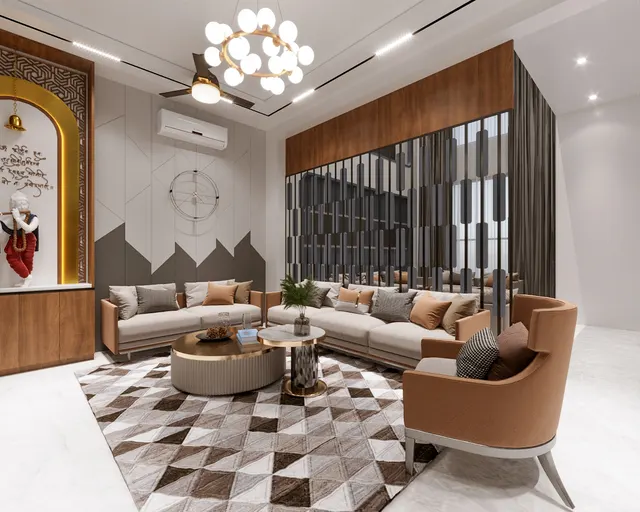
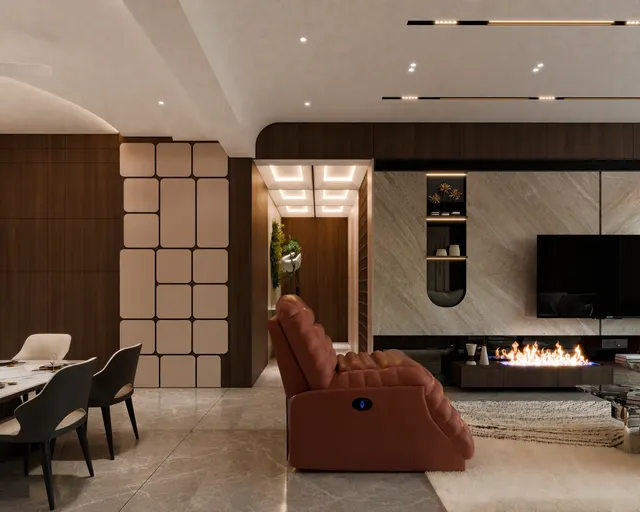
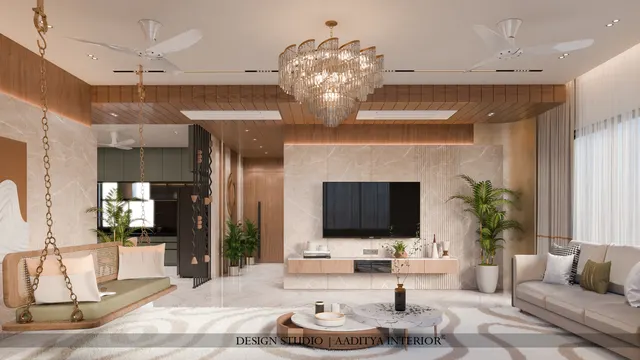
Southwestern interior design is the look of the high desert of the American Southwest — the adobe towns of New Mexico and Arizona, Santa Fe and Taos — where Spanish colonial building met the earthen architecture of the Pueblo peoples. It is a style built from the land it comes from: walls of sun-dried mud brick, floors of baked clay, ceilings of raw timber, and colour borrowed directly from sand, rust, clay and sky. To an Indian eye it feels oddly familiar, because the ingredients are the ingredients of a Rajasthani haveli or a Kutch home — thick earthen walls, lime and mud plaster, terracotta, carved wood and bold woven textiles. That shared desert logic is exactly why the style translates so well to Indian homes.
The style is often reduced to a cliché — cactus prints, a cow skull on the wall and orange paint — and done that way it looks like a theme restaurant. Real Southwestern design is quieter and warmer than that. It is about material honesty: surfaces that look hand-made, colours drawn from a narrow earthy range, and a few strong accents of turquoise and woven pattern against a calm background. It rewards texture over gloss, and age over newness. Done well it produces rooms that feel grounded, sun-warmed and restful, which is a welcome antidote to the cold, glossy, all-white interiors that have dominated Indian flats for a decade.
This article sets out where the style comes from, the desert palette at its heart, the materials and surfaces that carry it, and the textiles and patterns that lift it. It then turns to the practical question an Indian reader actually has: how to bring this warmth into a Surat flat or an Ahmedabad bungalow without it looking like a costume, and why the style's climate roots make it genuinely sensible in hot, dry parts of the country rather than merely fashionable.
Where the style comes from
Southwestern design has three ancestors, and each left a clear mark. The oldest is Pueblo architecture: for centuries the Pueblo peoples of the Southwest built with adobe — sun-dried bricks of mud and straw — stacked into thick-walled, flat-roofed houses finished with smooth mud plaster, with rounded corners, deep window reveals and projecting roof beams. Those thick earthen walls stored the cool of the night and released it through the hot day, a passive-cooling idea identical to the one behind a Rajasthani fort or a Kutch bhunga. The soft, rounded, hand-smoothed forms of adobe are the single most recognisable feature of the style.
The second ancestor is Spanish colonial: settlers from Mexico brought carved wooden doors and corbels, wrought iron, heavy timber-beamed ceilings, arched openings, Talavera tilework and a Catholic tradition of niches (nichos) set into the wall for images. The third is the living craft of the region's peoples — the bold geometric weaving of Navajo rugs and blankets, Pueblo pottery with its black-on-cream patterns, and silver-and-turquoise jewellery. Southwestern interior design is simply the domestic blend of these: the earthen shell of the Pueblo house, the carved wood and iron of the Spanish, and the colour and pattern of the region's textiles and pottery.
The desert palette
Colour is where Southwestern style lives or dies. The palette is narrow and entirely earthy: the warm neutrals of sand, clay and bone form the background, deeper terracotta, rust and brown make the middle, and a small number of accents — turquoise above all, then sage green and the black-on-cream of Pueblo pottery — bring it to life. The discipline is to keep the room overwhelmingly in the warm neutral and mid bands and to use the bright accents sparingly. A whole wall of orange shouts; a terracotta floor with cream plaster walls and one turquoise door reads as considered. A useful ratio is roughly seventy per cent warm neutral, twenty per cent mid earth tone and ten per cent accent.
These colours carry warmth because they are the colours of baked earth and low desert sun, and they behave well in Indian light. The strong, warm daylight of Gujarat and Rajasthan flatters ochre, terracotta and rust, where it can make a cool grey look dirty. In a north-lit room the same earth tones add the warmth the light lacks. The one accent to use carefully is turquoise: it is the signature of the style and a little goes a long way — a painted door, a run of tiles, a few cushions or a piece of pottery, rather than a feature wall. Black appears only as the graphic line of woven and painted pattern, never as a dominant surface.
| Role | Share of room | Typical tones | Where to use |
|---|---|---|---|
| Background neutral | About 70% | Adobe sand, cream, bone, pale ochre | Walls, ceilings, large sofas, floors |
| Mid earth tone | About 20% | Terracotta, rust, clay brown, wood | Rugs, leather, pottery, beams, tiles |
| Cool accent | Small | Turquoise, sky blue | A door, tiles, cushions, one artwork |
| Green accent | Small | Sage, olive, cactus green | Plants, a throw, glazed pottery |
| Graphic line | Minimal | Black, charcoal on cream | Woven pattern, pottery, iron work |
Materials and surfaces
Southwestern design is a material style before it is a colour style, and the surfaces do most of the work. The walls want a hand-finished, slightly irregular plaster rather than flat machine-smooth paint — a textured lime or clay plaster, or a limewash with visible brush movement, that catches the light the way smoothed adobe does. Floors are baked terracotta tiles, warm-toned natural stone, or a polished earthy concrete; a cool white vitrified tile fights the whole mood. Timber is everywhere and always warm and a little rough: exposed ceiling beams, carved doors and corbels, chunky furniture in mango, sheesham or similar woods, left matte rather than high-gloss polished.
Two details carry the Spanish colonial thread. The first is the nicho — a niche set into a thick wall to hold a piece of pottery, a lamp or an image, often with a gently arched top, which is both a practical recess and a signature of the style. The second is wrought iron: lamp fittings, grille work, curtain rods, drawer pulls and candle holders in plain black iron, which reads as hand-forged. Leather belongs here too — a tan or cognac leather sofa or a pair of club chairs ages into exactly the warm, worn look the style wants. Across all of it the rule is texture and patina: surfaces should look touched by hand and softened by use, not sprayed in a factory.
| Surface | Southwestern choice | Avoid | Indicative Oct 2026 cost |
|---|---|---|---|
| Walls | Textured lime / clay plaster, limewash | Flat glossy enamel, cool greys | Textured finish ₹40–150+ per sq ft |
| Floors | Terracotta tile, warm stone, earthy concrete | Bright white vitrified tile | Terracotta/stone, verify locally per sq ft |
| Ceilings | Exposed timber beams, warm plaster | Glossy white false ceiling alone | Beam/cladding work, quoted per project |
| Timber | Matte mango or sheesham, carved doors | High-gloss PU, veneer-look laminate | Furniture priced per piece |
| Metal | Plain black wrought iron | Chrome and bright steel | Iron fittings, per piece |
| Upholstery | Tan or cognac leather, handloom cotton | Shiny synthetic, cold grey fabric | Leather sofa, furniture pricing |
Textiles, pattern and the finishing layer
If the shell is earthy and calm, the textiles are where colour and pattern arrive. The defining textile is the flat-woven rug in bold geometry — the Navajo blanket tradition of stepped diamonds, zigzags and banded stripes in rust, cream, black and turquoise. An Indian home can reach the same effect honestly with a handwoven dhurrie or a Kilim-style flatweave in desert colours, which sits perfectly within the style and supports local craft. Layered textiles — a leather sofa dressed with woven cushions and a chunky throw, a bench with a folded blanket — build the warmth. Pattern should be concentrated in these soft furnishings and in pottery, not spread across walls and curtains at once.
The finishing layer is objects, and here restraint separates the designed room from the themed one. A few pieces of earthenware or black-on-cream pottery, a woven basket, a cluster of cacti or succulents in terracotta pots, a piece of silver-and-turquoise-inspired craft, a single dramatic artwork — placed in the niches and on the mantel and shelves — complete the look. The cow skull and cactus-print cushion, used once and with irony, can work; used repeatedly they tip the room into cliché. The test is material honesty: every object should look hand-made, natural or genuinely old, and nothing should look like it was bought to match a theme.
| Element | Southwestern expression | Indian-sourced equivalent |
|---|---|---|
| Floor rug | Navajo-style flatweave, bold geometry | Handwoven dhurrie or kilim in desert tones |
| Cushions and throws | Woven wool, stripes and diamonds | Handloom cotton, Kutch or Rajasthani weave |
| Pottery | Pueblo black-on-cream earthenware | Terracotta and studio ceramic in earth glazes |
| Baskets and storage | Coiled grass baskets | Cane, moonj grass and sabai baskets |
| Plants | Cacti and succulents in clay pots | Succulents, aloe, snake plant in terracotta |
| Metal craft | Silver and turquoise, wrought iron | Brass, black iron, blue-pottery accents |
Making it work in an Indian home
The style suits India for a reason deeper than fashion. Southwestern design grew in a hot, dry, high-sun climate, and its core moves are climate moves: thick walls and earthy mass that even out the day's heat, small or shaded openings, light-reflecting pale plaster outside, warm sheltered interiors, and natural materials that breathe. Those are the same strategies that make a Rajasthani haveli or an old Ahmedabad house comfortable. In a hot, dry Indian city the look is therefore not a costume but a sensible response to the same conditions — which is why it settles into a Gujarat or Rajasthan home so naturally. In humid coastal India it reads as purely decorative, which is fine, but the climate logic applies most where summers are dry and fierce.
Practically, most Indian homes adopt the style as a layer over a conventional flat rather than by building in adobe. The highest-impact, lowest-cost moves are a textured earthy wall finish in place of flat paint, a warm terracotta or stone floor in at least the main living space, one or two built-up niches, exposed or clad timber on a ceiling beam, and then the textiles, leather and pottery. A single turquoise door or a run of hand-painted tiles anchors the accent colour. The plan should keep the room uncluttered and let the surfaces and a few strong objects carry the style, which also keeps the cost sensible — it is a style of good materials used simply, not of expensive things.
Furniture, lighting and the ceiling
Furniture in the style is low, solid and a little rustic: chunky wooden tables and sideboards with visible grain and simple joinery, leather seating, woven or rush seats, and iron-framed pieces. Nothing is delicate or glossy. Lighting is warm and layered — wrought-iron lamps and lanterns, mica or parchment shades that throw a honey-coloured glow, and candles. Cool white LED light destroys the mood; the whole scheme wants warm light at around 2700 kelvin, the colour of a low sun, and plenty of pools of light rather than one bright ceiling fixture. Dimmers help a great deal, because the style is at its best in the warm, soft light of late afternoon.
The ceiling is a real opportunity. The exposed timber ceiling of adobe architecture — round beams called vigas carrying smaller cross-poles called latillas — is one of the most atmospheric features of the style. An Indian home can echo it with exposed or clad timber beams, a run of bamboo or timber poles over a passage, or simply a warm timber-finished ceiling in the main room instead of a flat white one. The beams add shadow, warmth and a sense of shelter that a plain slab cannot. Where a real timber ceiling is not possible, warm-toned paint or a timber-look finish with concealed warm cove light gets part of the way there.
Room by room
The style adapts differently to each room, and a whole home does not need the full treatment everywhere. The living room is where it is worth committing — a textured wall, a warm floor, a leather sofa on a flatweave rug, a niche and warm layered light. Bedrooms take a gentler version: earthy walls, a woven throw and headboard, and restraint so the room still rests the eye. Kitchens and dining rooms carry the look through terracotta or Talavera-style tile, open timber shelving and earthenware on display. Bathrooms suit warm stone, hand-glazed tile and a plain black iron mirror frame. Balconies and verandahs are a natural home for terracotta pots, a bench and a woven rug. The table below gives one strong move per room and a reminder of what to keep simple, so the warmth is spread without the whole flat turning into a theme.
| Room | The move that carries the style | Keep simple |
|---|---|---|
| Living room | Textured wall, warm floor, leather on a flatweave rug | One accent colour, uncluttered |
| Dining | Terracotta or Talavera-style tile, earthenware on show | A single pendant, plain table |
| Bedroom | Earthy walls, woven throw and headboard | Restraint — let the room rest |
| Kitchen | Open timber shelves, warm tile backsplash | Avoid cool white fronts |
| Bathroom | Warm stone, hand-glazed tile, black iron frame | No glossy cold finishes |
| Balcony / verandah | Terracotta pots, a bench, a woven rug | Weatherproof materials only |
| Niche / pooja wall | A plastered nicho with soft light | One object, well lit |
Where the style is going
Southwestern design is riding the broader return to warmth, craft and natural material that has pushed back against a decade of cool grey minimalism. Its modern, pared-down version — sometimes called desert modern or Santa Fe modern — keeps the earthy palette, plaster walls and timber but strips out the clutter and the clichés, pairing clean-lined furniture with hand-finished surfaces. That restraint is exactly what makes it work in a contemporary Indian flat. The sustainability argument helps too: earthen plasters, lime, terracotta, local timber and handwoven textiles are low-energy, repairable and regional, which fits the growing interest in materials that age well and can be sourced close to home. The style's future is less cactus and cow skull, and more honest earth tones and texture.
Rules for a Southwestern room that is not a cliché
- Keep roughly seventy per cent of the room in warm neutrals and let terracotta, wood and leather carry the warmth.
- Use turquoise and bold pattern only as accents — a door, tiles, cushions, pottery — never as whole walls.
- Choose a textured, hand-finished wall surface over flat glossy paint; the irregularity is the point.
- Floor the main space in terracotta, warm stone or earthy concrete, not cool white vitrified tile.
- Bring in real timber — a beam, carved door or chunky furniture — left matte rather than high-gloss.
- Light the room warm (around 2700 K) in layered pools, with dimmers; avoid cool white ceiling glare.
- Anchor seating on a handwoven flatweave rug in desert colours, large enough for the furniture to sit on.
- Prefer materials and objects that look hand-made, natural or genuinely old; avoid matched theme-shop sets.
Frequently asked questions
What colours define Southwestern interior design?
Earth tones: adobe sand, cream and ochre as the warm neutral background, terracotta, rust and wood brown in the middle, and turquoise, sage green and black-on-cream pattern as accents. The scheme stays overwhelmingly warm and earthy, with the cool turquoise used sparingly as the signature accent rather than as a dominant colour.
Is Southwestern style the same as boho or farmhouse?
They overlap but are distinct. Southwestern style is specifically rooted in the desert — adobe plaster, terracotta, Native American and Spanish colonial craft, and a desert palette. Bohemian style is more eclectic and global in its pattern mixing, and farmhouse style is cooler, more painted-timber and white. Southwestern is the warmest and most earthy of the three, and the most tied to a particular place and climate.
Does Southwestern design suit Indian homes?
Very well, especially in hot, dry regions such as Gujarat and Rajasthan, because the style's roots are climate-driven: thick earthy walls, warm plaster, shaded openings and natural materials are the same strategies that cool a haveli. Many of its elements — terracotta, handwoven rugs, carved wood, earth-glazed pottery — can be sourced locally, so the look can be built honestly and affordably with Indian craft.
How do I get the look without a big budget?
Concentrate on surfaces and a few strong pieces. A textured earthy wall finish instead of flat paint, a warm floor in the main room, one built-up niche, a timber-finished ceiling beam, warm lighting, and then a handwoven dhurrie, a leather or warm-fabric sofa and a cluster of terracotta pottery will carry the style. It is a look of good materials used simply, so it does not depend on expensive furniture.
Sources & standards
- National Park Service (United States) — descriptions of Pueblo and Spanish colonial adobe architecture of the Southwest
- General references on adobe construction, vigas and latillas, and nichos in Southwestern building
- Craft documentation on Navajo weaving and Pueblo pottery traditions, described generically
- Bureau of Indian Standards — IS 2690 (burnt clay flat terracing tiles) and general finishes practice
- National Building Code of India 2016, Part 8 (Building Services) — interior lighting guidance
- Price ranges: indicative October 2026 estimates — confirm locally before budgeting