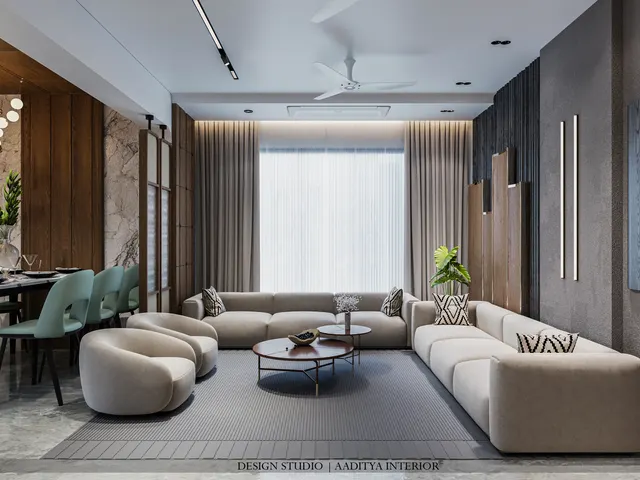
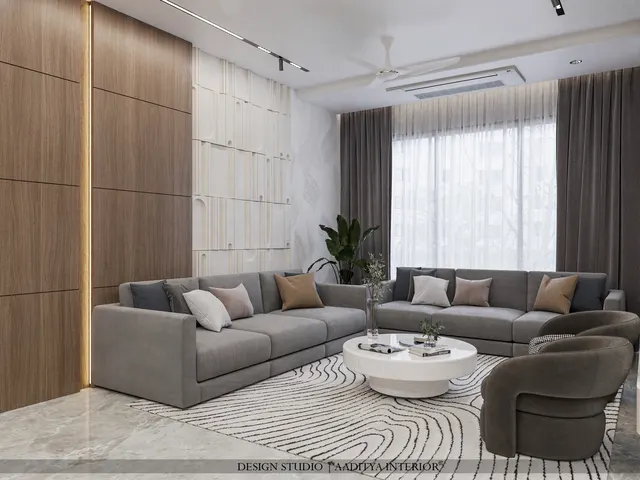
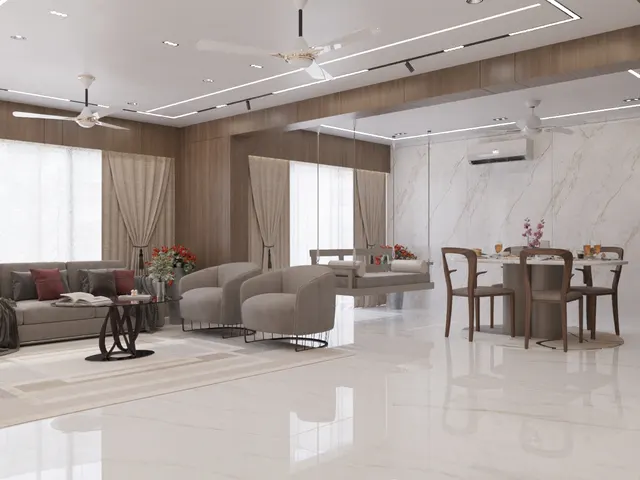
A turnkey contract is the simplest way to build a house in Lucknow, and also the easiest way to be surprised by the final bill. The homeowner signs one agreement, the contractor delivers a finished house with flooring, paint, doors, plumbing, electrical fittings and sanitary ware, and the family walks in with furniture. The attraction is obvious: one point of responsibility, one payment schedule and no daily supervision of masons, carpenters and electricians. The risk is equally obvious. When everything is bundled into a single per-square-foot rate, nobody can see what the cement, the steel, the tiles and the labour actually cost, and two quotations that look only a few hundred rupees apart can describe houses of very different quality.
Lucknow adds its own conditions to the calculation. The city grows fast along Faizabad Road, Sultanpur Road, Gomti Nagar Extension and the outer ring road, where new plots are large and the soil is often filled or low-lying. Summers are long and hot, the monsoon is sharp, and winter mornings are foggy and cold. A house that is cheap to build but hot in May, damp in July and cold in January is not a bargain. The ground floor needs a proper plinth above the road, the roof needs insulation and a good slope for rainwater, and the walls need plaster and paint that survive both dust and rain. These are not luxuries; they are the difference between a house that lasts thirty years and one that starts leaking in its second monsoon.
This article breaks a turnkey quotation open so that a homeowner in Lucknow can read one properly. It explains what turnkey means and what it usually excludes, gives the per-square-foot rates that are typical in October 2026, and separates the material breakup from the labour breakup, item by item. It covers the approvals, the hidden costs and the payment stages, and it ends with a checklist that can be used to compare two contractors on the same basis. All prices are indicative October 2026 estimates and must be confirmed locally before budgeting, because cement, steel, sand and labour move with the season and the locality.
What turnkey really means in Lucknow
A turnkey house contract means the contractor supplies the materials, the labour, the supervision and the coordination, and hands over a house that is ready to live in. In Lucknow practice that normally covers excavation and foundation, the reinforced concrete frame or load-bearing walls, brickwork, plaster, flooring, wall and ceiling paint, doors and windows with hardware, kitchen platform and sink, bathroom fittings and sanitary ware, electrical wiring with switches and sockets, plumbing with overhead tank and fittings, and the compound wall with a gate. The family still buys the furniture, the curtains, the fans and lights beyond the basic points, and the appliances. Some contractors include fans and basic lights; many do not, and the difference should be written down before the agreement is signed.
The items most often excluded are the ones that cause arguments later. The list usually includes the boundary wall beyond a basic height, the gate, the borewell or municipal water connection, the electricity connection and meter deposit, the sewer or septic tank connection beyond the plot, landscaping, the approval fees of the Lucknow Development Authority, and GST where it applies. A quotation of ₹1,800 per sq ft that excludes the boundary wall, the water connection and the approvals is not cheaper than a quotation of ₹1,950 per sq ft that includes them; it is simply less complete. The honest comparison is the total cost of a finished, occupied house, not the headline rate on the first page.
There are two common ways contractors price turnkey work in Lucknow. The first is a single per-square-foot rate on the built-up area, which is simple to compare but hides the specification. The second is a detailed estimate with a rate analysis for each item, which takes longer to prepare but lets the homeowner change one item, such as the tile or the door, and see the price move. Aaditya Interior recommends asking for the second form even when the first is offered, because a single rate with no specification is a promise without a description. The specification sheet should name the brand or grade of cement, steel, tiles, sanitary ware, switches and paint, and the thickness of the flooring, the plaster and the slab.
The per-square-foot rate in Lucknow in October 2026
For a typical two-floor house on a 1,000 to 1,500 sq ft plot, the turnkey rate in Lucknow in October 2026 is about ₹1,650 to ₹2,000 per sq ft for a basic specification, about ₹2,000 to ₹2,400 per sq ft for a mid-range specification, and about ₹2,800 to ₹4,200 per sq ft for a premium specification. Basic means vitrified tile flooring, standard cement plaster, emulsion paint, flush doors with laminate, aluminium or UPVC windows, standard sanitary ware and modular switches. Mid-range adds better tiles, designer bathroom fittings, wooden or designer main doors, false ceiling in the living areas and a modular kitchen carcass. Premium adds imported or large-format tiles, stone cladding, designer sanitary ware, full false ceilings, home automation points and a finished modular kitchen.
The rate moves with the plot and the design, not only with the specification. A narrow plot with a long, shared wall costs more per square foot than a square plot of the same area, because the ratio of wall to floor is higher. A house with a cantilevered balcony, a double-height living room or a large staircase costs more than a simple rectangular box. A basement adds a large cost and is rarely economical for a single house in Lucknow unless the water table and the soil allow it. A stilt floor for parking is cheaper than a basement and is common on newer plots, but it needs proper columns and a clear height of at least 2,400 mm for cars. These are the reasons two neighbours with the same plot size can receive quotations that differ by ₹200 to ₹300 per sq ft.
The rate also moves with the season. Cement and steel prices are higher in the summer building season and softer in the monsoon, when work slows. Sand and aggregate prices depend on the supply from the Gomti and the nearby quarries, and on transport distance from the yard to the site. Labour rates rise when many sites are active at once and fall when work is scarce. A quotation is therefore a snapshot, and a good contractor states how long it is valid for, usually thirty to sixty days. A homeowner who collects quotations in one month and starts work six months later should expect the rates to be revised, and should ask for the revision in writing rather than discovering it in the first bill.
| Specification | Rate per sq ft | Typical flooring | Doors and windows | Kitchen and baths |
|---|---|---|---|---|
| Basic | ₹1,650–2,000 | Vitrified tiles ₹85–160 per sq ft | Flush doors, aluminium windows | Granite platform, standard fittings |
| Mid-range | ₹2,000–2,400 | Designer vitrified or ceramic | Designer doors, UPVC windows | Modular carcass, better fittings |
| Premium | ₹2,800–4,200 | Large-format or imported tiles | Teak or designer doors | Full modular kitchen, designer ware |
| Structure only | ₹1,050–1,350 | Not included | Not included | Not included |
| Finishing only | ₹600–1,050 | As per selection | As per selection | As per selection |
Material breakup: where the money goes
The structure is the largest single material cost and also the least visible after handover. Cement, steel, sand, aggregate, bricks and concrete together take roughly a third of the total cost. A typical house uses cement in the range of ₹350 to ₹450 per bag in October 2026, steel reinforcement at about ₹55 to ₹70 per kg, and bricks at about ₹6 to ₹9 per piece for a good kiln brick, with the exact price depending on the kiln, the season and the distance from the site. The foundation type matters more than the brand of cement: a filled plot needs deeper footings or a raft, and the extra concrete and steel show up directly in the bill. A soil test before the design is the cheapest insurance a homeowner can buy, and it usually costs ₹8,000 to ₹15,000.
Finishes are the second largest group and the one where the homeowner has the most choice. Flooring tiles range from about ₹85 to ₹160 per sq ft installed for standard vitrified tiles, rising to ₹250 to ₹425 per sq ft for large-format or premium tiles, and further for imported stone. Wall paint costs about ₹20 to ₹30 per sq ft for emulsion with putty, and designer finishes cost more. The kitchen is a concentrated cost: a modular kitchen carcass in BWR plywood with laminate shutters typically costs ₹1,340 to ₹1,800 per sq ft of cabinetry, with a quartz counter at about ₹250 to ₹425 per sq ft and a granite counter lower. Bathroom fittings vary more than any other item, from standard Indian brands at a few thousand rupees per bathroom to designer sets at ten times that price.
Doors, windows and grills are often underestimated. A good flush door with laminate costs about ₹8,000 to ₹15,000 fitted, a designer or teak door costs ₹20,000 to ₹45,000, and the main door with a frame and hardware can cost ₹25,000 to ₹60,000. Aluminium windows cost about ₹350 to ₹650 per sq ft and UPVC windows about ₹450 to ₹800 per sq ft, with grills and mosquito mesh extra. Electrical work includes wiring, switches, distribution boards and earthing, and the cost depends on the number of points: a house with a point for every appliance costs more than one with a single socket per room, but it is far cheaper to add the point during construction than to chase the wall later. Plumbing follows the same logic, and a second bathroom or a kitchen on the first floor adds a full set of pipes, fittings and a water line.
| Material group | Share of total | Typical rate | What drives the price |
|---|---|---|---|
| Cement, steel, bricks | 28–34% | ₹350–450 per bag cement | Foundation type, soil, design |
| Sand and aggregate | 5–8% | By truckload, varies | Distance, season, quality |
| Flooring and tiling | 10–14% | ₹85–160 per sq ft | Tile size, brand, laying pattern |
| Paint and putty | 4–6% | ₹20–30 per sq ft | Finish, coats, external texture |
| Doors, windows, grills | 8–12% | ₹8,000–45,000 per door | Material, hardware, size |
| Plumbing and sanitary | 7–10% | ₹15,000–35,000 per bath | Fittings brand, number of baths |
| Electrical and switches | 6–9% | By point, ₹1,200–2,500 | Number of points, brand |
Labour breakup: who does what, and what it costs
Labour is the part of the bill that homeowners understand least, because it is paid in stages and through the contractor rather than directly. In a turnkey contract the labour is bundled, but it still has a structure. Masonry and concreting take the largest share, because the mason, the helper and the shuttering carpenter are on site for the longest period. A mason in Lucknow typically earns about ₹800 to ₹1,200 per day in October 2026, a helper about ₹450 to ₹650 per day, and a shuttering carpenter about ₹900 to ₹1,300 per day. These rates vary with the season, the locality and whether the work is paid by the day or by the measured quantity.
The finishing trades are paid by the square foot or by the item, and their rates are easier to compare. Painting costs about ₹20 to ₹30 per sq ft for emulsion with putty, and the painter's rate includes the labour only, not the paint. Tile laying costs about ₹25 to ₹45 per sq ft for standard sizes and more for large-format tiles, which need a levelled bed and careful cutting. Plumbing and electrical work are usually quoted per point or as a lump sum for the house, with an electrician charging about ₹1,200 to ₹2,500 per point depending on the wiring and the switch brand. The carpenter for doors, wardrobes and kitchen work is usually the most expensive finishing trade per day, at about ₹1,000 to ₹1,500 per day, because the work is slow and precise.
The contractor's supervision, transport, tools and profit sit on top of the material and labour cost, and a transparent quotation shows them as a line, not as a hidden margin. A reasonable contractor margin in Lucknow is about 8 to 12 per cent of the direct cost for a turnkey house, and it covers the site engineer, the transport of materials, the scaffolding and tools, and the risk of rework. A quotation with no visible margin is not cheaper; it means the margin is hidden inside inflated material rates. The homeowner should ask for the rate analysis of the main items, compare the cement, steel and tile rates with the market, and check that the labour rates are realistic. A rate that is far below the market usually means the contractor plans to recover the difference later, through extra items or a lower specification.
| Trade | Typical rate (Oct 2026) | Paid by | Where it shows in the bill |
|---|---|---|---|
| Mason | ₹800–1,200 per day | Day or measured work | Structure, brickwork, plaster |
| Helper / mazdoor | ₹450–650 per day | Day | Loading, mixing, cleaning |
| Shuttering carpenter | ₹900–1,300 per day | Day or per sq ft | Slabs, beams, columns |
| Furniture carpenter | ₹1,000–1,500 per day | Day or per sq ft | Doors, wardrobes, kitchen |
| Electrician | ₹1,200–2,500 per point | Per point | Wiring, switches, boards |
| Plumber | ₹1,500–3,000 per point | Per point | Pipes, fittings, sanitary |
| Painter | ₹20–30 per sq ft | Per sq ft | Putty, primer, emulsion |
Approvals, deposits and the costs nobody quotes
The Lucknow Development Authority approval is the first cost outside the construction rate, and it is the one most often forgotten. The approval fee depends on the plot area and the built-up area, and the drawings must be prepared by a licensed architect and submitted with the ownership papers, the site plan and the structural design. The fee itself is usually a few thousand to a few tens of thousands of rupees, but the drawings, the structural design and the liaison typically add ₹15,000 to ₹35,000. Building without approval is a false economy: the house cannot be sold or mortgaged easily, and the authority can stop the work at any stage. The approval should be in hand before the excavation begins.
The service connections are the second group of hidden costs. A new electricity connection with a meter and a deposit typically costs ₹5,000 to ₹15,000 depending on the load, and a higher load for air conditioners and a water pump costs more. A borewell, where municipal water is not reliable, costs about ₹40,000 to ₹90,000 depending on the depth and the pump, and the water in some localities needs a filter or a softener. The sewer connection or a septic tank with a soak pit costs about ₹25,000 to ₹60,000. None of these appear in a per-square-foot construction rate, and together they can add ₹75,000 to ₹2,00,000 to the total. The boundary wall, at about ₹1,200 to ₹2,000 per running foot for a 5-foot wall with plaster, is another item that is often quoted separately.
GST is the third item to confirm in writing. A turnkey construction contract for a house is generally a works contract, and the GST treatment depends on the structure of the agreement and whether the contractor supplies the materials. Some contractors quote the rate inclusive of GST and some quote it exclusive, and the difference is not small. The homeowner should ask for the GST treatment in the quotation, check whether the agreement is a works contract or a labour contract, and keep the tax invoices for every payment. The agreement should also state who pays for the water and electricity used during construction, who bears the cost of rework if the work is defective, and what happens if the work is delayed beyond the agreed date.
| Item outside the rate | Typical cost | Who arranges it | When it is paid |
|---|---|---|---|
| LDA approval + drawings | ₹15,000–35,000 | Architect + owner | Before construction |
| Electricity connection | ₹5,000–15,000 | Owner + contractor | Before handover |
| Borewell + pump | ₹40,000–90,000 | Owner | During construction |
| Septic tank / sewer | ₹25,000–60,000 | Contractor | During construction |
| Boundary wall + gate | ₹1,200–2,000 per rft | Contractor | Near handover |
| GST on the contract | As per agreement | Contractor | With each bill |
Timeline and the payment schedule that protects the homeowner
A two-floor house of about 1,000 to 1,500 sq ft per floor in Lucknow typically takes ten to fourteen months from excavation to handover, and the timeline is set by the curing of concrete as much as by the availability of labour. The foundation and plinth take one to two months, the ground-floor slab and columns another month, and the first-floor structure a further month. Brickwork and plaster take two to three months, and the finishes, including flooring, painting, doors and fittings, take three to four months. The monsoon slows the work, and a house started in June will usually take a month longer than one started in October. A contractor who promises a two-floor house in six months is either planning to skip the curing time or to use a very large team, and the homeowner should ask which it is.
The payment schedule is the homeowner's main protection, and it should follow the work, not the calendar. A common and fair pattern is 10 per cent on signing, 15 per cent on completion of the plinth, 20 per cent on completion of the ground-floor slab, 20 per cent on completion of the first-floor slab and brickwork, 15 per cent on completion of plaster and flooring, 10 per cent on completion of painting and fittings, and the final 10 per cent on handover after the snag list is cleared. The snag list is the list of small defects found at handover, such as a door that does not close, a tap that leaks or a patch of paint that is uneven, and the final payment should not be released until the list is cleared. A retention of 5 per cent for three to six months after handover is a reasonable protection against defects that appear only after the house is occupied.
The agreement should also record the measurement method. The built-up area is usually measured on the outer face of the walls, including the staircase and the balconies at half or full area depending on the local practice, and the method should be written down before the work begins. The most common dispute in Lucknow is not about the rate but about the area: the contractor measures the balcony at full area and the homeowner expects half, and the difference on a 2,000 sq ft house is the price of a bathroom. The agreement should name the measurement method, the specification, the brands, the timeline, the payment stages, the penalty for delay and the defect liability period. A written agreement of a few pages is worth more than a handshake and a low rate.
How to compare two quotations in Lucknow
Two quotations can only be compared when they describe the same house. The first step is to give both contractors the same drawing, the same specification sheet and the same list of inclusions and exclusions, and to ask each of them to quote item by item. The second step is to check the quantities: the area of brickwork, the area of plaster, the area of flooring and the number of doors and windows should be nearly the same in both quotations, because they come from the same drawing. A quotation with a much smaller quantity of plaster or flooring is not cheaper; it is incomplete, and the missing quantity will appear later as an extra item.
The third step is to check the rates of the five items that matter most: cement, steel, bricks, tiles and paint. If one contractor's cement rate is far below the market, the brand or the grade is probably different. If the tile rate is far below the market, the tile is probably a lower grade or a smaller size. The fourth step is to check the labour and the supervision: a contractor with a site engineer and a written quality checklist will usually quote more than a contractor who leaves the site to the mason, and the difference is visible in the finished house. The fifth step is to check the contractor's past work, not only the photographs but the actual houses, and to speak to two homeowners whose houses were completed at least a year earlier.
The final step is to read the agreement before the advance is paid. The agreement should state the rate, the specification, the measurement method, the payment stages, the timeline, the penalty for delay, the defect liability period and the GST treatment. It should also state what happens if the homeowner changes a tile or a fitting midway, because a change during construction costs more than the same change on paper. A contractor who refuses to put the specification in writing is not offering a bargain; the contractor is offering a dispute. A homeowner who pays a large advance before the agreement is signed has given away the only leverage that exists.
| Check | What to look for | Red flag | Good sign |
|---|---|---|---|
| Same drawing + spec | Both quote the same house | Different quantities | Quantities match closely |
| Cement and steel rates | Near market rates | Far below market | Brand and grade named |
| Tile and paint rates | Grade and size named | No grade mentioned | Brand, size, grade listed |
| Payment stages | Linked to completed work | Large advance up front | 10% on signing, rest by stage |
| Past work | Two houses over a year old | Only photographs shown | Owners happy to show the house |
| Agreement | Spec, timeline, penalty | Verbal promises only | Written, signed, dated |
Where Lucknow construction costs are heading
Construction costs in Lucknow have risen steadily over the past decade, driven by the price of steel and cement, the cost of skilled labour and the demand for better finishes. The trend is unlikely to reverse, because the city is growing and the supply of skilled masons, carpenters and electricians is not growing as fast as the demand. The more useful question for a homeowner is not whether the rate will fall but which parts of the house will cost more in future and which can be built efficiently now. The structure, the waterproofing and the plumbing are the parts that are expensive to change later, and they deserve the best quality the budget allows. The finishes, the fittings and the paint are the parts that can be upgraded later without breaking the walls, and they can be chosen at a mid-range level now and improved in a few years.
Two changes are already visible in Lucknow. The first is the wider use of ready-mix concrete and machine-made blocks, which give a more consistent strength and a faster slab cycle than site-mixed concrete and hand-made bricks, and which are worth the small premium on a house where the structure matters. The second is the growing demand for energy-efficient houses: thicker walls on the west, smaller windows on the hot side, a roof with insulation and a light-coloured finish, and a provision for solar panels. These measures add a small amount to the construction cost and reduce the electricity bill for the life of the house, and they are easier to build in now than to add later. A homeowner who plans to live in the house for twenty years should treat the structure and the thermal comfort as the investment, and the finishes as the part that can follow.
Rules for building a turnkey house in Lucknow
- Get the soil tested and the LDA approval in hand before the excavation begins, and keep the approval papers with the agreement.
- Ask every contractor to quote on the same drawing and the same written specification, item by item, with brands and grades named.
- Compare the total cost of a finished, occupied house, including the boundary wall, the connections and the approvals, not only the headline rate.
- Pay by completed stage, keep the final 10 per cent for handover, and hold 5 per cent retention for three to six months.
- Write the measurement method into the agreement, including how balconies, staircase and porch are measured.
- Check the cement, steel, tile and paint rates against the market, and treat a rate far below the market as a warning, not a bargain.
- Visit two houses the contractor completed more than a year ago, and speak to the owners about leaks, cracks and the snag list.
- Spend the best money on the structure, the waterproofing and the plumbing, and choose finishes that can be upgraded later.
Frequently asked questions
What is the turnkey house construction cost per sq ft in Lucknow in 2026?
The typical turnkey rate in Lucknow in October 2026 is about ₹1,650 to ₹2,000 per sq ft for a basic specification, about ₹2,000 to ₹2,400 per sq ft for mid-range, and about ₹2,800 to ₹4,200 per sq ft for premium. The rate depends on the plot, the design, the specification and the locality, and it excludes the boundary wall, the service connections, the LDA approval fees and GST unless the quotation says otherwise. Always confirm the current rate locally before budgeting.
Does a turnkey contract include the boundary wall and the gate?
Usually not, or only up to a basic height. The boundary wall is often quoted separately at about ₹1,200 to ₹2,000 per running foot, and the gate is priced by its size and material. The quotation should state the height, the plaster and the paint of the wall, and whether the gate, its frame and its hardware are included. Ask for this in writing before signing.
How long does it take to build a two-floor house in Lucknow?
A two-floor house of about 1,000 to 1,500 sq ft per floor typically takes ten to fourteen months from excavation to handover, including the curing time for concrete and the finishing trades. The monsoon adds time, and a house started in June will usually take about a month longer than one started in October. A promise of six months for two floors should be questioned.
What is the labour cost share in a turnkey house?
Labour, including masonry, shuttering, carpentry, plumbing, electrical and painting, typically accounts for about a fifth to a quarter of the total turnkey cost, with the rest going to materials, supervision, transport and the contractor's margin. A mason earns about ₹800 to ₹1,200 per day and a helper about ₹450 to ₹650 per day in Lucknow in October 2026. The share varies with the specification, because premium finishes need more skilled labour per square foot.
Is GST charged on a turnkey house construction contract?
The GST treatment depends on the structure of the agreement and whether the contractor supplies the materials, and it should be stated in the quotation. Some contractors quote the rate inclusive of GST and some exclusive, and the difference is significant. Ask for the GST treatment in writing, check whether the agreement is a works contract, and keep the tax invoices for every payment.
Sources & standards
- National Building Code of India 2016 (SP 7), Part 3 — Development Control Rules and General Building Requirements; Part 8 — Building Services
- BIS IS 456:2000 — Plain and Reinforced Concrete: Code of Practice
- BIS IS 1200 (Parts 1–18) — Method of Measurement of Building and Civil Engineering Works
- Neufert, Architects' Data, 4th edition — standard dimensions, clearances and room sizes
- Time-Saver Standards for Architectural Design Data — residential planning and services data
- Energy Conservation Building Code (ECBC) 2017 and BEE guidelines for efficient homes
- IGBC Green Homes Rating and GRIHA guidelines for resource-efficient residential construction
- Price ranges: indicative October 2026 estimates — confirm locally before budgeting