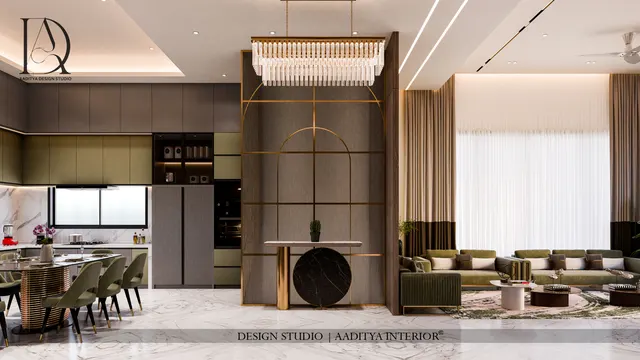
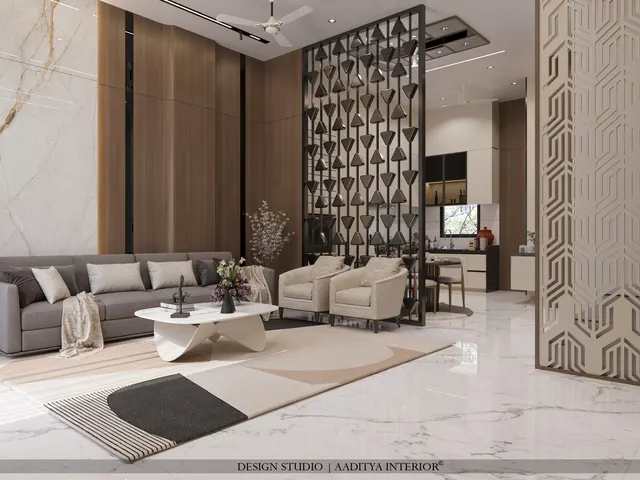
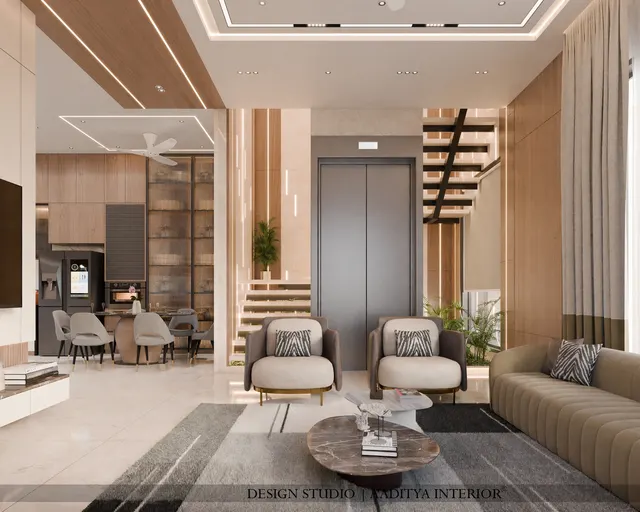
Walk into any tile showroom in India and the vocabulary arrives quickly: ceramic, vitrified, double charge, full body, nano, GVT, PGVT, slab, matt, glossy, high gloss, satin, carving, sugar, rustic. Salespeople use these words as if they were all the same kind of thing, but they are not. Some describe what the tile is made of, some describe where its design sits, some describe its size and some describe only how its surface has been finished. Mixing them up is how a family ends up with a glossy polished tile in a bathroom, a printed glaze on a heavy-traffic shop floor, or a slab tile that the site mason has never laid before.
India is one of the world's largest producers of ceramic tiles, and most of that production is concentrated in the Morbi cluster in Gujarat, which is why a buyer in Surat, Ahmedabad or Rajkot often sees the newest formats and finishes first. The choice is wider than ever, and that makes clear definitions more useful than ever. This article sorts the vocabulary into four questions — body, design layer, size and finish — and then gives dimensions, indicative October 2026 prices consistent with the other flooring guides on this site, laying details and room-by-room recommendations.
From red oxide to digital glaze: how Indian floors got here
For most of the twentieth century, Indian floors were made on site. Red and black oxide floors were trowelled by hand; mosaic and terrazzo floors were laid with marble chips and ground smooth; Kota, Shahabad and other local stones were cut and polished; and in Chettinad, handmade Athangudi cement tiles brought colour and pattern. Factory-made ceramic tiles were used mainly on bathroom and kitchen walls. The big change came when vitrified tiles — dense, very low-absorption tiles pressed and fired at high temperature — became widely available and affordable, and the Gujarat tile industry grew to supply the whole country.
Early vitrified tiles were mostly soluble-salt tiles, with colour penetrating only a shallow layer and a polished surface, often protected by a nano coating. Double-charged tiles followed, with a much thicker pattern layer. Then digital inkjet printing transformed the industry: it allowed any image — marble, wood, stone, concrete, fabric — to be printed on a glaze on top of a vitrified body. That is the glazed vitrified tile, or GVT, and its polished version, the PGVT. Over the last several years, manufacturers have pushed sizes up to large slabs that can clad whole walls, kitchen counters and furniture with almost no joints.
Question 1 — the body: ceramic or vitrified?
Every tile starts as a body of clay and minerals pressed and fired in a kiln. The key property of the body is water absorption: how much water a fired tile can soak up, measured as a percentage of its weight. International and Indian classifications for pressed tiles, set out in ISO 13006 and IS 15622, group tiles by this figure. Tiles with water absorption of 0.5 per cent or less are the densest group and are what the Indian market calls vitrified or porcelain. Ceramic wall tiles, by contrast, typically have water absorption above 10 per cent; their bodies are lighter and easier to cut but weaker and more porous, which is why they belong on walls.
Low absorption brings strength, frost and stain resistance and a long life on floors, which is why vitrified tiles have become the standard Indian floor. Every type discussed below — double charge, full body, nano, GVT, PGVT and slab — is a vitrified tile. The differences between them lie in the top few millimetres.
Question 2 — the design layer: double charge, full body, GVT and PGVT
Soluble salt and nano-polished tiles
The earliest mass-market vitrified tiles had their colour applied as soluble salts that penetrate a shallow depth into the surface, which was then polished. A nano coating is often applied to fill the microscopic pores opened by polishing, giving a shine and some stain resistance. These tiles are economical and still sold, but the colour range is limited, the polish can dull in heavy-traffic areas, and the coating wears with time.
Double charge vitrified tiles (DCVT)
In a double charge tile, the press fills the mould with two layers of powder: a pigmented pattern layer of about 3–4 mm on top of the base body. Because the design is thick, the tile can be polished and re-ground without losing its pattern, and a chip shows much less. Patterns are typically simple speckled, granite-like or plain colours. Double charge tiles are a sound choice for heavy-traffic floors — shops, offices, corridors, institutional buildings — and are commonly made in 600 × 600 and 800 × 800 mm.
Full body vitrified tiles
In a full body tile, the colour and texture run through the entire thickness. A chip or scratch reveals the same colour underneath, so wear barely shows. They are the toughest choice for commercial floors, external paving, steps, ramps and areas where heavy trolleys move, and they are often made in matt or structured finishes. Their limitation is design: through-body colour can imitate stone and concrete, but not the detailed veining of a printed marble.
GVT — glazed vitrified tiles
A GVT is a vitrified body with a layer of glaze on top, onto which the design is printed by digital inkjet. Because the design is a printed image, GVT can reproduce anything — Statuario marble, travertine, onyx, oak, concrete, terrazzo, fabric — with many different faces in each series so the floor does not repeat obviously. The glaze can be fired matt, satin or glossy, or textured. GVT is the most popular tile in Indian homes today because it gives the widest design range at a moderate price. Its limitation is that the design lives in a thin glazed layer, so a deep chip shows the body colour, and the glaze surface will eventually show wear in very heavy commercial traffic.
PGVT — polished glazed vitrified tiles
A PGVT is a GVT whose glaze has been polished after firing to a high, mirror-like gloss. It is the tile behind most "marble look" glossy living-room floors in Indian flats. The gloss deepens the colours and veining and reflects light, which makes rooms look larger and brighter. The trade-offs are that a polished surface is slippery when wet, shows scratches from grit more readily, and reflects glare from windows and downlights. PGVT belongs in dry living rooms, bedrooms, lobbies and wall cladding — not in bathrooms, kitchens, balconies, ramps or entrances that collect water and grit.
| Tile type | Where the design sits | Typical sizes (mm) | Strengths | Weaknesses | Indicative material price (₹/sq ft, Oct 2026) |
|---|---|---|---|---|---|
| Ceramic wall tile | Glaze on porous body | 300 × 450, 300 × 600 | Light, easy to cut, cheap, huge design range | Porous; not for floors in most cases | ₹40–80 |
| Nano / soluble salt vitrified | Shallow surface colour, polished | 600 × 600 | Economical, plain shine | Polish and coating wear; limited designs | ₹60–75 (lower end of vitrified band) |
| Double charge (DCVT) | 3–4 mm pigmented layer | 600 × 600, 800 × 800 | Heavy traffic, re-polishable, chips show less | Simple speckled patterns only | ₹60–90 |
| Full body vitrified | Through the whole body | 600 × 600, 600 × 1200 | Toughest; wear and chips barely show | Limited realism in design | ₹70–120+ |
| GVT | Printed on a glaze layer | 600 × 600, 600 × 1200, 800 × 800 | Widest design range, matt or gloss | Deep chips show body; glaze wears in heavy commercial use | ₹60–100 |
| PGVT | Printed glaze, polished | 600 × 1200, 800 × 1600 | High gloss marble look, bright rooms | Slippery when wet; shows scratches and glare | ₹65–120 |
| Slab tile (GVT/PGVT) | Printed glaze, matt or polished | 800 × 1600, 1200 × 1800, 1200 × 2400 | Few joints; walls, floors, counters, furniture | Specialist handling and laying; costly breakage | ₹120–300+ |
The prices above are indicative October 2026 material ranges per square foot, excluding GST, and sit inside the vitrified band used across this site's flooring articles — vitrified floor tiles at about ₹60–120+ per sq ft in material, plus about ₹25–40 per sq ft for laying. Premium brands, designer series and imported tiles go well beyond these figures; promotional lots can fall below them. Large slabs are priced separately and cost more to lay, as explained below.
Question 3 — size: from 600 × 600 to slab
Tile sizes in India have grown steadily. The 600 × 600 mm tile, once the premium choice, is now the everyday floor tile; 600 × 1200 mm and 800 × 800 mm are the common upgrades; and slabs of 800 × 1600 mm, 1200 × 1800 mm and 1200 × 2400 mm — with some manufacturers offering larger still — are used for statement floors and seamless walls. Larger tiles mean fewer grout lines and a calmer, more expensive-looking surface. They also demand a flatter substrate, better adhesive, more skilled laying and careful handling.
| Size (mm) | Typical thickness | Approx. area per tile | Best use | Laying notes |
|---|---|---|---|---|
| 300 × 600 (wall) | 8–9 mm | ≈ 1.9 sq ft | Bathroom and kitchen walls | Ceramic or vitrified; thin-bed adhesive |
| 600 × 600 | 8–9 mm | ≈ 3.9 sq ft | Floors in any room | Standard; most masons experienced |
| 600 × 1200 | 9–10 mm | ≈ 7.8 sq ft | Living, bedroom floors, wood-look planks | Back-butter; levelling clips advised; offset ≤ 1/3 to limit lippage |
| 800 × 800 | 9–10 mm | ≈ 6.9 sq ft | Large living rooms, lobbies, shops | Full bed; flat screed essential |
| 800 × 1600 | 9–11 mm | ≈ 13.8 sq ft | Feature floors, walls | Two people to lift; levelling system |
| 1200 × 1800 | 9–15 mm | ≈ 23.3 sq ft | Feature walls, large floors | Handling frame, suction lifters, slab adhesive |
| 1200 × 2400 | 9–15 mm (some 6 mm) | ≈ 31 sq ft | Floor-to-ceiling walls, counters, furniture | Specialist team; check lift and stair access |
What makes a slab different
A slab is not just a big tile. It is cut and finished more like stone: on site with rail cutters and wet saws, sometimes with waterjet or CNC for counters and sinks. A slab demands a substrate flat to within a few millimetres over 2 metres, a deformable high-performance adhesive applied to both the floor and the back of the slab, and a team that has laid slabs before. Breakage during transport or a bad cut is expensive, because the replacement is a whole slab. Before choosing slabs for a flat, check the lift car dimensions, the staircase turns and the door sizes; slabs that cannot reach the room have to be cut, which defeats their purpose. Laying labour for slabs is typically about ₹40–80 per sq ft (indicative October 2026), compared with ₹25–40 for standard tiles, and is often quoted as a separate specialist rate.
Question 4 — the finish: matt is not a tile type
Matt, satin, glossy, high gloss, lappato, rustic, carving and sugar are all finishes — descriptions of the surface sheen and texture — and most of them can be applied to GVT, and several to full body or slab tiles. A "matt tile" therefore tells only half the story; a matt GVT and a matt full body tile behave very differently when chipped. The finish decides three things that matter in daily life: how slippery the tile is when wet, how easily it shows dirt and scratches, and how much light and glare it reflects.
| Finish | What it looks like | Slip resistance when wet | Maintenance | Best rooms |
|---|---|---|---|---|
| Matt | No shine; soft, natural stone or concrete look | Good for indoor floors; check the rating for bathrooms | Hides scratches; shows oily marks if not cleaned | Bedrooms, kitchens, whole-home floors, commercial |
| Satin / soft gloss | Low sheen, gentle reflection | Moderate | Easy; a good compromise | Living, dining, bedrooms |
| Glossy / high gloss (PGVT) | Mirror-like shine, deep colour | Low — slippery when wet | Shows scratches, footprints and dust | Dry living rooms, lobbies, walls |
| Lappato (semi-polished) | Polished high points, matt low points | Moderate | Moderate | Living rooms, shops wanting sheen with grip |
| Rustic / structured | Textured, stone- or slate-like | High | Texture holds dirt; scrub occasionally | Balconies, terraces, ramps, parking, outdoor |
| Carving | Raised relief that follows the printed veins | Moderate to good | Moderate | Feature walls and floors |
| Sugar | Fine glittering texture | Moderate to good | Texture can hold grime | Living rooms, bedrooms, feature areas |
| Anti-skid (tested) | Matt or textured with a tested slip rating | High — R10–R11 or DCOF ≥ 0.42 typical for wet floors | Clean with a scrubbing brush | Bathrooms, wet kitchens, wash areas, pool decks |
The word "anti-skid" on a box is a marketing term unless it comes with a test value. Two test methods are widely used for tiles. The German DIN 51130 ramp test classifies floors from R9, the lowest, to R13, the highest; R10–R11 is generally appropriate for residential bathrooms and wet kitchens. The American ANSI A326.3 method measures the dynamic coefficient of friction, or DCOF, and a value of 0.42 or more is the commonly cited threshold for level interior floors that will be walked on when wet. Ask the dealer for the manufacturer's tested value for the exact product and finish.
Which tile goes where in an Indian home
Combining the four questions gives a practical room-by-room guide. The aim is not to use the most expensive tile everywhere but to match the body, design layer, size and finish to how each room is actually used. Aaditya Interior usually specifies one main floor tile throughout the dry areas of a home for continuity, and changes finish and size only where water, traffic or design demands it.
| Space | Recommended type | Size (mm) | Finish | Avoid |
|---|---|---|---|---|
| Living and dining | GVT or PGVT, or slab for a feature | 800 × 1600, 800 × 800, 600 × 1200 | Satin, matt or gloss | Gloss at the main door without a mat |
| Bedrooms | GVT; wood-look GVT planks | 600 × 1200, 200 × 1200 planks | Matt or satin | High gloss under bright downlights (glare) |
| Kitchen floor | GVT or full body | 600 × 600, 600 × 1200 | Matt with a tested slip rating | PGVT and high gloss — oil and water make them slippery |
| Kitchen backsplash | Ceramic, GVT or a slab panel | 300 × 600 or full slab | Gloss or matt | Heavily textured tiles behind the hob (hard to clean) |
| Bathroom floor | Anti-skid vitrified (tested) | 300 × 300, 600 × 600 with falls | Matt or structured, R10–R11 | Polished and glossy tiles |
| Bathroom walls | Ceramic, GVT or slabs | 300 × 600, 600 × 1200, slabs | Any; matt hides water spots | Joints at awkward heights — plan the layout |
| Balcony, terrace, wash area | Full body or rustic vitrified | 600 × 600 or smaller | Rustic or structured | Gloss; also thin glazes in direct rain |
| Shop and office floors | Double charge or full body | 600 × 600, 800 × 800 | Matt or lappato | Printed glaze in heavy trolley traffic |
| Staircase | Full body or step tiles with nosings | Step and riser sets | Matt, with anti-slip nosing | Glossy treads |
Laying it right: adhesive, joints and flatness
Most tile complaints in Indian homes — hollow sound, cracked tiles, lifted tiles, uneven edges — come from laying, not from the tile. The traditional method of setting tiles on a thick bed of sand-cement mortar with spot dabs leaves voids under the tile; when something heavy drops on the hollow area, the tile cracks. Large formats make the problem worse, because they flex and because thin mortar dabs cannot level a long tile. Modern practice is to lay tiles on a properly levelled screed using a polymer-modified cement tile adhesive applied with a notched trowel, with back-buttering of larger tiles to achieve near-full contact.
Tile adhesives in India are specified under IS 15477, and European classes such as C1 (normal) and C2 (improved), with additional letters for extended open time, reduced slip on walls and deformability (S1 and S2), are widely printed on bags. Large-format tiles and slabs need an improved, deformable adhesive. Rectified tiles — tiles ground to precise dimensions after firing — allow narrow joints of 2–3 mm, and slabs 1.5–2 mm, but no tile should be laid with zero joint. Levelling clip systems keep adjacent edges flush and are almost essential for 600 × 1200 mm and larger. Movement joints at walls, columns and across large rooms allow the floor to expand and contract with temperature without lifting or "tenting".
Quality checks before and after laying
- Check the box for size, thickness, shade or batch number and calibre; buy all tiles for a room from one batch, plus 5–10 per cent spares.
- Lay out a dry sample of several tiles on the floor in daylight to check shade variation and pattern repeat before laying starts.
- Check flatness of large tiles by placing two face to face; visible warp means trouble with lippage.
- Insist on a levelled substrate, a tile adhesive bag on site, and back-buttering for tiles of 600 × 1200 mm and above.
- After laying, tap tiles with a coin or a small rubber mallet; hollow sounds indicate voids under the tile.
- Keep foot traffic off fresh floors for at least 24 hours and protect polished tiles with sheets until all other work finishes.
Costs: putting the numbers together
For budgeting, separate the three parts of a tiled floor: tile material, laying labour with adhesive and grout, and extras such as skirting, spacers, levelling clips, epoxy grout and wastage. On a typical 200 sq ft living room in 600 × 1200 mm GVT at ₹60–100 per sq ft, material comes to about ₹12,000–20,000 before wastage; laying at ₹25–40 per sq ft adds about ₹5,000–8,000. The same room in 800 × 1600 mm PGVT slabs at ₹120–200 per sq ft costs about ₹24,000–40,000 in material, plus ₹8,000–16,000 for specialist laying at ₹40–80 per sq ft, and needs more spares because breakage is costlier. All of these are indicative October 2026 ranges excluding GST.
| Item | Indicative rate (Oct 2026) | Notes |
|---|---|---|
| Vitrified floor tile, material | ₹60–120+ per sq ft | GVT, PGVT, double charge, full body within this band |
| Slab tile, material | ₹120–300+ per sq ft | 800 × 1600 and larger; premium and imported higher |
| Ceramic wall tile, material | ₹40–80 per sq ft | 300 × 600 digital glaze and similar |
| Laying labour, standard tiles | ₹25–40 per sq ft | Includes normal adhesive work; large formats at the upper end |
| Laying labour, slabs | ₹40–80 per sq ft | Specialist team, levelling system, handling |
| Wastage and spares | 5–10 per cent of area | Higher for diagonal layouts and small rooms |
Where tiles are heading
Tile technology continues to move quickly. Digital printing and glazing now reproduce stone and wood with near-photographic depth, and "synchronised" textures align the surface relief with the printed veins. Slabs are getting larger and thinner, and are increasingly used as kitchen counters, tabletops, wardrobe shutters and bathroom vanities. Matt and soft-touch finishes have become the mainstream choice over high gloss in many premium projects. Manufacturers are investing in antibacterial glazes, recycled content and lower-energy kilns, and green building rating systems such as IGBC and GRIHA reward materials with environmental product declarations. Outdoor 20 mm porcelain pavers, laid on gravel or pedestals, are spreading on terraces and around pools.
Rules for choosing tiles
- Decide the body first: vitrified for all floors; ceramic only for walls.
- Choose the design layer by traffic: GVT and PGVT for homes, double charge or full body for heavy commercial floors.
- Treat matt, gloss and the rest as finishes, and choose them by slip, glare and maintenance.
- Never use polished or high-gloss tiles in bathrooms, wet kitchens, balconies, ramps or entrances.
- Ask for the tested slip rating — R10–R11 or DCOF ≥ 0.42 — for every wet floor.
- Check lift, stairs and door sizes before ordering slabs, and hire a team that has laid slabs before.
- Lay on a flat screed with polymer-modified adhesive and back-buttering; never on spot dabs.
- Buy one batch for each room, plus 5–10 per cent spares stored for future repairs.
Frequently asked questions
What is the difference between GVT and PGVT tiles?
Both are glazed vitrified tiles with a digitally printed design on a glaze layer. In a GVT the glaze is fired as it is — matt, satin, glossy or textured. In a PGVT the glaze is then polished to a high, mirror-like gloss. PGVT looks brighter and more like polished marble but is more slippery when wet and shows scratches more easily.
Which is better: GVT or double charge tiles?
For homes, GVT is usually better because it offers far more realistic designs at a similar price. For heavy-traffic commercial floors, double charge is often better because its 3–4 mm pattern layer wears and chips with less visible damage and can be re-polished.
Are matt tiles better than glossy tiles?
Matt tiles are better where safety and practicality matter — kitchens, bathrooms, entrances, homes with children and elders — because they are less slippery and hide scratches. Glossy tiles suit dry living rooms and walls where a bright, reflective look is wanted. Many homes use matt or satin throughout for safety and calm.
What size are slab tiles?
Slab tiles in India commonly come in 800 × 1600, 1200 × 1800 and 1200 × 2400 mm, with some manufacturers offering larger formats. Thickness is commonly about 9–15 mm, with some thin 6 mm products for walls and furniture. They need specialist handling, deformable adhesive and an experienced laying team.
Are PGVT tiles good for kitchens and bathrooms?
Not for floors. Polished glazed tiles become slippery when wet or oily. Use matt or textured vitrified tiles with a tested slip rating on kitchen and bathroom floors. PGVT can work on bathroom and kitchen walls, where slip is not an issue.
Sources & standards
- Bureau of Indian Standards — IS 15622:2017 (pressed ceramic tiles, specification) and IS 13630 (methods of test for ceramic tiles)
- ISO 13006 (ceramic tiles — definitions, classification, characteristics and marking) and ISO 10545 series (test methods)
- Bureau of Indian Standards — IS 15477 (adhesives for use with ceramic, glass and stone tiles, specification); EN 12004 adhesive classes C1, C2, S1, S2
- DIN 51130 (slip resistance, ramp method) and ANSI A326.3 (dynamic coefficient of friction of hard surface flooring)
- National Building Code of India 2016, Part 5 (building materials) and Part 7 (constructional practices and safety)
- Leading Indian tile manufacturers' technical catalogues for GVT, PGVT, double charge, full body and slab ranges, described generically
- IGBC and GRIHA rating system guidance on materials and environmental product declarations
- Price ranges: indicative October 2026 estimates — confirm locally before budgeting