
Few questions come up as often in an Indian home as which direction the bedroom should face and which way to sleep. Families take it seriously, elders have firm views, and buyers often rule out an otherwise good flat because a bedroom sits in the wrong corner. At the same time, many homeowners are unsure how much of the guidance is tradition and how much is practical, and they end up either ignoring it entirely or following it rigidly even when it fights the plan, the ventilation or the view.
This article treats Vastu as what it is: a traditional Indian system of orientation and placement, rich in guidance, that deserves respect as custom and is best applied with judgement rather than as fixed law. Much of the traditional advice on bedrooms also carries a sound design logic in the Indian climate — morning light from the east, the heavier evening heat from the west, privacy at the back of the plan — and where it does, that reasoning is given alongside the tradition. Where a belief is purely traditional, it is described as such, not presented as fact.
The aim is a balanced, usable guide: the traditional direction for the master, children's and guest bedrooms, which way tradition suggests sleeping and why, how to place the bed and what to keep away from it, and a practical layout that respects the custom while keeping the room comfortable and well planned. Small remedial changes carry an indicative October 2026 cost where a room cannot be moved.
What Vastu is, in brief
Vastu Shastra is an ancient Indian tradition of building orientation and spatial arrangement that relates the directions, the elements and the daily path of the sun to where activities and rooms should sit in a dwelling. It grew in a context without electric light or mechanical cooling, when the orientation of a house to the sun and wind genuinely governed how comfortable it was, and much of its guidance encodes that climate wisdom. It is followed widely across India as a matter of culture and comfort, and this article presents its bedroom guidance in that spirit — as traditional advice to weigh, not as a set of rules that override good planning or a family's needs.
Direction for each bedroom
Traditional Vastu places the master bedroom in the south-west of the home. The practical reading is that the south-west is the most grounded, private part of the plan — away from the entrance, quiet, and shaded from the harsh afternoon and evening sun on the right side with proper openings — which suits the room where the head of the household rests. Children's bedrooms are traditionally placed in the west or north-west, and a guest room in the north-west, which in plan terms keeps the guest near the entrance and the children in a lively, well-lit part of the house.
| Room | Traditional direction | Practical reading |
|---|---|---|
| Master bedroom | South-west | Quiet, private, away from the entrance |
| Children's bedroom | West / north-west | Lively, well-lit part of the plan |
| Guest bedroom | North-west | Near the entrance, easy for visitors |
| Elderly parents' room | South-west / south | Stable, calm, ground-floor if possible |
| Study / work corner | North-east / east | Good morning light to work by |
| Centre of home | Keep open (brahmasthan) | An airy core aids cross-ventilation |
Which way to sleep, and the reasoning
The best-known piece of bedroom Vastu is sleep direction. Tradition holds that one should sleep with the head towards the south, and the east is also considered favourable, while sleeping with the head to the north is traditionally discouraged. These are traditional beliefs, and they are stated here as such. What can be said practically is that having a fixed, sensible head position — against a solid wall, away from the door and the window draught, not under a beam — matters more for real sleep quality than any compass point, and the traditional preferences happen to steer the bed to a solid interior wall in most Indian plans.
Head to south or east
In the Indian climate there is a modest practical case for the traditional orientations too: a bed placed so the sleeper is not facing into the low morning sun, and is sheltered from the hot western wall, tends to be more comfortable. The honest position is that sleep direction is primarily a matter of tradition and personal belief, and that a homeowner who finds the guidance meaningful should follow it, while one who does not should at least place the bed well by the practical rules below. Both can coexist: the traditional head-to-south placement is usually also a well-planned placement.
It helps to remember why the south-west came to be favoured for the main bedroom in the first place. In the Indian climate the western and south-western walls take the strongest afternoon and evening sun and hold heat into the night, so a heavy, well-built room in that corner, with openings and shading handled thoughtfully, stays settled and private; placed where the head of the household rests, it reads in both the traditional and the practical sense as the anchor of the home. This is the kind of guidance worth keeping, because following it costs nothing and tends to produce a calm, private master suite regardless of whether one accepts the traditional reasoning behind it.
Placing the bed and what to keep away from it
Several bedroom cautions are shared by Vastu tradition and sound design alike. The headboard should sit against a solid wall, not under a window, so the sleeper has a sense of support and is out of the draught and light; the bed should not sit directly in the line of the door, so one is not disturbed by every opening and in traditional terms not aligned with the feet pointing straight out of the room; and a heavy beam running directly over the bed is avoided both because tradition dislikes it and because a visible down-stand beam overhead feels oppressive. A mirror positioned to reflect the bed is traditionally discouraged, and many people also simply sleep better without a mirror facing them at night.
Clearances that make a bedroom work
Beyond direction, a bedroom has to function. Leave at least 600 mm — ideally 700–750 mm — to walk on each usable side of the bed, keep a clear path to the door and the bathroom, and give the wardrobe its door swing or sliding clearance. A bed jammed against two walls to satisfy a direction but leaving no room to make it or walk past is a poor room. The art is to find the placement that honours the traditional preference and still leaves the clearances, the ventilation and the storage a good bedroom needs.
| Guidance | Traditional view | Practical reasoning |
|---|---|---|
| Headboard on a solid wall | Favoured | Support, out of draught and light |
| Bed not in line with the door | Avoid feet to door | Less disturbance when the door opens |
| No beam directly over the bed | Avoid | A beam overhead feels oppressive |
| No mirror facing the bed | Avoid | Many sleep better without it |
| Head to south or east | Favoured | Tradition; modest climate comfort |
| Clear 600 mm each side | Not specified | Room to make the bed and walk |
The clearances matter as much as the compass. A double bed itself is commonly about 1500–1800 mm wide and 1900–2000 mm long, and a room has to give it a solid headboard wall plus space to walk, dress and open a wardrobe. A bedroom pushed below roughly 3.0 × 3.6 m struggles to hold a double bed, two bedside tables and a wardrobe with any comfort, whichever direction the bed faces. When a family is torn between a textbook orientation and a workable layout, the workable layout should usually win, because a bedroom that is cramped or dark to satisfy a direction serves no one well, while a generous, airy room with a sensibly placed bed serves its occupants every night.
A practical master-bedroom layout
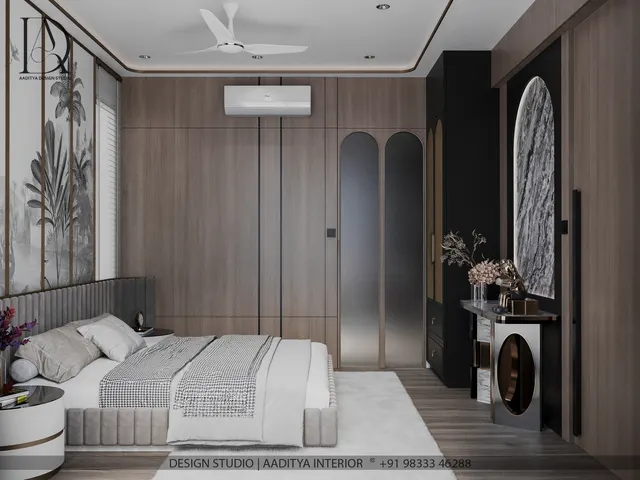
Putting it together, a master bedroom that respects the tradition and works as a room places the bed with its headboard against a solid internal wall so the sleeper lies head to the south or east, keeps the bed out of the direct door line, and leaves at least 600 mm clear on each side and a clear route to the bathroom. The wardrobe goes on a wall where its doors clear the bed, often to the south or west, and the dressing mirror is sited so it does not reflect the bed. Windows on the east or north bring morning light and cross-ventilation; heavy afternoon sun from the west is managed with shading rather than by sealing the room.
Children's, guest and elders' rooms
The guidance extends gently to the other bedrooms. A children's room is traditionally placed in the west or north-west, which in plan terms tends to be a lively, well-lit part of the house, and the same practical rules apply within it — a solid headboard, the bed off the door line, room to walk and study, and good daylight for a desk that sits best near an east or north window. A guest room in the north-west keeps visitors near the entrance and easy to reach without crossing the private heart of the home. A room for elderly parents is traditionally placed in the south-west or south and benefits practically from being calm, stable and, where the house has more than one floor, on the ground floor to spare stairs.
Across all of these, the honest message is the same as for the master: the direction is a traditional preference to weigh, while the things that truly decide how well a bedroom serves its occupant — light, air, a sensible bed position, enough room to move, and privacy from the busy parts of the house — are matters of ordinary good planning that no compass point can substitute for. A child who sleeps in a bright, airy, well-arranged room in the north does better than one in a cramped, dark room that happens to face the textbook direction.
| Do | Avoid | Why it helps |
|---|---|---|
| Headboard on a solid wall | Headboard under a window | Support, less draught and light |
| Bed clear of the door line | Feet pointing out of the door | Fewer disturbances, calmer feel |
| Ceiling clear over the bed | A beam directly over the bed | Avoids an oppressive overhead |
| Mirror off the bed line | Mirror reflecting the bed | Better rest for many sleepers |
| East or north window kept | Sealing the room against the west | Morning light and cross-ventilation |
| 600 mm clear each side | Bed jammed between two walls | Room to make the bed and pass |
Balancing tradition with comfort, and sensible remedies
Not every home can give every bedroom its ideal direction, and a flat buyer rarely has the choice. The balanced approach is to follow the guidance where it costs nothing and helps — a solid headboard wall, the bed out of the door line, no beam overhead, east light where possible — and to use judgement where strict compliance would hurt the plan. Where a room cannot be moved, small changes carry most of the reassurance: shifting the bed to the favoured orientation within the room, adding a solid headboard, screening or repositioning a mirror, boxing in or visually lightening a beam, and improving the ventilation. These are modest, indicative ₹5,000–40,000 interventions rather than structural work.
| Remedy | When used | Indicative cost |
|---|---|---|
| Reorient the bed within the room | Wrong sleep direction | No cost to minimal |
| Add a solid headboard | Headboard under a window | ₹8,000–30,000 |
| Reposition or screen a mirror | Mirror faces the bed | ₹2,000–12,000 |
| Box in or light-wash a beam | Beam over the bed | ₹6,000–25,000 |
| Add shading on the west | Hot afternoon sun | ₹5,000–30,000 |
| Improve cross-ventilation | Stuffy sealed room | ₹5,000–40,000 |
Rules for a balanced bedroom plan
- Treat Vastu directions as traditional guidance to weigh, not as fixed law that overrides good planning.
- Where it helps, place the master bedroom in the quiet, private south-west of the plan.
- Set the headboard against a solid wall, not under a window, with the head to the south or east if the tradition matters to the family.
- Keep the bed out of the direct line of the door and clear of any beam running over it.
- Site mirrors so they do not reflect the bed, which suits both tradition and sleep.
- Leave at least 600 mm, ideally 700–750 mm, to walk on each usable side of the bed.
- Keep east or north windows for morning light and cross-ventilation, and shade the west rather than sealing it.
- Give the wardrobe a wall where its doors clear the bed and the walkway.
- Where a room cannot be moved, use small remedies — headboard, mirror, beam and shading — rather than forcing the plan.
- Let comfort, ventilation and the family's real needs settle any conflict with the directional ideal.
Where this guidance is heading
The practical trend is towards a balanced reading of Vastu in which families keep the traditional preferences that cost little and clearly help — orientation to light and air, a settled head position, a calm private master suite — and set aside rigid rules that would spoil an otherwise good plan. Designers increasingly present the traditional guidance and the design reasoning side by side, letting the household decide how closely to follow it. The constant is that a bedroom which is well oriented to light and air, with the bed sensibly placed against a solid wall and generous to walk around, serves its occupants well whether or not every direction is textbook-perfect.
Frequently asked questions
Which direction should the head face while sleeping?
Traditional Vastu suggests sleeping with the head towards the south, and considers the east favourable too, while discouraging the head to the north. These are traditional beliefs. Practically, what matters most for sleep is a fixed, sensible position — headboard against a solid wall, away from the door and draught, not under a beam — and the traditional preferences usually steer the bed to just such a wall.
Where should the master bedroom be in the house?
Tradition favours the south-west, which in plan terms is the quiet, private part of the home away from the entrance and well shaded from the harsh western sun when openings are handled properly. If the plan allows it, placing the master there suits both the custom and the practical need for a calm, private main bedroom; where it does not, good planning of light, air and privacy matters more than the exact corner.
Is it bad to sleep with the head to the north?
It is traditionally discouraged in Vastu, and that is best described as a traditional belief rather than a proven fact. A family that holds the belief can simply choose a south or east head position, which is usually easy to arrange. A family that does not can place the bed by the practical rules — solid headboard wall, off the door line, clear beams — and sleep well in any orientation.
Can a mirror face the bed?
Vastu tradition discourages a mirror positioned to reflect the bed, and many people independently find they sleep better without a mirror facing them at night. The simple fix is to site the dressing mirror on a wall or inside a wardrobe shutter so it does not reflect the bed, which satisfies both the tradition and ordinary comfort at little or no cost.
What if my flat's bedroom is in the wrong direction?
Most flat buyers cannot choose the direction, and this is where a balanced approach helps. Follow the guidance that costs nothing within the room — orient the bed to the favoured head direction, use a solid headboard, keep mirrors off the bed, light-wash or box a beam, and improve ventilation and western shading. These small remedies, an indicative ₹5,000–40,000, carry most of the reassurance without structural change.
Sources & standards
- Traditional Vastu Shastra guidance on dwelling orientation (described as traditional practice, not established fact)
- National Building Code of India 2016, Part 3 — room sizes, ventilation and general building requirements
- Neufert, Architects' Data — bedroom and furniture clearances
- Time-Saver Standards for Interior Design and Space Planning — bedroom planning dimensions
- Bureau of Indian Standards — ventilation and daylighting references for habitable rooms
- Price ranges: indicative October 2026 estimates — confirm locally before budgeting