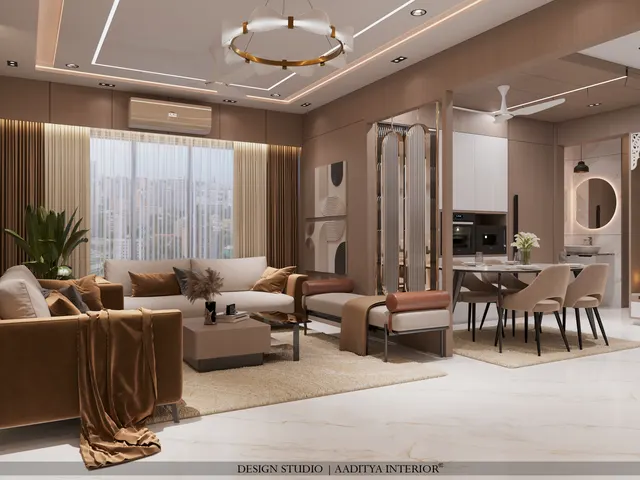
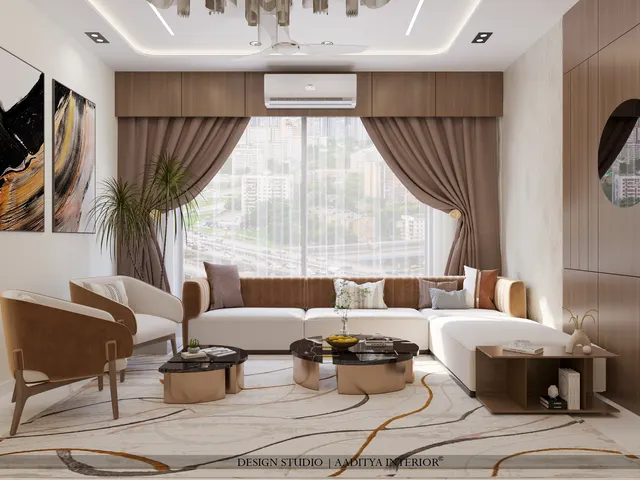
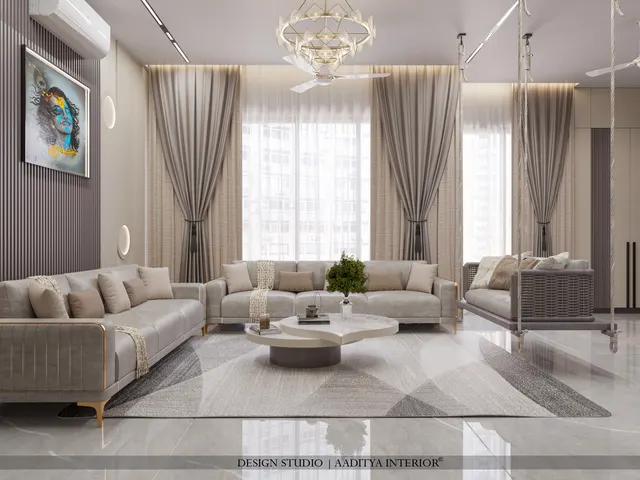
Vastu Shastra is the traditional Indian system of placing and orienting a building and its contents in harmony with the directions, light and air. For someone building a house, it can shape the plan from the start. For the far larger number of people who rent — and in Indian cities most working families rent for years — it seems to offer nothing but anxiety, because every Vastu article assumes the reader can move the kitchen to the south-east or put the main door in the north. A tenant can do none of that. The walls, the door, the toilet and the kitchen platform are fixed by the landlord and the builder, and the lease forbids structural change.
Yet most of what Vastu actually concerns itself with inside a home is not structure at all. It is placement and use: which way a person sleeps, which way they face while cooking or working, where the heavy furniture sits, where clutter is allowed to gather, how light and air are let in, and which corners are kept open. Almost all of these are entirely within a tenant's control and cost little or nothing to change. The trick is to separate the handful of things a renter genuinely cannot alter from the many things they can, and to spend energy only on the second list.
This article is written for that practical reader. It explains the direction logic that Vastu rests on, then goes room by room through the fixes a tenant can make without touching the building — bed and desk direction, the cooking position, the pooja place, the open north-east, mirrors, lights, colour and decluttering. It treats Vastu as the traditional design guidance it is, not as a guarantee of outcomes, and it never asks a tenant to break a lease or spend on renovation.
Where Vastu comes from, and what it is really about
Vastu Shastra has its roots in ancient Indian texts on building and town planning, and it grew in a climate where the sun, the wind and the monsoon were the dominant forces on a home. Many of its rules, read plainly, are sensible responses to the Indian climate and to daily life: keep the heavy, solid mass of the building to the hot south and west, and keep the north and east — which in the northern hemisphere receive the gentle morning sun — open and light; put the kitchen fire where the morning sun can reach it and where cooking smells drift away from living spaces; keep water and lightweight, open functions to the north-east. Whether one follows Vastu as faith, as tradition, or simply as a time-tested way of arranging a home, its inner logic is about light, air, orientation and order.
That is good news for a tenant, because light, air, orientation and order are exactly the things a renter controls. The direction of a built-in kitchen is fixed, but the direction a person faces while cooking at it is not. The position of a window is fixed, but whether its light is let in or blocked by heavy curtains and clutter is not. Understanding Vastu as placement and use, rather than as construction, is what makes it usable in a rented flat.
The directions, and what a tenant cannot change
Vastu divides a space into eight directions around a centre, each associated with an element and a set of functions. The figure below shows the common associations. The honest first step for a renter is to accept what cannot be changed: the main door's direction, the position of the toilet and bathroom, the kitchen platform, and the windows are all fixed by the building. Rather than fight these, the tenant works around them with the many movable elements. A compass or a phone compass app, used standing in the centre of the flat, is all that is needed to know which wall is which direction before planning anything.
| Feature | Tenant can change? | Practical response |
|---|---|---|
| Main door direction | No | Keep the entrance clean, lit and clutter-free |
| Toilet / bathroom position | No | Keep the door shut, lid down, exhaust on |
| Kitchen platform position | No | Change the direction you face while cooking |
| Window positions | No | Let light in; do not block with clutter |
| Bed position and facing | Yes | Head to south or west, not north |
| Desk / study facing | Yes | Face north or east while working |
| Heavy furniture placement | Yes | Mass to the south-west |
| Clutter in the north-east | Yes | Keep it open, light and clear |
The bedroom: bed direction and the small fixes
The bedroom is where a tenant can follow Vastu most fully, because almost everything in it is movable. The traditional guidance is to sleep with the head towards the south or the west and the feet towards the north or east, and to avoid sleeping with the head to the north. The master bed is ideally in the south-west part of the flat, the heaviest, most grounded corner. A mirror or a dressing table should not face the bed directly; if the only place for it does, it can be covered at night or angled away. Heavy wardrobes sit well along the south or west wall. None of this needs a drill — it is arranging furniture a tenant already owns.
The kitchen: changing the direction you face
A tenant cannot move the kitchen platform, but Vastu's main concern in the kitchen is the direction a person faces while cooking, and that is often adjustable. The traditional preference is to cook facing east. If the platform makes the cook face another way and the stove is a free-standing gas hob, it can sometimes be turned so the cook faces east; where it cannot, the guidance is simply followed as far as the fixed platform allows, without stress. The other common point — keeping the gas and the water sink apart, since fire and water are opposing elements — is usually already handled by the builder, and where sink and hob are close, a small separation in how the counter is used is enough. The kitchen is the clearest case of doing what is possible and not fretting over the fixed.
| Kitchen element | Traditional guidance | Tenant's practical fix |
|---|---|---|
| Cooking direction | Face east while cooking | Turn a free-standing hob if possible |
| Gas and sink | Keep fire and water apart | Use opposite ends of the counter |
| Drinking water / pot | North-east of the kitchen | Place the water filter to the NE |
| Storage of grains | South or west | Keep heavy stores on the S/W side |
| Dustbin | Not in the NE | Keep the bin to the south or under-sink |
Pooja, study, living and the open north-east
A pooja space in a rented flat is best placed in the north-east or east, which is also where it most often ends up naturally. A wall-mounted mandir or a slim free-standing unit needs no construction and can face the user to the east or north while praying. The study or work desk follows the same logic: facing north or east while working is the traditional preference, and a desk is easily turned to suit. In the living room, the heavy seating and media unit sit well towards the south and west, leaving the north-east corner light and open. That open, uncluttered north-east — kept clear of shoe racks, dustbins and heavy storage — is one of the most emphasised and easiest-to-follow ideas in all of Vastu, and it costs nothing but tidiness.
The entrance and the work desk
The entrance is the one fixed feature a tenant can most improve without touching it. Vastu places great weight on the main door as the point through which energy enters, and while its direction cannot be changed, its condition entirely can. A clean, well-lit, clutter-free entrance — no shoe pile spilling across the threshold, no broken bell, a working light, perhaps a small auspicious marking or a plant beside it — satisfies the spirit of the guidance and improves the flat in plain practical terms. The area just inside the door is kept open rather than blocked by a tall shoe cabinet or stacked boxes, so that the eye and the air both move freely on entering. None of this costs more than tidiness and a bulb.
The work desk has become a central Vastu concern now that so many people work from home, often from a corner of a rented room. The traditional preference is to sit facing north or east while working or studying, with a solid wall behind the back rather than a window or an open door, which is said to give a sense of support and, read plainly, simply reduces glare and distraction. A desk is light and movable, so a tenant can almost always turn it to face north or east and set it against a wall. Keeping the desk uncluttered and the area well lit follows the same logic that runs through all tenant-level Vastu: order and light first, direction second.
Colour is the last reversible lever, and it maps onto the directions in a way a tenant can follow with soft furnishings rather than paint. The tradition pairs cool, light shades with the north and east and warmer, earthier tones with the south and west, broadly echoing the quality of light each direction receives. Because repainting a rented wall is rarely allowed or wise, the practical route is removable colour: curtains, cushion covers, bedspreads, rugs, a framed print, or a peel-off wallpaper panel on a single wall. The table below gives the common direction-to-colour associations as a starting point, to be used with removable items so nothing is lost when the lease ends.
| Direction | Suggested colour family | Reversible way to add it |
|---|---|---|
| North / east | White, light blue, light green | Curtains, cushions, a light rug |
| South-east | Warm orange, coral, pink | Kitchen-side linen, a print |
| South / south-west | Earthy brown, terracotta, beige | Bedspread, heavier curtains |
| West | Light grey, off-white, metallic accents | Cushion covers, a framed piece |
| Centre | Neutral, pale, kept light | Keep it open and uncluttered |
Light, colour, mirrors and plants: the low-cost toolkit
Beyond placement, Vastu is helped by a handful of reversible, inexpensive changes that any tenant can make and undo. Light is the first: a dark north-east corner lifted with a lamp, and heavy curtains replaced with lighter ones to let morning light in, align with Vastu and improve the flat regardless. Colour is the second: light, cool shades to the north and east and warmer, earthier tones to the south and west follow the tradition, and removable options — curtains, cushions, bedcovers, a peel-off wallpaper panel — avoid repainting a rented wall. Mirrors can visually open a cramped entrance or a dark passage, placed so they do not face the bed or the main door directly. Plants in the east and north bring the suggested greenery; a small water feature or fountain suits the north-east. The figure-free point is that these cost little and leave no mark on the flat.
| Fix | Where | Reversible cost (₹) |
|---|---|---|
| Lamp to light a dark corner | North-east | ₹800 – ₹3,000 |
| Lighter curtains for morning light | East / north windows | ₹1,500 – ₹6,000 |
| Removable colour (cushions, covers) | By direction | ₹1,000 – ₹5,000 |
| Mirror to open a passage | Not facing bed / door | ₹1,500 – ₹6,000 |
| Indoor plants | East, north | ₹500 – ₹3,000 |
| Small tabletop water feature | North-east | ₹1,500 – ₹5,000 |
Where this is going: Vastu meets modern design
Vastu is increasingly read today through the lens of everyday wellbeing — light, air, order and calm — rather than as a rigid rulebook, and that reading suits renters and small flats well. Designers more often present Vastu alongside the practical benefits of good orientation and decluttering, so that a tenant following it also ends up with a brighter, better-organised home. Digital compass tools and floor-plan apps make it easy to check directions without an expert visit, and the growing market in removable, reversible finishes — peel-off wallpaper, modular lighting, free-standing storage — means the tradition can be followed without a single permanent change. Whether taken as faith or as a sensible way to arrange a home, Vastu in a rented flat is becoming a matter of thoughtful placement, not construction. For a renter that is liberating rather than limiting, because almost every move the tradition asks for turns out to be free, reversible, and good for the flat whether or not one reads it as Vastu at all.
Ten Vastu fixes any tenant can make
- Fix the directions first: stand in the centre with a compass before moving anything.
- Accept what is built in — door, toilet, kitchen, windows — and plan only the movable around them.
- Sleep with the head to the south or west, feet to the north or east; keep the master bed to the south-west.
- Keep mirrors and dressing tables from facing the bed directly, or cover them at night.
- Turn a free-standing hob to cook facing east where the platform allows.
- Place the pooja unit and the work desk so the user faces north or east.
- Keep the heavy furniture to the south and west, and the north-east corner and centre open and clear.
- Keep a toilet in the north-east contained: door shut, lid down, exhaust on, clean and lit.
- Use light, colour, mirrors and plants as reversible fixes — no painting a rented wall permanently.
- Declutter above all; most of what Vastu asks of a renter is light, air and order, which cost nothing.
Frequently asked questions
Can I follow Vastu in a rented flat without renovation?
Yes, to a large extent. Most of what Vastu addresses inside a home is placement and use — bed and desk direction, cooking position, furniture layout, light and order — all of which a tenant controls. The structural features a renter cannot change are worked around rather than altered.
Which direction should I sleep in a rented room?
The traditional guidance is head to the south or west, feet to the north or east, avoiding sleeping with the head to the north. The master bed is ideally in the south-west part of the flat. This is simply a matter of turning the bed, with no change to the building.
My toilet is in the north-east, which Vastu dislikes. What can I do as a tenant?
Since the toilet cannot be moved, the practical response is containment and cleanliness: keep the door closed and the lid down, run the exhaust fan, keep a light on or a window open, and keep the space clean. Vastu fixes for fixed features are about order and hygiene, not demolition.
Does the direction I face while cooking matter if I cannot move the kitchen?
The direction the cook faces is Vastu's main kitchen concern, and facing east is preferred. If the stove is a free-standing hob it can sometimes be turned so the cook faces east; where the platform fixes the direction, it is followed as far as possible without worry. Keeping the gas and water sink a little apart is the other simple step.
Are Vastu fixes expensive for a renter?
No. The most important fixes — orienting the bed and desk, placing heavy furniture to the south-west, keeping the north-east open and decluttering — cost nothing. Reversible additions such as lamps, lighter curtains, mirrors, plants and removable colour run roughly ₹500–6,000 each and leave no mark on the flat.
Sources & standards
- Traditional texts on Vastu Shastra, including the Vastu and Shilpa Shastra tradition, as summarised in standard reference works on Indian architecture
- National Building Code of India 2016, Part 8 (Building Services) — orientation, daylight and ventilation principles that align with Vastu's light-and-air logic
- Neufert, Architects' Data — orientation, daylighting and furniture clearance guidance
- Bureau of Energy Efficiency (BEE) and Eco-Niwas Samhita — passive orientation and daylight for comfort, consistent with Vastu's climate basis
- Price ranges: indicative October 2026 estimates for reversible, non-structural items — confirm locally before budgeting