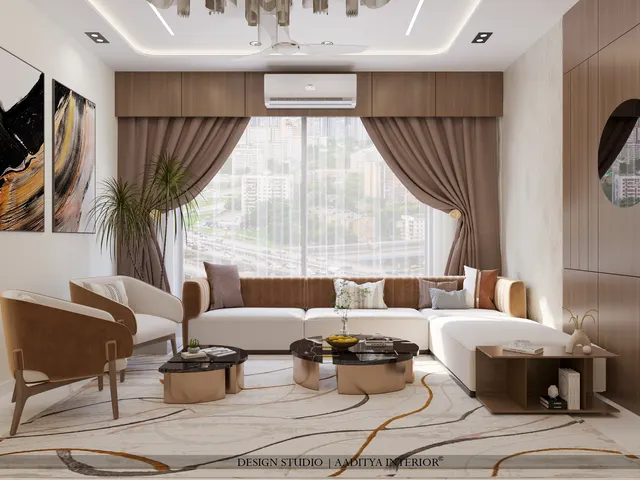
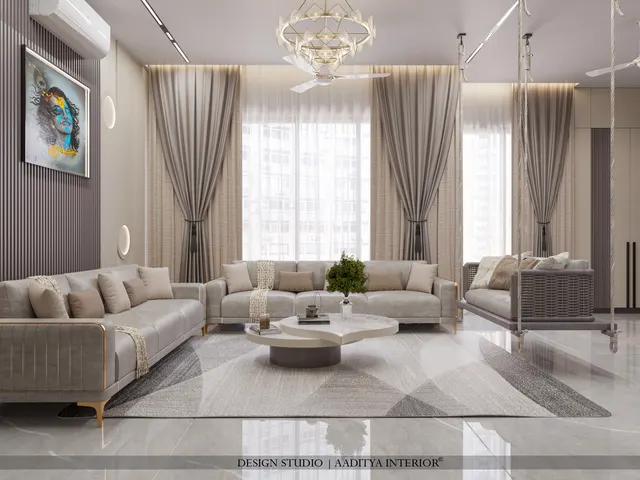
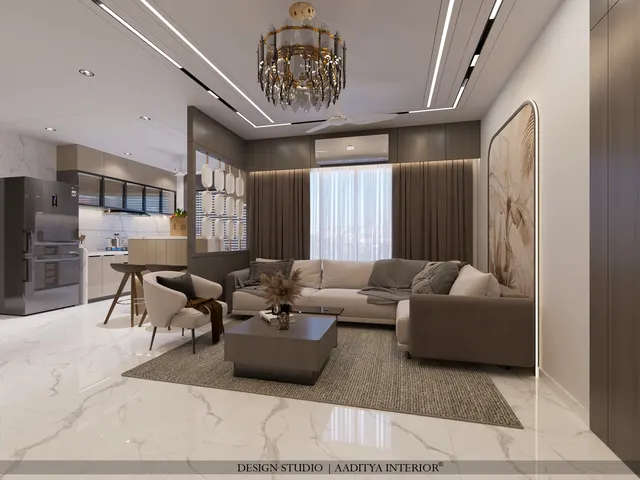
In most Indian homes the television still anchors the living room: the sofa faces it, the seating is arranged around it, and where it goes effectively sets the whole layout. So when families turn to Vastu Shastra for guidance on the television, they are really asking where the focal point of the room should sit — a question that carries both the weight of tradition and the everyday reality of glare, viewing angles and cable routes. The two are often treated as if they must conflict. In practice, for the television, traditional Vastu guidance and sound ergonomic placement agree far more than they differ, and the sensible approach is to read them together rather than choose between them.
This article treats the subject with respect and balance. Vastu Shastra is an ancient Indian tradition of orienting and arranging buildings in relation to the cardinal directions and the five elements, and for many families its guidance carries genuine cultural and emotional meaning. It is presented here as considered tradition and as a set of spatial preferences, not as a guarantee of outcomes; a television in a particular corner will not by itself change a household's fortunes, and this article makes no such claim. What it does is set out the common Vastu recommendations for the television clearly, explain the practical reasoning that sits alongside each, and give the ergonomic numbers — distance, height and angle — that make a living room comfortable to watch in whichever direction the screen faces.
The common mistakes are the same whether one reaches them through tradition or through ergonomics. The screen is hung on a wall that faces a window, so daytime glare washes it out. It is mounted too high, so necks crane upward through a film. It is pushed into the wrong corner for the room's light and seating, so the sofa ends up with its back to the entrance. Reading the Vastu guidance and the practical rules side by side resolves most of these at the planning stage, which is the spirit in which they are offered below.
What Vastu is, and how to read it here
Vastu Shastra is a body of traditional Indian knowledge concerned with the orientation, proportion and arrangement of buildings in harmony with the cardinal directions and the five elements — earth, water, fire, air and space. Its rules assign qualities to directions: the east and north are associated with light and positive energy, the south and west with weight and stability, and the north-east with a sacred, light and open quality. Much of classical Vastu predates electricity and electronics, so there is no ancient rule about televisions as such; modern Vastu guidance extends the tradition's logic about the elements and directions to new objects, treating the television as an electrical, heat-producing device associated with the fire element.
Because that extension is interpretive, Vastu practitioners do not all agree on every detail, and this article gives the most commonly offered guidance rather than a single doctrine. It is presented respectfully and in a balanced way: as tradition that many families value, supported where possible by the practical reasoning that makes the same placement comfortable to live with. Readers who follow Vastu closely can take the directional guidance; readers who do not can still use the ergonomic numbers, which stand on their own. The honest position is that the two usually point the same way, and that is the useful finding.
The directional guidance for a television
The most widely repeated Vastu guidance places the television on the south-east wall of the living room. The south-east is the direction associated with the fire element (Agni), and because the television is an electrical, heat-producing device, Vastu reasoning links the two. With the set on the south-east wall, the viewer seated on the opposite sofa faces east or north — the directions associated with light and positivity — which is held to be favourable for watching and for the room. A common alternative, where the room does not allow a south-east placement, is the south or south-west wall, keeping the viewer facing north or east.
Equally consistent is what Vastu guidance advises against. The north-east corner (Ishanya) is regarded in the tradition as the most sacred, light and open part of the home, best kept clear and uncluttered, so a bulky television and its cabinet are generally kept out of it. Placing the screen directly opposite a main door, where the viewer sits with their back to the entrance, is also discouraged, as is positioning the set so a mirror reflects it. The diagram summarises the commonly suggested and avoided positions; the table that follows pairs each with the practical reason that tends to agree.
| Vastu guidance | Direction | Traditional reason | Practical reason that tends to agree |
|---|---|---|---|
| Preferred TV wall | South-east | Fire element; links to electrical device | Often an internal wall, away from the brightest glare |
| Alternative TV wall | South or south-west | Weight and stability directions | Solid wall, good for a heavy unit and cabling |
| Viewer faces | East or north | Directions of light and positivity | Back to a solid wall, facing into the room |
| Keep clear | North-east corner | Sacred, light, open quality | Best kept open for light and movement anyway |
| Avoid | Directly facing a main door | Back to the entrance discouraged | Sitting back-to-door feels uneasy; also draughts |
| Avoid | Reflected in a mirror | Doubling the screen's energy | A mirror doubles glare and distraction |
Read down that table, the pattern is clear: the traditional preferences and the practical reasons rarely pull in opposite directions. A south-east or south wall is usually an internal wall away from the strongest window light; facing the viewer into the room with a solid wall behind is both the Vastu preference and the more settled seating; and keeping the north-east open suits daylight and circulation whether or not one follows Vastu. Where a particular home cannot meet the directional guidance — because the only sensible wall faces north-west, say — Vastu practitioners generally accept that comfort and the room's realities take precedence, and simple remedies such as keeping the area tidy and well-lit are suggested.
Viewing distance, height and angle
Whatever the direction, a television is only comfortable within a band of distance, height and angle, and these are the numbers that most affect how a room feels to watch in. Viewing distance is set by the screen size: as a working rule, a comfortable distance is about 1.5 to 2.5 times the screen's diagonal measurement, closer for a sharper, more immersive picture and further for a relaxed one. For a 140 cm (55-inch) screen that is roughly 2.1 to 3.5 metres; for a 165 cm (65-inch) screen about 2.5 to 4.1 metres. The sofa-to-screen gap in most Indian living rooms, around 2.5 to 3.5 metres, therefore suits a screen of roughly 139 to 165 cm comfortably.
Height is where living rooms most often go wrong, usually because the television is mounted over a mantel or high on a feature wall for looks. The comfortable rule is that the centre of the screen should sit near the seated viewer's eye level, which for most sofas puts the screen centre about 1,000 to 1,200 mm above the floor. A line of sight that runs level or very slightly downward is relaxing; a screen mounted high forces the neck into extension, which tires it over a long film. Where a screen must go higher — above a console in a multi-use room — a tilting bracket of a few degrees downward partly compensates, but the lower, eye-level mounting remains the comfortable one. The table gives distance and height figures by screen size.
| Screen size | Diagonal | Comfortable distance (1.5–2.5×) | Screen-centre height |
|---|---|---|---|
| 43-inch | ~109 cm | ~1.6–2.7 m | 1000–1150 mm |
| 50-inch | ~127 cm | ~1.9–3.2 m | 1000–1200 mm |
| 55-inch | ~140 cm | ~2.1–3.5 m | 1050–1200 mm |
| 65-inch | ~165 cm | ~2.5–4.1 m | 1050–1250 mm |
| 75-inch | ~190 cm | ~2.9–4.8 m | 1100–1300 mm |
| Horizontal viewing angle | — | Within about 30° off-centre | Avoid extreme side seats |
Light, glare and the television wall
The single biggest practical enemy of a television is daylight falling on the screen, and this is where tradition and comfort meet most usefully. A screen on a wall that faces a large window catches reflections through the brightest hours; a screen on a wall adjacent to or away from the main window is far easier to watch. The commonly suggested south-east or south wall is frequently the internal wall of an Indian living room, away from the main daylight opening, which is one reason the Vastu placement and glare control tend to agree. Where the chosen wall does cop some glare, the answer is light control — curtains or blinds on the opposing window, a matt rather than glossy wall finish behind the set, and avoiding a mirror or glazed cabinet opposite that bounces light back.
Lighting the room around the screen matters too. Watching in a completely dark room with a bright screen tires the eyes through the harsh contrast; a little soft, indirect background light — a lamp to the side, a warm wash behind the unit — eases that contrast without throwing reflections onto the glass. A bias light strip behind the screen itself is a modern version of the same idea. These comfort measures sit easily with Vastu's general preference for well-lit, uncluttered living areas, and they cost very little to add.
| Measure | What to do | Why it helps |
|---|---|---|
| Screen wall | Choose a wall away from the main window | Avoids daytime glare on the screen |
| Opposing window | Fit curtains or blinds | Controls direct light during the day |
| Wall finish behind set | Keep it matt, mid-to-dark | Reduces reflection around the screen |
| Background light | Add a soft, indirect lamp or bias light | Eases the screen-to-wall contrast |
| Mirrors and glass | Keep off the wall opposite the screen | Stops doubled glare and distraction |
Planning a television wall that works both ways
Bringing it together, a television wall that satisfies both the tradition and the ergonomics is usually achievable in an ordinary Indian living room. The method is to start from the fixed constraints — where the windows and the door are, where the sofa can sensibly go — and then to find the wall that is away from the main glare, lets the viewer sit with a solid wall behind them facing into the room, and keeps the north-east corner open. In the common Indian layout, that wall is frequently the south-east or south one, so the Vastu preference and the practical choice coincide. The unit beneath carries the cabling and the devices, sits the screen centre at about 1,000 to 1,200 mm, and is kept low and uncluttered so the corner reads calm.
| Element | Dimension / detail | Note |
|---|---|---|
| Screen-centre height | 1000–1200 mm | Seated eye level |
| Media console height | 450–600 mm | Holds devices below the screen |
| Console depth | 400–500 mm | Takes set-top and console boxes |
| Power and data point | Behind the screen, ~1000–1100 mm | Conceal cables in a conduit |
| Ventilation gap | 50–75 mm around devices | Electronics shed heat |
| Soundbar | Just below the screen | Keep it off the floor |
Where this is going
Two shifts are quietly changing the question. The first is the thinness of modern screens and the rise of wall-mounted and even art-mode televisions that double as framed pictures when off, which frees the set from the bulky cabinet and makes it easier to place well on the suggested wall without dominating the room. The second is the move toward multi-use media walls and projectors in some homes, where the fixed television gives way to a retractable screen or a large display integrated into joinery; the directional and ergonomic logic still applies to wherever the image lands, but the object is lighter and more flexible to position. Through both, the underlying advice holds: place the image away from glare, at eye level, on a settled wall, in a room kept calm and open where it matters.
The deeper point is that Vastu's directional preferences and modern viewing ergonomics were arrived at by different routes but describe a similar comfortable room — one that is well-lit but not glaring, where people sit facing into the space with a wall at their back, and where the sacred or simply open corner is left uncluttered. Treating the two as partners rather than rivals gives a living room that feels right to those who follow the tradition and watches well for everyone, and that combination is the sensible aim.
Rules for placing a living-room television
- Where Vastu is followed, prefer the south-east wall for the set, with the south or south-west as the alternative.
- Seat the main viewer facing east or north, with a solid wall behind the sofa and not its back to the main door.
- Keep the north-east corner open and uncluttered rather than filling it with the television and its cabinet.
- Place the screen on a wall away from the main window so daylight does not fall on it; use blinds to control glare.
- Set the screen centre near seated eye level, about 1000–1200 mm above the floor, for a roughly level line of sight.
- Match screen size to the sofa distance: a comfortable gap is about 1.5–2.5 times the screen diagonal.
- Keep most seats within about 30 degrees off the screen centre so no one watches from a sharp angle.
- Avoid a mirror or glossy cabinet directly opposite the screen, which doubles glare and distraction.
- Add soft, indirect background light so the bright screen is not watched against a dark wall.
- Where the ideal direction is impossible, let comfort and glare decide, and keep the area tidy and well-lit.
Frequently asked questions
In which direction should a television be placed as per Vastu?
The most commonly offered Vastu guidance places the television on the south-east wall of the living room, the direction associated with the fire element, with the viewer seated facing east or north. Where the room does not allow this, the south or south-west wall is the usual alternative. These are traditional preferences offered respectfully; where a home cannot meet them, comfort and glare are generally accepted as taking precedence.
Which direction should you avoid for a television?
Vastu guidance generally keeps the television out of the north-east corner, which the tradition regards as the most sacred, light and open part of the home and prefers to keep clear. It also discourages placing the set directly opposite a main door, so the viewer sits with their back to the entrance, and advises against positioning it where a mirror reflects the screen. Each of these also has a practical basis in comfort and glare.
How high should a television be mounted in the living room?
Set the centre of the screen near seated eye level, which for most sofas is about 1,000 to 1,200 mm above the floor, so the line of sight runs roughly level rather than craned upward. Mounting the set high over a mantel looks neat but tires the neck over a long viewing session; where a higher position is unavoidable, a small downward tilt of the bracket partly compensates.
How far should the sofa be from the television?
A comfortable viewing distance is about 1.5 to 2.5 times the screen's diagonal measurement — closer for a sharper, more immersive picture and further for a relaxed one. For a 140 cm (55-inch) screen that is roughly 2.1 to 3.5 metres, which suits the typical Indian sofa-to-screen gap of 2.5 to 3.5 metres. If the room is smaller, choose a smaller screen rather than crowding the seating.
Does the television placement really affect the home as per Vastu?
Vastu offers the placement as a spatial preference within a wider tradition of orienting a home, and many families value it for that cultural meaning. It is not, however, a guarantee of particular outcomes, and this article makes no such claim. What the guidance does, read alongside ergonomics, is encourage a calm, glare-free, well-seated living room — a real benefit — and where the ideal direction is impossible, comfort should decide.
Sources & standards
- Traditional Vastu Shastra principles on directional orientation and the five elements — described respectfully and generically
- Ernst Neufert, Architects' Data — living-room layout, seating and viewing-distance guidance
- Time-Saver Standards for Architectural Design — residential living spaces and sight lines
- Consumer electronics and display viewing-distance guidance — comfortable distance as a multiple of screen diagonal, described generically
- National Building Code of India 2016, Part 3 — living-room dimensions and daylight openings
- Ergonomics guidance on screen height and viewing angle — screen centre near seated eye level
- Price ranges: indicative October 2026 estimates — confirm locally before budgeting