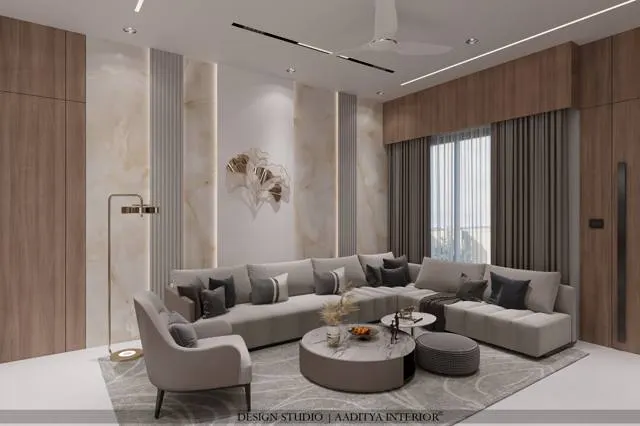
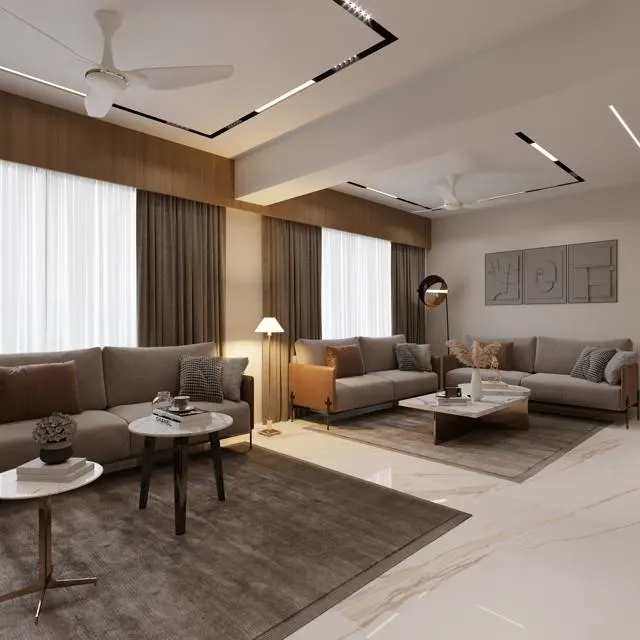
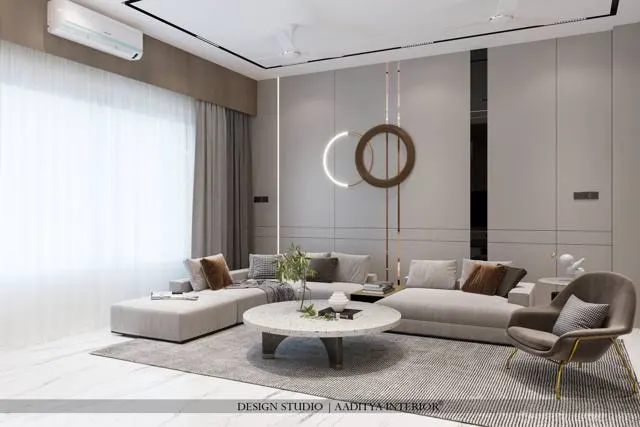
There is one wall in every Indian home that never gets direct sun, and it is the most useful wall in the house. The north side receives soft, steady light all day, without the heat of the east or the glare of the west, and that is why Vastu places the family's wealth there: the locker, the safe and the valuables, under the guardianship of Kubera, the treasurer of the gods. When the north stays open and light, the living room is bright without being hot, the locker sits on a dry wall where it can be seen and reached, and a small water feature or a row of plants can cool the air by evaporation. When the north is blocked by a staircase, a toilet or a wall of heavy storage instead, the house loses its coolest light and its driest wall in one move.
The trouble usually shows up when the family needs the locker in a hurry. A flat is bought for its large bedrooms, and only while shifting in does the family discover that the north wall holds the toilet pipes, that the living room's north window is blocked by the staircase, or that the only dry wall in the flat is behind the kitchen. By then the safe is bought, the documents are packed in boxes, and the locker ends up in a damp south room where it rusts, or in a bedroom where nobody can reach it without waking the house. This article is written for both moments: the sketch stage, when a light, open north costs nothing extra, and the lived-in stage, when the north is already blocked and the question is how to give the locker a dry wall and the living room its light back without demolition.
Vastu is often presented as a set of rigid rules, but it reads better as a planning system, and like every planning system it works best when its reasons are understood. Water in the north is a shorthand for light, coolness and flow: the soft northern light that never glares, the cool air that never overheats, and the water that should be kept clean and moving rather than still and stagnant. Kubera's association with the north is the traditional way of saying the same thing — that the family's valuables belong where the house is coolest, driest and brightest. Aaditya Interior uses the zone as a starting point for every residential plan, then tests it against the site, the budget and the family's daily routine, because a Vastu-correct locker that nobody can open safely is no success at all. The guidance below follows that approach: the traditional rule first, the practical reason behind it, and then the dimensions and costs that make it real.
Where the north (Kubera) zone comes from
The nine-zone Vastu grid, the Vastu Purusha Mandala, divides any plot into three rows and three columns, with the centre left open and light. The north square is the Kubera square, named for the treasurer of the gods, and its character follows from where the sun never goes: in the northern hemisphere the sun never shines directly into a north window, so the north receives light all day without heat, glare or shadow. Traditional teaching therefore places here everything that needs good light without heat — the living room, the reading corner, the locker — and everything that needs to stay cool and dry. The pairing is worth understanding because it predicts the corner's behaviour: it is the brightest room on a cloudy day, the coolest room in May, and the wall least likely to grow damp.
In the traditional house the grid was laid out on the ground with ropes and stakes, and the north side was kept low and open on purpose, with large windows, a verandah and no heavy structure to block the light. The family treasury sat against the south wall of the north room, so its door opened towards the north, and the water pot stood in the north-east, where it stayed cool. In a modern flat the same grid is laid over the floor plan instead, dividing the flat into nine equal parts, and the north square may fall across a room boundary. When that happens, the room holding most of the square is treated as the zone's room, and the locker should sit on the south wall of that room even if the living-room seating has to be arranged around it.
Surat's climate sharpens every decision about this corner, because the city stays hot and humid for most of the year and the north is the one side that stays cool through it. A living room here can be lit by daylight all day without an air conditioner running from morning, but only if the north window is kept large, clear of tall furniture, and openable for the breeze. Humidity is the enemy, not heat: a locker on a north wall that shares a toilet pipe, or a water feature that is never cleaned, will grow damp in a Surat summer long before it would in a dry north Indian city. A north Indian home can afford a smaller north window; a Surat home needs the window large, the wall dry, and the water kept clean and moving.
What the water element means in a modern home
The five elements of Vastu — earth, water, fire, air and space — are best read as a building-science shorthand, and water in the north stands for a set of physical conditions: soft, shadow-free light, cool air, and a flow that should be kept moving rather than left still. When the article says the zone suits the locker and the living room, it is saying that those uses benefit from exactly those conditions — the living room gets daylight without heat, the locker gets a dry wall, and a small water feature or a row of plants cools the air by evaporation. A kitchen in this corner would fight the same conditions: it would bring heat and smoke into the coolest room of the house, and a toilet would bring damp into the driest wall. Mirrors belong here for the same reason the locker does: they catch the north light and share it with the rest of the room, provided they are placed with care.
| Aspect | The north (Kubera) zone | What it means in practice |
|---|---|---|
| Element | Water | Soft light, cool air and flow govern this corner |
| Deity | Kubera | Traditional guardian of wealth, treasury and safekeeping |
| Sun | No direct sun; soft light all day | Bright without heat, so large windows work here |
| Best rooms | Locker and valuables; living room | Dry wall for the safe, daylight for the family |
| Avoid | Kitchen; toilet or septic tank | Heat and damp destroy the zone's cool and dry |
| Mirrors | On the north wall, facing south | Share the north light; never face a bed or a door |
Modern building services have not made the water element obsolete; they have given it better tools, and also new ways to ignore it. A dehumidifier can keep a north locker dry through a humid monsoon, LED lighting can extend the soft north daylight into the evening, and a properly fixed safe can be anchored to the structure so it cannot be carried away. But services cannot repeal the physics: a north room blocked by a staircase will always need artificial light, and a locker on a damp wall will always rust, however expensive the safe. Placing the living room and the locker correctly is cheaper than compensating for them for the next twenty years, which is why the zone decision belongs at the sketch stage, before the staircase and the toilets are frozen.
What belongs in the north (Kubera) zone — and what does not
The clearest way to use the north zone is as a short list, and the list is ruled by light and dryness. The rooms that belong here are the locker, safe and valuables, the living room or open verandah, a water feature or aquarium, and a pooja room on the north-east edge of the zone. Each of these gains something from the zone: the locker gets a dry wall and a light above it, the living room gets daylight without heat, and the water feature gets a cool corner where it can evaporate without warming the room. The rooms that must stay out are the kitchen, the toilet or septic tank, heavy storage or an overhead tank, and a staircase that blocks the light. Each of those loses something here — the kitchen loses the cool it needs to fight, the toilet brings damp to the driest wall, and heavy storage steals the light the whole house depends on.
| Room or use | In the north (Kubera) zone? | Reason |
|---|---|---|
| Locker, safe and valuables | Yes — ideal | Dry wall, good light, easy to see and reach |
| Living room, open verandah | Yes — ideal | Soft daylight all day, without heat or glare |
| Water feature, aquarium | Yes — good | Clean, moving water cools the air by evaporation |
| Pooja room (north-east edge) | Yes — good | Calm, bright corner for morning prayer |
| Kitchen | No — avoid | Heat and smoke spoil the coolest room |
| Toilet or septic tank | No — avoid | Damp and odour on the driest wall of the house |
| Heavy storage, overhead tank | No — avoid | Mass blocks the light the whole house needs |
| Staircase blocking light | No — avoid | A solid stair here darkens the living room |
The north is the only direction in Vastu that is described in terms of what it receives rather than what it gives: it receives light all day, without the heat of the east or the glare of the west. In the northern hemisphere the sun never shines directly into a north window, so north light is soft, steady and shadow-free, which is why artists' studios and reading rooms have always faced north. In an Indian home that makes the north the natural place for the living room, for a study desk and for anything that needs good light without heat. A large north window, kept clear of tall furniture, can light a whole living room through the day.
The locker belongs in the north because of the old association with Kubera, the treasurer of the gods, but the practical rule is just as clear: the locker should open towards the north, which means its door faces south and its back rests against the south wall of the north zone. A locker 900 mm wide and 1,500 mm high fits into most living-room walls, and it should be fixed to the structure, not left free-standing where it can be carried away. Jewellery, documents and cash live there, so the locker needs a dry wall, no plumbing behind it, and a light above it so its contents can be seen clearly.
Dimensions that make the living room work
A Vastu-correct living room that is the wrong size is still a bad living room, so the dimensions matter as much as the direction. The living room in the north zone is typically 4,200 mm by 3,600 mm in a family home, which leaves room for a three-seater sofa, a clear circulation aisle of 1,200–1,500 mm, and a locker of 900 mm width and 1,500 mm height fixed to the south wall of the room, where its door opens towards the north. The television should sit at a distance of about 2,400 to 3,000 mm from the sofa, the north window should stay clear of tall furniture so its light reaches the whole room, and the door should open without hitting the seating. Smaller rooms can work for a couple, but below about 3,600 by 3,000 mm the sofa starts to dictate the room instead of serving it.
| Item | Typical size (mm) | Why it matters |
|---|---|---|
| Living room overall | 4,200 × 3,600 | Fits furniture plus a clear aisle |
| Clear aisle | 1,200–1,500 mm | One person passes without turning sideways |
| Work height | seat 450 mm | Comfortable reach without stooping |
| Door clear width | 800–900 | Furniture and a wheelchair can pass |
| Window sill height | 900–1,050 | Light in, privacy kept, rain kept out |
| Ceiling height | 3,000–3,300 | Air, fan clearance and a sense of space |
Clearances are where Indian living rooms most often fail, and a north living room fails them in a particular way: the locker is fixed to the wall, the sofa is pushed against the window, and nobody can walk between them. The circulation aisle needs 1,200 to 1,500 mm so two people can pass without turning sideways, the locker needs a clear space of at least 900 mm in front of it so its door can open fully, and the sofa needs 600 mm behind it if it does not sit against a wall. The National Building Code of India 2016, Part 3, sets out the minimum clearances for habitable rooms, and the dimensions in the table above sit comfortably above those minimums, because a living room should be designed for a family receiving guests, not for the bare minimum. Measure the clearances on the drawing before the locker is fixed to the wall; measuring them after the sofa arrives is too late.
Water in the north is the other half of the Kubera association, and it works on the same logic of light and coolness. A small water feature, an aquarium or even a row of indoor plants near the north window cools the air by evaporation and gives the living room a focal point that does not need electricity. The water must be kept clean and moving, because still, dirty water in any corner is a problem in Vastu and in hygiene alike. An underground water tank, however, does not belong in the north; it belongs in the north-east, and a tank in the north zone itself is one of the most common Vastu faults found in Indian homes.
Materials, colours and light
The north zone has traditional colours — green, light blue, white, silver — and those colours are worth following, not because a wall colour changes fate, but because they match a cool, bright corner and make the soft northern light feel fresh instead of flat. A pale green wall, white linen and a light wood sofa frame look settled in shadow-free light, while dark saturated paint on all four walls makes a room that should feel open feel closed instead. Materials matter more than colour here: the mirror should be plain glass on the north wall, the locker wall must be dry and free of plumbing, and the floor should be light enough to bounce the daylight across the room. The palette below pairs the traditional colours with materials that are available in any Indian city, chosen for light and dryness rather than for show.
| Surface | Recommended | Avoid in this zone |
|---|---|---|
| Walls | Pale green or light blue, washable emulsion | Dark saturated colours on all four walls |
| Mirror | Plain glass on the north wall, facing south | Mirror facing the bed or the main door |
| Locker wall | Dry wall, no plumbing behind it, light above | Locker on a damp wall or a toilet wall |
| Floor | Light vitrified tile or pale wood | Dark stone that swallows the north light |
| Furniture | Light wood, matte laminate, low height | Tall dark storage blocking the north window |
| Plants and water | Indoor plants, clean aquarium near the window | Still, dirty water left standing in a corner |
Light in a north living room should be layered around the daylight, because the daylight is the room's best feature and the evening light must not fight it. A large north window does the work through the day, a general ceiling light with warm white 3000–4000 K covers the evening, and a focused light above the locker is what actually lets the family see its contents clearly. A single ceiling light in the middle of the room leaves the locker in shadow and the reading corner in darkness, and that is the most common lighting fault in Indian living rooms. A mirror on the north wall can share the daylight with the rest of the room, but it must face south into the room and never face a bed or the main door. IS 3646, the code of practice for interior illumination, and the National Building Code's Part 8 both point the same way: more, smaller lights, placed where they are used, with daylight doing the work whenever it can.
How to plan it in a new home
Planning the north zone in a new home starts with keeping it low and open, not with placing the furniture. Mark the north square on the plot, place the living room there, and then decide what will not go there: no staircase, no toilet, no heavy storage and no overhead tank on the north side. Only then should the locker be drawn, fixed to the south wall of the north room with its door opening towards the north, and the north window be sized large and kept clear of tall furniture. Check the plan against the light as well: the window should face true north where the plot allows, the water feature should sit near the window where it can cool the air, and the heavy mass of the house — the staircase, the storage, the tank — should all sit on the south and west, where their weight is useful rather than wasteful.
- Keep the north square low and open: living room first, no staircase, toilet or heavy storage there
- Fix the locker to the south wall of the north room, 900 mm wide, door opening towards the north
- Keep the north window large and clear of tall furniture, so daylight reaches the whole room
- Put a light above the locker and keep its wall dry, with no plumbing behind it
- Place a mirror on the north wall facing south, never facing a bed or the main door
- Keep water clean and moving — an aquarium or a small feature near the window, never a stagnant tank
- Put the heavy mass of the house — staircase, storage, overhead tank — on the south and west
- Get the plan checked by the architect and, if the family follows Vastu, by their Vastu consultant together
Treating the north as leftover space is the mistake that darkens the whole house. Once the slab is cast, the staircase, the toilet and the storage are fixed, and a north room darkened by a staircase can never be made bright with paint. At the sketch stage the same decisions are free: move the staircase to the south, shift the toilet to the north-west, or give the locker its proper wall. If the family values Vastu, the consultant should be in the room before the architect's first drawing, and the north window should be drawn before the staircase, not after it.
Remedies when the zone is already wrong
In a resale flat the north room is often the one that lost its light: a staircase was drawn across its window, a wall of storage was built against it, or the living room was pushed south to make the bedrooms larger. Softening that is mostly a matter of light and dryness, not demolition. A mirror on the north wall shares the daylight, a light above the locker makes the safe usable, damp-proofing dries the wet wall, and moving the heavy storage south gives the window back to the room. Done together, they change how the living room feels through the day; done one at a time, they barely register.
| Fault in the north (Kubera) zone | Indicative remedy | Indicative cost (₹) |
|---|---|---|
| North room dark, light blocked | Mirror on the north wall plus layered LED lighting | ₹9,000–₹32,000 |
| Locker on a damp or unsafe wall | New safe, anchored to a dry wall, light above | ₹25,000–₹85,000 |
| Damp wall behind the locker | Damp-proofing, ventilation and a pale repaint | ₹20,000–₹60,000 |
| Humid air, valuables tarnish | Dehumidifier and an openable north window | ₹8,500–₹24,000 |
| No focal point, room feels flat | Clean aquarium or small water feature near the window | ₹12,000–₹45,000 |
| Toilet or stair blocks the north | Re-plan the use, move storage south, re-route light | ₹50,000–₹1,90,000 |
Water and mirrors are the two remedies that most often go wrong in a north room. A water feature should never sit where it can leak into wiring or into the locker wall, and it must be kept clean and moving, because still, dirty water in any corner is a problem in Vastu and in hygiene alike. A mirror should never face a bed or the main door. Ventilation, fire safety and structural rules come first; a correction that breaks a building rule is not a correction at all. When the choice is between a traditional remedy and the building code, the code wins every time.
The future: Vastu and modern Indian homes
Home offices, reading corners and indoor plants have all moved into the north room in recent years, drawn by the same shadow-free light that once drew artists' studios. Young buyers who would never consult a traditional text still ask for the living room in the north and the locker on its dry wall, because a bright room that never overheats is simply good planning. The future of this corner is not a return to old rituals but a quiet merger: traditional placement, modern safes and modern lighting, with the same northern light doing the same work it always did.
In a flat the north window often faces a neighbouring building rather than the sky, and that changes how the zone must be handled. The living room still wants the north side of the flat, the locker still wants a dry wall, and the heavy storage still wants the south — but the window must be kept large and clear of tall furniture, because there is no second source of that soft light. Draw the nine-square grid over the flat's plan, check the actual light at midday, and protect the north window before the staircase or the storage is drawn. Homes that do this stay bright all day, and their owners only know that the valuables are safe and dry.
Frequently asked questions
Which direction is the north (Kubera) zone in a flat?
The flat's own plan is the map, not the building's site. Split the floor plan into nine equal squares and look at the middle square of the top row on a north-up plan — that is the north zone. The living room belongs in whichever room holds most of that square, and the locker belongs on the south wall of that same room, with its door opening towards the north. Where the square is split between two rooms, the larger share decides, and the smaller share is corrected with a mirror, a light and a change of use.
Can the locker, safe and valuables be placed elsewhere if the north (Kubera) zone is too small?
Yes, and in small flats it often must be. The next-best corner is the north-east, which shares the light and the cool of the north, and the locker should still sit on a dry wall with no plumbing behind it, its door opening towards the north, and a light above it. A smaller living room planned well — with the north window kept clear and the heavy storage moved south — serves the family better than a larger room in the right corner that cannot fit its sofa or its locker.
What is the most common Vastu fault in the north (Kubera) zone?
The most common fault is a toilet or septic tank in the north, which brings damp to the driest wall of the house, followed by a staircase or heavy storage blocking the north window and an overhead tank sitting over the zone. All three are found in a large share of resale flats, because earlier owners planned for a larger bedroom or a convenient stair rather than for the light. None of them requires demolition to soften: changing the use, damp-proofing the wall and sharing the light with a mirror together make a real difference.
Does Vastu allow a toilet in the north (Kubera) zone?
A toilet in the north is the fault to check first in any resale flat. It brings damp, odour and plumbing noise into the corner that should stay dry and bright, and a leak from it can reach the locker wall and the living-room floor beside it. Where one already exists, the fix is containment rather than decoration: keep it dry, fit an exhaust fan, keep the door shut, and check the waterproofing before spending on mirrors or lights. No remedy can make a damp locker wall safe, so the damp comes first and everything else comes after.
How much does it cost to correct the north (Kubera) zone?
Small corrections — a mirror, layered lighting, a dehumidifier and a pale repaint — typically cost ₹10,000–₹40,000 for one north room in October 2026. A new anchored safe on a dry wall costs more, typically ₹25,000–₹85,000, while re-planning a blocked north with moved storage and re-routed light costs ₹50,000–₹1,90,000. Prices are indicative October 2026 estimates — confirm locally before budgeting.
Sources & standards
- Bureau of Indian Standards — National Building Code of India 2016, Part 3 (development control rules and general building requirements)
- Bureau of Indian Standards — National Building Code of India 2016, Part 8 (building services, lighting and ventilation)
- Bureau of Indian Standards — IS 3646, code of practice for interior illumination (living-room and task lighting)
- Bureau of Indian Standards — IS 3362, code of practice for natural ventilation of residential buildings
- Energy Conservation Building Code (ECBC) and Bureau of Energy Efficiency (BEE) — daylighting and thermal comfort guidance
- Neufert, Architects' Data — standard dimensions for living rooms, seating and storage
- Traditional Vastu texts in the Vastu Purusha Mandala tradition — zone, element and deity teachings, used here as traditional references
- Price ranges: indicative October 2026 estimates — confirm locally before budgeting