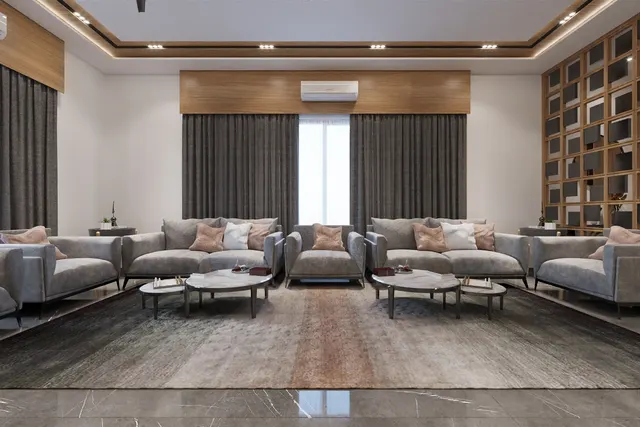
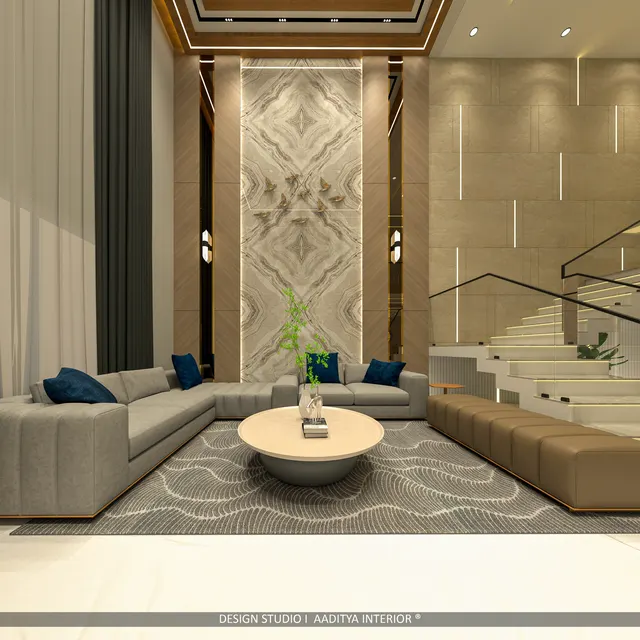
In a one- or two-bedroom flat the air-conditioning decision is simple: put a split unit in each room that needs cooling and be done. In a large home — a big bungalow, a duplex, a six- or eight-room house — the same approach quietly becomes a problem. Each split needs its own outdoor unit, so the back wall, the terrace or the service balcony fills up with a row of condensers, each with its own pipes and drains, each humming. The electrical load of a dozen compressors starting independently is heavy and uneven. And the look, from outside, is of a building wearing its machinery on its sleeve. At this scale a different kind of system — variable refrigerant flow, universally abbreviated VRF (and sold as VRV by one major maker) — becomes worth considering, because it feeds many indoor units from one or a few outdoor units and runs them as a coordinated whole.
The decision is often made badly because it is made late and by the wrong person. Air-conditioning is treated as an appliance to be bought at the end, after the interiors are designed, rather than as a service to be planned with the building. By then the false ceilings are detailed without space for ducts, the electrical load is fixed without headroom for a VRF, there is no planned location for a bank of outdoor units, and the refrigerant and drain routes have to be chased through finished work. The result is a compromise: splits bolted on because nothing else will fit, or a VRF squeezed in at extra cost. Whether VRF or splits is the right answer depends on the home, but either way the answer must be decided early, when the ceilings, the electrical supply and the outdoor-unit location can still be planned around it.
This article compares the two honestly for the large Indian home. It explains how a VRF system and a multi-split arrangement actually work, sets out where each wins on zoning, efficiency, aesthetics, redundancy, cost and maintenance, shows how the cooling load and tonnage are estimated, covers the indoor-unit types and the refrigerant-piping limits that constrain the design, and gives indicative October 2026 cost ranges to be confirmed locally. The aim is a decision made on the facts of the particular home, not on a salesperson's default.
How the two systems work
A split air-conditioner is a pair: an indoor unit in the room and an outdoor unit (the condenser) outside, joined by a refrigerant pipe and a drain. Each split is independent — its own compressor, its own thermostat, its own on/off. A multi-split is a mild extension in which one outdoor unit serves two or three indoor units, saving a little outdoor space, but it is still essentially a small group of independent machines. In a large home the common arrangement is simply many splits: one indoor and one outdoor unit per air-conditioned room, each sized and controlled on its own. The virtues are simplicity, low first cost per unit, easy fault isolation and familiar servicing; the drawbacks at scale are the number of outdoor units, the uneven electrical load, and modest efficiency because each compressor runs flat out or not at all unless it is an inverter type.
A VRF system works on a different principle. One or a few larger outdoor units serve many indoor units through a shared refrigerant-pipe network, and a variable-speed compressor varies the flow of refrigerant to match the exact cooling demanded by the rooms that are in use at that moment. If three bedrooms call for cooling and the rest of the house does not, the system delivers just enough refrigerant for those three, modulating smoothly rather than switching whole compressors on and off. This gives several advantages in a large home: one or two tidy outdoor-unit locations instead of a dozen, a smoother and often lower electrical and energy demand because the compressor runs at part load most of the time, precise room-by-room control, and a wide choice of indoor-unit styles on the same system. The cost is a higher first price, a dependence on a single system and installer, and the need for skilled design and commissioning.
Sizing the load: how much cooling a home needs
Both systems must be sized to the cooling load, and oversizing or undersizing is a common and expensive error. The load is the heat that must be removed from a room to keep it comfortable, and it depends on far more than floor area: the room's exposure to the sun, the size and orientation of its glazing, the number of people, the heat from lights and appliances, the insulation of the walls and roof, and the local climate. A top-floor west-facing bedroom with large windows in Surat or Nagpur has a much higher load than a shaded ground-floor room of the same size. A proper design uses a heat-load calculation following recognised methods — the kind set out in ISHRAE and ASHRAE guidance — rather than a flat rule, and this is especially important for a VRF, where the indoor units and the outdoor capacity are matched to the calculated loads and the expected simultaneous demand.
As a rough first check, a common rule of thumb in Indian homes is about one ton of cooling for every 120 to 160 square feet of room for ordinary conditions, moving towards the lower figure (more cooling) for hot, sunny, glazed or top-floor rooms and the higher figure for shaded, well-insulated ones. A typical bedroom of 120 to 150 square feet therefore needs about one to one-and-a-half tons; a large living-dining space of 350 to 450 square feet needs about three tons, often split between two units. For a VRF, the designer also applies a diversity or simultaneity factor: because not every room is cooled at full tilt at once, the total outdoor capacity can be less than the simple sum of all the indoor units, which is one of the ways VRF saves on plant size and cost. The rule of thumb is only a sanity check; the heat-load calculation is what should size the equipment.
| Room (typical) | Area | Rough load | Indoor unit |
|---|---|---|---|
| Bedroom | 120–150 sq ft | 1–1.5 ton | 1 wall or cassette |
| Master bedroom | 180–220 sq ft | 1.5–2 ton | 1 larger unit |
| Living–dining | 350–450 sq ft | 3–4 ton | 2 units or ducted |
| Study / child's room | 90–120 sq ft | 0.8–1 ton | 1 wall unit |
| Kitchen (if cooled) | 100–140 sq ft | 1–1.5 ton | 1 unit, higher load |
| Home office | 120–160 sq ft | 1–1.5 ton | 1 wall or cassette |
Indoor units and ceiling space
One of VRF's real advantages is the range of indoor units it can mix on a single system, and the choice of unit shapes the interior as much as the cooling. The wall-mounted unit is the familiar split-style box high on the wall — cheapest, easiest, but visible. The ceiling cassette sits flush in the false ceiling with only a square grille showing and blows air in two or four directions; it is tidy and even but needs ceiling depth. The slim ducted or concealed unit sits entirely above the ceiling and delivers air through grilles, so nothing of the machine is seen — the cleanest look, favoured for living rooms and master suites, but needing the most ceiling space and careful duct design. A floor-standing or in-wall unit is used where there is no ceiling void. The point is that the indoor-unit choice must be made with the false-ceiling design, because a concealed or cassette unit needs a planned depth of ceiling void and a planned grille layout that a decorator cannot add afterwards.
This is where air-conditioning and interior design genuinely have to be designed together. A concealed ducted unit typically needs a ceiling void of the order of 300 to 400 millimetres for the unit and its ducts, plus access for a filter and a service panel; a cassette needs enough depth for its body above the grille; even a wall unit needs a clear position with the right throw and a drain fall. If the ceiling is designed first and the air-conditioning fitted afterwards, the units end up where they fit rather than where they should blow, cold air falls on the bed or the dining table, and the service access is forgotten. Deciding the unit types and positions with the ceiling and the electrical layout is the single biggest thing a homeowner can do to get both comfort and a clean look.
| Indoor unit | Ceiling void needed | Look | Best for |
|---|---|---|---|
| Wall-mounted | None (on wall) | Visible box high on wall | Bedrooms, budget, retrofits |
| Ceiling cassette | ≈ 220–300 mm | Flush square grille | Even cooling, tidy rooms |
| Concealed ducted | ≈ 300–400 mm | Hidden; only grilles show | Living rooms, master suites |
| Floor-standing | None | Low unit at floor level | Rooms with no ceiling void |
| Slim ducted (ducted split) | ≈ 250–350 mm | Hidden; grilles show | Where a clean look is wanted |
Piping, outdoor units and the limits that shape the design
A VRF is a network of refrigerant pipes, and that network has limits the designer must respect. The total length of pipe the system can run, the maximum distance from the outdoor unit to the farthest indoor unit, and the maximum height difference between the outdoor unit and the indoor units are all capped by the manufacturer, and a large or tall house can approach those limits. Refrigerant is distributed through branch fittings — joints that split the flow to groups of indoor units — and these must be placed and sized correctly. The pipes are insulated and run through ceilings and shafts, so their routes must be planned with the structure and the ceilings, and a vertical shaft for the risers is often needed in a multi-storey home. Getting the pipe network right is a design task, not a site improvisation, and it is one of the reasons a VRF must be engineered rather than simply bought.
The outdoor units need a planned home too. A VRF's one or few outdoor units are larger and heavier than a split's condenser, need firm support and vibration isolation, and need generous clearance around them for the air they move and for servicing; crammed into a tight, unventilated corner, they lose efficiency and overheat. A terrace, a dedicated plant area or a well-ventilated service yard is the usual location, placed where the noise and the warm exhaust air do not blow into living spaces or a neighbour's window. Multiple splits avoid the single large plant but multiply the problem: a dozen condensers need a dozen positions, each ventilated and serviceable, and a row of them on a back wall is both an eyesore and a maintenance chore. Either way, the outdoor-unit location is a planning decision to be made with the architecture, not a leftover to be solved at the end.
Efficiency, comfort and reliability
On efficiency, the VRF has a genuine edge in a large home that is used the way most homes are — some rooms cooled, some not, and rarely everything at full load. Its variable-speed compressor runs at part load for most of the time, which is more efficient than a fixed-speed split cycling fully on and off, and the diversity of a whole house means the plant is smaller than the sum of the rooms. Inverter splits narrow this gap, because they too modulate, and for a home where only two or three rooms are ever cooled at once the efficiency difference may not justify the VRF's cost. The honest position is that VRF is most efficient where many rooms are cooled and the usage varies through the day; where only a few rooms are ever on, good inverter splits can be close. The Bureau of Energy Efficiency's star rating and the ISHRAE and ECBC efficiency expectations are the right references, and a higher-rated system of either type repays its premium over years of running.
On comfort, VRF's fine modulation holds a steadier room temperature with fewer swings than a cycling split, and its range of concealed indoor units lets the cooling be delivered where it should be rather than from a box on the wall. On reliability, the trade-off reverses: a split's independence is a virtue, because if one unit fails the others are unaffected and a technician can fix or swap it easily, whereas a VRF concentrates the house's cooling in one system, so a fault in the outdoor unit or the controls can affect many rooms and ties the owner to one manufacturer and a capable service network. A large home far from good VRF service support may be better with splits for this reason alone. The sensible questions are how many rooms are cooled and how often, how much the clean look matters, how reliable the local VRF service is, and what the budget allows — not a blanket preference for the newer technology.
Cost and where VRF pays
Cost is usually the deciding factor, and the comparison has two layers: the first cost and the running cost. On first cost, multiple splits are cheaper per room and much cheaper for a small number of rooms, while a VRF carries a higher base cost for the outdoor plant, the controls and the engineered pipe network that only begins to pay off across many indoor units. As indicative October 2026 ranges, a good 1.5 ton inverter split installed runs roughly ₹45,000 to ₹70,000 per unit, so a large home with ten such units might spend of the order of ₹5 to ₹8 lakh on splits. A home VRF system is commonly priced in the region of ₹1.3 to ₹2.2 lakh per ton of capacity, all-in with indoor units, piping and commissioning, so a 15 to 20 ton home system runs into the ₹20 to ₹40 lakh range or more depending on the indoor-unit mix and the finish. These figures vary widely with brand, city and specification and must be confirmed with vendors before budgeting.
The point at which VRF starts to make sense is usually a combination of scale and ambition rather than a single number, but as a guide it is worth serious consideration once a home has roughly six or more rooms to be cooled, wants concealed or cassette units for a clean look, has the budget for the higher first cost, and sits where competent VRF service is available. Below that — a handful of rooms, a tighter budget, or a location without good service support — well-chosen inverter splits are often the wiser choice, and there is no shame in it. On running cost, the VRF's part-load efficiency and diversity can lower the energy bill in a house where many rooms are cooled and usage varies, helping to repay the premium over years; in a house where only two or three rooms are ever cooled, the saving is smaller. Aaditya Interior's practice is to run the heat-load calculation and a simple first-and-running-cost comparison for the specific home, and to let those numbers, not a default, choose the system.
| Factor | Multiple splits | VRF |
|---|---|---|
| First cost (few rooms) | Lower | Higher — base plant cost |
| First cost (many rooms) | Adds up; many outdoor units | Competitive; one plant |
| Outdoor units | One per room | One or a few |
| Part-load efficiency | Good with inverters | Strong — modulates + diversity |
| Indoor unit choice | Mostly wall / some cassette | Wall, cassette, concealed on one system |
| Redundancy | High — units independent | Lower — shared system |
| Indicative cost (Oct 2026) | ₹45k–70k per 1.5 ton split | ₹1.3–2.2 lakh per ton all-in |
| Home scenario | Rooms cooled | Usual best choice | Why |
|---|---|---|---|
| Small flat, few rooms | 1–3 | Inverter splits | Lower first cost; simple |
| Mid home, some rooms | 3–5 | Inverter splits (or VRF) | Splits often enough; weigh looks |
| Large home, clean look | 6+ | VRF | One plant, concealed units, zoning |
| Large home, remote area | 6+ | Splits | Independence where VRF service is poor |
| Multi-storey bungalow | 6+ | VRF | One riser network, tidy outdoor plant |
| Varied daily usage | many | VRF | Part-load efficiency and diversity |
Where home cooling is going
The direction of travel favours variable, connected and cleaner systems. Inverter technology, which is what makes both modern splits and VRF modulate, is now standard, and the gap is narrowing as inverter splits get smarter and VRF systems get cheaper and easier to install. Refrigerants are shifting towards lower global-warming options such as R32 in place of older types, which the regulations and manufacturers are driving. Controls are becoming connected: zoning, schedules, occupancy sensing and app or voice control, which suit VRF naturally but are reaching splits too. And the efficiency bar is rising, pushed by the Bureau of Energy Efficiency's star ratings and the Energy Conservation Building Code's expectations for larger buildings. For the large home, the practical implication is to plan for a system that can be zoned and controlled, to leave electrical headroom, and to choose efficiency ratings that will still look good in a decade of rising energy prices — whichever of the two systems the particular home chooses.
Ten rules for air-conditioning a large home
- Decide the system early, with the ceilings, electrical supply and outdoor-unit location — not as a last appliance.
- Size from a proper heat-load calculation (ISHRAE/ASHRAE method), using the area rule of thumb only as a sanity check.
- Consider VRF seriously once about six or more rooms are cooled and a clean, concealed look is wanted.
- Stay with good inverter splits for a few rooms, a tight budget, or a place without reliable VRF service.
- Choose indoor-unit types with the false-ceiling design, allowing the void a cassette or ducted unit needs.
- Engineer the VRF pipe network to the maker's length and height limits — do not improvise on site.
- Give outdoor units a planned, ventilated, serviceable location away from where exhaust air blows into rooms.
- Leave electrical headroom and a zoned, controllable design for future smart control.
- Favour high BEE star ratings and low-GWP refrigerants to keep running costs down over the system's life.
- Compare first cost and running cost for the specific home, and let the numbers choose the system.
Frequently asked questions
Is VRF worth it for a home?
It becomes worth it for a large home — roughly six or more rooms to be cooled — where a clean, concealed look is wanted, the budget covers the higher first cost, and reliable VRF service is available locally. It gives one or two tidy outdoor-unit locations instead of a wall of condensers, efficient part-load running, and precise room-by-room control. For only a few cooled rooms or a tighter budget, good inverter splits are usually the wiser choice.
How many tons of AC does a large house need?
It depends on a heat-load calculation, not just area, but as a rough check Indian homes use about one ton per 120 to 160 square feet, towards the lower figure for hot, sunny, glazed or top-floor rooms. A big house of eight to ten cooled rooms often totals in the region of 15 to 20 tons of indoor capacity, though a VRF's diversity factor means the outdoor plant can be sized below the simple sum of all the rooms.
Does VRF use less electricity than splits?
Usually, in a home where many rooms are cooled and usage varies through the day, because its variable-speed compressor runs efficiently at part load and the whole-house diversity means a smaller plant. Where only two or three rooms are ever cooled at once, modern inverter splits can be close, and the VRF's efficiency edge may not justify its higher cost. Choosing a high BEE star rating matters more than the system type for the running cost.
Can VRF use concealed ceiling units?
Yes — one of VRF's strengths is that it can mix indoor-unit types on the same system, including concealed ducted units that hide entirely above the false ceiling, flush ceiling cassettes, and ordinary wall units. Concealed units give the cleanest look but need a planned ceiling void of around 300 to 400 millimetres plus service access, so they must be designed with the false ceiling rather than added afterwards.
What happens if a VRF outdoor unit fails?
Because a VRF concentrates the home's cooling in one system, a fault in the outdoor unit or the controls can affect many indoor units at once, and repairs depend on the manufacturer's service network. This is the main reliability trade-off against splits, where each unit is independent and a failure affects only one room. A home far from capable VRF service should weigh this carefully, as it can be a reason to choose splits.
Sources & standards
- ISHRAE (Indian Society of Heating, Refrigerating and Air Conditioning Engineers) — handbooks and guidance on heat-load calculation and HVAC design
- ASHRAE Handbook — fundamentals of cooling-load estimation and system design (general reference)
- Bureau of Energy Efficiency (BEE) — star-rating programme for air-conditioners
- Energy Conservation Building Code (ECBC) — efficiency provisions for building services
- National Building Code of India 2016, Part 8 (Building Services), Section on air-conditioning and ventilation
- VRF/air-conditioner manufacturers' technical data — piping limits, indoor-unit types and clearances (generic industry ranges)
- Price ranges: indicative October 2026 estimates — confirm locally before budgeting