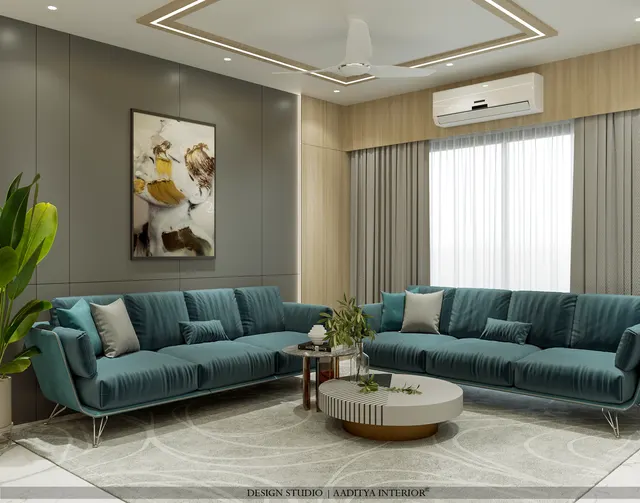
Walls are the largest visible surface in any room, and the finish chosen for them sets the room's entire character — yet the decision is usually reduced to a colour shade card. The real choice is between four systems with very different economics and behaviour: conventional paint (distemper to premium emulsion), texture paint, wallpaper, and wall panels. Each has a cost band, a durability profile, a repairability story and a set of rooms where it belongs. Choosing by looks alone is how homes end up with peeling wallpaper behind the bed headboard and texture paint in a corridor that nobody can touch up.
Paint is the economical workhorse: fast, familiar, endlessly recolourable and easy to repair. Texture paint is paint with drama — trowelled, rolled or sprayed into three-dimensional patterns, then top-coated. Wallpaper trades paint's simplicity for instant, precise pattern and print quality no brush can match. Wall panels — routed MDF/HDF, WPC, fabric or wood — add physical depth, rhythm and even acoustic softening. This article compares all four on cost, durability, repairability and design range, with realistic per-square-foot bands and room-by-room guidance.
What this article settles: what each wall system is and how it is built up, a full comparison across every practical parameter, the dimensioned anatomy of an accent wall, honest price bands per square foot, and where each finish belongs. Paint prices are indicative October 2026 market ranges; wallpaper and panel pricing varies too widely to band.
The four systems: what each wall finish is
Conventional paint — distemper to premium emulsion
Painted walls are built in layers: wall putty (typically two coats) to level the plaster, a primer coat to seal and unify, then two coats of the finish paint. The paint tiers differ enormously: distemper is the basic water-based coating for budget work; economy emulsions add washability; premium emulsions (the Royale tier) bring richer depth, better stain resistance and longer colour life. Paint's superpowers are economy and repairability — a scuffed wall is fixed with a roller in an afternoon, and the whole room can change colour for the cost of labour plus paint.
Texture paint — paint with topography
Texture paint starts like conventional paint — putty and a base coat — then adds a thick texture coat worked with trowels, rollers, combs or spray into patterns: rustics, metallics, stone effects, fabric weaves. A protective topcoat seals the design. The result has genuine three-dimensional relief that catches light and shadow, delivering designer drama at a fraction of panelling cost. The trade-offs: textures collect dust in their crevices, repairs are nearly impossible to blend invisibly, and bold textures date faster than flat colour.
Wallpaper — instant, precise pattern
Wallpaper is printed or embossed paper/vinyl pasted over a prepared wall (a liner paper is often used to smooth the surface first). Its advantage is pattern precision — geometrics, murals, metallics and large-scale prints reproduced with a consistency no hand application can match — and speed: a room is transformed in a day or two with no drying odours. Its weaknesses are moisture (edges lift and seams show in damp or steamy conditions), repairability (a damaged strip means re-papering the whole wall for a match), and the fashion cycle: bold prints age visibly.
Wall panels — depth, rhythm and acoustics
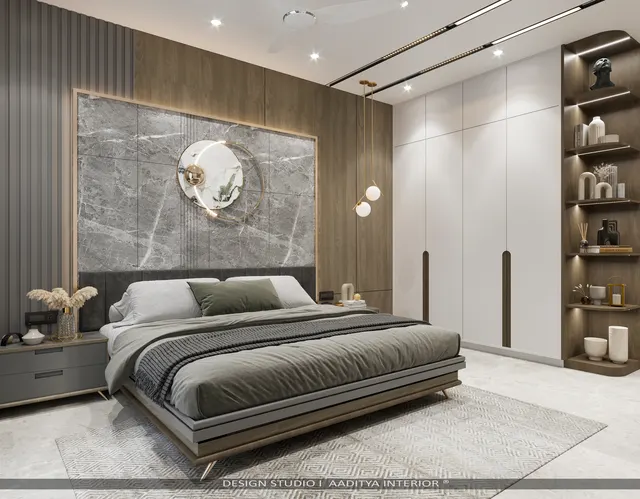
Wall panels fix a finished surface — routed MDF/HDF boards, WPC (wood-plastic composite) profiles, fabric-upholstered panels or timber battens — over battens on the wall, creating real physical depth. Panels add what flat finishes cannot: shadow lines, rhythm, tactile materiality and, with fabric or fluted profiles, genuine acoustic softening. They are the premium choice for TV walls, bed backs and feature walls. The costs are the highest of the four, installation is carpentry work, and panelled walls surrender the easy recolourability of paint.
The full comparison
Four systems, one wall. Cost, durability and repairability usually decide before aesthetics get a vote.
| Parameter | Conventional paint | Texture paint | Wallpaper | Wall panels |
|---|---|---|---|---|
| What it is | Putty + primer + 2 coats emulsion | Base + trowelled/rolled texture + topcoat | Liner + pasted printed paper/vinyl | Battens + MDF/WPC/fabric/timber panels |
| Cost per sq ft (all-in) | Distemper ₹7–12; economy ₹12–18; premium ₹20–30 | ₹40–150+ | Verify locally — wide brand range | Verify locally — carpentry work |
| Design range | Unlimited colours; flat finish | 3D relief patterns, metallics, stone effects | Precise prints, murals, geometrics | Depth, rhythm, real materials |
| Durability | Good; premium tiers washable | Good; texture hides minor marks | Moderate; edges and seams vulnerable | Very good; hard surfaces resist knocks |
| Moisture tolerance | Fair — breathes; blisters with seepage | Fair — like paint, worse with seepage | Poor — lifts and stains with damp | Fair to good depending on panel material |
| Repairability | Excellent — roller touch-up | Poor — patches never blend | Poor — re-paper the whole wall | Moderate — replace individual panels |
| Application time | Fastest — days for a home | Moderate — artisanal application | Fast — a room in a day or two | Slowest — carpentry and finishing |
| Cleaning | Wipes clean; washable tiers best | Dust settles in relief — needs soft brushing | Wipe gently; no scrubbing | Dust ledges on profiles; vacuum flutes |
| Lifespan tier | Moderate; repaint cycles refresh | Moderate; dates faster than flat paint | Moderate; fashion and seams age it | Long — physical material endures |
| Best for | Everywhere as the base finish | Accent walls, drama per rupee | Bedroom accents, instant pattern | TV walls, bed backs, feature walls |
The accent wall: planned as an elevation
Feature walls fail when they are improvised on site. The professional approach is an elevation drawing: the wall's width and height, the panel module size, the TV or artwork position, and the lighting — all dimensioned before a single batten is fixed. A typical living-room TV wall of 3600 mm width by 2700 mm height divides cleanly into six 600 mm fluted-panel modules; a TV of around 1400 by 800 mm centres on the middle two modules with its centre at roughly 1200 mm from the floor (typical detail) — the comfortable viewing height for a sofa-seated viewer. Coves or profile lights at the panel edges need their wiring run before panels close the wall.
Budget discipline matters here: panelling one 3600 by 2700 mm wall is roughly 105 sq ft of panel work plus carpentry — price it per square foot all-in, and compare that number against the texture-paint alternative (₹40–150+ per sq ft) before committing. The rest of the room stays in premium emulsion (₹20–30 per sq ft), which keeps the total wall budget sane while the accent wall does the visual work.
Prices: the honest cost picture
Paint bands below are per square foot all-in (material plus application), indicative October 2026 market ranges excluding GST. A practical budgeting rule: paintable wall area runs roughly 3 to 3.3 times the carpet area, so a 1,000 sq ft carpet home carries about 3,000–3,300 sq ft of paintable surface. Wallpaper and panel pricing varies too widely by brand and material to band honestly — get written per-square-foot quotes.
| Wall finish | ₹ per sq ft (all-in) | Notes |
|---|---|---|
| Distemper | ₹7 – ₹12 | Budget basic; rentals and back-of-house |
| Economy emulsion | ₹12 – ₹18 | Washable; the value default |
| Premium emulsion (Royale tier) | ₹20 – ₹30 | Depth, stain resistance, colour life |
| Texture / designer paint | ₹40 – ₹150+ | Artisanal; boldest textures at the top |
| Wallpaper | Verify locally | Wide brand range; pasting usually extra |
| Wall panels | Verify locally | Carpentry + material; quote all-in per sq ft |
Where each finish belongs
- Living rooms: premium emulsion everywhere, one accent wall in texture, wallpaper or panels.
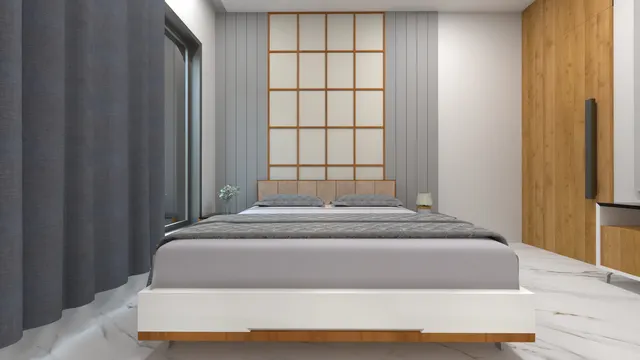
- Bedrooms: wallpaper or panels behind the bed; premium emulsion on the remaining walls.
- Kids' rooms: washable economy or premium emulsion — crayons wash off; wallpaper does not survive.
- Dining and passages: texture paint or panels where the wall takes knocks; flat paint elsewhere.
- Home office / study: fluted panels for acoustics and video-call backdrop; emulsion elsewhere.
- Bathrooms and wet walls: none of the four — tiles or waterproof systems only.
- Damp or seepage-prone walls: fix the waterproofing first; no finish survives active seepage.
- Rentals and budget refreshes: distemper or economy emulsion — maximum change per rupee.
Sources & standards
- Paint cost bands (distemper, emulsion, texture) — October 2026 market reference (indicative, excl. GST)
- Paintable area ≈ 3–3.3x carpet area — commonly cited estimation practice
- Wall build-up sequences — commonly cited trade practice