

The Daily Design Chronicle · Wednesday, 25 November 2026
Technology · USA
ICON Starts Its Biggest Commercial 3D-Printed Build Yet in San Antonio
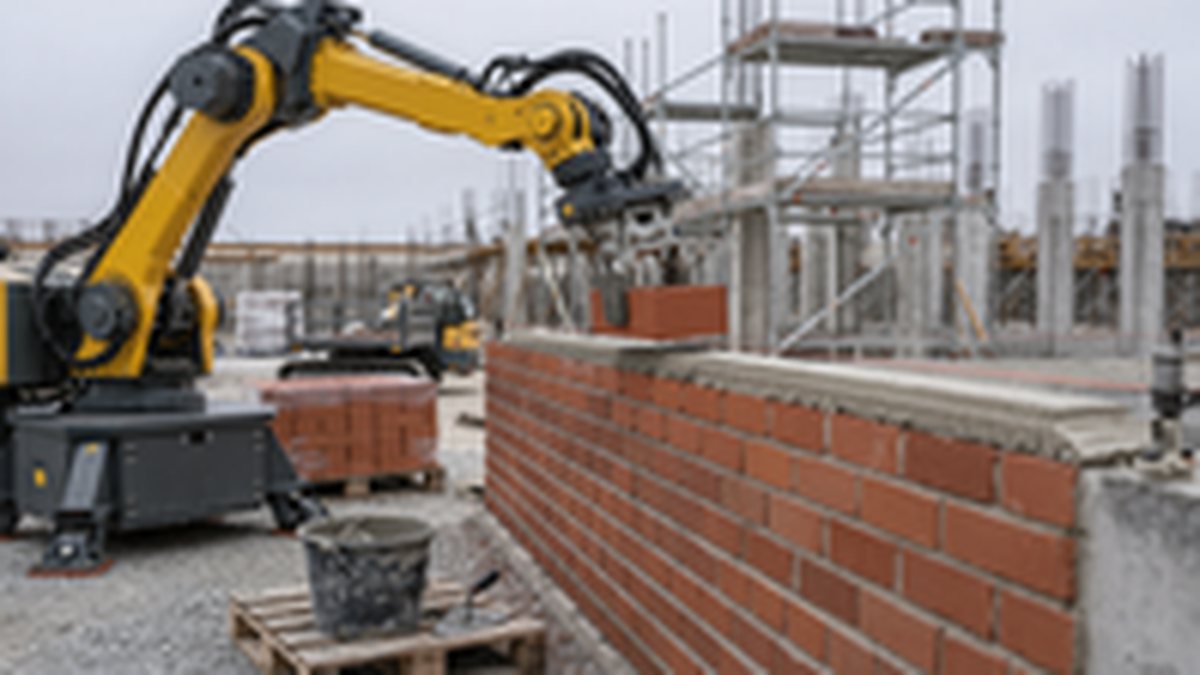
The construction technology firm ICON has started 3D printing what it describes as its largest commercial building to date, a 12,649-square-foot exhibition and training centre for the heavy equipment dealer ASCO Equipment in San Antonio, 3DPrinting.com reported. The project is scheduled for completion in the summer of 2027.
The detail that matters most is not the floor area but the method. ICON is combining 3D-printed curved walls wrapped around climate-controlled rooms with a steel superstructure of roughly sixty tons, an approach the firm calls a mixed structural system. In other words, the printer is not trying to do everything, and that is precisely why the project reads as a serious step rather than a stunt.
This hybrid logic is the quiet breakthrough. Earlier printed buildings often tried to prove that the technology could stand alone, which limited them to low-rise, simple forms. By letting steel carry the long spans and the load while the printer handles the sculptural, insulated envelope, each system is used for what it does best. That division of labour is how 3D printing is likely to enter the commercial mainstream.
For interior designers, the printed curved wall is the most interesting consequence. Curves that would be expensive to frame and clad in a conventional building become almost native to the printing process, which lays material in continuous layers. That changes the starting point for a floor plan, because sweeping, flowing interior spaces stop being a luxury upgrade and become a reasonable default.
The climate-controlled rooms wrapped inside the printed shell also carry a practical message for warm regions. A thick, monolithic printed wall has useful thermal mass, which can steady indoor temperatures and ease the load on cooling systems. For businesses watching energy bills, the envelope is not just a shape but a performance decision that shows up every month.
There is a clear read-across for a fast-building market such as Surat and the wider Indian commercial landscape, where showrooms, training centres and workshops go up constantly. The ASCO building is effectively a template: a robust steel frame for the big volumes, and a printed skin that gives the structure character and insulation without a long trade sequence of blockwork, plaster and cladding.
A realistic note is warranted. A 2027 completion date underlines that printing a building of this size is still a multi-year undertaking, and skilled operators, permitting and finishing trades remain very much in the picture. The technology compresses some stages but does not erase the discipline of construction, and anyone expecting instant buildings will be disappointed.
Still, the direction is unmistakable. When a dealer of heavy machinery chooses a printed-and-steel hybrid for a flagship training centre, it signals that the method has crossed from experiment to business decision. For clients and designers alike, the practical takeaway is to start asking which parts of a building are better printed and which are better framed, rather than treating the choice as all or nothing.
References & further reading
This is an original article by the Aaditya Interior design desk, written around publicly reported facts. Full reporting and any copyright remain with the sources above.
More in today's edition
India · Surat Gujarat India
Surat's DREAM City Draws Rs 20 Billion Boost as Diamond Capital Reaches Skyward
Surat's Diamond Research and Mercantile City has secured a roughly Rs 20 billion infrastructure push, deepening the city's ambition to become a planned global hub for the diamond trade.
Read the full story →
Awards & Culture · Global
Indian Firm's University Campus Crowned World Building of the Year
Sanjay Puri Architects won World Building of the Year for Prestige University at the 2026 World Architecture Festival, where an Interior of the Year was also announced.
Read the full story →Awards & Culture · Bangladesh
Bangladesh's Friendship Centre Wins Inaugural MoMA Prize for Nature-Reconciled Design
Kashef Chowdhury/URBANA has won the first Ambasz-MoMA prize for the Friendship Centre in Bangladesh, an award that carries a $200,000 sum shared with a reforestation nonprofit.
Read the full story →