

The Daily Design Chronicle · Tuesday, 24 November 2026
Materials & Construction · USA
Mass Timber Climbs Higher as Builders Rethink Steel and Concrete
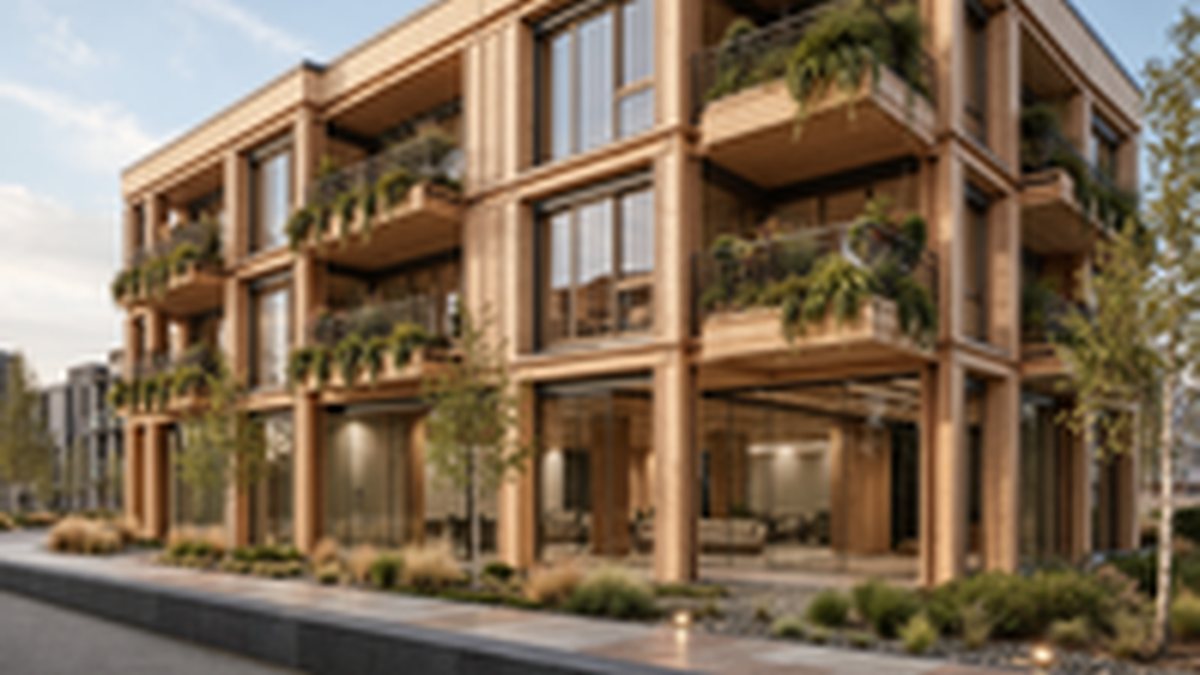
Mass timber is moving from novelty to mainstream in American construction. According to CRE Daily, citing the industry group WoodWorks, the number of mass-timber buildings in the United States has grown from fewer than 100 a decade ago to more than 1,500 including projects started this year. A separate report from Bisnow notes that surging data-centre demand has tied up large portions of steel and concrete supply, prompting more developers to look seriously at engineered wood as an alternative.
The economics are nuanced. Developers quoted in the CRE Daily report point to faster assembly, smaller crews and the appeal of exposed wood as advantages that can help offset a cost premium of roughly 10 to 20 per cent over steel and reinforced concrete. A pivotal regulatory shift came with the 2021 International Building Code, which raised the permissible height for wood buildings from six storeys to eighteen, opening the door to taller and more ambitious projects.
The scale of recent work underlines the shift. The reports cite a 25-storey apartment tower in Milwaukee, Walmart's 2.4-million-square-foot offices in Bentonville and a project of more than 500 units on Staten Island. On the data-centre front, Bisnow notes that Microsoft expected to complete two further mass-timber data centres in Virginia this year, while Meta has an 800-million-dollar mass-timber data centre under construction in South Carolina.
The supply-chain angle is the quiet driver. When a single booming sector absorbs much of the available steel and concrete, prices and lead times move against everyone else, and builders start hunting for materials that are both available and faster to erect. Mass timber, arriving as prefabricated panels that slot together on site, answers both concerns at once.
For the design trades, exposed engineered wood is as much an aesthetic opportunity as a structural one. Warm, visible timber can become the defining finish of a space, reducing the need for added cladding and lending interiors a calm, tactile character that steel and concrete rarely offer on their own.
Market forecasts suggest the momentum is real. Grand View Research, cited in the reporting, projects that mass-timber construction will grow from about 2 billion dollars today to 5.7 billion dollars by 2030. That trajectory implies a maturing supply chain, which in turn tends to narrow cost premiums over time.
The Indian relevance is worth weighing carefully. Engineered timber remains a nascent category here, and climate, fire codes and sourcing all demand local study before any leap. Yet the underlying logic, which is faster assembly, lighter structures and a warmer material palette, speaks directly to concerns shared by builders and homeowners everywhere.
The Aaditya Interior desk watches this evolution with genuine interest, reading it less as a passing trend than as a widening of the palette available to architects and builders. When a material can cut construction time, soften an interior and ease pressure on strained supply chains, it earns a seat at the table.
References & further reading
This is an original article by the Aaditya Interior design desk, written around publicly reported facts. Full reporting and any copyright remain with the sources above.
More in today's edition
Architecture · UAE
Gehry's Guggenheim Finally Sets a Date on Saadiyat Island
Frank Gehry's long-awaited Guggenheim Abu Dhabi will open on 11 December 2026, anchoring the Saadiyat Cultural District with 30 galleries and vast outdoor exhibition grounds.
Read the full story →Architecture · Switzerland
BIG's Timber Hotel in Thun Cracks Open Its Own Form
Danish studio BIG has completed the Siegenthalergut, a timber hotel in Thun whose dramatic upside-down cantilever appears to split the building open.
Read the full story →
Awards & Culture · Japan
A Tree-Top Sauna in Japan Wins the Night at Dezeen Awards
The Daichi Silent River Tree Sauna in Kanagawa has been named architecture project of the year at the ninth Dezeen Awards, praised as beautifully minimalist with a spiritual touch.
Read the full story →