

The Daily Design Chronicle · Tuesday, 24 November 2026
Sustainability · Brazil
Sao Paulo Reaches New Heights in Timber as Brazil Tests a Lower-Carbon Skyline
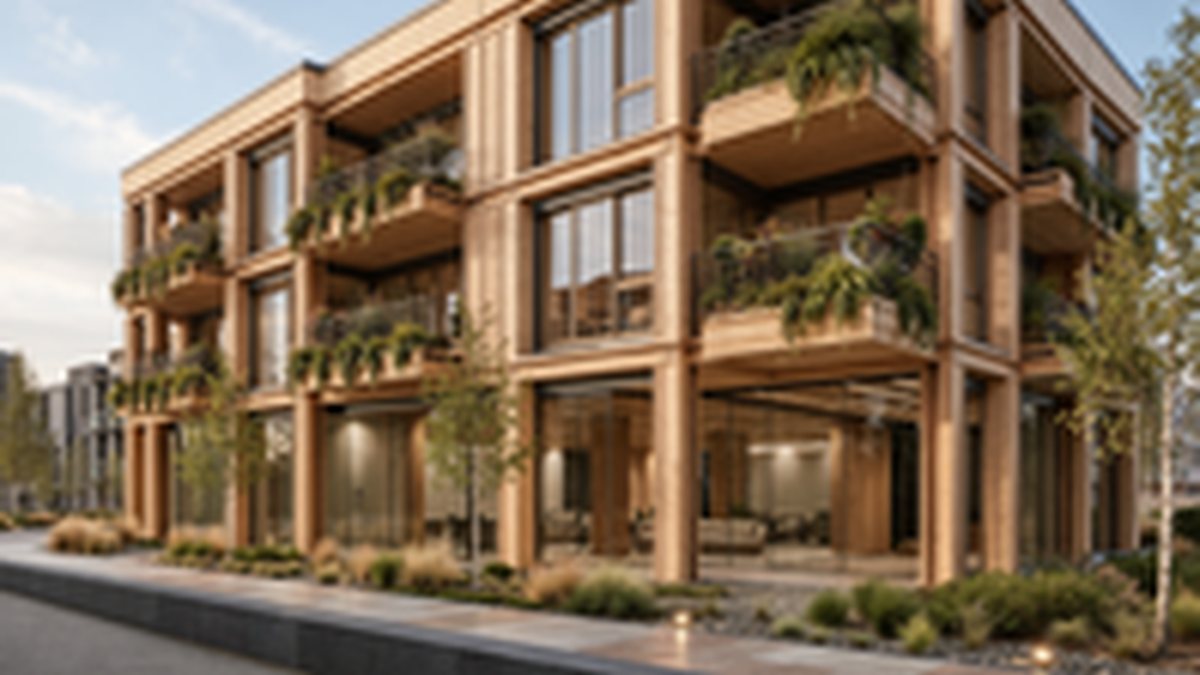
Timber construction firm Crosslam has completed what it describes as Brazil's tallest mass-timber tower in Sao Paulo, according to Dezeen. The project is being presented as a showcase for engineered timber as a renewable, lower-carbon structural material within the Brazilian market, where concrete and steel have long dominated the way tall buildings are imagined and built.
The significance here is less about any single storey count and more about the signal the building sends. For decades, 'tall' and 'timber' were treated as opposites. A completed high-rise that leans on engineered wood for its structure quietly rewrites that assumption, and it does so in one of the largest construction economies in the Global South rather than in a European laboratory of green building.
Mass timber refers to large, factory-made wood components, the kind of engineered panels and columns that behave predictably under load and are prefabricated to tight tolerances. Because the material is grown rather than fired or smelted, and because it stores carbon drawn down during the tree's life, a timber frame can carry a markedly lighter embodied-carbon burden than an equivalent concrete-and-steel cage, provided the wood is responsibly sourced.
For the design and architecture community, the appeal runs deeper than carbon accounting. Prefabricated timber arrives on site as a kit of parts, which tends to mean faster erection, quieter sites, less waste and less dust in dense urban settings. The interiors that result often carry the warmth of exposed wood grain as a finish in its own right, collapsing the usual distance between structure and surface.
There are, of course, honest questions that any such project must answer over time: how the timber performs in humid, warm climates, how it is detailed against fire and moisture, and whether the supply chain can scale without straining forests. A single completed tower does not settle these debates, but it does move them from theory into something people can walk through and measure.
For homeowners and smaller developers watching from a distance, the practical takeaway is that engineered timber is steadily graduating from boutique villas and low-rise offices into serious structural territory. That trajectory usually precedes wider availability, clearer codes and eventually lower costs for the mid-scale projects most families and businesses actually commission.
At Aaditya Interior, the team reads this Sao Paulo milestone as a useful reminder that sustainability in the built environment is increasingly a structural decision, taken long before the first finish is chosen, rather than a label added at the end. In a warm, fast-urbanising country like India, the lessons about detailing wood for heat and humidity are the ones worth studying closely.
Whether or not mass timber becomes commonplace, Brazil's tallest wooden tower makes a persuasive case that the materials of the next skyline need not be the materials of the last one. The more such buildings are completed, occupied and monitored, the easier it becomes for the rest of the industry to trust the idea rather than merely admire it.
References & further reading
This is an original article by the Aaditya Interior design desk, written around publicly reported facts. Full reporting and any copyright remain with the sources above.
More in today's edition
Architecture · UAE
Gehry's Guggenheim Finally Sets a Date on Saadiyat Island
Frank Gehry's long-awaited Guggenheim Abu Dhabi will open on 11 December 2026, anchoring the Saadiyat Cultural District with 30 galleries and vast outdoor exhibition grounds.
Read the full story →Architecture · Switzerland
BIG's Timber Hotel in Thun Cracks Open Its Own Form
Danish studio BIG has completed the Siegenthalergut, a timber hotel in Thun whose dramatic upside-down cantilever appears to split the building open.
Read the full story →
Awards & Culture · Japan
A Tree-Top Sauna in Japan Wins the Night at Dezeen Awards
The Daichi Silent River Tree Sauna in Kanagawa has been named architecture project of the year at the ninth Dezeen Awards, praised as beautifully minimalist with a spiritual touch.
Read the full story →