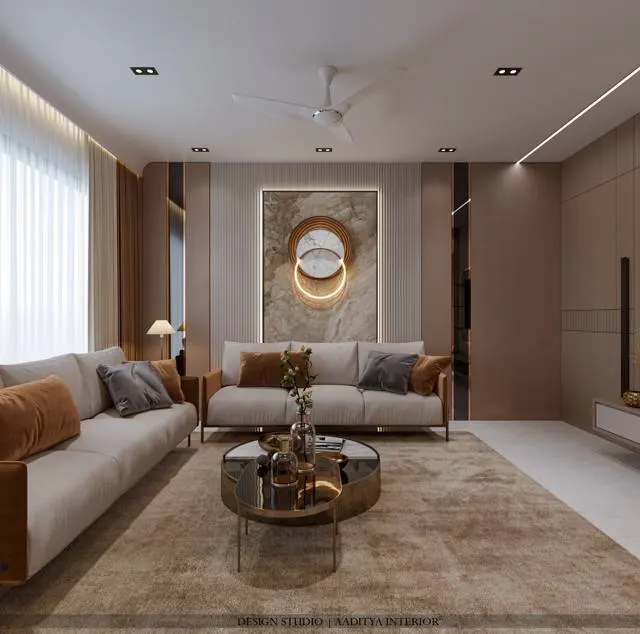
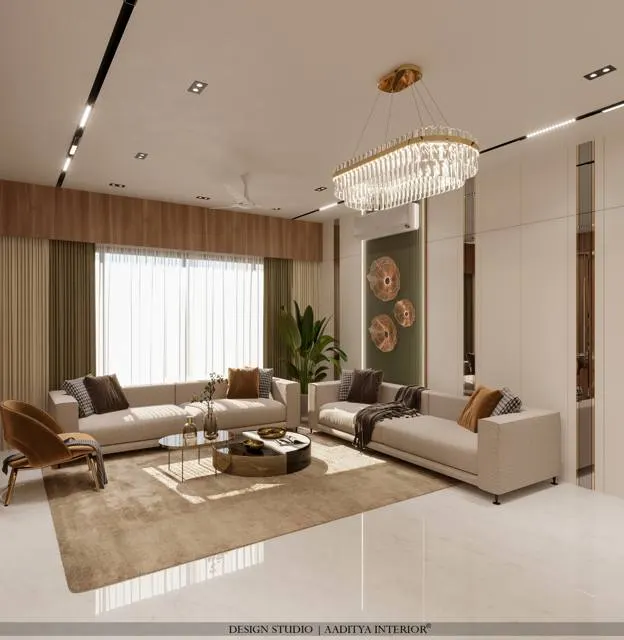
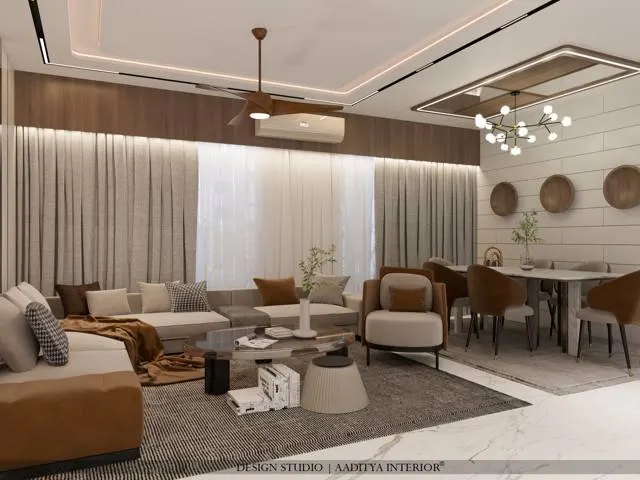
Every interior designer knows the same scene: a sofa that looked perfect in the showroom arrives home and is suddenly too long for the wall, too deep for the walkway, or the wrong shade of grey against the curtains. The showroom is large, bright and empty; the living room is not. Augmented reality, usually shortened to AR, exists to close that gap. Point a phone camera at the living room, choose a sofa in an app, and a life-size three-dimensional model of that sofa appears on the screen, standing on the actual floor, in front of the actual wall, at its true size. Walk around it, view it from the sofa's far side, change its fabric, and see whether the room still works.
The technology has moved quickly from novelty to a normal part of furniture shopping in India. Large retailers and furniture brands now offer AR views on their product pages, interior designers use AR in client meetings to test layouts without moving a single piece of furniture, and homeowners use it to settle arguments about size before spending money. But AR is a tool with limits, and those limits matter: the model is only as accurate as the phone's sensors and the light in the room, the colour on the screen is only as true as the phone's display, and a model that looks right on screen can still be the wrong sofa if the model itself was built to the wrong dimensions. This article explains how AR furniture works, how accurate it really is, which apps and tools are worth using in India, and the checks that should still be done with a tape measure.
The approach is practical rather than technical. The first sections explain the idea in plain language — what the phone is actually doing when it places a virtual sofa on a real floor — and the later sections give a step-by-step workflow for testing a sofa, a dining table or a bed in a real Indian living room, with the dimensions and clearances that decide whether the piece fits. Prices are given for the apps and services involved, and the limits of the technology are stated plainly, because a tool that is trusted too far is worse than a tool that is not used at all.
A short history: from laboratory headsets to every phone
Augmented reality is older than most people think. In 1968 the computer scientist Ivan Sutherland built the first head-mounted display, a heavy headset hung from the ceiling that overlaid simple wireframe graphics on the wearer's view of the room. It was called the Sword of Damocles, and it was a laboratory curiosity for decades. Through the 1990s and 2000s AR lived mainly in military, medical and industrial training, where expensive headsets and markers were acceptable. The turning point for ordinary people came with the smartphone: once a phone had a good camera, a fast processor and motion sensors, it could do a useful version of AR without any extra hardware at all.
Furniture was one of the first consumer uses. In 2017 two things happened at once: Apple released ARKit and Google released ARCore, the software frameworks that let any app place virtual objects in a camera view, and IKEA released IKEA Place, the first widely used furniture AR app. Suddenly anyone with a modern phone could put a virtual armchair in their living room. Indian furniture retailers followed: large online furniture brands added AR views to their product pages, and interior design studios began using AR in client presentations. The pandemic years accelerated the shift, because customers who could not visit showrooms still needed to judge size and fit, and a phone screen was the only showroom available.
Today AR furniture is a normal step in the buying journey rather than a demonstration. The models are better, the tracking is steadier, and the apps are built into the shopping pages themselves, so there is no separate download for many products. The next step is already visible: phones with LiDAR sensors measure a room in seconds, AI tools rebuild a whole room from a short video, and lightweight AR glasses are beginning to replace the phone screen altogether. The history matters because it explains the present: AR furniture is a mature phone technology, not an experiment, but it is still a phone technology, with a phone's limits.
How AR puts a sofa in the room: cameras, planes and tracking
An AR furniture app does three jobs at once. First it finds the floor. The phone's camera looks for flat surfaces — the floor, a wall, a table top — by watching how points in the image move as the phone moves, and by reading the phone's motion sensors. This is called plane detection. On phones with a LiDAR sensor, which measures distance with pulses of light, the floor is found in a second or two; on older phones without LiDAR it takes a few seconds of slow movement before the app is confident. Second, the app tracks the phone: as the user walks around the room, the app keeps the virtual sofa fixed in place by combining camera images with the gyroscope and accelerometer, so that the sofa stays on the same spot on the floor instead of sliding around. Third, the app draws the 3D model of the sofa into the camera image at the right size, angle and lighting, so that it looks as if it is really there.
The 3D model is the part most buyers never think about, and it is the part that decides whether the exercise is useful. A good model is built from the manufacturer's real measurements — the exact length, depth, seat height and arm height of the sofa — and carries the real fabric texture and colour. A poor model is an approximate shape built by a third party, and it can be wrong by 50 mm or more in length, which is enough to turn a correct decision into a wrong one. Reputable furniture brands supply their own models or commission them from the factory drawings; generic model libraries are less reliable. When an app offers a sofa that the brand itself sells, the model is usually trustworthy; when an app offers a generic sofa shape, it should be treated as a rough guide to size and style, not as a measurement.
Scale is the other quiet detail. AR apps place the model at true scale by default, but a model can drift if the tracking is lost — for example, if the user points the phone at a plain white wall with no features to track, or moves the phone too fast. The symptom is a sofa that slowly grows, shrinks or floats above the floor. The cure is simple: move the phone slowly, keep the floor in view, and re-place the model if it looks wrong. A quick sanity check is to place a known object — a 600 mm floor tile, a standard door of 2100 mm height — beside the virtual sofa and compare. If the tile grid and the sofa agree, the scale is right.
How accurate is AR, really?
The honest answer is: accurate enough to make buying decisions, not accurate enough to replace measurement. In good conditions — bright, even daylight, a floor with visible texture such as tiles or wood, a modern phone with LiDAR — AR placement is typically accurate to about 10–20 mm over a sofa-sized object. That is enough to tell whether a 2100 mm sofa fits a 2400 mm wall, whether the walkway beside it stays above 900 mm, and whether the sofa's back blocks a window. In poor conditions — dim evening light, a plain white floor with no texture, a budget phone without LiDAR, a room full of moving people — the error can grow to 50 mm or more, and the model can drift while the user watches. The error also grows with distance: a sofa placed 2 m from the phone is more accurate than a wardrobe placed 5 m away.
Colour is the weakest part of AR. A fabric that looks warm grey on the phone screen can be cool grey in the room, because the phone's screen, the room's light and the camera's white balance all shift the colour. Dark colours look darker on screen than in life, and textured fabrics lose their texture at phone resolution. The safe rule is to use AR for size, position and proportion, and to judge colour from a physical fabric swatch held against the wall and the floor in the actual room light. Most good furniture brands will courier a swatch for a small fee or free, and a swatch that costs nothing to check is worth more than a perfect render.
There is one more accuracy question that buyers rarely ask: is the model itself the right size? A model built from the factory's drawings is usually correct, but models are sometimes built from a catalogue photograph, scaled by eye, and then the AR is perfectly placing a wrong sofa. The check is simple and takes a minute: compare the model's stated dimensions in the app with the dimensions on the brand's own website or specification sheet. If the two disagree, trust the specification sheet and treat the AR as a rough visual only. If they agree, the AR can be trusted for fit.
| Condition | Typical placement error | What to do | Trust it for |
|---|---|---|---|
| Bright daylight, LiDAR phone, tiled floor | ≈ 10–20 mm | Place once, check against tile grid | Fit, walkways, blocking windows |
| Bright daylight, no LiDAR, textured floor | ≈ 20–40 mm | Move phone slowly; re-place if it drifts | Rough fit; confirm with tape |
| Dim evening light, plain floor | ≈ 50 mm or more | Turn lights on; add a rug for texture | Style and proportion only |
| Model from brand's own drawings | Model error near zero | Cross-check stated dimensions | Ordering decisions |
| Model from generic library | Model error 50 mm or more | Treat as a shape guide only | Style ideas, not sizes |
| Colour on screen | Shifts with light and screen | Order a physical fabric swatch | Size and layout, never colour |
The step-by-step workflow for testing a sofa
The workflow below takes about fifteen minutes and saves the most common buying mistake in Indian homes: a sofa that is too big for the room. It works for any large piece — a dining table, a bed, a wardrobe — with the dimensions changed. The key is to do it in the real room, in daylight, with the room as it will actually be used, not emptied for the test. Move the coffee table and the rug out of the way for the test, but leave the television, the curtains and the other furniture in place, because the sofa has to live with them.
Start by measuring the room with a tape and writing down the wall length, the window positions and the door swing. Then open the AR view, scan the floor slowly until the app confirms the plane, and place the sofa against the wall it is meant for. Check three things in order: the length against the wall, with at least 150 mm spare at each end for cushions and curtains; the depth against the walkway in front, keeping 900 mm clear for walking and 450 mm between the sofa front and the coffee table; and the height against the window sill and any picture or shelf above it. Then walk to the far side of the room and look back: does the sofa block the television view from the dining table, does it crowd the entrance, does it leave the room feeling balanced? Change the fabric and the leg finish in the app, and view the sofa from the doorway, which is how guests will first see it.
Finally, confirm with the tape. Measure the wall length, mark the sofa's length on the floor with masking tape, and place two chairs where the sofa's ends will be. Sit on one of them and look at the television: is the viewing distance comfortable for the screen size, roughly 2.1–2.8 m for a 55-inch television? Walk the path from the entrance to the kitchen with the tape outline on the floor: is it clear? If the AR, the tape outline and the sit test all agree, the sofa can be ordered with confidence. If they disagree, the tape wins.
AR apps and tools that work in India
The easiest AR is the kind built into the shopping page. Large Indian online furniture retailers — including the big marketplaces and the large furniture brands — now show a "View in your room" or similar button on many product pages, and it opens the phone's AR view directly without a separate download. The model in that view is the brand's own product, which is the most trustworthy kind. The limitation is choice: only the products that the retailer has modelled are available, and the app may not allow the sofa to be moved freely or combined with other pieces.
Standalone apps give more freedom. General AR furniture apps let a user place many different brands' models in one room, build a whole layout, and save it as a picture or a video to share with family. Some interior design apps go further and rebuild the whole room in 3D from a phone scan, so that walls, windows and existing furniture are all in the model and new pieces can be tried against them. Professional tools used by designers — room-scanning apps and 3D planning software — cost more but give a measured plan as well as a picture, and they are the right choice when a whole room or a whole home is being planned rather than a single sofa.
Costs are modest. Most retailer AR views are free. Standalone AR furniture apps are usually free for basic use, with a paid tier of roughly ₹300–1,500 per month for saving projects, higher-quality models or removing watermarks. Professional room-scan and planning tools run from about ₹1,000 to ₹5,000 per month, or are billed per project. A designer who uses AR in client meetings will typically recover the cost in a single avoided mistake — one wrongly ordered sofa costs far more than a year of app subscriptions. The table below summarises the options.
| Tool type | Examples of use | Indicative cost (₹) | Best for | Limitation |
|---|---|---|---|---|
| Retailer AR on product page | View the exact sofa being sold | Free | Checking one product before ordering | Only that retailer's modelled products |
| Standalone AR furniture app | Place many brands in one room | Free; ₹300–1,500 / month for pro | Comparing sofas from different shops | Model quality varies by brand |
| Room-scan + 3D planner | Scan the room, plan the whole layout | ₹1,000–5,000 / month | Full-room planning, designer use | Needs a good phone; learning curve |
| Designer AR presentation tool | Show clients the finished room | Part of design fee | Client meetings, approvals | Needs a prepared 3D model |
| AR measuring app | Measure walls, windows, gaps | Free to ₹500 | Quick measurements on site | Accuracy 10–30 mm; not for ordering |
Where AR goes wrong — and how to avoid it
The most common AR failure is a floating or sliding model. It happens when the phone loses track of the floor — usually because the user moved too fast, pointed at a blank wall, or walked into a dark corner. The fix is to move slowly, keep the floor in the lower half of the screen, and work in good light. If the model still drifts, restart the AR view and scan the floor again from a different angle. The second common failure is a model placed on the wrong plane: the sofa appears on top of the rug, or half sunk into the floor, because the app detected the rug as the floor. The fix is to remove the rug for the test, or to place the model on the bare floor and then put the rug back.
The third failure is subtler: the room looks right in AR but feels wrong in life. AR shows the sofa from the phone's viewpoint, which is usually standing height, while the room is lived in sitting down. A sofa that looks fine from standing height can block the television from the dining chair, or crowd the path to the balcony. The cure is to view the AR model from sitting height — crouch or sit while holding the phone — and from the doorway, the dining table and the kitchen entrance. The fourth failure is trusting the screen for colour and texture, which has already been covered: always check a physical swatch. The fifth is forgetting the delivery path: a sofa that fits the room may not fit through the main door, the lift or the staircase. Measure the narrowest point of the delivery route — usually the lift door, about 900–1000 mm wide, or a staircase turn — and compare it with the sofa's smallest dimension, usually its height when stood on end.
AR for the whole room: tables, beds and layouts
Once the sofa test is understood, the same method works for every large piece. A dining table is checked against the chair pull-out space — 900 mm behind each chair — and against the path to the kitchen. A bed is checked against the wardrobe door swing and the walkway on both sides, ideally 600 mm on the side used daily. A wardrobe is checked against the ceiling height, because a 2400 mm × 600 mm wardrobe needs about 2474 mm of diagonal clearance to stand it up, so a 2700 mm ceiling leaves little room to spare, and against the door swing in front of it. The advantage of AR grows with the size of the decision: a single chair can be judged by eye, but a full living-room layout of sofa, chairs, television unit and rug is hard to hold in the head, and AR lets a family see it together and agree before ordering.
Designers use AR differently from shoppers. In a client meeting, a designer can place three sofa options in the room in a few minutes, change the fabric on each, and let the client sit on the actual floor and look at the television from the real viewing position. That shortens the decision from days of exchanging photographs to a single meeting, and it reduces the most expensive kind of revision — the one that happens after delivery. For a full home, designers combine AR with a measured 3D plan, so that the AR view is anchored to real wall dimensions rather than to a phone scan alone. The combination is the professional standard: measure first, model second, view in AR third.
| Piece | Key AR check | Clearance to keep | Typical Indian size |
|---|---|---|---|
| Three-seater sofa | Length against the wall | Walkway ≥ 900 mm; table gap 450 mm | 2000–2200 × 900–1000 mm |
| L-shaped sofa | Long side against the longest wall | Walkway ≥ 900 mm on the open side | 2400–2800 × 1600–1800 mm |
| Dining table, 6-seater | Chair pull-out all round | 900 mm behind each chair | 1800 × 900 mm table |
| Queen bed | Walkway on both sides | 600 mm each side; 900 mm at foot | 1500 × 2000 mm (60 × 78 in) |
| King bed | Wardrobe door swing clear | 600 mm each side; 900 mm at foot | 1800 × 2000 mm (72 × 78 in) |
| Wardrobe, sliding | Height against ceiling | 50 mm gap above the top once upright | 2400 mm high × 600 mm deep |
| TV unit + 55-inch TV | Viewing distance from sofa | 2100–2800 mm viewing distance | Unit 1800–2400 mm long |
| Coffee table | Gap to sofa and chairs | 450 mm to sofa; 600 mm walkway | 1200 × 600 mm |
What comes next: LiDAR, AI scans and glasses
The next few years will make AR furniture more accurate and less visible. LiDAR sensors, already present in higher-end phones, measure a room's dimensions directly instead of estimating them from camera images, and as they reach cheaper phones the typical placement error should fall well below 10 mm. AI room scanning goes further: a short video walk through a room can now produce a measured 3D model with walls, windows, doors and existing furniture, into which new pieces can be placed with their real dimensions. That removes the weakest step of current AR — the phone's guess about where the floor is — and replaces it with a measured plan. For Indian homes, where rooms are often irregular and walls are rarely perfectly square, a measured scan is a genuine improvement over a phone estimate.
AR glasses are the longer-term change. A pair of lightweight glasses that overlays the virtual sofa on the real room without the user holding a phone would let a family walk around a layout together, each seeing the same sofa from their own viewpoint, and would let a designer adjust a layout while talking to the client rather than while holding a screen. The glasses are not yet common in India — they remain costly and their battery life is short — but the direction is clear. What will not change is the need for the checks in this article: a true-scale model, a tape measure for the final order, a fabric swatch for colour, and a measured delivery path. The technology improves; the discipline stays the same.
| Development | What it changes | When it matters in India | What stays the same |
|---|---|---|---|
| LiDAR on more phones | Faster, more accurate floor detection | Already on premium phones; spreading | Tape check for the final order |
| AI room scans from video | Measured 3D room, not an estimate | Available now in pro tools | Colour still needs a swatch |
| Better 3D model libraries | More products modelled to true size | Growing with retailer adoption | Cross-check model dimensions |
| AR glasses | Hands-free shared viewing | Early, costly; a few years away | Clearances and delivery path |
| AI layout suggestions | App proposes layouts for the room | Emerging in design apps | Family must still sit and test it |
Eight rules for using AR furniture well
- Use AR for size, position and proportion — never for colour; always check a physical fabric swatch.
- Cross-check the model's stated dimensions against the brand's specification sheet before trusting it.
- Work in bright, even daylight with the floor visible, and move the phone slowly while scanning.
- Check the sofa against a known size — a 600 mm floor tile or a 2100 mm door — to confirm the scale.
- Keep 900 mm clear for walkways, 450 mm between sofa and coffee table, and 150 mm spare at each end of the wall.
- View the AR model from sitting height and from the doorway, not only from standing height.
- Mark the sofa outline on the floor with masking tape and sit-test the television view before ordering.
- Measure the delivery path — main door, lift and staircase turn — before paying, not after.
Frequently asked questions
Is augmented reality furniture accurate?
In good light on a modern phone, AR placement is typically accurate to about 10–20 mm, which is enough to judge whether a sofa fits a wall and whether walkways stay clear. In dim light or on a phone without LiDAR the error can reach 50 mm or more. Always confirm the final order with a tape measure.
Which is the best AR furniture app in India?
For a single purchase, the retailer's own AR view on the product page is usually best, because the model is the brand's own product built from factory drawings. For comparing products from different brands, a standalone AR furniture app is more flexible. Designers planning a whole room should use a room-scan or 3D planning tool.
Can AR show the true colour of a sofa?
No, not reliably. The phone screen, the room light and the camera's white balance all shift colour, and dark fabrics look darker on screen than in life. Use AR for size and layout, and judge colour from a physical fabric swatch held against the wall and floor in the room's own light.
Do I need a special phone for AR furniture?
Most phones made in the last few years support AR through ARKit or ARCore. Phones with a LiDAR sensor place models faster and more accurately, but a phone without LiDAR still works well in bright light on a textured floor. A very old or budget phone may not support AR at all, in which case a tape outline on the floor is the fallback.
Can AR replace a site visit by a designer?
No. AR is a visualisation tool, not a survey. A designer still needs to measure the room, check wall squareness, note window heights and door swings, and confirm the delivery path. AR makes the design meeting faster and the decision clearer, but it does not replace measurement.
What if the sofa fits the room but not the lift?
Measure the narrowest point of the delivery route — main door, lift door, staircase turn — before ordering, and compare it with the sofa's smallest dimension when carried on end, usually its depth. If it does not fit, ask the retailer about a sofa with removable legs or a modular design that arrives in sections.
Sources & standards
- Bureau of Indian Standards — National Building Code of India 2016, Part 3 (Development Control Rules and General Building Requirements) and Part 8 (Building Services, lighting and ventilation)
- Bureau of Indian Standards — IS 303 (plywood for general purposes), IS 12406 (medium density fibreboard)
- Neufert, Architects' Data — seating dimensions, circulation clearances and television viewing distances
- Time-Saver Standards for Interior Design and Space Planning — living room layouts, dining clearances and bedroom planning
- Apple ARKit and Google ARCore developer documentation — plane detection, tracking and LiDAR measurement
- Price ranges: indicative October 2026 estimates — confirm locally before budgeting