An empty flat is the hardest kind of home to sell. A buyer walks into a bare living room, sees four white walls and a tiled floor, and has to imagine a sofa, a television, a dining table and a life — all at once, in a space that echoes. Most buyers cannot do it. They remember the flat as smaller than it is, colder than it is, and harder to furnish than it is. Estate agents know this, which is why the best flats on any property portal are shown furnished, even when the flat itself is empty. Until recently, furnishing an empty flat for photographs meant hiring furniture, moving it in, styling it, photographing it and moving it all out again — a week of logistics and a bill that only made sense for premium homes.
Virtual staging changed that arithmetic. A photographer takes clean photographs of the empty rooms, and a designer or a software tool adds realistic furniture, rugs, lamps, curtains and art into those photographs digitally. The walls, the floor, the windows and the proportions stay exactly as they are; only the furniture is invented. The result is a set of listing photographs that show a buyer how the flat could live, at a fraction of the cost of moving real furniture and in a day or two instead of a week. In Indian cities, where most resale flats and many new launches are sold empty, virtual staging has moved from a novelty to a standard marketing tool in less than a decade.
This article explains the whole subject as a designer and a seller would need it: what virtual staging is and where it came from, how the work is actually done, what it costs in India in 2026, how to photograph a flat so the staging looks real, which rooms to stage and which to leave empty, how it compares with physical staging and with full 3D renders, and the honesty rules that keep a staged listing trustworthy. All prices are indicative October 2026 estimates and should be confirmed with local providers before budgeting.
From empty rooms to sold homes: a short history of staging
Staging — furnishing a home to sell it — began as a real-estate practice in the United States in the 1970s, when agents noticed that furnished show homes sold faster than empty ones. The logic was psychological rather than decorative: buyers do not buy square feet, they buy a picture of their own life, and an empty room gives them nothing to hold on to. By the 1990s, professional staging had become a service industry of its own, with furniture rental companies, stylists and photographers working as a team. The cost, however, stayed high. A staged three-bedroom home in a metro city typically needs a truck of furniture, a day of installation, a day of photography and a day of removal, and the furniture stays on rent until the home sells.
In India, staging arrived later and in a different form. New launches were sold from sample flats — one fully furnished flat in the project, photographed and shown to every buyer — while resale flats were usually shown empty, with the agent pointing at bare walls and describing the furniture that could go there. The sample flat worked well for developers, but it was expensive to build and it only showed one layout. The resale market, which is most of the market in cities such as Mumbai, Delhi, Bengaluru and Surat, had no affordable equivalent. Virtual staging filled exactly that gap. The first services appeared in the early 2010s, when 3D artists began furnishing listing photographs by hand in software. The work was slow and expensive at first, but by the late 2010s, dedicated staging firms and then AI tools had brought the price down to a level where staging a single flat cost less than a day of an agent's time.
The change that made virtual staging mainstream was not only price. Property portals began to rank listings with good photographs far above listings with poor ones, and buyers began to expect every listing to show a furnished home. An empty-room photograph, which once looked normal, began to look unfinished. At the same time, the tools improved: better lighting models, larger furniture libraries, and software that could match the perspective and shadows of the original photograph. The result is that a well-staged virtual photograph is now hard to tell from a real one at portal size — which is precisely why the rules about labelling it have become so important.
| Staging era | How a flat was shown | Typical cost (indicative) | Turnaround | What changed |
|---|---|---|---|---|
| 1970s–1990s (USA origin) | Physical staging with rented furniture | High — truck, labour, monthly rent | 1–2 weeks | Staging proved furnished homes sell faster |
| 2000s (India) | Developer sample flats; resale shown empty | Sample flat ₹5–20 lakh to build | Weeks | Only one layout shown; resale had no option |
| Early 2010s | Hand-built 3D staging of listing photos | ₹3,000–8,000 per image | 3–5 days | First affordable staging for resale flats |
| Late 2010s | Dedicated staging firms, larger libraries | ₹1,500–4,000 per image | 48–72 hours | Quality and speed improved together |
| 2020s–now | AI-assisted staging plus human finishing | ₹500–5,000 per image | 24–72 hours | Staging became standard on portals |
How virtual staging works today, step by step
The process has five steps, and the first two decide the quality of everything that follows. Step one is the photography. The photographer shoots the empty rooms with a wide-angle lens, a level camera and good light, taking one or two angles per room. Step two is selection: the seller or agent chooses which photographs to stage, usually one strong angle of the living room, one of the dining area and one of each bedroom. Step three is the staging itself. A designer — or an AI tool supervised by a designer — studies the photograph's perspective, light direction and scale, then places furniture from a digital library into the image: a sofa at the right size against the right wall, a rug under it, a lamp that matches the window light, art hung at eye level. Shadows and reflections are painted in so the furniture sits in the room rather than floating on it.
Step four is review. The staged photographs come back as proofs, and the seller checks them for the mistakes that give bad staging away: furniture that is too large or too small for the room, a rug that crosses a door swing, a dining table that blocks the passage, or a style that fights the flat — a heavy carved set in a compact 2BHK, or a minimalist white set in a family home that will clearly be lived in hard. Good providers offer one or two rounds of revision, and the sensible seller uses them: swapping a sofa style, removing a chair that crowds the balcony door, or toning down colours that photograph too brightly. Step five is listing. The staged photographs go onto the portal with the original empty photographs beside them, and every staged image is labelled as digitally staged.
Two kinds of providers do this work in India today. The first is the specialist staging studio, usually a small team of 3D artists who work from photographs and deliver finished images in 24–72 hours. Their strength is control: they can match a specific furniture style to the flat, keep proportions honest and revise on request. The second is the AI staging tool, where the seller uploads a photograph and the software furnishes it in minutes. AI tools are fast and cheap, and their quality has improved sharply, but they still make the classic mistakes — furniture that ignores the room's scale, impossible reflections, or a style that changes from room to room. The best results in 2026 usually come from a hybrid: AI for the first pass, a human designer for the finish. Whichever route is chosen, the rule is the same: the staged photograph must show what the room can genuinely hold, not what a catalogue wishes it could hold.
| Photo specification | Recommended value | Why it matters | What goes wrong otherwise |
|---|---|---|---|
| Camera height | 1200–1500 mm from floor | Matches standing eye level; furniture sits naturally | Too low makes furniture loom; too high shrinks the room |
| Lens (full-frame equivalent) | 16–24 mm wide angle | Shows two walls and the floor in one frame | A 35 mm or longer lens crops the room to a corner |
| Camera position | In a corner, level on a tripod | Captures the room's true shape and size | Hand-held tilted shots bend walls and break perspective |
| Resolution | At least 3000 px on the long edge | Portals compress images; low resolution turns soft | Staged furniture looks pasted on a blurry base |
| Light | Daylight plus all room lights on | Even exposure the stager can match | Dark corners force fake light that never matches |
| Angles per room | Two corners for living and bedrooms | Buyer sees the full room, not one wall | One angle hides the door, the window or the passage |
What virtual staging costs in India in 2026
Virtual staging is priced per image, and the range in India in 2026 is wide because the work itself varies. At the low end, AI-only staging costs about ₹500–1,500 per image: the photograph is uploaded, the software furnishes it in minutes, and the result is usable for a quick listing. At the middle, a specialist studio charges about ₹1,000–2,500 per image for photorealistic staging by a human designer, with one or two revision rounds included. At the top end, premium staging — a named designer, a specific furniture style matched to the flat, detailed lighting and shadows, and several revisions — runs about ₹2,500–5,000 per image. Most sellers stage 6–10 images for a 2BHK or 3BHK, so a full flat typically costs about ₹6,000–25,000 all in, against ₹1.5–4 lakh for physical staging of the same flat for a month.
The price also depends on what is being staged. A simple living room with a sofa, a rug and a television unit is quick work. A bedroom with a bed, side tables, a wardrobe wall and curtains takes longer. A photograph that needs correction first — a dark room, a tilted camera, a wall that must be digitally repainted — costs more, because the stager is fixing the photograph as well as furnishing it. Some providers bundle the photography with the staging, which is worth taking when the seller has no photographer: a photographer who knows the staging brief shoots the right angles in the right light, and the stager receives files that need no repair. Always ask what the per-image price includes: the number of revision rounds, the delivery resolution, whether the empty originals are supplied alongside, and whether the fee includes GST. A quotation that seems cheap usually excludes revisions, and a staged photograph that cannot be revised is a photograph the seller is stuck with.
| Service level | What is included | Indicative cost per image (₹) | Typical turnaround | Best for |
|---|---|---|---|---|
| AI-only staging | Software furnishing, no human review | ₹500–1,500 | Minutes to hours | Quick rental listings, bulk portfolios |
| Standard studio staging | Human designer, realistic furniture and light, 1–2 revisions | ₹1,000–2,500 | 24–72 hours | Most resale flats and new launches |
| Premium staging | Named designer, matched style, detailed shadows, several revisions | ₹2,500–5,000 | 48–96 hours | Luxury flats, villas, developer campaigns |
| Full flat package (6–10 images) | Staging for living, dining and bedrooms, revisions included | ₹6,000–25,000 total | 2–4 days | A complete 2BHK or 3BHK listing |
| Photography + staging bundle | On-site photography plus staging of the set | ₹12,000–35,000 total | 3–5 days | Sellers with no photographer of their own |
| Physical staging (for comparison) | Rented furniture, installation, photography, removal | ₹15,000–40,000 per room / month | 1–2 weeks | Premium homes where buyers visit in person |
Two costs are easy to forget. The first is the photography itself, if it is not bundled: a professional real-estate shoot for a 2BHK or 3BHK in a metro city typically costs ₹5,000–15,000, and the photographs are the raw material for everything that follows. The second is the cost of doing it badly: a listing with obviously fake staging — furniture at the wrong scale, shadows pointing the wrong way — can cost more in lost enquiries than the staging saved. A good rule is to spend the money where the buyer looks first. The living room photograph is the cover of the listing; it deserves the best staging in the set. The second bedroom can take the simplest treatment. Spending equally on every image is how a ₹10,000 package becomes a ₹25,000 package without selling the flat any faster.
Room by room: what to stage, what to leave empty
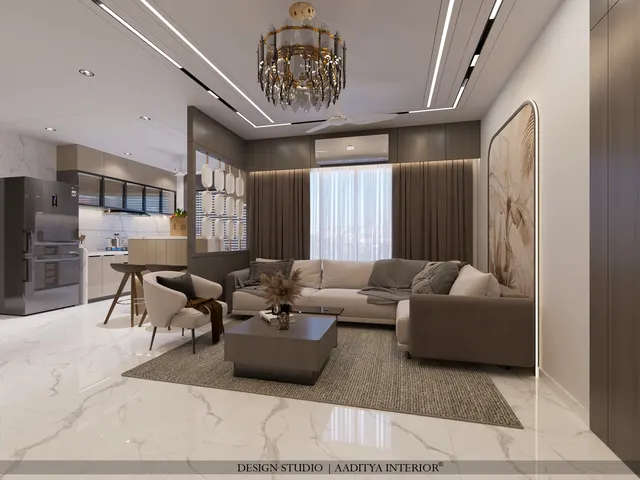
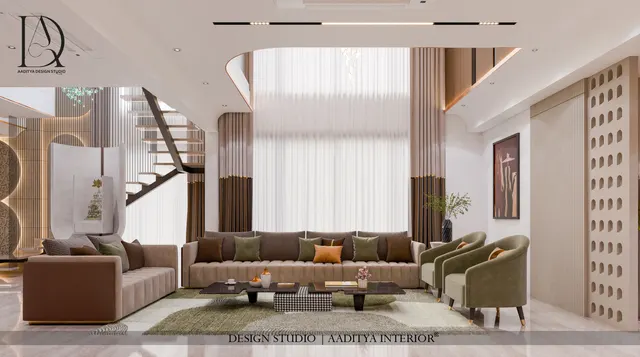
Not every room benefits from staging, and staging every room is the quickest way to waste money. The living room comes first, always. It is the largest room, the first photograph on the portal, and the room buyers find hardest to imagine empty. A staged living room should show the real furniture the room can hold: a three-seater sofa of about 2000–2200 mm on the long wall, a television unit on the opposite wall at a viewing distance of 2.1–2.8 m for a 55-inch screen, a coffee table with 400–450 mm of clearance from the sofa, and a rug that sits under the front legs of the sofa rather than floating in the middle of the floor. The style should match the flat: warm wood and fabric in a family home, clean lines in a compact urban flat, and nothing that could only belong in a hotel lobby.
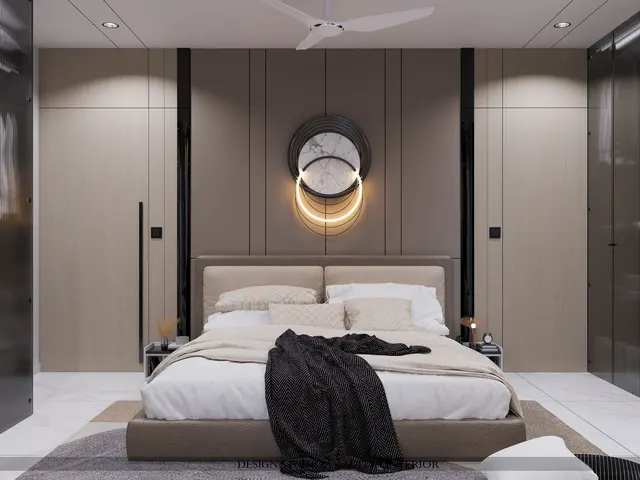
Bedrooms come second. A bedroom photograph needs to answer one question: does a real bed fit, with room to walk around it? The staging should show a queen bed of 1524 × 1981 mm with 600–750 mm of clear space on the side used for getting in, side tables of about 450 mm wide, and a wardrobe wall that does not block the door. The dining area comes third: a table for six with 900 mm of chair pull-out space behind each chair, a pendant light above it, and a sideboard if the room is wide enough. These three rooms — living, bedroom, dining — are where staging earns its fee, because they are the rooms whose size a buyer cannot judge from an empty photograph.
Kitchens and toilets should almost always be left empty. A kitchen sells on its counters, its storage and its light, and a staged kitchen — with digitally added fruit bowls, plants and bar stools — usually looks less honest than the bare counter, because the buyer knows the fruit is not included. A toilet sells on its fittings and its size; adding digital towels and candles only draws attention to the fact that the room is small. Passages, utility areas and balconies should also stay empty, with one exception: a large balcony or terrace can be staged with two chairs and a small table, because an empty balcony reads as wasted space while a furnished one reads as an outdoor room. The rule is simple — stage the rooms where furniture answers a question, and leave the rooms where furniture would only decorate.
| Room | Stage or leave empty | What the staging should show | Typical furniture in the image | Priority |
|---|---|---|---|---|
| Living room | Stage — always | Sofa size, TV distance, walking space | 3-seater sofa, rug, TV unit, lamp | 1 — the portal cover photo |
| Master bedroom | Stage — always | Bed fit, wardrobe wall, side clearance | Queen bed, 2 side tables, wardrobe | 2 |
| Second bedroom | Stage | That a real bed fits with room to move | Queen or double bed, side table | 3 |
| Dining area | Stage | Table size and chair pull-out space | 6-seater table, pendant light | 3 |
| Children's room | Stage lightly | Bed, study table and storage together | Single bed, study table, shelf | 4 |
| Kitchen | Leave empty | Counters, storage, light and fittings | — (keep counters clear) | — |
| Toilets and baths | Leave empty | Fittings, size, ventilation | — (keep fittings visible) | — |
| Balcony / terrace | Stage only if large | That it works as an outdoor room | 2 chairs, small table, planter | 4 |
Virtual staging versus physical staging versus 3D renders
Sellers often confuse three different services, and choosing the wrong one wastes money. Virtual staging furnishes a photograph of a real room. Physical staging furnishes the real room with real furniture. A 3D render creates an entirely imaginary room from a floor plan, with no photograph at all. Each has its place. Virtual staging is the right choice for a resale flat that is empty and needs listing photographs this week: it is fast, cheap, and it shows the actual flat — the real windows, the real floor, the real proportions — with furniture added. Physical staging is the right choice for a premium home that buyers will visit in person, because a buyer who has seen a staged photograph and then walks into a beautifully furnished room feels the home rather than merely seeing it. A 3D render is the right choice for a flat that does not exist yet — an under-construction project — where there is no room to photograph at all.
The costs tell the same story. Virtual staging for a whole flat costs about ₹6,000–25,000; physical staging for the same flat costs ₹1.5–4 lakh for a month of furniture rental and installation; a set of 3D renders for a new launch costs about ₹2,000–10,000 per view, in line with the rates this site's guides quote for elevation and interior 3D views. The time tells it too: virtual staging takes days, physical staging takes a week or more to install, and renders take as long as the design takes to draw. The honest comparison is not which is best in general, but which fits the sale: a ₹60 lakh resale flat in Surat does not need a ₹2 lakh physical staging bill, and a ₹3 crore villa in Ahmedabad should not be sold on virtually staged photographs alone when buyers will walk through it.
| Factor | Virtual staging | Physical staging | Full 3D render |
|---|---|---|---|
| What is shown | Real photo of the real room, furniture added | The real room, really furnished | An imaginary room drawn from a plan |
| Indicative cost (2–3BHK) | ₹6,000–25,000 for 6–10 images | ₹1.5–4 lakh for a month | ₹2,000–10,000 per view |
| Time to first photos | 24–72 hours | 1–2 weeks | 3–7 days per view |
| Best for | Resale flats, quick listings | Premium homes, buyer visits | Under-construction projects |
| Buyer sees on visit | The empty room as it is | The furnished room as photographed | A building site or a shell |
| Risk | Looks fake if badly done | High cost if the flat sits unsold | Buyer may feel the render oversold |
| Revision cost | Low — re-render the image | High — move real furniture | Medium — redraw the view |
There is also a hybrid that works well for new launches: the developer builds one physical sample flat, photographs it, and then virtually stages the photographs of the other layouts in the project. The buyer sees one real furnished flat and several virtually staged ones, and the comparison is honest because the sample flat proves what the finishes really look like. For resale sellers, the equivalent hybrid is simpler: stage the living room and bedrooms virtually, and photograph the kitchen and toilets empty. The listing then shows the buyer exactly what they need — how the big rooms live — without pretending the whole flat is furnished.
Honesty rules: disclosure, RERA and buyer trust
Virtual staging has one rule that matters more than all the others: the buyer must always be able to tell what is real and what is digital. A staged photograph that is presented as a real photograph is not marketing — it is a misrepresentation, and it damages the seller twice. First, the buyer arrives, finds an empty flat, and feels cheated before the viewing has begun. Second, the agent and the seller lose the trust that the rest of the sale depends on. Real estate law in India requires advertisements to be accurate and not misleading: RERA places that duty on promoters and developers, and for a resale listing the same labelling is expected under consumer-protection law and portal rules, so a listing that shows furnished rooms without saying so invites exactly the complaint those rules exist to prevent. The safe practice is simple and costs nothing: label every staged image clearly, in the image itself or in the caption, with the words digitally staged or virtually staged.
Good listings go further and show the empty photographs alongside the staged ones. The staged set goes first, because it is what makes a buyer stop scrolling; the empty set follows, because it is what the buyer will actually own. This pairing is also the best defence against the most common staging complaint — that the furniture made the room look bigger than it is. A buyer who can compare the staged and empty photographs side by side can judge the size for themselves, and the seller has nothing to hide. The same logic applies to what the staging is allowed to change. Furniture, rugs, lamps, curtains and art may be added. Walls may not be moved, windows may not be enlarged, a view may not be invented, and a stain, a crack or a damp patch may not be painted out. Digital staging that hides a defect is not staging; it is concealment, and it will be discovered on the first visit.
| Honesty check | Allowed in staging | Not allowed | Why it matters |
|---|---|---|---|
| Adding furniture and decor | Yes — sofas, beds, tables, rugs, lamps, art | Furniture that cannot fit the room | Buyer must be able to buy the same sizes |
| Changing wall colour | Yes, if the repaint is offered or disclosed | Repainting to hide damp or cracks | Hides a defect the buyer will inherit |
| Adding curtains and lighting | Yes — they show how the room can feel | A window or a view that does not exist | The view is part of the price |
| Removing clutter | Yes — empty rooms are the starting point | Removing a pillar, a beam or a duct | Structure decides what the room can hold |
| Labelling | Must say digitally staged on the image | Presenting staged photos as real | Consumer-protection and portal rules expect accuracy |
| Empty photos alongside | Always include the unstaged set | Staged photos only, no empty ones | Buyer cannot judge true size otherwise |
Where virtual staging is going next
Virtual staging is moving in three directions at once. The first is speed: AI tools that stage a photograph in minutes rather than days are improving fast, and within a few years the first draft of a staged set will be instant and nearly free. The second is depth: the same photograph that is staged today will tomorrow be part of a virtual tour, where the buyer walks through the furnished flat on a phone, opens cupboards, changes the sofa colour and measures the walls on screen. Some Indian portals and developers already offer simple versions of this, and the technology is becoming cheap enough for ordinary resale listings. The third direction is honesty by design: tools that watermark staged images automatically, that keep the empty original one tap away, and that flag furniture which does not fit the room's real dimensions.
None of this removes the human designer. A tool can fill a room with furniture; it cannot yet decide which room matters most to this buyer, which style suits this flat, or which photograph should lead the listing. It also cannot yet be trusted with scale — the classic AI mistakes of a bed that is too long for its wall or a dining table that blocks the door will keep appearing until the software genuinely understands room geometry. The likely future is the one already visible in the best Indian staging studios: AI does the first pass in minutes, a designer corrects it in an hour, and the seller lists in a day. For the buyer, the change is simpler to state: every listing will soon be staged, and the listings that win will be the ones where the staging is honest, the scale is true and the empty photographs are one tap away.
Nine rules for virtual staging that sells
- Photograph the empty flat properly first — level camera at 1200–1500 mm, 16–24 mm lens, two corners per room — or no staging will look real.
- Stage the living room first and best; it is the cover photograph of the listing.
- Keep every piece of staged furniture true to size: a sofa wider than its wall is a lie the buyer will spot on the first visit.
- Match the furniture style to the flat and the likely buyer, not to a catalogue.
- Stage living, dining and bedrooms; leave kitchens, toilets and passages empty.
- Always show the empty photographs beside the staged ones, and label every staged image as digitally staged.
- Never move a wall, enlarge a window, invent a view or paint out a defect in staging.
- Use the revision rounds: check scale, door swings, passage widths and style before the listing goes live.
- Budget for the whole flat (₹6,000–25,000 for 6–10 images) rather than staging one room and leaving the rest bare.
Frequently asked questions
How much does virtual staging cost in India?
A standard studio charges about ₹1,000–2,500 per image in 2026, an AI-only tool about ₹500–1,500 per image, and premium staging about ₹2,500–5,000 per image. A full flat of 6–10 images typically costs ₹6,000–25,000, and a photography-plus-staging bundle costs ₹12,000–35,000. Physical staging for comparison costs ₹15,000–40,000 per room per month. Prices are indicative October 2026 estimates — confirm locally before budgeting.
Is virtual staging legal in India?
Yes, as long as the images are honest. Real estate advertising rules require advertisements to be accurate and not misleading — RERA places that duty on promoters, and for a resale listing the same standard is expected under consumer-protection law and portal rules — so staged images must be labelled as digitally staged, the empty photographs should be shown alongside, and nothing structural — walls, windows, views or defects — may be altered. Staging that hides a defect or invents a view is a misrepresentation, not marketing.
Does virtual staging actually help sell a flat?
It helps in the specific job it does: getting buyers to stop scrolling, shortlist the flat and book a visit. Listings with good photographs attract far more enquiries than empty-room listings, and a staged living room lets a buyer picture their own life in the flat. It does not change the price the flat can command, and it cannot rescue a flat that is overpriced or badly located. Its value is in the viewing, not in the valuation.
How long does virtual staging take?
A standard studio returns staged photographs in 24–72 hours, and a full flat of 6–10 images is usually listed within 2–4 days including one or two revision rounds. AI tools return a first draft in minutes, but a human review and revision still takes a day. The slowest step is usually the seller's review of the proofs, so answering the same day is the fastest way to list quickly.
What should I ask a virtual staging provider before hiring them?
Ask five things: the price per image and what it includes, especially revision rounds and GST; the delivery resolution of the finished images; whether the empty originals are supplied alongside the staged set; how they handle scale — whether furniture is sized to the room's real dimensions; and whether they label staged images as digitally staged. Ask to see two or three finished sets for flats similar to yours, and check the furniture scale in those samples before paying.
Can I virtually stage a flat myself with an app?
Yes, for a quick rental listing or a first draft. AI staging apps will furnish a photograph in minutes at low cost. The results are good enough to show the idea of a room, but they often get scale, shadows and style wrong, so a seller should always review the images critically — or send them to a designer for a finishing pass — before using them on a sale listing where the price is high and the buyer will visit in person.
Sources & standards
- National Building Code of India 2016, Part 3 (Development Control Rules and General Building Requirements) and Part 8 (Building Services, Lighting and Ventilation)
- Bureau of Indian Standards — IS 732 (code of practice for electrical wiring installations)
- Ernst Neufert — Architects' Data (standard furniture sizes, clearances and viewing distances)
- Time-Saver Standards for Interior Design and Space Planning (living and bedroom planning, furniture dimensions)
- Real Estate (Regulation and Development) Act, 2016 — accuracy duties on promoters' advertisements
- Energy Conservation Building Code (ECBC) and BEE guidance on daylighting and lighting quality in homes
- Price ranges: indicative October 2026 estimates — confirm locally before budgeting