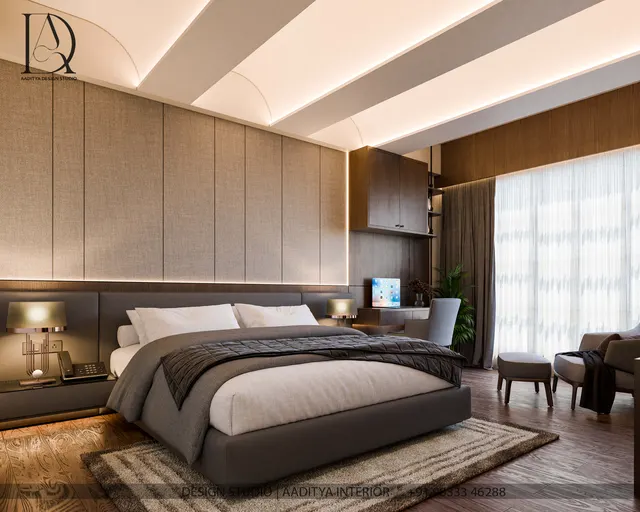
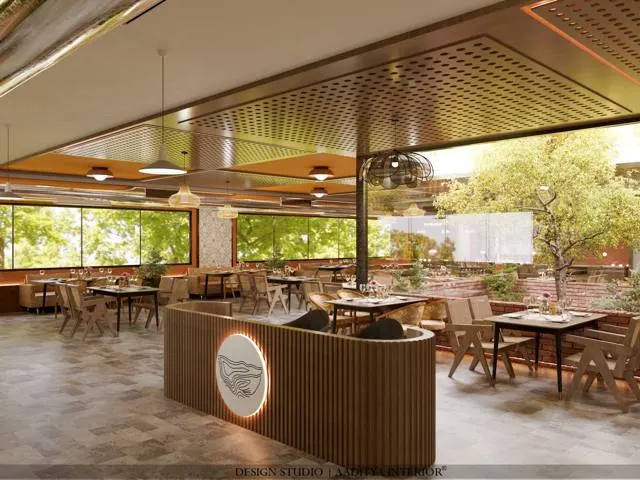
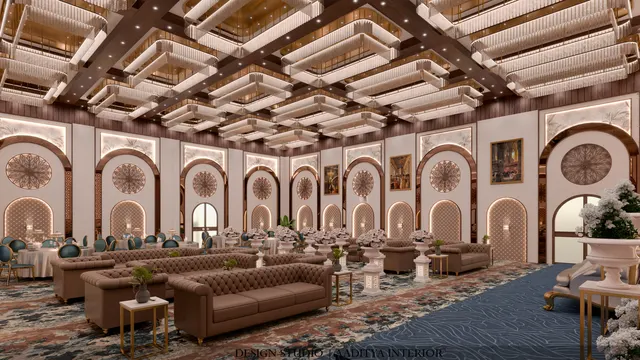
Almost every café project in India begins with the same question: how much will the interior cost? And almost every answer given in the first meeting is wrong — not because the contractor is dishonest, but because the question is incomplete. A café is not one budget. It is an interior fit-out, a coffee and kitchen equipment package, an air-conditioning system, fire and electrical upgrades, signage, licences and an opening stock, each priced differently and each controlled by different decisions. A per-square-foot rate that covers only one of these lines, quoted as if it covered all of them, is the most common reason cafés open late, open unfinished, or open with no money left for the first three months of rent.
The second reason is that café owners compare the wrong numbers. A rate of ₹1,000 per sq ft from one contractor and ₹1,800 from another may describe the same café — one excluding furniture, lighting fixtures and the counter, the other including them. Indian cafés also carry specific costs that generic interior estimates miss: a counter loaded with plumbing, drainage and heavy electrical points; acoustic treatment for rooms full of hard surfaces; extra air-conditioning for espresso machines, ovens and crowds; and, in a humid city like Surat or Mumbai, materials that will survive daily mopping and monsoon damp.
This guide breaks a café budget into its real lines. It keeps the fit-out bands identical to this site's restaurant and café design guides — about ₹900–1,400 per sq ft basic, ₹1,400–2,200 mid-range and ₹2,200–3,500 or more premium — and then shows what sits inside those numbers, what sits outside them, and how three typical cafés of 300, 800 and 1,800 sq ft add up. All prices are indicative October 2026 ranges, excluding GST, and must be confirmed locally.
Why café interiors cost what they cost
A café packs more work into each square foot than a home or an ordinary office. In a 2BHK flat, most of the money goes into wardrobes and a kitchen. In a café, the money concentrates in three places: the service counter, which is a piece of furniture, a plumbing installation and an electrical panel at the same time; the seating, which has to survive hundreds of people a week; and the services — drainage, water filtration, dedicated power circuits, exhaust and air-conditioning — that nobody sees in a photograph but that decide whether the café can operate at all.
The history of the Indian café explains why these costs have climbed. The Irani cafés of Mumbai and Pune, which grew through the twentieth century, were furnished with bentwood chairs, marble-topped tables, mirrors and high ceilings with fans — a durable kit that lasted for decades with little reinvestment. The coffee chains that expanded from the late 1990s and 2000s brought standardised counters, branded graphics, air-conditioning and power points at seats. Today's specialty cafés add espresso machines with dedicated circuits and filtered water, display chillers, layered dimmable lighting, acoustic panels and a facade designed to be photographed. Each step added services and finishes, and each step raised the per-square-foot cost.
Looking ahead, three trends are already changing café budgets. Energy costs are pushing owners towards efficient inverter air-conditioning and LED lighting with controls; delivery and takeaway volumes are shifting space from seating to pick-up and packing; and modular, demountable counters and furniture are being chosen so that a café can relocate or refresh without starting from zero. None of these makes a café cheaper on day one, but each reduces the cost of the second and third year.
| Café format | Typical area | Typical fit-out grade | Indicative interior fit-out (₹) | What drives the cost |
|---|---|---|---|---|
| Kiosk or coffee cart in a mall or office | 80–250 sq ft | Basic to mid-range | ≈ ₹1–5 lakh (often priced as a lump sum) | Counter joinery, mall fit-out rules, power and water points |
| Grab-and-go café | 250–500 sq ft | Basic to mid-range | ≈ ₹2.3–11 lakh | Counter, shopfront, bar ledges, signage |
| Neighbourhood café | 600–1,200 sq ft | Basic to mid-range | ≈ ₹5.4–26.4 lakh | Seating mix, counter length, acoustics, lighting |
| Bakery or dessert café | 600–1,500 sq ft | Mid-range | ≈ ₹8.4–33 lakh | Display chillers, longer counters, bakery back-of-house |
| Destination café or roastery | 1,500–3,000+ sq ft | Mid-range to premium | ≈ ₹21 lakh–1.05 crore | Feature ceilings, bespoke furniture, roaster exhaust, outdoor seating |
The ranges above are simply area multiplied by the fit-out bands; they exclude equipment and services covered later. They are deliberately wide, because the grade decision moves the number more than the area does. A 1,000 sq ft café can cost ₹9 lakh or ₹22 lakh for its interior, and both can be the right answer for different concepts.
The three fit-out grades: what each one buys
This site's restaurant and café guides use three fit-out grades. The bands are the same across all hospitality articles, so a café owner can compare them directly with the restaurant, QSR and fine dining guides. The difference between the grades is not luxury for its own sake; it is mostly durability, acoustics, lighting control and how much of the furniture is custom-made rather than bought.
| Grade | Indicative fit-out (₹ per sq ft) | Floors and walls | Ceiling and lighting | Counter and furniture |
|---|---|---|---|---|
| Basic | ₹900–1,400 | Vitrified tiles, emulsion paint, one feature wall | Plain gypsum or exposed painted slab, standard downlights | Laminate counter, ready-made chairs and tables |
| Mid-range | ₹1,400–2,200 | Larger-format tiles or microcement, tiles or panelling at dado, textured feature wall | Gypsum with acoustic panels or baffles, layered dimmable lighting, a few decorative pendants | Custom counter with stone top, built-in banquettes, contract-grade chairs |
| Premium | ₹2,200–3,500+ | Stone, terrazzo, timber, metal and bespoke tiles | Designed ceiling with integrated acoustics, lighting scenes and control | Bespoke counter and back bar, designer furniture, custom light fittings |
Most neighbourhood cafés sit in the basic-to-mid-range bands, and that is usually correct. The premium band suits destination cafés, hotel cafés and flagship stores where the interior is part of the brand's marketing. A common error is to choose premium finishes for a café whose rent and ticket size cannot carry them; the second common error is to choose basic finishes for a destination café that must compete on atmosphere. The concept, the expected ticket size and the lease length should set the grade before any material is chosen.
Line by line: what the fit-out rate actually contains
A per-square-foot rate is an average. Behind it are nine or ten trades, each with its own cost. The breakdown below shows how a mid-range fit-out of ₹1,400–2,200 per sq ft usually divides, expressed per sq ft of café floor area. The same proportions apply roughly to the basic band at lower values. Use it to check a contractor's quote: if a line is missing, ask whether it is excluded or hidden somewhere else.
| Fit-out line | Indicative mid-range (₹ per sq ft of floor) | What it includes | What is often left out |
|---|---|---|---|
| Civil, plumbing and drainage | ₹120–200 | Demolition, new partitions, wash area, counter water and drain lines, grease trap where needed | Toilet upgrades required by the authority; floor-level changes |
| Electrical, DB and data | ₹140–220 | Wiring, distribution board, dedicated circuits for machine and ovens, sockets at seats, data and CCTV points | Three-phase connection charges; generator or inverter |
| Flooring | ₹120–220 | Vitrified or porcelain tiles, microcement or terrazzo-look finish, skirting, entrance mat well | Floor levelling over damaged screed |
| Ceiling and acoustics | ₹120–220 | Gypsum ceiling, access panels, PET felt panels or baffles over seating | Fire-rated ceilings where the authority asks |
| Wall finishes | ₹90–160 | Emulsion, one textured or brick-slip feature wall, tiles behind the counter | Art, murals and graphics |
| Counter and back bar | ₹220–330 | Moisture-resistant carcass, stone or quartz top, display, back-bar storage, drawers for bins | Display chiller and under-counter fridges (equipment) |
| Seating and tables | ₹320–460 | Built-in banquettes, contract-grade chairs and stools, table tops and bases | Outdoor furniture; umbrellas |
| Lighting fixtures | ₹120–190 | Downlights, track, linear lights, a few decorative pendants, dimmers | Smart lighting control systems |
| Shopfront and signage | ₹150–200 | Glazed shopfront or doors, fascia signage, menu boards | Landlord-controlled facade elements; signage permission fees |
Outside the fit-out: the costs that are not in the per-sq-ft rate
The fit-out rate covers the room. It does not cover the machines that make the coffee, the air-conditioning that keeps the room usable, the fire systems that make it legal, or the business costs of opening. This site's restaurant guide estimates that for full-service restaurants the interior is roughly 35–50 per cent of the whole project. For cafés, with a lighter kitchen but a heavier counter, the interior is usually a slightly larger share — about 40–55 per cent in Aaditya Interior's experience of small hospitality projects. Either way, a café owner who budgets only for the interior will have budgeted for about half the project.
| Budget head (outside fit-out) | Indicative share of total project | Indicative range for an 800 sq ft café | Notes |
|---|---|---|---|
| Coffee equipment (machine, grinders, filtration, brewing gear) | ≈ 10–20 % | ≈ ₹3–12 lakh | Two-group commercial machines vary widely by brand and origin |
| Refrigeration, display chiller, oven, dishwasher, ice | ≈ 5–10 % | ≈ ₹1.5–5 lakh | Depends on menu; bakery cafés at the upper end |
| HVAC (equipment and installation) | ≈ 8–15 % | ≈ ₹2.5–6 lakh | Size from a heat-load calculation, not from area alone |
| Fire detection, extinguishers, emergency lighting | ≈ 2–5 % | As specified by the fire consultant | Depends on building and NOC requirements |
| Exhaust for ovens or roaster, where needed | ≈ 0–6 % | Quoted separately | Roasters need specialist exhaust and approval |
| POS, CCTV, music, Wi-Fi | ≈ 2–4 % | ≈ ₹0.6–1.5 lakh | Often bought by the owner directly |
| Design fees and supervision | ≈ 4–8 % | Per sq ft or lump sum | Includes drawings, specification and site visits |
| Licences, crockery, uniforms, opening stock, marketing | ≈ 5–10 % | Varies | Rent deposits are outside this table altogether |
The coffee equipment line is the one that surprises most first-time owners. A specialty café's machine, grinders and water treatment can cost as much as the entire seating budget. The range is wide because machines differ in group count, boiler design and origin, and because some owners lease or buy refurbished equipment; the right figure comes from the coffee supplier's quotation, not from an interior designer. What the designer must do is get the specification early — width, weight, power rating, water and drain positions — because the counter, the electrical design and the HVAC load all depend on it.
Air-conditioning is the second surprise. A café's heat load is higher than its floor area suggests: an espresso machine runs hot all day, ovens and dishwashers add heat and humidity, glass shopfronts take sun, and a full room of guests generates more heat than an empty one. Sizing air-conditioning by a rule of thumb per square foot is a frequent cause of cafés that are uncomfortable on the busiest afternoons. A qualified HVAC engineer should calculate the load once the equipment list and seating plan are fixed.
Worked budget: the 800 sq ft neighbourhood café
The most common café brief in Indian cities is an inline shop of about 700–900 sq ft, with a 5–6 m counter, 24–32 seats, a small wash and prep area, and one accessible toilet. The plan below shows a typical 800 sq ft unit of about 8.0 × 9.3 m. The cost table that follows uses the fit-out bands and outside-fit-out ranges above.
| Item (800 sq ft café) | Basic | Mid-range | Notes |
|---|---|---|---|
| Interior fit-out | ₹900–1,400 / sq ft ≈ ₹7.2–11.2 lakh | ₹1,400–2,200 / sq ft ≈ ₹11.2–17.6 lakh | All nine lines in Fig. 1, including counter and furniture |
| Coffee equipment | ≈ ₹3–6 lakh | ≈ ₹6–12 lakh | Supplier's quotation decides; leasing changes cash flow |
| Refrigeration and small kitchen equipment | ≈ ₹1.5–3 lakh | ≈ ₹3–5 lakh | Display chiller, under-counter fridges, oven, dishwasher |
| HVAC | ≈ ₹2.5–4 lakh | ≈ ₹4–6 lakh | From heat-load calculation |
| Fire, emergency lighting, signage permission | As specified | As specified | Licensed fire consultant and authority |
| POS, CCTV, music, Wi-Fi | ≈ ₹0.6–1 lakh | ≈ ₹1–1.5 lakh | Owner often buys directly |
| Design fees, licences, opening stock | ≈ 8–15 % of total | ≈ 8–15 % of total | Rent deposit excluded |
| Indicative total project | ≈ ₹16–28 lakh | ≈ ₹27–44 lakh | Excluding GST, deposits and working capital |
Cost per seat: the number investors ask for
Cost per square foot tells a contractor what to charge. Cost per seat tells an owner whether the café can pay for itself. Two cafés with the same per-sq-ft rate can have very different per-seat costs, because one fits 32 seats into 800 sq ft and the other, with lounge chairs and a large counter, fits 22. Each seat has to earn back its share of the investment through tickets sold, so a layout that wastes floor makes every cup more expensive to serve.
| Layout type (800 sq ft) | Typical seats | Mid-range interior per seat | Comment |
|---|---|---|---|
| Dense: two-tops, bar ledge, communal table | 30–35 | ≈ ₹32,000–59,000 | Suits high-footfall, quick-visit cafés |
| Balanced: two-tops, banquettes, a few four-tops | 24–30 | ≈ ₹37,000–73,000 | The usual neighbourhood café |
| Relaxed: lounge chairs, sofas, large tables | 18–24 | ≈ ₹47,000–98,000 | Needs a higher ticket or longer opening hours |
| Takeaway-led with a few stools | 8–14 | ≈ ₹80,000–2.2 lakh | Judge on counter throughput, not seats |
The figures above divide the mid-range interior band (₹11.2–17.6 lakh) by the seat range. They are not targets; they are a way to test a concept. If the per-seat cost of a relaxed layout looks high, the answer is not always to add seats — a relaxed café that sells more per visit can carry it. But the owner should see the number before the drawings are frozen.
The counter: where a café budget is won or lost
The counter is the most expensive single object in a café and the one most often redesigned on site. It must hold the espresso machine, grinders, a knock box, a sink, under-counter fridges, a dishwasher, the POS, a display and a pick-up point — and every one of these needs power, water or drainage in a precise position. A counter drawn without the equipment specification is a counter that will be cut open after it is built. That rework is pure waste: the carcass, stone and electrical work are paid for twice.
The dimensions in the section match this site's café design guide: a customer ledge at 1050–1100 mm, a work counter at 850–900 mm and 600–750 mm deep, a back bar 600 mm deep with fridges below, and a 900 mm aisle for one barista or 1050–1200 mm for two. Cost rises with length, with the top material (laminate, then granite, then quartz, then natural stone or solid surface), with the amount of display glazing, and with the number of service points. A 5–6 m counter with a quartz top and a back bar typically accounts for about 15–16 per cent of a mid-range fit-out — the single biggest line after seating.
- Get the equipment specification sheets before the counter drawing is issued.
- Run water, drain and power in the floor or a service void before flooring is laid.
- Use a moisture-resistant carcass — BWP plywood or HDHMR — never ordinary MDF near sinks.
- Keep the customer ledge separate from the work counter so clutter stays hidden.
- Leave removable panels for access to drains, filters and fridge compressors.
- Ask for a sample of the top material and edge detail before ordering the full slab.
Three budgets side by side
The same method scales up and down. A small grab-and-go café puts almost all its money into the counter, the shopfront and signage; a large destination café spends more on ceiling, acoustics, lighting and bespoke furniture. The table below sets out three typical projects using the same bands. Every figure is indicative October 2026 and excludes GST, rent deposits and working capital.
| Line | 300 sq ft grab-and-go (basic) | 800 sq ft neighbourhood (mid-range) | 1,800 sq ft destination (mid to premium) |
|---|---|---|---|
| Interior fit-out rate | ₹900–1,400 / sq ft | ₹1,400–2,200 / sq ft | ₹1,800–3,000 / sq ft |
| Interior fit-out total | ≈ ₹2.7–4.2 lakh | ≈ ₹11.2–17.6 lakh | ≈ ₹32.4–54 lakh |
| Seats | 6–12 (stools and ledge) | 24–32 | 50–75 |
| Coffee equipment | ≈ ₹3–6 lakh | ≈ ₹6–12 lakh | ≈ ₹8–15 lakh |
| Refrigeration and kitchen | ≈ ₹1–2 lakh | ≈ ₹3–5 lakh | ≈ ₹6–15 lakh |
| HVAC | ≈ ₹1–2 lakh | ≈ ₹4–6 lakh | ≈ ₹9–15 lakh |
| Other (fire, IT, fees, licences, stock) | ≈ ₹1.5–3 lakh | ≈ ₹3–4 lakh | ≈ ₹8–15 lakh |
| Indicative total | ≈ ₹9–17 lakh | ≈ ₹27–44 lakh | ≈ ₹63 lakh–1.14 crore |
Two things stand out. First, in the smallest café the equipment can cost more than the interior; the counter and machine are the business. Second, in the largest café, the interior is the biggest line and the main decision-maker for the brand's image. The destination café rate of ₹1,800–3,000 per sq ft straddles the mid-range and premium bands, because most destination cafés are premium in the guest zone and plain in the back-of-house.
Where café budgets leak, and how to stop it
Most over-runs on café projects come from a small number of predictable causes. None of them is about expensive taste. They are about decisions taken late, or not taken at all, and they are avoidable with a disciplined sequence: concept, equipment list, layout, services design, then finishes.
| Budget leak | What happens | Typical impact | Prevention |
|---|---|---|---|
| Equipment chosen after the counter is built | Counter cut open, plumbing and power re-run | Rework of counter and electrical lines | Freeze the equipment list before drawings |
| HVAC sized late or by rule of thumb | Ceiling opened, units changed, room still hot | Ceiling and HVAC partly paid twice | Heat-load calculation at layout stage |
| Fire requirements discovered after finishes | Ceilings opened for detectors, exits changed | Delay to opening; rework | Fire consultant engaged before lease signing |
| No acoustic treatment | Room is loud; panels added after opening | Retrofit costs more than designed panels | Budget ₹150–400 per sq ft of panel from the start |
| Domestic furniture bought for commercial use | Chairs loosen, upholstery tears within months | Replacement within the first year | Contract-grade frames and cleanable fabrics |
| Scope gaps between contractors | Nobody owns the shopfront, the drain or the signage | Variations and disputes | One responsibility matrix for every trade |
| Landlord conditions missed | Facade, signage or exhaust route refused | Redesign and lost weeks | Read the fit-out manual before design starts |
The acoustic line deserves emphasis. This site's café guide recommends PET felt panels or baffles at about ₹150–400 per sq ft of panel, typically 200–300 sq ft of panel in an 800 sq ft café. Planned during design, this sits inside the ceiling line of the fit-out. Added after opening, it costs more, looks like an afterthought, and is usually done only after reviews have complained about noise.
Saving money without making the café look cheap
Good cost control in a café is about putting money where guests touch, see and sit, and saving it where they do not. A guest never sees the back-of-house ceiling, but sits on the banquette for an hour. A guest notices a warm, well-lit counter immediately, but never notices whether the storeroom shelves are custom-made.
- Fix the grade from the business plan: rent, ticket size and lease length decide basic, mid-range or premium.
- Spend on seating, the counter front and lighting; save on back-of-house finishes and storage.
- Use one strong feature — a brick-slip wall, a terrazzo counter or a pendant cluster — instead of five weak ones.
- Use an exposed, cleaned and painted slab in the back-of-house rather than a full false ceiling.
- Choose standard table sizes (600–750 mm two-tops, 750–900 mm four-tops) so tops and bases can be bought, not made.
- Design built-in banquettes along walls: they seat more people per metre and cost less per seat than loose sofas.
- Choose durable, easy-to-repair finishes so the café can be refreshed in year three without demolition.
- Hold a 7–10 per cent contingency on the fit-out and do not spend it on upgrades before handover.
Frequently asked questions
What is the cost of a café interior per sq ft in India?
Indicatively, about ₹900–1,400 per sq ft for a basic café, ₹1,400–2,200 for a mid-range café and ₹2,200–3,500 or more for premium work (October 2026, excluding GST). These figures include civil and electrical work, flooring, ceiling, walls, the counter, furniture, lighting fixtures and signage, but exclude coffee equipment, HVAC equipment and fire systems.
How much does it cost to open a small café in India?
For a 300 sq ft grab-and-go café, roughly ₹9–17 lakh including a basic interior, coffee equipment, refrigeration, HVAC and opening costs; for an 800 sq ft neighbourhood café, roughly ₹16–28 lakh at a basic level or ₹27–44 lakh mid-range. Rent deposits, working capital and GST are extra. These are indicative ranges that narrow once the equipment list and layout are fixed.
Is the counter included in the interior cost?
It should be, and in this guide it is — the counter and back bar are usually about 15–16 per cent of a mid-range fit-out. But the equipment that sits in and under the counter, such as the espresso machine, grinders, display chiller and fridges, is normally a separate equipment budget. Always ask the contractor to state clearly what is included.
How long does a café interior take?
For an 800 sq ft café, typically 3–6 weeks for concept, layout and services design, and 6–10 weeks on site, with approvals running in parallel. Equipment installation, snagging and trial runs add one to two weeks. A total of about 12–20 weeks from brief to opening is realistic if decisions are made on time.
Can a café be done for under ₹10 lakh?
A small grab-and-go or kiosk café can, if the interior is basic and the equipment is chosen carefully or leased. A seated neighbourhood café of 700–900 sq ft is unlikely to open for under ₹10 lakh in total once equipment, HVAC and licences are counted, although its interior alone can fall below that figure at a basic level.
Sources & standards
- National Building Code of India 2016, Part 4 (Fire and Life Safety) and Part 8 (Building Services — lighting, ventilation, air-conditioning, electrical)
- Food Safety and Standards Authority of India (FSSAI) — food business registration and licensing
- Neufert, Architects' Data — restaurants and cafés: counters, seating and circulation
- Time-Saver Standards for Interior Design and Space Planning — food service dimensions
- Bureau of Indian Standards — IS 3646 (interior illumination), IS 2190 (selection, installation and maintenance of portable fire extinguishers)
- Bureau of Energy Efficiency — star labelling for air-conditioners
- This site's Restaurant Interior Design Guide and Cafe Interior Design Ideas — fit-out bands and counter dimensions
- Price ranges: indicative October 2026 estimates — confirm locally before budgeting