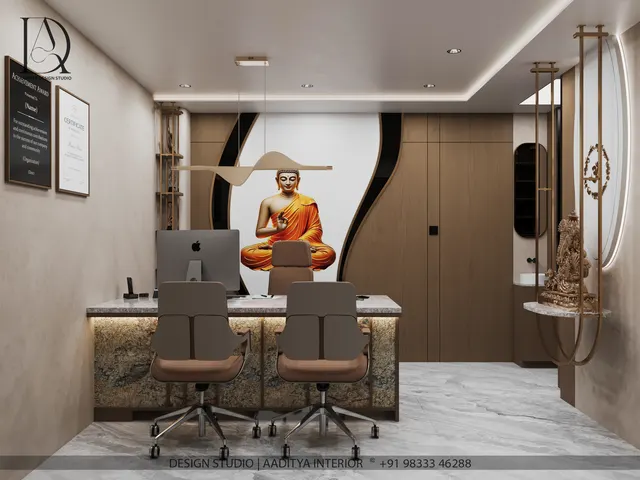
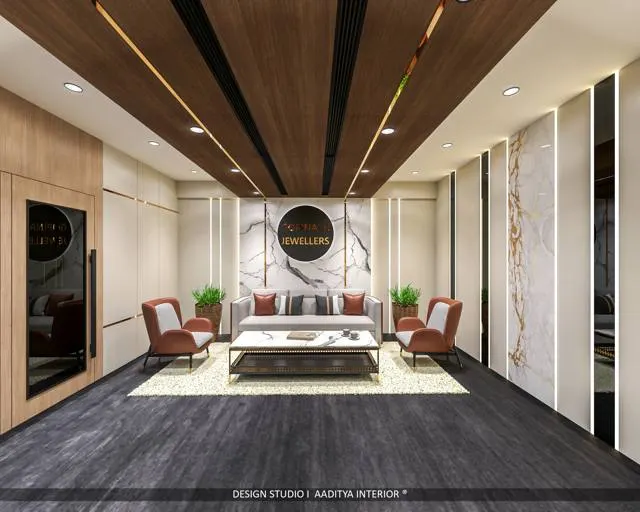
A showroom is a different animal from a neighbourhood shop. It is larger, usually 1,500 to 10,000 sq ft or more; it sells high-value goods that customers want to see, touch and compare — cars, furniture, tiles and sanitaryware, kitchens, appliances, lighting, jewellery, sarees; and its interior is part of the product. A sofa looks expensive or cheap depending on the light falling on it; a tile is judged on a mock-up floor, not in a box; a car's paint is read through the reflections of the ceiling. That is why showroom quotations vary so widely, and why owners often find that two contractors quoting ₹1,500 and ₹3,000 per sq ft are describing completely different scopes.
The commonest budgeting mistakes are the same across categories. The interior rate is compared without checking what it excludes — air-conditioning, facade glazing, signage, security and GST. The cost of display systems and lighting, which together often take half the budget in a showroom, is underestimated. Large open floors expose every flooring defect, so cheaper floors cost more within a year. And brand-specified elements — mandated by car makers, appliance brands or franchise manuals — are added late, after the budget is fixed.
This guide sets out indicative October 2026 cost bands for showroom interiors in India, the rate for each major item, how costs change by showroom type, what usually sits outside the interior quotation, and three worked budgets. The bands are consistent with this site's guides on retail shop costs, car, furniture and jewellery showrooms, and Surat textile showrooms; all prices are indicative and should be confirmed locally before budgeting.
How showroom interiors are priced in India
Indian interior contractors price commercial fit-outs per square foot of carpet area — the usable floor inside the walls — and that rate is meant to cover civil and finishing work, flooring, ceilings, wall finishes, display joinery, lighting fixtures and electrical wiring within the premises. It rarely covers the building's services (air-conditioning equipment, fire systems, lifts), the outside of the building (facade glazing, cladding, signage) or the business systems (security, IT, POS). The rate per sq ft is therefore a starting point for comparison, not a budget. Before comparing two quotes, both should be asked to price the same drawing and the same scope list.
Showroom rates have changed over the last two decades as formats have shifted. Older showrooms were essentially large shops with glass fronts and tube lights; modern showrooms are designed as experiences, with room-set vignettes, display mock-ups, tuned high-CRI lighting, customer lounges and digital screens. The share of the budget spent on lighting and display has grown accordingly, while basic civil work and painting have become a smaller share.
| Level | Indicative fit-out (₹ per sq ft carpet) | Typical specification | Typical showroom |
|---|---|---|---|
| Basic | ₹900–1,400 | Vitrified floor, plain gypsum or open painted ceiling, LED panels with some track lights, laminate display units, simple counter | Trader showroom, budget dealership, regional outlet |
| Mid-range | ₹1,400–2,200 | Large-format tiles or engineered finishes, feature ceilings, layered track lighting, custom display walls and vignettes, lounge corner | Standard dealership, multi-brand furniture or tile showroom, regional brand flagship |
| Premium | ₹2,200–3,500+ | Stone, terrazzo or wood finishes, bespoke joinery, high-CRI tuned lighting, digital screens, scent and acoustic design, premium lounge | Luxury car or furniture brand, experience centre, national flagship |
| Jewellery (special case) | ₹1,800–6,000+ | Counters and showcases across most of the floor, specialist lighting, security integration, lounges | Independent jeweller to regional flagship |
These bands match the retail and dealership bands used across this site. A showroom does not automatically cost more per square foot than a shop — a large furniture showroom with loose products on a vitrified floor may sit at the lower end, because the fixed costs of toilets, a counter and a facade are spread over more area — but showroom budgets climb quickly where display systems, mock-ups and lighting are dense.
Cost by showroom type
The type of product decides where the money goes. A car showroom spends on floor strength, ceiling height, facade glazing and linear lighting; a tile showroom spends on display boards and room mock-ups; a kitchen showroom spends on the services that make live displays work; a jewellery showroom spends on showcases, lighting and security. The table gives indicative October 2026 interior bands per sq ft of carpet for common showroom types, followed by a chart of the same ranges.
| Showroom type | Indicative ₹ per sq ft carpet | Where the money goes | Cost driver to watch |
|---|---|---|---|
| Car or two-wheeler dealership (display and sales) | ₹900–3,500+ (standard ₹1,400–2,200) | Heavy-duty floor, linear lighting, glazed front, delivery bay, lounge | Brand corporate-identity elements and facade glazing |
| Furniture and home décor | ₹900–3,500+ (mid ₹1,400–2,200) | Room-set vignettes, warm high-CRI lighting, wall finishes per vignette | Number of vignettes and lighting density |
| Tiles, sanitaryware and bath fittings | ₹1,400–2,200 mid; ₹2,200–3,500+ experience centres | Display boards, room mock-ups, working bath displays | Mock-up count; water and drainage for live displays |
| Modular kitchen and appliances | ₹1,400–2,200 mid; higher for premium | Live kitchens, power and gas-free demo points, lighting | Whether display kitchens are supplied by the brand |
| Mobile and electronics | ₹1,200–2,500 | Demo tables, accessories walls, many power and data points | Number of powered demo points and screens |
| Textile and saree | ₹900–3,500 | Seated counters, pigeon-hole walls, high-CRI lighting | Counter length and rack joinery quality |
| Jewellery | ₹1,800–6,000+ | Showcases, counters, lounges, tuned lighting, security | Showcase glass, lighting and security integration |
What pushes each type up or down
In car and two-wheeler showrooms, the floor is the first cost driver: vehicles are driven in and turned on the spot, so large-format tiles need a solid, void-free bed, and any hollow tile will crack. Ceiling height and facade glazing follow, because a glazed front of 4–6 m height with a car entry door is a substantial line on its own. Brand corporate-identity manuals specify much of the rest — colours, fascia, lighting layout and furniture — and should be obtained before budgeting.
In furniture showrooms, the number of vignettes decides the budget. Each room-set needs its own wall finish, rug, lighting and sometimes a ceiling feature, so a showroom with twelve vignettes costs noticeably more per square foot than one with six, even at the same specification. In tile and sanitaryware showrooms, mock-up rooms with working fittings need water supply, drainage and waterproofing just like real bathrooms, while display boards and sample racks add joinery by the running foot. Kitchen and appliance showrooms often receive display kitchens from the brand, which can lower the interior rate considerably — but the services to make them work, power points, lighting and, where cooking demonstrations happen, ventilation and fire safety, still sit with the owner.
In electronics showrooms, the count of powered demo points and screens drives electrical and data costs well above a normal shop. In textile and saree showrooms, the length of seated counters and the quality of pigeon-hole joinery decide where in the wide ₹900–3,500 band a project lands. And in jewellery showrooms, showcases with specialist glass and lighting, lounges and security integration push the rate to the top of every band; a strongroom, safes and security systems are budgeted separately.
Item rates: what each part of a showroom costs
Breaking the rate into items makes quotes comparable and shows where savings are possible. The rates below are indicative October 2026 figures for metro and tier-2 cities, consistent with this site's retail, flooring, ceiling and lighting guides. Large showrooms often get better unit rates on flooring and ceilings because of volume; small, detailed showrooms pay more per unit.
| Item | Indicative rate (Oct 2026) | Unit | Notes |
|---|---|---|---|
| Vitrified floor tiles | ₹60–120+ material, plus ₹25–40 laying | Per sq ft | Large formats need a flat, solid bed; heavy-duty grades for vehicles |
| Gypsum false ceiling (plain) | ₹60–80 | Per sq ft | Designer or cove ceilings ₹80–180; open painted ceilings cheaper |
| Painting (premium emulsion) | ₹20–30 | Per sq ft of paintable area | Textures and panelling cost more |
| LED panels and downlights | ₹400–1,200 | Per fitting | Ambient light |
| Track spots, high-CRI | ₹800–3,500 | Per head | Plus track and wiring; the main display light |
| Cove or linear LED | ₹150–300 | Per running ft | Feature ceilings, shelf and showcase lighting |
| Electrical, data and CCTV wiring | ₹100–200 | Per sq ft carpet | Zoned circuits, POS and data points, distribution board |
| Full-height display wall bays | ₹3,500–9,000 | Per running ft | Laminate with metal uprights; veneer or lit shelves cost more |
| Cash or billing counter | ₹40,000–1,50,000 | Per counter | 1800–3000 mm long; stone or veneer at the top end |
| Toughened glass shopfront with fittings | ₹450–900 | Per sq ft of glazing | 12 mm toughened, patch fittings; door hardware extra |
Two lines deserve attention in showrooms. Lighting is usually the biggest single sales lever: a 3,000 sq ft furniture showroom lit properly may need 120–200 track heads, which at ₹800–3,500 per head is ₹1–7 lakh in fittings alone before track, wiring and controls. And display walls are priced per running foot, so a showroom with 200 running feet of full-height display at ₹3,500–9,000 carries ₹7–18 lakh of joinery before any vignette, counter or lounge.
What usually sits outside the interior rate
In showrooms, the items outside the interior quotation can add 30–80 per cent to the interior figure, and they are where most budgets go wrong. Air-conditioning is the largest: showrooms are lit heavily and visited by many people, so the cooling load is high. Facade glazing, signage and security follow. The planning figures below are indicative October 2026 ranges consistent with this site's retail cost guide; the HVAC designer, the fire consultant and the tax adviser confirm the real numbers.
| Item usually outside the rate | Indicative planning figure (Oct 2026) | Notes |
|---|---|---|
| Air-conditioning | About ₹30,000–80,000 per TR installed, by system | Concept rule of thumb about 1 TR per 80–150 sq ft; heavy lighting pushes towards the lower area per TR |
| Facade glazing and entrance | ₹450–900 per sq ft of toughened glazing with fittings | Auto or heavy-duty doors, canopies and car entry doors extra |
| External signage | About ₹1–5 lakh for a typical high-street fascia | Multi-storey or brand-mandated pylons and facades quoted separately |
| GST | Commonly 18 % on works contracts and most fit-out services | Confirm rate and input credit with a tax adviser |
| Fire detection, sprinklers and alarm tie-in | Quoted by approved vendors | Must match the new ceiling layout; NBC 2016 Part 4 and local fire rules |
| Security and IT | Quoted separately | CCTV, access control, EAS, POS, Wi-Fi, digital screens |
| Loose furniture and display products | Quoted separately | Sofas in lounges, mannequins, display furniture supplied by brands |
| Civil and structural changes | Site-specific | Mezzanines, slab cut-outs, floor strengthening for vehicles — engineer's design |
Safety items are not optional extras. Any change to ceilings, partitions or layout must keep exits, exit widths, fire detection and sprinkler coverage compliant with the National Building Code of India 2016, Part 4, and local fire regulations; mezzanines, floor strengthening for vehicles and any structural cut-out need a qualified structural engineer; and electrical work must be done by a licensed contractor with a properly sized distribution board, earth leakage protection and load sanction. These costs are small against the risk of a refused occupancy or an accident.
Three worked budgets
The examples below apply the bands to typical showrooms. They are planning figures, not quotations; each assumes a warm shell with a level floor, power supply, drainage and a toilet point available, and excludes stock, rent deposits and loose display products.
| Example | Carpet area | Band used (₹ per sq ft) | Indicative interior cost | Comment |
|---|---|---|---|---|
| Jewellery showroom, standard | 1,500 sq ft | ₹2,200–3,500 | ≈ ₹33–52 lakh | Matches the jewellery showroom guide; security extra |
| Tile and sanitaryware showroom | 2,000 sq ft | ₹1,400–2,200 | ≈ ₹28–44 lakh | Mock-ups and display boards drive the top end |
| Furniture and décor showroom | 3,000 sq ft | ₹1,400–2,200 | ≈ ₹42–66 lakh | Worked in detail below |
| Electronics showroom | 1,200 sq ft | ₹1,200–2,500 | ≈ ₹14.4–30 lakh | Powered demo tables and screens |
| Car dealership display and sales | 6,000 sq ft | ₹1,400–2,200 | ≈ ₹84 lakh–1.32 crore | Matches the car showroom guide; facade and workshop extra |
| Textile and saree showroom | 1,000 sq ft | ₹1,400–2,200 | ≈ ₹14–22 lakh | Counter length and rack joinery |
How long a showroom fit-out takes
Programme affects cost because rent usually starts before trading does. Showroom programmes are driven by joinery, glass, lighting and services coordination rather than by civil work, and by approvals in malls and commercial complexes. The table gives typical durations from drawing approval to handover for a warm shell; design development and brand approvals add two to six weeks before site work starts.
| Showroom size | Typical site programme | Critical path | Common cause of delay |
|---|---|---|---|
| Up to about 1,500 sq ft | 6–10 weeks | Counters, showcases, shopfront glass | Late decisions on display systems |
| 1,500–3,000 sq ft | 8–12 weeks | Display joinery and lighting | Change in vignette design after ordering |
| 3,000–6,000 sq ft | 10–14 weeks | Joinery, ceiling services, AC | Fire tie-in approvals; electrical load sanction |
| 6,000 sq ft and above | 12–20 weeks | Flooring, facade, HVAC | Brand corporate-identity approvals; imported finishes |
| Jewellery or luxury flagship | 12–20+ weeks | Bespoke showcases, glass, security | Security design sign-off; showcase glass lead times |
Where to save — and where not to
Showroom budgets can be trimmed without hurting sales if the savings land on surfaces customers do not judge. Open painted ceilings instead of full gypsum in back zones, standard modular display systems in place of bespoke joinery on secondary walls, vitrified tile instead of stone outside the hero zones, and a smaller number of well-chosen vignettes instead of filling every metre are all sensible. Phasing — fitting the core display and lighting first and adding lounge upgrades later — also works where cash flow is tight.
The places not to save are equally clear. Lighting quality (CRI 90+ on merchandise, correct colour temperature, enough track heads) directly affects how products look and sell. Floor flatness and bed quality matter in any showroom with heavy goods or vehicles, because cracked tiles in a showroom are expensive to replace without closing. Electrical capacity, earthing and fire safety are compliance and safety items. And the entrance and facade are the showroom's advertisement — the one place where a slightly higher spend is seen by every passer-by.
When comparing quotes, ask every contractor to price the same drawing set and the same scope list, separate the interior rate from AC, glazing, signage and GST, state the brand and grade of tiles, boards, laminates, lights and hardware, give the payment schedule tied to stages, and confirm the warranty on joinery and electrical work. A quote that looks 20 per cent cheaper but excludes lighting fixtures or display walls is not cheaper; it is smaller.
Where showroom costs are heading
Three shifts are visible in Indian showroom projects. First, showrooms are becoming experience centres: fewer products on the floor, more room-sets, live demonstrations and digital catalogues on screens, which moves money from storage and racks into lighting, finishes and technology. Second, energy is entering the budget conversation: LED lighting with controls, better-insulated facades and efficient inverter or VRF air-conditioning cost more up front but reduce running costs for a building that is lit and cooled twelve hours a day. Third, modularity: brands increasingly use standard display kits that can be reused when a showroom moves, which lowers the cost of the second and third outlet. The bands in this guide will move with material prices, but the structure — interior rate plus services, facade, signage and tax — will not.
Rules for budgeting a showroom interior
- Budget the interior per sq ft of carpet area, then add AC, facade glazing, signage, security, IT and GST separately.
- Expect the all-in budget to be 1.3–1.8 times the interior figure in a typical showroom.
- Count lighting by track heads and display by running feet — these two lines decide most of the cost.
- Get brand and franchise corporate-identity requirements before the budget is fixed, not after.
- Ask every contractor to price the same drawings and scope list; compare item by item.
- Never cut lighting quality, floor bed quality, electrical capacity or fire compliance to save money.
- Have mezzanines, floor strengthening and any slab work designed by a qualified structural engineer.
- Keep exits, aisles and fire equipment clear and compliant with NBC 2016 Part 4 and local fire rules.
- Add a contingency of about 8–10 per cent for site conditions and late changes.
Frequently asked questions
What is the cost of showroom interior design per sq ft in India?
Indicatively in October 2026, about ₹900–1,400 per sq ft basic, ₹1,400–2,200 mid-range and ₹2,200–3,500 or more premium, on carpet area, excluding AC, facade glazing, signage and GST. Jewellery showrooms run about ₹1,800–6,000 or more because of showcases, lighting and security.
How much does a 2,000 sq ft showroom interior cost?
At the mid-range band of ₹1,400–2,200 per sq ft, about ₹28–44 lakh for the interior. With air-conditioning, facade glazing, signage and GST, a realistic all-in budget is usually 1.3–1.8 times that figure, depending mainly on the AC system.
Does the showroom interior rate include air-conditioning?
Usually not. Most interior quotations cover civil finishes, flooring, ceilings, walls, joinery, lighting fixtures and wiring; AC equipment and ducting are quoted separately, often at about ₹30,000–80,000 per TR installed depending on the system. Always ask for the exclusions list in writing.
Which part of a showroom interior costs the most?
In most mid-range showrooms, display walls, vignettes and counters take the largest share — often a quarter to a third of the interior budget — followed by lighting, ceilings and flooring. In car showrooms, flooring, facade glazing and lighting rise in share; in jewellery showrooms, showcases and security dominate.
How long does a showroom fit-out take?
For a warm shell, about 6–10 weeks up to 1,500 sq ft, 8–12 weeks for 1,500–3,000 sq ft and 10–14 weeks for 3,000–6,000 sq ft, plus two to six weeks for design and approvals. Flagship and jewellery showrooms commonly take 12–20 weeks or more.
Sources & standards
- National Building Code of India 2016, Part 4 (Fire and Life Safety) — exits, detection and sprinklers in mercantile occupancies
- National Building Code of India 2016, Part 8 (Building Services) — lighting, electrical installations and air-conditioning
- Bureau of Indian Standards — IS 732 (electrical wiring installations), IS 16231 (use of glass in buildings)
- Bureau of Energy Efficiency — Energy Conservation Building Code (ECBC) for commercial buildings
- Companion cost guides on this site: retail shop interior cost, car, furniture and jewellery showroom design, textile showrooms
- GST: commonly 18 % on works contracts and fit-out services — confirm with a tax adviser
- Price ranges: indicative October 2026 estimates — confirm locally before budgeting