Cove lighting is the single most requested feature in Indian false-ceiling design and the one most often done badly. The idea is simple and timeless — hide a light source behind a lip so that only the glow reaches the room, bouncing off the ceiling as soft, indirect light. Done well it lifts a plain room into something that feels designed, with no visible fitting and no glare. Done badly it becomes a row of bright dots, a strip of uneven yellow, or a line that flickers and dies within a year. The difference is never the cove's shape; it is a handful of dimensions and component choices that the quotation almost never shows.
Indian homes add their own stresses to the detail. Voltage fluctuation shortens the life of cheap drivers, dust settles inside open coves and dulls the output within a year, and deep false ceilings make a bare stick-on strip visible from the sofa — dots and all. A homeowner who asks only for a cove and accepts the lowest per-foot rate usually gets the cheapest strip on a no-name driver tucked behind a lip of the wrong height, and the result looks nothing like the showroom image that inspired it. Getting a cove right is about specifying the parts inside the per-foot rate, not the rate itself.
This article sets out how a cove actually works and how to design one that glows evenly: the lip height and strip offset that stop dotting, the difference between SMD and COB strips and when each belongs, the aluminium profile and driver that decide longevity, the colour temperature that suits each room, the brightness to aim for, and the indicative October 2026 cost of getting it right. The aim is to let any homeowner or student read a cove detail and know whether it will glow or disappoint before a single metre of strip is bought.
How a cove works
A cove is a trough built into the edge of a false ceiling — a step or a channel with a lip rising in front of a hidden LED strip. The strip points up and inward, so none of it is seen directly; its light hits the higher ceiling surface and scatters down into the room as a soft wash with no hard shadow and no glare. Because the eye never sees the source, the brightness reads as gentle even when the strip is quite bright, and the ceiling appears to float. This indirect quality is why cove light reads as premium: hotel corridors, lobbies and good restaurants use it precisely because it flatters a space without any visible hardware.
The physics that make a cove glow are also what make it fail. For the light to blend into an even band, the strip needs room to spread before its light clears the lip — too little room and the individual LEDs show as dots along the lip; too much lip and the cove swallows its own light and reads dim. The strip must also sit far enough back from the lip that the room cannot see it at a normal viewing angle, yet not so deep that dust collects and the output dulls. Every cove is therefore a small geometry problem: lip height, strip offset and the gap to the reflecting surface, balanced so the glow is even, hidden and bright enough. The figures below are the ones that reliably work.
The dimensions that stop a cove from dotting
Three numbers decide whether a cove glows as a band or shows as dots. The lip — the fascia that hides the strip — should stand 75 to 100 mm high; below 75 mm the strip peeps over the top at a shallow viewing angle, above 100 mm the cove starts to swallow its own light. The strip should sit 60 to 100 mm back from the inner face of the lip, giving the light room to spread sideways and merge before it clears the lip. And the gap from the strip up to the main ceiling it washes should be at least 150 mm, so the beam has distance to blend into an even patch rather than a tight bright line directly above the strip. These three — lip 75–100, offset 60–100, gap 150-plus — are the geometry of an even cove.
Dotting, the most common complaint, is almost always a combination of a strip too close to the lip and an SMD strip with widely spaced LEDs. The cure is to pull the strip back to the full offset and, where the strip is visible at a steep angle, to use a high-density or COB strip whose light is continuous. A frosted diffuser on the profile also smooths dots, at the cost of a little brightness. The second common fault, a dim cove, usually means the lip is too tall or the gap to the ceiling too small, trapping the light; opening the gap and trimming the lip fixes it. The cove is forgiving once these dimensions are respected, and unforgiving when they are guessed.
| Dimension | Recommended | Why it matters |
|---|---|---|
| Lip height | 75–100 mm | Hides the strip without swallowing light |
| Strip offset from lip | 60–100 mm | Lets the light spread and merge |
| Gap to main ceiling | ≥ 150 mm | Beam blends into an even band |
| False-ceiling drop | ≥ 150 mm total | Room for the cove, lights and wiring |
| Cove width (trough) | 100–150 mm | Holds strip, profile and a hand to clean |
| Strip from room (view angle) | not seen at eye line | No visible source, no glare |
SMD versus COB, profile and driver
The strip is the heart of the cove, and the real choice today is between SMD and COB. An SMD strip carries individual surface-mounted LED chips spaced along the tape; it is cheaper and comes in many densities, but at low density the separate chips can read as dots, so a cove needs a higher-density SMD to look continuous. A COB — chip-on-board — strip spreads many tiny LEDs under a continuous phosphor coating, so it emits a solid line of light with no dots at any viewing angle. For coves, COB has become the quality default precisely because it never dots, while good high-density SMD remains a sound economical choice when the geometry is right.
The profile and the driver
A bare strip stuck to raw gypsum is the mark of a cheap job and the first thing to fail. A proper cove runs the strip inside an aluminium profile — a channel that holds the strip straight, sinks its heat so the LEDs last, and carries a diffuser that smooths the light. Aluminium matters because LEDs lose life fast when they run hot, and a cove strip left to cook on a plaster lip dims and yellows within a year. Equally important and equally hidden is the driver, the small transformer that converts mains to the strip's low voltage. In Indian conditions a branded, correctly rated driver with headroom for voltage swings is the difference between a cove that lasts years and one that flickers or dies early. Spending on the strip and skimping on the driver is the classic false economy.
| Component | Quality choice | Cheap choice to avoid | Reason |
|---|---|---|---|
| LED strip | COB or high-density SMD | Low-density bare SMD | Low density dots; COB never dots |
| Mounting | Aluminium profile | Bare strip on gypsum | Heat sink; LEDs last longer |
| Diffuser | Frosted cover on profile | None | Smooths dots, softens the line |
| Driver | Branded, rated with headroom | No-name, under-rated | Survives voltage swings |
| Colour temperature | Consistent across the run | Mixed reels | Avoids patchy warm-cool bands |
| Connections | Soldered or proper connectors | Twisted and taped | Prevents flicker and failure |
Colour temperature and brightness
Colour temperature sets the mood a cove creates, and the choice should follow the room. Warm white, around 2700 to 3000 K, gives the soft golden glow that suits bedrooms, living rooms and dining areas — it is the tone most people mean when they picture cove light. Neutral white, around 4000 K, suits kitchens, studies and workspaces where a crisper light helps. Cool white above 5000 K is rarely right for a home cove; it reads clinical and blue and flatters nothing. The one firm rule is consistency: every reel in a single cove run must be the same temperature, because a mix shows as patchy warm-and-cool bands that no amount of dimming hides.
Brightness is a matter of layering, not maximum output. A cove is mood and fill light, not task light — it washes the ceiling to lift the room and soften shadows, while spots, pendants and lamps do the actual work of lighting a task. A cove run bright enough to read by usually glares and flattens the room; one dimmed to a gentle wash and paired with task lights reads far better. A dimmer on the cove circuit is the small addition that transforms it, letting the same cove move from bright evening fill to a soft night glow. The aim is a cove that you notice as atmosphere and never as a light fitting.
| Room | Colour temperature | Why | Cove role |
|---|---|---|---|
| Bedroom | 2700–3000 K | Warm, restful glow | Soft night fill |
| Living / dining | 2700–3000 K | Golden, welcoming | Evening atmosphere |
| Kitchen | 3500–4000 K | Crisper for prep | Fill above task light |
| Study / home office | 4000 K | Alert, neutral | Even ambient fill |
| Bathroom (dry ceiling) | 3000–4000 K | Clean, flattering | Perimeter fill only |
| Corridor / lobby | 2700–3000 K | Hotel-like calm | Primary soft light |
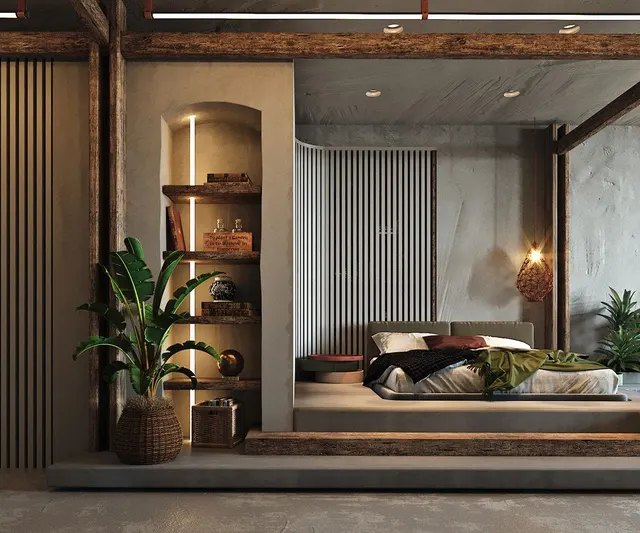
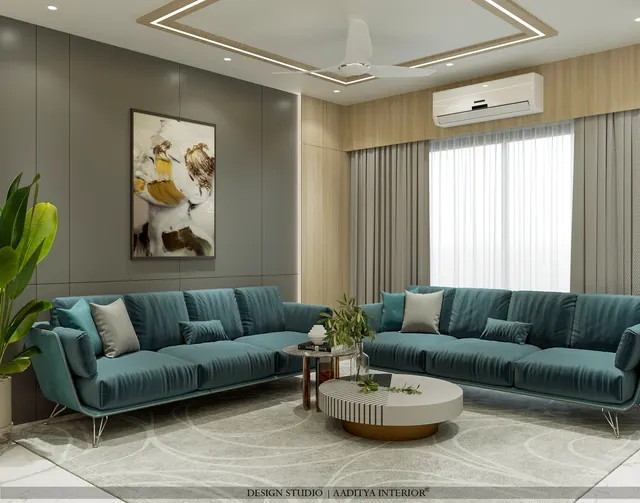
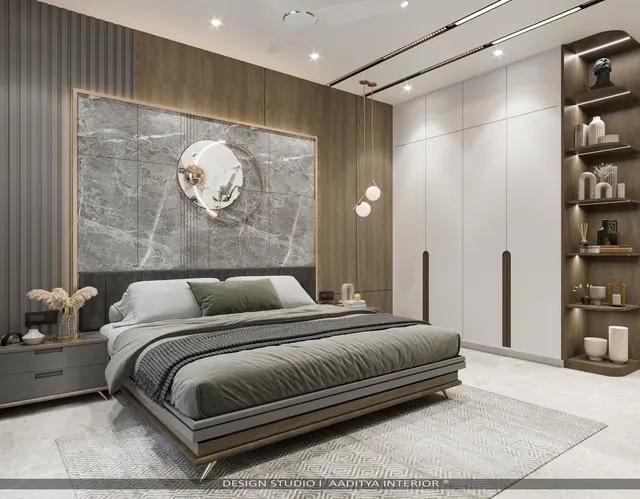
The section below shows the cove doing its real job — washing the ceiling as the softest layer in a room that also carries task and accent light. The cove lifts the whole ceiling plane and removes the cave-like gloom of a flat painted soffit; a recessed spot or two does the reading and working; a floor or table lamp adds a warm pool at sitting height. Read together, these layers give a room depth that a single bright ceiling light never achieves. A cove designed as the only light in a room disappoints because it was never meant to be the only light; designed as the base layer of three, it is what makes the room feel finished.
What a cove costs in India
Installed cove LED strips in the Indian market list at an indicative ₹150–300 per running foot in October 2026, and that figure normally bundles the strip, the aluminium profile, a share of the driver and the labour. The range is wide because the components inside vary enormously: a bare stick-on SMD strip on a no-name driver sits at the bottom, while COB in a recessed profile on a branded driver sits at the top. The per-foot rate is meaningless on its own — two quotes at ₹200 can describe completely different coves — so the specification inside the rate is what to compare, not the number.
Worked to a room, the numbers are easy to plan with. For a typical 12 × 12 ft bedroom, the cove perimeter runs about 40 running feet after deducting the door side — roughly ₹6,000 at the budget end and ₹12,000 at the quality end, before a dimmer. A living room with 40 running feet of cove carries ₹6,000–12,000 of cove lighting before the ceiling itself, which is why the false-ceiling rate and the cove rate should always be read as two separate lines. The cove is a small part of a room's cost and a large part of its character, which is exactly the kind of line where spending for quality pays back every evening.
| Item | Indicative cost (Oct 2026) | Unit | Note |
|---|---|---|---|
| Cove LED strip, installed | ₹150–300 | per running ft | Strip + profile + driver share + labour |
| Budget cove (SMD, basic driver) | lower end | per running ft | Risk of dotting and early fade |
| Quality cove (COB, profile, branded driver) | upper end | per running ft | Even glow, longer life |
| 12 × 12 ft bedroom cove (~40 rft) | ₹6,000–12,000 | per room | Before a dimmer |
| Dimmer / controller on cove circuit | ₹600–3,000 | per circuit | Transforms the cove; worth adding |
| Panel / spot lights (task layer) | ₹400–1,200 | per piece | Cove is fill, not task light |
Rules for designing a cove that glows
A cove rewards attention to a few dimensions and a few components, and punishes guesswork on either. The rules below are the ones professional lighting detailers follow, and they hold for a modest bedroom cove as much as for a hotel corridor. Specify them into the quotation so the per-foot rate describes a known cove, and the common disappointments — dots, yellowing, flicker, a dim trough — do not arise.
- Set the lip 75–100 mm high so the strip is hidden but the cove does not swallow its own light.
- Keep the strip 60–100 mm back from the lip so the light spreads and merges into a band.
- Allow at least 150 mm from the strip up to the main ceiling it washes, and a 150 mm ceiling drop overall.
- Use a COB or high-density SMD strip, never a low-density bare strip that reads as dots.
- Run the strip in an aluminium profile so heat sinks and the LEDs last; add a diffuser to smooth the line.
- Fit a branded, correctly rated driver with headroom for voltage swings, placed where it can be replaced.
- Choose 2700–3000 K for living and bedrooms, 4000 K for kitchens and studies, and keep one temperature per run.
- Treat the cove as fill light and layer it with spots and lamps; add a dimmer to control the mood.
Where cove lighting is heading
Cove design in India is moving steadily toward COB strips, recessed aluminium profiles and smart control. COB has largely answered the old dotting problem, and its continuous line now looks right even in shallow coves and at steep viewing angles. Tunable-white strips, which shift from warm to neutral on a controller, are appearing in premium homes, letting one cove be golden in the evening and crisp in the morning. App and voice control of the cove circuit, often alongside the rest of the home's lighting, is becoming ordinary rather than exotic, and a dimmer on every cove is close to standard specification in considered interiors.
What does not change is the geometry. A tunable COB strip on a smart driver still needs the right lip, the right offset and the right gap to the ceiling, or it dots and dims like any other. The studios that detail coves well — Aaditya Interior among the practices doing careful lighting across Indian homes — draw the cove section before choosing the technology, because the section is what makes the glow. The future of the cove is smarter components inside the same unforgiving geometry, and the homes that get both right will keep reading like the hotel corridors that made indirect light aspirational in the first place.
Frequently asked questions
Why does my cove light show dots instead of a smooth line?
Almost always because the strip is too close to the lip or it is a low-density SMD strip with widely spaced chips. Pull the strip back to the full 60–100 mm offset, switch to a COB or high-density SMD strip, and add a frosted diffuser on the profile. Those three changes convert a dotted cove into an even band of light.
What is the right height for a cove lip?
75 to 100 mm. Below 75 mm the strip peeps over the top at a shallow viewing angle and shows itself; above 100 mm the lip starts to trap the light and the cove reads dim. Pair the lip with a 60–100 mm strip offset and at least a 150 mm gap to the ceiling for an even glow.
Is COB better than SMD for cove lighting?
For coves, COB is the quality default because it emits a continuous line with no dots at any angle, which is exactly what a cove needs. High-density SMD still works well and costs less when the geometry is right. Low-density bare SMD is the one to avoid, because it is the usual cause of a dotted cove.
What colour temperature should cove lighting be?
Warm white at 2700–3000 K for bedrooms, living and dining rooms, where the soft golden glow suits relaxing. Neutral white around 4000 K for kitchens and studies. Cool white above 5000 K is rarely right in a home. Whatever the choice, keep every reel in one cove run at the same temperature to avoid patchy bands.
How much does cove lighting cost per foot in India?
An indicative ₹150–300 per running foot installed in October 2026, bundling the strip, profile, driver share and labour. The budget end is a basic SMD strip on a no-name driver; the quality end is COB in a profile on a branded driver. A 12 × 12 ft room of about 40 running feet runs roughly ₹6,000–12,000 before a dimmer.
Sources & standards
- National Building Code of India 2016, Part 8 (Building Services), Section 2 — electrical and lighting installations
- Bureau of Indian Standards — IS 3646 (interior illumination) and allied lighting codes
- Bureau of Energy Efficiency (BEE) — LED luminaire and efficiency guidance
- Neufert, Architects' Data — lighting layout and indirect lighting principles
- Time-Saver Standards for Interior Design — lighting detailing and colour temperature
- IndiaMART / TradeIndia dealer listings, October 2026 — cove LED strip ₹150–300 per running ft installed; panels ₹400–1,200 (indicative)
- Price ranges: indicative October 2026 estimates — confirm locally before budgeting