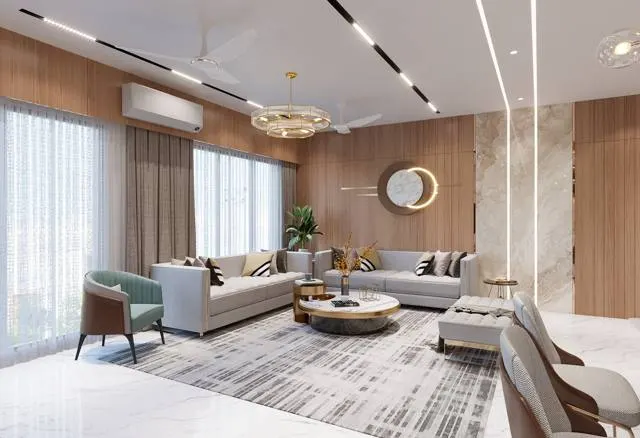
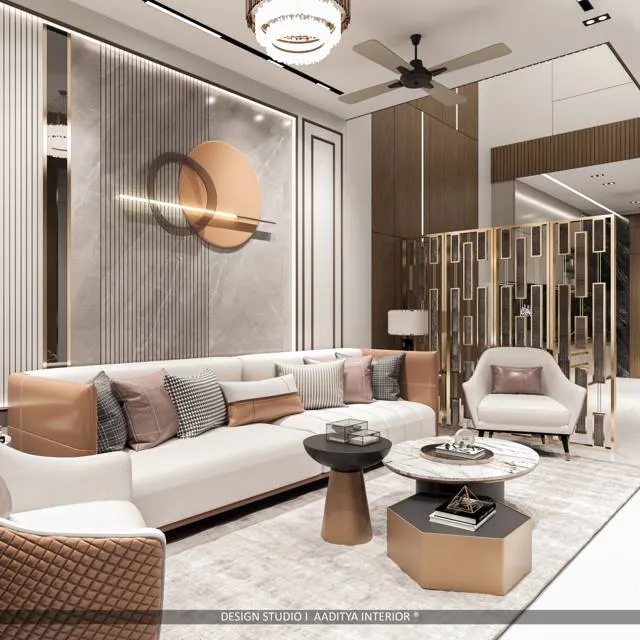
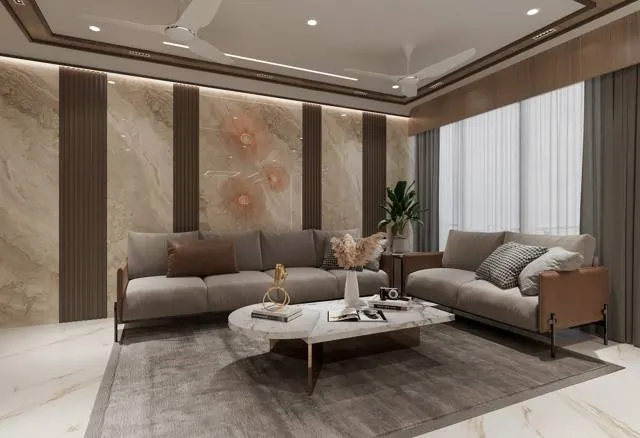
Curtains are bought by colour and picked up by the hand — the shade on the swatch card and the way the fabric falls are what persuade most families. But the fabric's fibre, weave, weight and, above all, its lining decide how the curtain will actually behave: whether it fades to a stripe on the sunny side within two summers, whether it blocks the 6 am light in a bedroom, whether it sags, shrinks, creases or grows mould in the monsoon, and whether it can be washed at home or must go to a dry cleaner.
Indian windows are hard on fabric. Surat, Mumbai, Chennai and Kolkata combine strong sun with high humidity; Delhi and Ahmedabad add fine dust and extreme summer heat; west-facing bedrooms in every city take the full afternoon sun. Large sliding doors in modern flats mean curtains of three to four metres in width and nearly three metres in height, so the fabric and its lining are a substantial cost. Choosing them well is worth an hour of reading.
This article explains the fabrics and linings that Indian curtain shops actually sell — fibres, weaves, weights, sheers, blackout and thermal linings — how linings are attached, how much fabric a window needs, and which combination suits each room. Prices follow the indicative October 2026 ranges in this blog's curtains and blinds cost guide, and hardware dimensions follow the curtain rod height and width guide.
From pardah to blackout: a short history of curtains in India
For most of Indian history, windows were shaded rather than curtained. Deep verandahs, jaalis, timber shutters and chiks — split-bamboo blinds hung on cords — kept out sun and dust while letting air through. Cloth hung across doorways as a pardah gave privacy between rooms and from the street. Fabric itself was precious, and India's great textile traditions — cotton from Gujarat and Bengal, silks from Banaras and Kanchipuram, printed and block-printed cloth from Rajasthan — went into clothing and furnishing long before they went onto curtain rods.
The paired, drawn curtain on a pole arrived with colonial bungalows and the European-style rooms of the late nineteenth and early twentieth centuries: heavy velvets, brocades and printed cottons on brass or wooden poles, often under a timber pelmet. After independence, mill-made cotton and then synthetic fabrics made curtains affordable for every home, and by the 1980s and 1990s polyester prints on simple rods were standard in Indian flats. The last two decades have brought the current pattern — floor-to-ceiling curtains on concealed tracks, a sheer layer for daytime, blackout or dim-out linings for bedrooms, and linen-look polyesters that imitate natural fibres while resisting the sun.
Fibres: what the fabric is made of
A curtain fabric's fibre sets its look, its resistance to sun and moisture, and how it can be cleaned. Natural fibres — cotton, linen and silk — feel and drape beautifully but are vulnerable to sunlight, creasing and shrinkage. Synthetic fibres, mainly polyester, are tough, colour-fast and stable, and have improved enormously in appearance. Viscose (rayon), a regenerated cellulose fibre, adds sheen and drape but is weaker when wet. Most curtain fabrics sold in India are blends that try to combine the strengths of each.
| Fibre | Look and feel | Sun and fading | Moisture and shrinkage | Care | Indicative ₹ per metre (54-inch) |
|---|---|---|---|---|---|
| Polyester and poly blends | From shiny to convincingly natural; very wide range | Good fade resistance; the best choice for strong sun | Stable; little shrinkage; resists mould | Usually machine washable or dry clean | ₹250–900 |
| Cotton and cotton blends | Soft, matt, breathable | Fades in strong sun unless lined | Can shrink a few per cent; creases | Wash cool or dry clean; pre-shrink before stitching | ₹400–1,200 |
| Linen and linen-look | Relaxed, textured, light-filtering | Real linen fades and weakens in direct sun | Creases readily; can shrink | Dry clean for lined panels | ₹600–2,000 |
| Silk and silk-look (jacquard, designer) | Lustrous, rich colour | Very sensitive to sunlight; must be lined | Weakens with moisture; can water-mark | Dry clean only | ₹1,500–4,000+ |
| Velvet and chenille | Deep pile, heavy, rich fall | Polyester velvets hold colour; cotton velvets fade | Heavy when wet; hold dust | Dry clean; brush regularly | ₹800–2,500 |
| Viscose (rayon) blends | Soft sheen, fluid drape | Moderate | Weak when wet; can shrink and drop in humidity | Dry clean usually advised | Usually within the poly-blend and cotton bands |
Two practical points follow. First, for sun-facing windows — especially west and south-west in most Indian cities — choose polyester or a high-polyester blend for the face fabric, or protect natural fibres with a lining. Ask the supplier for the fabric's light-fastness rating where available; it is usually expressed on the blue wool scale from 1 (poor) to 8 (excellent), and a rating of 5 or more is a sensible target for sunny rooms. Second, in humid coastal cities, natural fibres in a closed, damp room can develop mildew; fabrics that dry quickly, good ventilation and a little gap between curtain and glass help.
Weaves and constructions
Two fabrics of the same fibre can behave completely differently because of how the yarns are woven. The weave affects drape, strength, sheen, how the fabric reflects light and how much light passes through. Shop names for fabrics — chanderi, organza, jacquard, dobby, sateen — are mostly names of weaves or finishes, not fibres, which is why the fibre composition label matters.
| Construction | What it is | Drape and look | Strengths | Watch out for |
|---|---|---|---|---|
| Plain weave (cotton, poly, linen) | Over-one-under-one; the basic cloth | Crisp, even, matt | Stable, easy to sew, affordable | Creases in natural fibres |
| Twill and herringbone | Diagonal ribs from an offset weave | Soft, textured, heavier | Durable, hides marks | Heavier on tracks |
| Satin and sateen | Long floats on the face | Sheen, fluid fall | Rich look; good for lining (sateen) | Snags; shows creases |
| Jacquard and brocade | Pattern woven in on a jacquard loom | Formal, textured, patterned | Pattern does not wash out | Pattern repeat adds metres; costly |
| Dobby and textured weaves | Small geometric patterns or slubs | Subtle texture | Hides dust and creases | Loose slubs can pull |
| Velvet and chenille | Cut-pile surface | Deep, heavy, light-absorbing | Blocks light and dampens sound | Dust, weight, needs strong track |
| Voile, organza, net, chanderi-type | Very open, light weaves | Sheer, diffused light | Daytime privacy and glare control | No privacy at night when lit inside |
| Coated or multi-pass blackout | Woven fabric with foam or multi-layer backing, or triple weave | Stiffer, fuller | Blocks light without a separate lining | Coating can crack with age and washing |
Weight and opacity: how much light gets through
Fabric weight is usually given in grams per square metre (gsm). It is a rough guide to how a curtain will hang and how much light it will stop, although weave density and colour matter as much as weight — a dark, tightly woven medium fabric can block more light than a heavier, open weave in a pale colour. The bands below are indicative and drawn from common trade practice rather than from any standard.
| Category | Indicative weight | Light through | Typical fabrics | Use |
|---|---|---|---|---|
| Sheer | ≈ 60–120 gsm | Most light; view softened | Voile, organza, net, light linen-look | Daytime privacy, glare control, layering |
| Light-filtering | ≈ 120–200 gsm | Glowing, diffused light | Light cotton, linen, linen-look poly | Living rooms, studies, kitchens |
| Medium (unlined or lined) | ≈ 200–350 gsm | Moderate; depends on colour | Cotton, poly blends, jacquards, dobbies | Most rooms, usually with a lining |
| Room-darkening (dim-out) | ≈ 250–400 gsm with dim-out lining | Little; room clearly darker | Lined medium fabrics, dim-out fabrics | Bedrooms where total darkness is not needed |
| Blackout | ≈ 350–600+ gsm including coating or lining | Almost none through the fabric | Coated blackout, triple weave, blackout-lined velvet | Bedrooms, media rooms, night-shift workers |
Even a perfect blackout fabric leaks light at its edges — at the top over the track, at the sides beyond the window, and at the bottom. True darkness comes from installation as much as from fabric: a ceiling-mounted track or a curtain pocket in the false ceiling, a track that extends 150–300 mm beyond the window on each side as recommended in this blog's rod guide, overlapping centre arms, and a hem that floats just 10–15 mm above the floor.
Linings: the layer that does the hard work
A lining is a second layer of fabric sewn or hung behind the face fabric. Indian homes often skip it to save money, and that is usually a false economy. A lining protects the face fabric from the sun, which is what fades and weakens it; it gives the curtain body, so the folds fall more evenly; it improves privacy at night; it reduces light, and with the right lining it can block it almost completely; and it adds a layer of insulation between the room and hot glass. A lined curtain lasts considerably longer than an unlined one in a sunny window, so the lining often pays for itself.
| Lining type | What it is | What it does | Best for | Indicative ₹ per metre (Oct 2026) |
|---|---|---|---|---|
| Plain lining (cotton or poly-cotton sateen) | Light, smooth, usually white or ivory | Protects face fabric, improves fall, some privacy | Living rooms, dining, most lined curtains | ₹120–400 |
| Thermal lining | Lining with a brushed or coated back | Reduces heat transfer and draughts somewhat; adds body | Sunny bedrooms, AC rooms, hill-station homes | Typically between plain and blackout prices |
| Dim-out lining | Denser or lightly coated lining | Darkens the room substantially but not totally | Bedrooms, children's rooms | Typically between plain and blackout prices |
| Blackout lining (coated or multi-pass) | Fabric with one or more layers of opaque coating | Blocks almost all light through the curtain; some heat | Bedrooms, media rooms, east-facing windows | ₹250–600 |
| Interlining (flannel or bump) | Soft padding layer between face and lining | Luxurious fullness, insulation, sound softening | Premium formal curtains, cold climates | Quoted by supplier; uncommon in Indian cities |
Colour is a small but important detail. Linings are usually white or ivory so that the curtains look uniform from the street, which many housing societies prefer. A coloured blackout lining can show through pale face fabrics in daylight, and some blackout coatings look slightly grey from outside. Where the outside view matters — a row of bungalows, a hotel facade — specify one lining colour for the whole building.
How linings are attached
There are four ways to combine a face fabric and a lining, and each changes how the curtain behaves, how it is cleaned and what it costs. Workrooms in Indian cities usually default to a sewn-in lining for pleated curtains and to no lining at all for eyelet curtains, so it is worth specifying the method clearly.
| Method | How it works | Advantages | Disadvantages | Choose when |
|---|---|---|---|---|
| Sewn-in (locked) | Lining stitched to the face along the sides and header; sometimes locked at intervals | Best drape, neat edges, one unit | Must be cleaned together; shrinkage differences show | Pleated living and bedroom curtains, dry-clean fabrics |
| Loose (bagged) | Joined at header and sides; hems hang separately | Each layer hangs freely; less puckering | Hems can separate visually | Cotton and linen faces that may shrink differently |
| Detachable | Separate lining with its own tape hooks onto the main curtain's hooks | Wash or replace lining separately; add blackout later | Slightly less neat; edges may part | Rentals, upgrades, washable fabrics |
| Separate track | Lining hung as its own curtain on a second track behind the face | Draw lining and face separately; very flexible | Needs a double track and more depth | Blackout plus decorative face, layered windows |
Layering: sheer, main curtain and lining together
The most useful arrangement in Indian homes is a two-layer window: a sheer on the track nearest the glass for daytime privacy and glare control, and a lined main curtain on the room side for evening privacy and darkness. The sheer cuts the harsh midday light, keeps the view while hiding the room from neighbours across the road, and protects furniture and floors from some UV. The main curtain stays open by day and closes at night. In bedrooms, the main curtain carries a blackout lining; in living rooms, a plain or dim-out lining is usually enough.
The fabrics have to suit each other. A sheer is usually lighter in colour than the main curtain and in a fibre that resists sun, since it hangs closest to the glass; polyester voile is the standard. The main curtain's lining should be the same colour on every window that faces the street. Fullness differs: sheers look best at 2–2.5 times the track length because thin fabrics need more gathers, while lined main curtains at 2 times are usually enough, as this blog's cost guide explains for each heading style.
Choosing fabric and lining for each room
No single fabric is right for every room. The table below summarises the combinations Aaditya Interior typically recommends, with the reasoning, for an Indian home in a hot, humid or dusty city. In hill stations and cold climates, thermal or interlined curtains become more valuable; in coastal cities, quick-drying synthetics and good ventilation matter more.
| Room | Face fabric | Lining | Second layer | Why |
|---|---|---|---|---|
| Living room | Linen-look polyester, cotton blend or textured weave | Plain lining (dim-out on west windows) | Polyester sheer on a second track | Soft daylight, privacy, fade protection |
| Master bedroom | Velvet, heavy poly blend or jacquard | Blackout lining | Sheer for daytime | Darkness for sleep; sound softening |
| Children's room | Washable cotton blend or polyester print | Blackout or dim-out, detachable | Optional sheer | Daytime naps; easy washing |
| Home theatre or media room | Dark velvet or heavy blackout fabric | Blackout lining | None | Total darkness; absorbs sound |
| Kitchen | Short polyester curtain or a blind | None | — | Fire risk near the hob; grease; blinds are safer |
| Bathroom | Polyester or PVC-free shower-safe fabric, or a blind | None | — | Humidity; quick drying |
| Pooja room or near diyas | Avoid curtains near flames; use a jaali door or glass | — | — | Fire safety |
| Hotel rooms, offices, restaurants | Inherently flame-retardant polyester | FR blackout or dim-out lining | FR sheer | Fire safety requirements and durability |
Flame-retardant fabrics for commercial spaces
In hotels, hospitals, offices, restaurants, cinemas and other public buildings, curtains are part of the interior finishes that fire authorities and fire consultants consider under NBC 2016 Part 4. Fabrics can be inherently flame-retardant, where the fibre itself (usually a modified polyester) resists ignition and keeps that property after washing, or treated, where a chemical finish is applied that may wash out or wear off over time. Specifiers commonly ask for test certificates to recognised international standards such as BS 5867-2 or NFPA 701; the fire consultant for the project should confirm what the authority requires. Inherently flame-retardant fabrics cost more but are the safer and longer-lasting choice for any building where many people sleep or gather.
How much fabric a window needs: a worked example
Fabric quantities follow a simple chain of arithmetic. Start with the track or rod length (the window width plus 150–300 mm on each side). Multiply by the fullness of the heading (about 2 times for pinch pleat and ripple fold, 1.5–2 times for eyelets). Divide by the usable fabric width (about 1320 mm for a 1370 mm, 54-inch fabric after trimming the selvedges) and round up to whole widths. Then multiply by the cut length — the finished drop plus allowances for the header and the hem, plus one pattern repeat per cut for patterned fabrics. Fig. 4 shows the calculation for a common bedroom window.
| Item for the Fig. 4 window | Quantity | Mid-range rate (Oct 2026) | Indicative cost |
|---|---|---|---|
| Main fabric, 54-inch | ≈ 12.5 m | ₹600–1,500 per metre | ≈ ₹7,500–18,750 |
| Blackout lining | ≈ 12.5 m | ₹300–500 per metre | ≈ ₹3,750–6,250 |
| Wide-width sheer | ≈ 6.3 m | ₹450–1,000 per metre | ≈ ₹2,850–6,300 |
| Stitching (2 main + 2 sheer panels) | 4 panels | ₹250–500 per panel | ≈ ₹1,000–2,000 |
| Double track | 2 × ≈ 8 running ft | ₹250–400 per running ft | ≈ ₹4,000–6,400 |
| Fitting and installation | 1 window | ₹500–1,000 | ≈ ₹500–1,000 |
| Total for one window | — | — | ≈ ₹19,600–40,700 |
The total of about ₹20,000–40,000 matches the mid-range figure for a pair of lined curtains with sheers in this blog's cost guide. The biggest lever is the face fabric: the same window in an economy polyester at ₹250–600 per metre with a plain lining costs roughly half, while a designer jacquard at ₹1,500–4,000 or more per metre can double it. Fullness is the second lever — cutting fullness from 2 to 1.5 saves a quarter of the fabric but makes the curtain look thin when closed.
Care, cleaning and lifespan
Curtains live in dust, sun and humidity, and their care should be decided when the fabric is chosen. Lined pleated curtains in natural fibres and velvets are usually dry-cleaned, which means taking them down; detachable linings and polyester face fabrics can often be washed. Vacuuming with a soft brush attachment every few weeks removes most dust, and shaking out and airing curtains on a dry, sunny day before the monsoon helps prevent mildew. In practice, a well-lined curtain in a polyester or blended fabric on a shaded window can last many years; an unlined cotton or silk curtain on a west window can fade or weaken within a few summers. Always check the care label, wash a test piece if in doubt, and pre-shrink washable natural fabrics before stitching.
Where curtain fabrics are heading
Three developments are changing curtain fabrics in India. First, natural-looking synthetics: polyester yarns now imitate linen slubs, cotton texture and even velvet with far better sun resistance, and they dominate mid-range collections. Second, performance fabrics: recycled polyester made from plastic bottles, inherently flame-retardant yarns for homes as well as hotels, and fabrics with improved light-fastness and anti-microbial finishes for humid climates. Third, integration with the building: ceiling pockets, motorised tracks with blackout and sheer layers controlled from a phone, and curtains specified alongside glazing and air-conditioning as part of the room's heat-gain strategy. The basics, though, remain the same — the right fibre for the sun, a lining on every sunny window, enough fullness and a track fixed into solid backing.
Rules for choosing curtain fabrics and linings
- Choose the face fabric fibre for the window's sun: polyester or high-polyester blends for strong sun, natural fibres only with a lining or on shaded windows.
- Line every curtain that faces direct sun; it protects the fabric, improves the fall and adds privacy.
- Use blackout linings in bedrooms and media rooms, and fix tracks to the ceiling or in a pocket so light does not leak over the top.
- Pair a polyester sheer at 2–2.5× fullness with a lined main curtain at 2× fullness on a double track.
- Specify one lining colour for all street-facing windows.
- Ask for the fabric width, pattern repeat, fibre composition, light-fastness and care instructions before ordering.
- Choose detachable or separate-track linings where curtains will be washed often.
- Keep curtains away from hobs, diyas and heaters; use blinds in kitchens.
- For hotels, offices and other public buildings, use inherently flame-retardant fabrics with test certificates, as confirmed by the fire consultant.
Frequently asked questions
Which fabric is best for curtains in India?
For most rooms, a good polyester or polyester-blend fabric is the most practical choice: it resists fading in strong Indian sun, does not shrink, dries quickly in humid weather and is affordable. Cotton and linen look softer and more natural but should be lined on sunny windows. Velvet suits bedrooms and media rooms where darkness and richness matter.
Do curtains really need a lining?
Any curtain on a window that gets direct sun should be lined. The lining protects the face fabric from fading and weakening, makes the curtain hang better, improves privacy at night and, with a blackout or thermal lining, reduces light and some heat. Sheers and short kitchen curtains are usually unlined.
What is the difference between blackout fabric and blackout lining?
Blackout fabric has the light-blocking coating or triple weave built into the face fabric itself, so no separate lining is needed. A blackout lining is a separate coated layer added behind any face fabric. Blackout lining lets families choose any decorative fabric and still get darkness; blackout fabric is simpler and cheaper but limits the choice of look.
How many metres of fabric do I need for curtains?
Multiply the track length by the fullness (about 2 for pleated curtains), divide by the usable fabric width (about 1.32 m for 54-inch fabric), round up to whole widths, and multiply by the cut length (finished drop plus about 350 mm for header and hem). An 1800 mm window with a 2400 mm track and a 2700 mm drop needs about 12.5 m of plain 54-inch fabric.
Is linen good for curtains?
Real linen gives a beautiful relaxed texture and filtered light, but it creases easily, can shrink, and fades and weakens in strong direct sun. Use it lined, on windows that are shaded or face north, or choose a linen-look polyester for sunny rooms.
Are thermal curtains worth it in a hot climate?
A thermal or blackout lining reduces the heat that a sun-struck window passes into a room, especially when the curtain is close-fitting and drawn during the hottest hours, and it helps air-conditioners work less hard. It is not a substitute for external shading or better glazing on west-facing glass, but it is a worthwhile, inexpensive improvement for sunny bedrooms.
Sources & standards
- Bureau of Indian Standards — National Building Code of India 2016, Part 4 (Fire and Life Safety): interior finishes and furnishings in public buildings
- ISO 105-B02 — Textiles: tests for colour fastness to artificial light (blue wool scale)
- British Standards Institution — BS 5867-2: fabrics for curtains, drapes and window blinds, flammability requirements
- National Fire Protection Association — NFPA 701: fire tests for flame propagation of textiles and films
- Joseph De Chiara, Julius Panero and Martin Zelnik — Time-Saver Standards for Interior Design and Space Planning: window treatments
- Fabric and lining manufacturers' published ranges for widths, weights and care, described generically
- Price ranges: indicative October 2026 estimates — confirm locally before budgeting