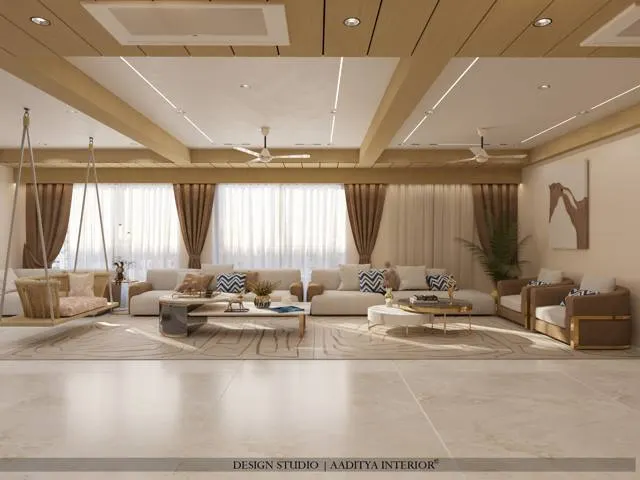
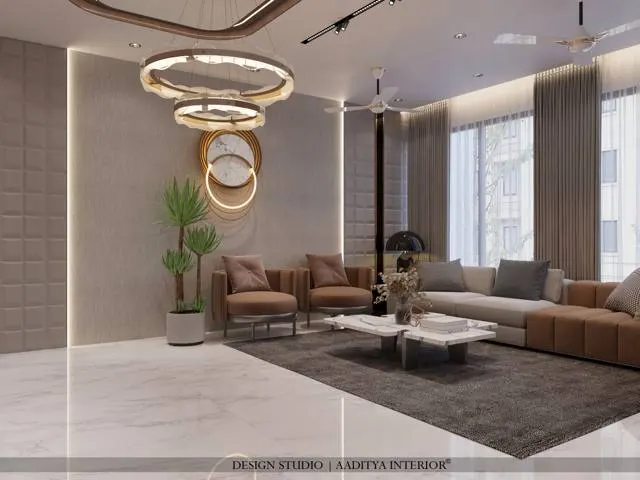
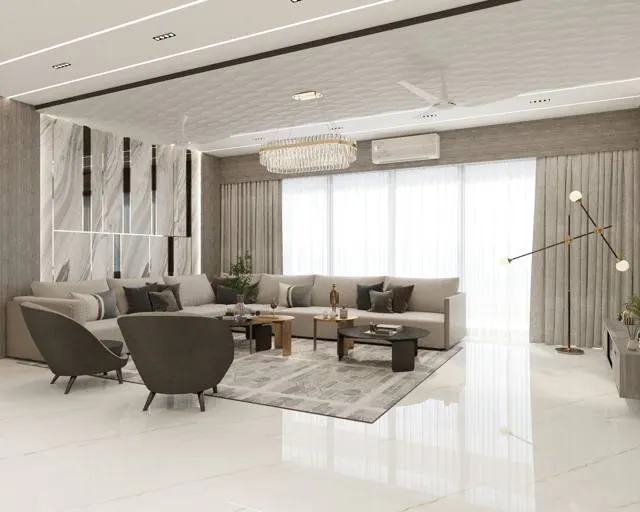
Curtains and blinds are usually the last line in an interior budget and the one most often underestimated. Families who have planned every rupee of the kitchen and wardrobes discover, a week before moving in, that dressing eight or ten windows with proper blackout curtains and sheers costs as much as a modest sofa set. The reason is that a curtain quote is built from five or six separate items — fabric, lining, stitching, track or rod, fittings and installation — each with its own wide price band, and the quantity of fabric depends on choices such as fullness and drop that most buyers never hear about.
Blinds are priced differently, per square foot of blind, with a minimum chargeable area, and the spread between a basic roller blind and a real-wood venetian is several times over. Motorisation, double layers of sheer and blackout, ceiling pockets and imported fabrics push both further. This guide breaks the costs into their parts, gives indicative October 2026 price ranges consistent with the rest of this site, shows how to calculate fabric quantities, and ends with per-window and whole-home budgets.
From chik and khus to blackout: a short history
Indian homes controlled sun and privacy long before fabric curtains became common. The chik — a screen of thin split bamboo or reed strips tied with cord — hung on verandahs and doorways, rolling up by day and dropping in the afternoon to cut glare while letting air through. In the hot, dry north, khus screens woven from vetiver roots were hung in openings and kept wet, so that the air passing through was cooled and lightly scented. Heavy fabric draperies, pelmets and tie-backs arrived with European interiors in colonial bungalows and were adopted in many Indian homes through the twentieth century.
Today the choices have multiplied. Blackout fabrics with coated backings, sheer voiles, ripple-fold heading systems, roller, zebra and roman blinds, and motorised tracks controlled by an app are all mainstream in Indian cities. Yet the old logic still applies: in a hot, bright climate, the window covering is as much about heat and glare as about privacy and decoration, and an external chik or an internal blind often does that job better than a heavy curtain.
What a curtain quote is made of
A curtain quotation should list each part separately. If it shows only a single number per window, ask for the breakdown, because that is the only way to compare two suppliers fairly. The table shows the parts and the indicative October 2026 rates used in this guide. Fabric rates are per running metre of a standard 54-inch (about 1370 mm) wide curtain fabric; wide-width fabrics of about 2.8 m, used sideways, are priced higher per metre but need fewer joins.
| Component | Unit | Economy | Mid-range | Premium | Notes |
|---|---|---|---|---|---|
| Main fabric (54-inch width) | per metre | ₹250–600 | ₹600–1,500 | ₹1,500–4,000+ | Polyester and blends to linen, velvet and imported designer ranges |
| Sheer / voile | per metre | ₹200–450 | ₹450–1,000 | ₹1,000–2,500+ | Often wide-width; second track needed |
| Lining (plain) | per metre | ₹120–250 | ₹150–300 | ₹200–400 | Protects fabric from sun; improves fall |
| Blackout lining | per metre | ₹250–400 | ₹300–500 | ₹400–600 | Coated or multi-pass; blocks light and some heat |
| Stitching | per panel | ₹150–300 | ₹250–500 | ₹400–800 | Eyelet cheapest; pinch pleat and ripple fold dearer |
| Track (aluminium, ceiling or wall) | per running ft | ₹150–250 | ₹250–400 | ₹400–800 | Heavy-duty or ripple-fold tracks at the top |
| Decorative rod with finials | per running ft | ₹200–400 | ₹400–800 | ₹800–2,000 | Metal or wood; brackets every 1–1.2 m |
| Fitting and installation | per window | ₹300–700 | ₹500–1,000 | ₹1,000–2,000 | Drilling into RCC, ladders, high windows |
These part rates, combined for a typical bedroom or living-room window with a track, produce the per-window bands already used across this site's room and furnishing guides: about ₹6,000–10,000 per window at economy level, ₹10,000–20,000 mid-range and ₹20,000–40,000 premium for blackout or lined curtains. A tall, wide or double-layer window moves up within the band or into the next one.
How much fabric a window needs
Fabric quantity is the single biggest driver of a curtain bill, and it is decided by four numbers: track width, fullness, drop and fabric width. The track should extend 150–300 mm beyond the window frame on each side, so the curtains can stack back clear of the glass when open; for a 1800 mm window, that means a track of 2100–2400 mm. Fullness is how much wider the flat fabric is than the track: 1.5–2 times for eyelet curtains, 2–2.5 times for pinch-pleat and ripple-fold. The drop is the finished height from the track to about 10–15 mm above the floor, and each cut length adds about 250–300 mm for the heading and the bottom hem. Pattern repeats add more.
A worked example makes the arithmetic concrete. For the window in Fig. 1, a 2400 mm track with pinch-pleat curtains at 2 times fullness needs 4800 mm of flat fabric width. With 1370 mm wide fabric, that is 3.5 widths, rounded up to 4 panels — two per side. Each panel is cut at the 2600 mm drop plus about 300 mm for heading and hem, so about 2.9–3.0 m. Four panels therefore need about 12 m of main fabric and, if lined, about 12 m of lining. A sheer behind it on a second track needs a similar quantity of sheer. Most of the difference between a ₹12,000 and a ₹30,000 quote for this window lies in the fabric rate per metre multiplied by those 12 metres.
| Heading style | Fullness | Look | Stitching cost | Track or rod |
|---|---|---|---|---|
| Eyelet (grommet) | 1.5–2.0 × | Even, deep folds; casual-modern | Lowest | Rod; slides easily |
| Pencil pleat (tape) | 2.0–2.5 × | Fine gathered folds | Low–medium | Track or rod with rings |
| Pinch pleat (double or triple) | 2.0–2.5 × | Tailored, formal | Medium–high | Track with gliders |
| Ripple fold / S-wave | 2.0–2.5 × | Soft continuous wave; contemporary | High | Dedicated ripple-fold track, often in a ceiling pocket |
| Rod pocket / tab top | 1.5–2.0 × | Simple, light | Low | Rod; hard to draw daily |
| Box pleat | 2.5–3.0 × | Structured, crisp | High | Track; more fabric |
Curtain fabrics and what they cost
Fabric choice affects not only price and look but how the curtain survives Indian sun, dust and humidity. Polyester and polyester blends dominate the market because they resist fading and creasing, wash well and are affordable. Cotton and linen look and feel natural but fade and crease, and should be lined on sunny windows. Velvet and chenille give weight and good blackout with lining, but collect dust. Blackout fabrics with a coated or multi-pass backing block light on their own and can be used unlined, though a blackout lining behind a decorative fabric usually looks better from the room.
| Fabric | Indicative ₹ per metre (54-inch) | Strengths | Weaknesses | Best rooms |
|---|---|---|---|---|
| Polyester / poly blend | ₹250–900 | Fade and crease resistant, washable, affordable | Can look synthetic at the cheapest end | Any room; rentals |
| Cotton / cotton blend | ₹400–1,200 | Natural feel, breathable | Fades in strong sun; shrinks if washed hot | Bedrooms, kids' rooms (lined) |
| Linen and linen-look | ₹600–2,000 | Relaxed texture, light filtering | Creases; real linen fades | Living rooms, sheer-like layers |
| Velvet / chenille | ₹800–2,500 | Rich, heavy fall, good with blackout lining | Holds dust; heavy on tracks | Master bedrooms, home theatres |
| Blackout (coated / multi-pass) | ₹400–1,200 | Blocks light without separate lining | Stiffer handle; coating can crack with age | Bedrooms, media rooms |
| Sheer / voile | ₹200–1,000+ | Daytime privacy and diffused light | No privacy at night when lit inside | Every room, as a second layer |
| Jacquard, silk and designer imports | ₹1,500–4,000+ | Pattern, sheen, statement | Fades and frays in sun unless lined | Formal living rooms |
Blinds: types and price per square foot
Blinds are measured and priced per square foot of blind (width × drop), and most suppliers apply a minimum chargeable area of roughly 10–20 sq ft per blind, so a small bathroom blind costs more per sq ft than a large living-room one. They use far less space than curtains, suit kitchens, studies, bathrooms and offices, and can sit inside the window recess. The table gives indicative October 2026 ranges for supplied and installed blinds with manual operation.
| Blind type | Indicative ₹ per sq ft, installed | Light control | Best for | Watch out for |
|---|---|---|---|---|
| Roller blind (polyester or sunscreen fabric) | ₹80–200 | Filters glare; sunscreen keeps view out | Studies, offices, kitchens | Light gaps at edges when inside-mounted |
| Blackout roller blind | ₹120–250 | Near-total blackout | Bedrooms, media rooms | Edge light unless fitted in side channels |
| Zebra / dual (day–night) blind | ₹150–350 | Adjustable stripes of sheer and solid | Living rooms, bedrooms | Dust on the stripes; cheap fabric sags |
| Roman blind (fabric) | ₹200–450 | Soft folds; can be lined or blackout | Bedrooms, kids' rooms, kitchens (away from hob) | Needs 75–100 mm recess depth |
| Aluminium venetian | ₹90–200 | Tilt control; durable | Bathrooms, kitchens, offices | Clatter; slats dent |
| Wooden or faux-wood venetian | ₹300–700 | Tilt control; warm look | Living rooms, studies | Heavy; real wood warps in wet rooms |
| Vertical blind | ₹70–160 | Tilt and traverse | Offices, tall sliding doors | Looks institutional at home |
| Bamboo or chik (internal or external) | ₹80–200 | Filtered light; traditional | Verandahs, balconies, sit-outs | Weathers outdoors; needs replacement |
Inside or outside the recess?
An inside-mounted blind sits within the window opening and looks neat, but it needs enough recess depth for the brackets and roll — about 50–75 mm for a roller or venetian and 75–100 mm for a roman blind — and leaves thin light gaps at the sides. An outside-mounted blind is fixed on the wall or soffit above the opening and overlaps the frame by 50–100 mm on each side; it blocks more light and hides uneven frames, at the cost of projecting into the room. For bedrooms that need real darkness, outside mounting or side channels are worth the extra.
Motorised curtains and blinds
Motorised tracks and blinds have moved from luxury villas into ordinary apartments, especially for tall living-room windows, double-height spaces and bedrooms where blackout curtains are drawn every day. This site's home automation guide puts a motorised curtain or blind at about ₹12,000–35,000 per window, depending on the motor brand, track length, fabric weight and whether it connects to an app, a voice assistant or a wall keypad. The fabric and stitching are extra. The single most important requirement is wiring: a power point inside the curtain pocket or above the blind, planned at the electrical stage. Battery-powered and rechargeable blind motors exist for retrofits, but they need charging and are less suited to heavy curtains.
| Option | Indicative cost (Oct 2026) | What it needs | Best for |
|---|---|---|---|
| Manual track with cord or wand | Included in track cost | Nothing | Most windows |
| Motorised curtain track (wired) | ₹12,000–35,000 per window | Power point in pocket; neutral wire for smart control | Tall or wide windows; daily blackout use |
| Motorised roller or zebra blind | ₹12,000–35,000 per window | Power point above blind, or battery motor | Bedrooms, high windows |
| Smart-home scenes (app, voice, keypad) | Part of automation package | Hub or Wi-Fi module | Homes with other automation |
| Battery or rechargeable blind motor | Lower end of the band | Periodic charging | Retrofits where wiring is impossible |
A whole-home budget: per window and per 3BHK
Per window, the bands are wide because windows are. A small kitchen window with an aluminium venetian blind might cost ₹1,500–3,000; a living-room picture window with sheers, blackout and a ripple-fold track in a ceiling pocket can pass ₹40,000. The worked example below prices the window from Fig. 1 at mid-range rates, and Fig. 4 shows where the money goes.
For a whole home, multiply by the windows and treat each room differently. Bedrooms usually need blackout; living rooms need sheers for daytime and a heavier layer for evenings; kitchens and bathrooms are better with blinds; balconies and verandahs suit outdoor chiks or bamboo blinds. The 3BHK budget below assumes about eight to ten windows and doors and sits around the soft-furnishing allowances used in this site's 3BHK cost guides (about ₹0.5 lakh basic, ₹1 lakh mid-range and ₹2 lakh or more premium); homes with many large or floor-to-ceiling windows will exceed them.
| Room / window | Economy | Mid-range | Premium | Typical choice |
|---|---|---|---|---|
| Living room (2 large windows or a sliding door) | ₹12,000–20,000 | ₹25,000–45,000 | ₹50,000–1,00,000+ | Sheer + lined or blackout, ripple fold at premium |
| Master bedroom (1–2 windows) | ₹6,000–12,000 | ₹12,000–30,000 | ₹30,000–70,000 | Blackout + sheer; motorised at premium |
| Two other bedrooms | ₹10,000–18,000 | ₹20,000–40,000 | ₹40,000–80,000 | Blackout curtains or blackout roller blinds |
| Kitchen and utility | ₹2,000–4,000 | ₹3,000–6,000 | ₹6,000–12,000 | Aluminium venetian or roller blind |
| Bathrooms (2–3 small windows) | ₹3,000–6,000 | ₹4,500–9,000 | ₹9,000–18,000 | PVC or aluminium venetian, frosted film |
| Balcony / sit-out | ₹2,000–5,000 | ₹5,000–12,000 | ₹12,000–30,000 | Bamboo chik or outdoor roller blind |
| Indicative total, 3BHK | ≈ ₹0.35–0.65 lakh | ≈ ₹0.7–1.4 lakh | ≈ ₹1.5–3.1 lakh+ | Before GST and motorisation |
How to compare quotations
Two quotes for the same windows can differ by a factor of two and both be honest, because they price different things. Before comparing, make sure both list the same track length, fullness, drop, number of panels, fabric (with the catalogue code and price per metre), lining type, heading style and installation. Ask whether the per-sq-ft blind price includes brackets, side channels and installation, and what the minimum chargeable area is. Check whether GST is included — it applies to curtains, fabrics and blinds and can change the comparison. Finally, ask for final measurements to be taken after flooring, false ceiling and window frames are complete, since a curtain cut 50 mm short cannot be fixed.
| Check on the quote | Why it matters | Red flag |
|---|---|---|
| Fabric code, rate per metre and total metres | Fabric is the largest cost line | Only a lump sum per window |
| Fullness and number of panels | Low fullness saves fabric but looks thin | Fullness below 1.5 × for pleated headings |
| Lining or blackout lining | Protects fabric, controls light | Lining 'optional' with no price |
| Track type, length and brackets | Cheap tracks bend under heavy curtains | Track shorter than the window plus 150 mm each side |
| Blind area, minimum charge, side channels | Small blinds cost more per sq ft | Minimum charge not stated |
| Installation and fixing into RCC | High windows need ladders or scaffold | Fixing into gypsum ceiling only |
| GST and delivery | Changes the total | Prices 'plus taxes' without the rate |
Where window coverings are going
Three trends are visible in Indian projects. The first is the ceiling pocket: curtains and blinds hidden in a recess in the false ceiling, with two tracks for sheer and blackout and a power point for a motor, so the window treatment becomes part of the architecture. The second is motorisation and automation, with curtains closing on schedule to keep out afternoon heat — a real energy saving on west-facing windows when combined with good glazing and external shading. The third is a return to performance fabrics and external shading: thermal and solar-reflective linings, sunscreen roller blinds that cut glare while keeping the view, and external chiks, louvres and jaalis that stop heat before it reaches the glass. Internal curtains alone cannot do that; they block light, but most of the heat has already entered the room.
Rules for budgeting curtains and blinds
- Budget curtains and blinds as a separate line from day one — about ₹6,000–40,000 per window for curtains, depending on level.
- Extend the track 150–300 mm beyond the frame each side and hang curtains from near the ceiling to 10–15 mm above the floor.
- Use 2–2.5 × fullness for pleated headings and 1.5–2 × for eyelets; never accept less than 1.5 ×.
- Line every curtain on a sunny window; use blackout lining or blackout blinds in bedrooms.
- Use blinds in kitchens, bathrooms and studies; curtains where softness and acoustics matter.
- Plan ceiling pockets, tracks and power points for motors at the false-ceiling and electrical stage.
- Fix tracks and brackets into RCC or masonry, not gypsum alone.
- Compare quotes on fabric code, metres, fullness, panels, lining, track and GST — not on a lump sum.
- Take final measurements after flooring and false ceiling are complete.
Frequently asked questions
What is the cost of curtains per window in India?
For a typical bedroom or living-room window with a track, lined or blackout curtains cost about ₹6,000–10,000 at economy level, ₹10,000–20,000 mid-range and ₹20,000–40,000 premium (indicative October 2026). Large floor-to-ceiling windows, sheers on a second track and designer fabrics push the figure up.
Are blinds cheaper than curtains?
Usually, for small and medium windows. A 4 × 5 ft roller blind (20 sq ft) at ₹80–200 per sq ft costs about ₹1,600–4,000, while lined curtains for the same window cost several thousand more. For large living-room windows, premium blinds such as wooden venetians or zebra blinds can cost as much as curtains.
How many metres of fabric are needed for one window?
Multiply the track length by the fullness (2 for pleated, 1.5–2 for eyelet), divide by the fabric width (about 1.37 m) and round up to get the number of panels; multiply panels by the drop plus about 0.3 m. A 2.4 m track with 2.6 m drop and pinch pleats needs about 4 panels and 12 m of fabric.
Which curtains are best for hot west-facing rooms?
Lined or blackout curtains in light colours, ideally with a thermal or reflective lining, combined with external shading where possible. Curtains stop glare, but external chiks, louvres or a jaali stop more heat because they work before the sun reaches the glass.
How much do motorised curtains cost?
About ₹12,000–35,000 per window for the motor and track (indicative October 2026), plus fabric and stitching. Plan a power point in the curtain pocket during the electrical stage; retrofitting wiring later is messy.
Sources & standards
- National Building Code of India 2016, Part 8 (Building Services) — lighting, ventilation and electrical installations
- Bureau of Energy Efficiency — Eco-Niwas Samhita (Energy Conservation Building Code for residential buildings) guidance on shading and openings
- Bureau of Indian Standards — IS 732 (Code of practice for electrical wiring installations), for motorised track power points
- Time-Saver Standards for Interior Design and Space Planning — window treatments and clearances
- Furnishing trade practice for fullness, panel calculation and minimum chargeable blind area, described generically
- Price ranges: indicative October 2026 estimates — confirm locally before budgeting