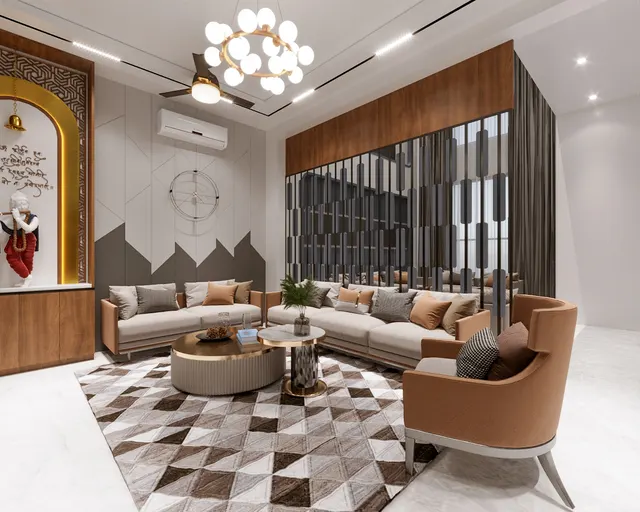
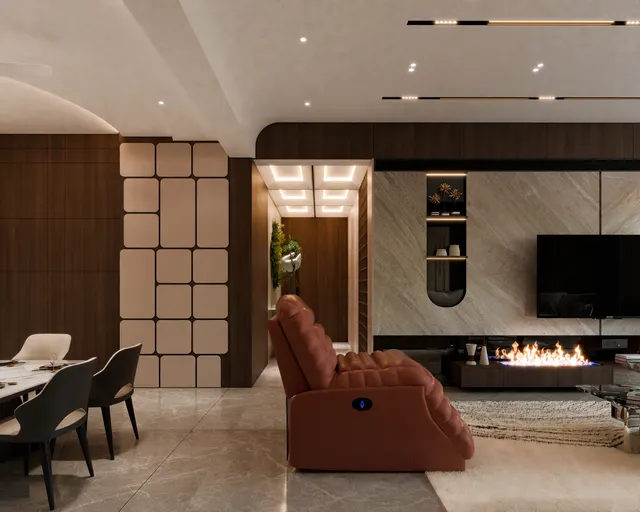
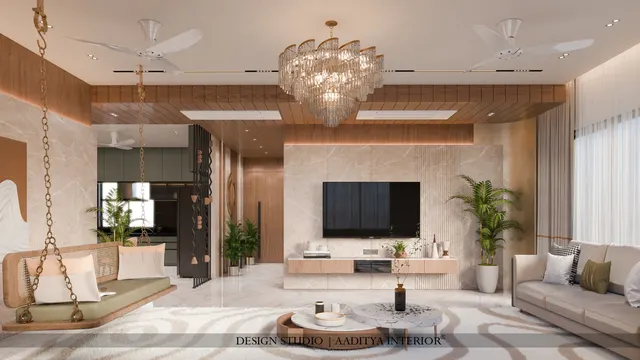
The false ceiling is the quietest line item in a home interior and one of the most misunderstood. It hides the wiring, the air-conditioning ducts and the uneven slab; it carries the room's lighting design; and it sets the perceived height of every room it covers. The material debate — POP versus gypsum — dominates showroom conversations, but the 2026 rates tell a calmer story: plain gypsum with painting at ₹60–80 per sq ft installed, POP at ₹70–100, PVC panels at ₹50–90, and designer gypsum ceilings with coves at ₹80–180. The two mainstream materials price within shouting distance of each other; what separates a ₹60 ceiling from a ₹180 ceiling is design complexity and lighting, not the bag of plaster.
The technical difference is real but narrower than folklore suggests. Gypsum is a factory-made 12.5 mm board (IS 2095) screwed to a galvanised-iron frame — fast, dimensionally stable, with joints that need taping and finishing. POP — plaster of Paris — is site-cast over a chicken-mesh and frame base, which makes it slower and more labour-dependent but infinitely mouldable: the intricate cornices, domes and floral mouldings of traditional Indian ceilings are POP's home turf, and no factory board follows a curve like wet plaster. PVC panels at ₹50–90 are the budget and moisture-zone option — quick, light, and honest about being a surface rather than a crafted ceiling.
What this article settles: the 2026 rates for each system with their inclusions, the build-up each price pays for, the cove and lighting details that multiply the cost, and the drivers that move any ceiling quote. Every rupee figure comes from the October 2026 price reference; board and dimension figures carry their standard sources.
2026 rates: the four systems side by side
| System | Indicative 2026 rate (installed) | What is included | Best for |
|---|---|---|---|
| Gypsum, plain with painting | ₹60–80 per sq ft | GI frame, 12.5 mm board (IS 2095), jointing, putty, primer, 2 coats | Bedrooms, living rooms — the default |
| Gypsum, designer / with cove | ₹80–180 per sq ft | All above + stepped profiles, cove channels, extra framing | Living and dining where lighting is designed |
| POP, plain to moulded | ₹70–100 per sq ft | Frame + mesh, site-cast plaster, finishing, painting | Curves, cornices, traditional mouldings |
| PVC panels | ₹50–90 per sq ft | Light frame + interlocking panels | Budget rooms, moisture-prone zones |
| Cove LED strip (add-on) | ₹150–300 per running ft | Strip + driver, installed in the cove | The lighting that makes coves worth building |
| Panel lights (add-on) | ₹400–1,200 per piece | Cutout, fitting, connection | General ceiling lighting |
The build-up explains why gypsum dominates new work: the board arrives dimensionally perfect from the factory, the GI frame goes up in a day, and a standard bedroom ceiling is boarded, jointed and ready for putty within the week. POP's site-cast process needs skilled hands and curing patience — the plaster must be mixed, laid and finished by workers who know its setting time — which is why its rate sits slightly above plain gypsum despite the cheaper raw material. The labour, not the bag, is the price. Where POP earns its premium is in design freedom: stepped temple ceilings, curved bulkheads, deep cornices and medallions are simply not board work, and a gypsum contractor asked to fake them with layered boards will charge more than the POP artisan would.
What really drives the cost: design, height and light
Three multipliers decide whether a ceiling lands at ₹60 or ₹180 per sq ft. The first is design complexity: a plain flat ceiling is one frame and one board layer; every step, curve, groove and cove adds framing labour and board wastage. The second is height and access: ceilings above 3600 mm need taller scaffolding and slower working, and the rate quietly rises. The third — and largest — is the lighting inside the ceiling. A cove is not a decoration; it is a second ceiling detail built to hide an LED strip, with its own framing, its own plastering, and the strip itself at ₹150–300 per running foot plus drivers. A living room with 40 running feet of cove carries ₹6,000–12,000 of lighting before the ceiling rate is even discussed.
The cove detail shows exactly where the designer-ceiling money goes: the drop of 150–300 mm, the 150–200 mm offset from the wall that lets the light wash the surface, the recessed channel that hides the strip and its driver. Every millimetre of that profile is extra framing and extra finishing over a plain ceiling. The honest way to budget a designer ceiling is therefore in two lines — the ceiling rate for the profiled area, and the lighting rate per running foot — rather than a single blended per-square-foot number that hides which of the two is expensive.
The worked check makes the band concrete: 700 sq ft of plain gypsum at ₹70 is roughly ₹49,000 installed with paint; the same area as a designer cove ceiling at ₹130 is roughly ₹91,000 — before a single LED strip or panel light. Families choosing between the two should know they are choosing the lighting design, not the material: a plain gypsum ceiling with well-placed panels often lights a room better than a fussy cove ceiling with a cheap strip, and it costs half as much. Spend the cove money where the family actually gathers — the living room — and keep the bedrooms plain.
The complete price table
| Scope | Indicative 2026 rate | Notes |
|---|---|---|
| Gypsum, plain with painting | ₹60–80 per sq ft | The default; fastest system |
| Gypsum, designer / with cove | ₹80–180 per sq ft | Profile complexity decides the band |
| POP, plain to moulded | ₹70–100 per sq ft | Curves and cornices are its home turf |
| PVC panels | ₹50–90 per sq ft | Budget and moisture zones |
| Cove LED strip | ₹150–300 per running ft | Strip + driver, installed |
| Panel lights | ₹400–1,200 per piece | Cutout and connection included |
| 700 sq ft home, plain gypsum | ≈ ₹42,000–56,000 | Worked example at ₹60–80 |
Where each system works — and where to avoid
- Bedrooms and living rooms: plain gypsum at ₹60–80 is the value default — fast, stable, paintable.
- Living and dining statements: designer gypsum with coves at ₹80–180, but only where the lighting design justifies it.
- Heritage and traditional interiors: POP at ₹70–100 for cornices, medallions and curves no board can follow.
- Bathrooms and balconies: PVC panels or moisture-rated boards — standard gypsum and POP both dislike sustained damp.
- Avoid cove ceilings in low rooms: below 2700 mm slab height, a 300 mm cove drop makes the room feel compressed.
- Avoid unpainted rate comparisons — always compare installed-with-painting rates; the painting is 15–20 percent of the job.
- Avoid skipping the lighting budget: a designer ceiling without its strip and panels is an expensive plain ceiling.
Sources & standards
- False-ceiling rates 2026: gypsum ₹60–80; designer/cove ₹80–180; POP ₹70–100; PVC ₹50–90 per sq ft installed
- IS 2095 (Part 1) 2011 — gypsum board 12.5 mm; sheets 2440 × 1220 / 1830 × 1220 mm
- Cove LED strip ₹150–300 per running ft; panel lights ₹400–1,200 per piece
- IndiaMART/TradeIndia dealer listings, Oct 2026 (indicative, excl. GST)