₹450 to ₹2,500 per square foot. That is the honest range for a glass partition in India in October 2026, and it is wide for a reason: the word "glass partition" covers everything from a single sheet of clear toughened glass dropped into an aluminium channel to a double-glazed acoustic wall with blinds between the panes. The glass itself is often less than half of the bill. Profiles, hardware, doors, films, site work and GST make up the rest, and that is where quotations differ.
This guide sets out the rate bands for the five common partition systems, prices one office cabin front line by line so that every rupee is visible, and lists what pushes the price up and how to bring it down without losing safety. The bands are consistent with the figures used across this blog's glass, office and partition articles.
Rate bands by partition system
Partition prices are quoted per square foot of the finished partition, measured as width × height of the glazed area including any door opening. Ask every vendor to quote on the same area and to state whether doors, hardware, films and making good are included. The table below gives the five systems Aaditya Interior meets most often in homes, offices and shops.
| System | Typical build-up | Indicative installed cost (₹ per sq ft) | Best for | Not ideal for |
|---|---|---|---|---|
| Clear toughened glass in channel (frameless look) | 10–12 mm toughened glass in aluminium floor and ceiling channels, silicone joints | ₹450–900 | Cabin fronts, study enclosures, shopfront screens | Sound privacy; very tall spans without fins |
| Slim framed clear, frosted or fluted (homes) | 8–10 mm toughened glass in a 20–40 mm aluminium frame, often black | ₹700–1,400 | Kitchen, study and living–dining partitions | Large spans without intermediate mullions |
| Office single-glazed system | 10–12 mm toughened glass in proprietary aluminium head, sill and joint profiles | ₹650–1,300 | Cabins and meeting rooms in open offices | Confidential rooms needing high sound insulation |
| Steel-and-glass (industrial grid) | Mild steel 25 × 25 to 40 × 40 mm bars, powder coated, with 8–10 mm toughened glass | ₹900–2,000 | Feature partitions, kitchens, factory vision panels | Tight budgets; humid areas without good coating |
| Double-glazed acoustic system | Two glass leaves with an air gap, gaskets, often integral blinds | ₹1,200–2,500 | Directors' cabins, conference rooms, clinics | Small homes where the cost is not justified |
| Sliding glass partition, 10–12 ft opening | 8–10 mm toughened glass, slim frame, sliding gear | ≈ ₹35,000–80,000 per opening; frameless premium ₹80,000–1,50,000 | Kitchens and living–dining openings | Openings where a track on the floor will trip people |
Two points explain much of the spread. First, thickness and type: a 12 mm toughened sheet costs more than an 8 mm one, and laminated or acoustic glass more again. Second, the profile system: a channel at the floor and ceiling is simple, while a proprietary office system with matched joints, door frames and deflection heads costs more but looks cleaner and installs faster on large projects.
One cabin front, priced line by line
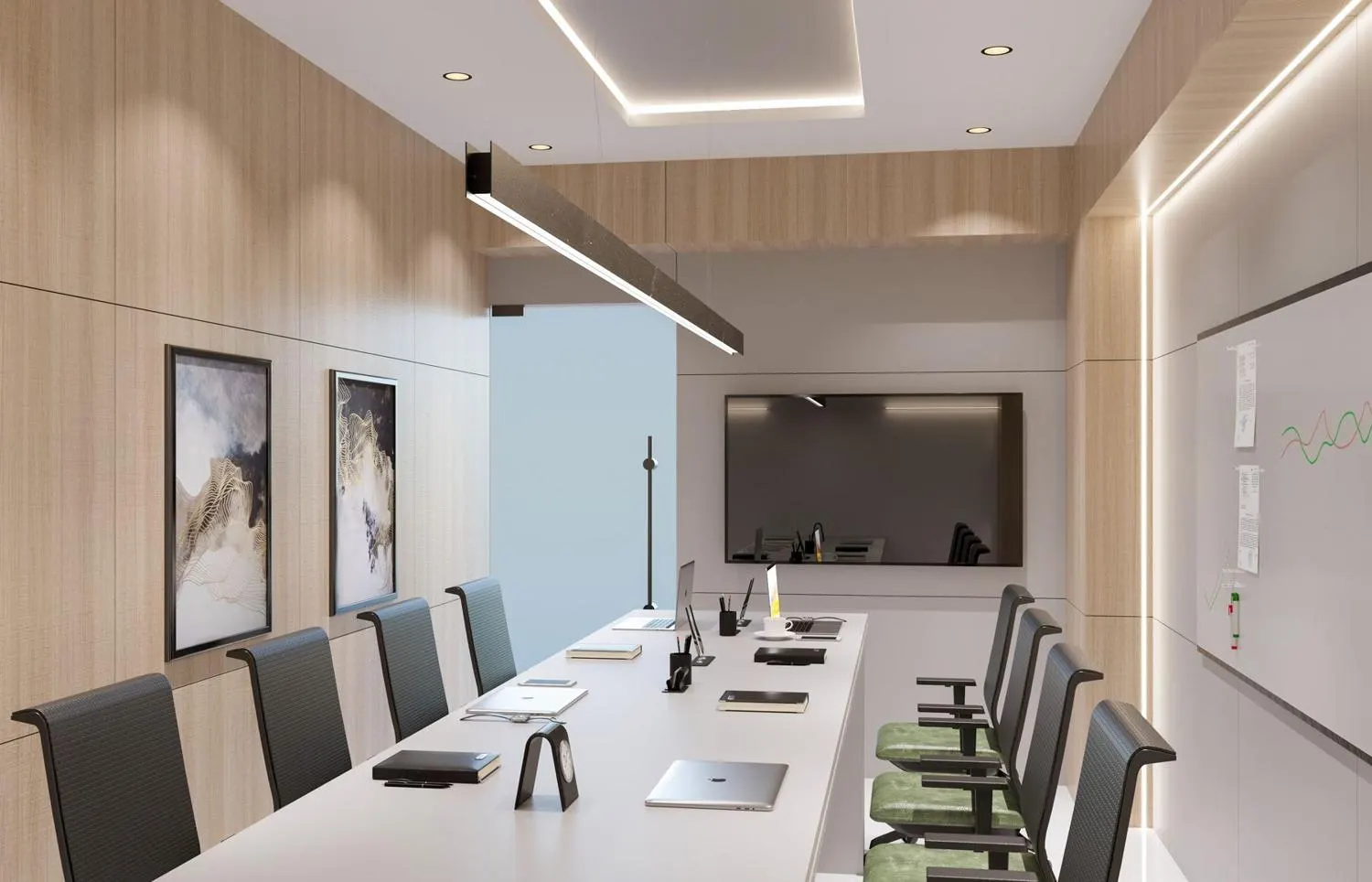
The example is a common office job: a frameless cabin front 3600 mm wide and 2700 mm high, about 105 sq ft, in 12 mm clear toughened glass in aluminium channels, with one 900 × 2100 mm hinged glass door and a frosted privacy band. The rates are indicative October 2026 figures for a tier-2 city such as Surat; metros run higher. Every line is shown so that the total can be checked.
| Line item | Quantity basis | Low (₹) | High (₹) |
|---|---|---|---|
| 12 mm clear toughened glass, cut, edge-polished, supplied | 105 sq ft at ₹270–450 | 28,350 | 47,250 |
| Aluminium floor and ceiling channels, powder coated | Lump sum, 3.6 m run top and bottom | 8,000 | 20,000 |
| Installation labour, silicone, gaskets, slab fixings | Lump sum | 6,000 | 15,000 |
| Frosted film privacy band | About 20 sq ft at ₹60–150 | 1,200 | 3,000 |
| Glass door hardware: patch fittings, floor spring, lock, handle | One door | 8,000 | 25,000 |
| Making good ceiling and skirting | Lump sum | 2,000 | 6,000 |
| Transport, handling and breakage allowance | Lump sum | 2,000 | 5,000 |
| Total before GST | Sum of the lines above | 55,550 | 1,21,250 |
| Total with GST at 18 % | If GST is charged on the full value | 65,549 | 1,43,075 |
Without the door hardware, the partition works out at about ₹450–920 per sq ft (₹47,550–96,250 for 105 sq ft), which sits in the channel-system band. The door hardware is the line most often left out of a "per square foot" quote, and at ₹8,000–25,000 it can change the total by a fifth. If the same cabin front were built in an office single-glazed system at ₹650–1,300 per sq ft, the partition alone would be about ₹68,000–1,37,000 before the door and GST.
Typical project totals
The same rate bands produce very different totals depending on the area and the system. The examples below multiply the indicative bands by typical areas; door hardware, films and GST are added only where stated.
| Project | Area | System and rate | Indicative cost (Oct 2026) |
|---|---|---|---|
| Home study enclosure, 8 × 9 ft | 72 sq ft | Slim framed fluted glass, ₹700–1,400 | ₹50,400–1,00,800 plus door hardware |
| Kitchen partition, 10 × 6 ft above a counter | 60 sq ft | Steel-and-glass, ₹900–2,000 | ₹54,000–1,20,000 |
| Office cabin front with one door | 105 sq ft | Channel system, itemised above | ₹55,550–1,21,250 before GST |
| Meeting room, two glazed sides | 250 sq ft | Office single-glazed system, ₹650–1,300 | ₹1,62,500–3,25,000 plus doors |
| Director's cabin, acoustic | 150 sq ft | Double-glazed system, ₹1,200–2,500 | ₹1,80,000–3,75,000 plus doors |
| Living–dining opening, 10–12 ft | One opening | Sliding glass, slim frame | ₹35,000–80,000; frameless premium ₹80,000–1,50,000 |
What changes the price
Before comparing totals, read what each quotation actually covers. A low per-square-foot figure often excludes the door hardware, the frosting, the aluminium profile finish, the making good of the ceiling and floor, or GST, and some vendors measure only the glass area while others include the door opening. Ask for the glass make, thickness and type, the profile section and finish, the hardware brand and model, the fixing method into the slab, and the warranty, all written on the quotation. The factors below explain most of the difference between a ₹450 and a ₹2,500 partition.
- Glass thickness and type: 8 mm costs less than 12 mm; laminated, acoustic laminated and double glazing cost progressively more.
- The profile system: plain channels are cheapest; proprietary office systems, black steel grids and double-glazed frames cost more.
- Doors: every hinged glass door adds patch fittings, a floor spring, a lock and a handle, about ₹8,000–25,000 in hardware alone.
- Height: panels above about 3000 mm need thicker glass, fins or transoms, larger cranes or more labour, and more breakage risk.
- Decoration: fluted, frosted, tinted or printed glass, and films or manifestation graphics, add to the base rate.
- Site conditions: work at night in a running office, upper floors without a lift, or fixing through a finished false ceiling add labour.
- Quantity: a single small partition carries the same visit, transport and set-up cost as a much larger job.
How to save without losing safety
- Use clear glass in channels for most of the run and spend on frosting or fluting only in the privacy band.
- Choose 10 mm toughened glass where the vendor confirms it is adequate for the panel size, instead of defaulting to 12 mm.
- Combine glass with a solid lower panel or a counter, as in a timber-framed partition, to reduce the glass area.
- Standardise panel widths so that the vendor can cut efficiently and stock spares.
- Put sound-critical rooms in double glazing and keep the rest single-glazed, instead of one specification everywhere.
- Get three quotations on the same drawing and the same inclusions — doors, hardware, films and making good named line by line.
- Never save by using annealed (ordinary float) glass in a partition or door: toughened or laminated safety glass is the minimum.
Frequently asked questions
What is the cost of a glass partition per sq ft in India?
Indicatively in October 2026, about ₹450–900 per sq ft for clear toughened glass in channels, ₹700–1,400 for slim framed clear, frosted or fluted partitions, ₹650–1,300 for office single-glazed systems, ₹900–2,000 for steel-and-glass and ₹1,200–2,500 for double-glazed acoustic systems, before doors, hardware and GST.
Which glass thickness is used for office partitions?
Office partitions commonly use 10–12 mm toughened glass, and frameless doors 10–12 mm. Home partitions in slim frames often use 8–10 mm. The right thickness depends on the panel size and support, and should be confirmed by the vendor against IS 16231.
Is a glass partition cheaper than a gypsum or brick wall?
Usually not. Gypsum stud partitions cost about ₹200–350 per sq ft with insulation, so glass costs two to five times more. Glass is chosen for daylight, openness and a sense of space, and is often combined with solid walls where privacy or sound matter.
Does a glass partition block sound?
Single toughened glass in channels reduces normal conversation but does not make a room confidential, especially with gaps at the ceiling. For directors' cabins and meeting rooms, double-glazed systems with gaskets, sealed heads and solid-core doors with seals are needed, with the ceiling void closed above the partition.
Sources & standards
- Bureau of Indian Standards — IS 16231 (Use of glass in buildings — code of practice), including the part on safety related to human impact
- Bureau of Indian Standards — IS 2553 (Part 1), Safety glass — specification
- Bureau of Indian Standards — National Building Code of India 2016, Part 4 (Fire and Life Safety) and Part 7 (Constructional Practices and Safety)
- Glass manufacturers' and partition-system suppliers' published standard ranges for toughened, laminated and double-glazed products (described generically)
- Aaditya Interior blog — glass types, toughened vs laminated glass, office cost and partition design guides (internal consistency of rates)
- Price ranges: indicative October 2026 estimates — confirm locally before budgeting