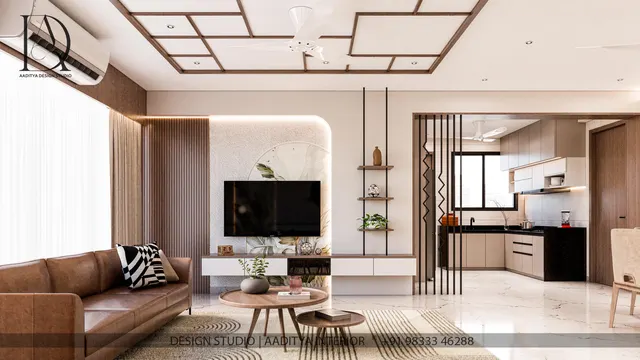
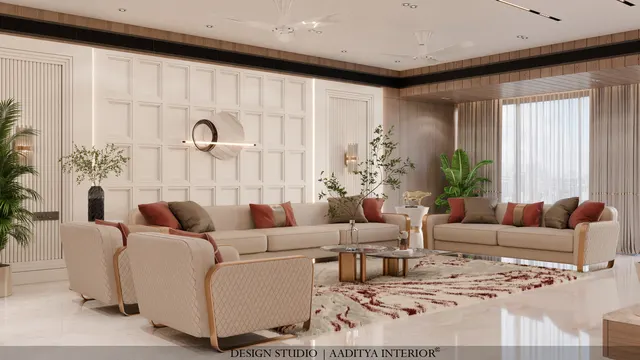
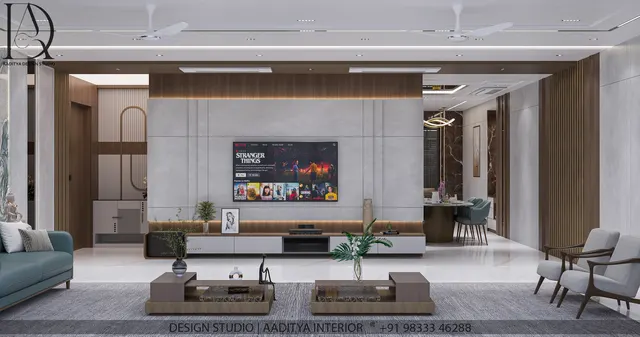
For a plain ceiling, the honest one-line answer is ₹60–80 multiplied by the floor area of the room — roughly ₹6,000–8,000 for a 10 × 10 ft bedroom and ₹8,600–11,500 for a 12 × 12 ft one. Here is why many quotes for the very same rooms arrive at three or four times that figure: the ceiling stops being a flat sheet and becomes a lighting design, with a dropped border, a cove, a run of LED strip and several fittings. Each of those is priced in a different unit — per sq ft, per running foot and per piece — and a single-room quote mixes all three.
This article prices the two most common Indian bedroom sizes line by line, so the total can be rebuilt from its parts and compared fairly. The rates are the ones used across this site's false-ceiling and lighting guides; the room sizes, cove lengths and fitting counts are worked examples that can be changed for any real room. A broader comparison of gypsum, POP and PVC systems is in the site's false-ceiling cost guide; this one stays with gypsum and with the small rooms where most families start.
The itemised table: two rooms, line by line
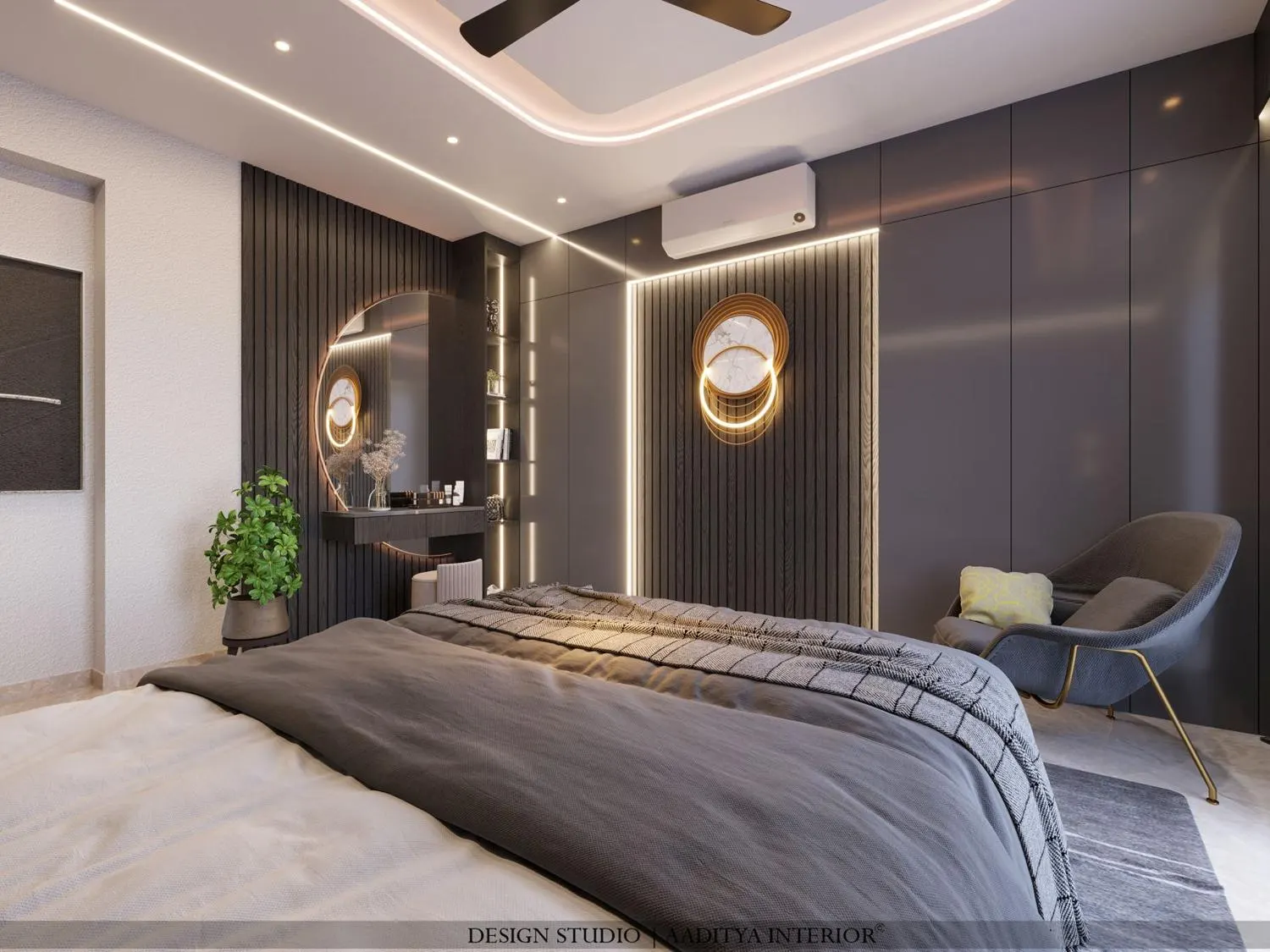
The table assumes a designer ceiling: a dropped gypsum border around the room with a cove facing the centre, a flat central panel at a higher level, a warm LED strip in the cove, and downlights in the border. The cove is set about one foot in from the walls, which gives about 32 running ft of strip in a 10 × 10 ft room (an 8 × 8 ft loop) and about 40 running ft in a 12 × 12 ft room (a 10 × 10 ft loop). Every line is quantity × rate, and the totals are the sum of the lines.
| Line item (designer ceiling) | Rate (indicative Oct 2026) | 10 × 10 ft room | 12 × 12 ft room |
|---|---|---|---|
| Gypsum ceiling incl. GI frame, 12.5 mm board, jointing, putty, primer, 2 coats | ₹80–180 per sq ft | 100 sq ft = ₹8,000–18,000 | 144 sq ft = ₹11,520–25,920 |
| Cove LED strip with profile and driver, installed | ₹150–300 per running ft | 32 rft = ₹4,800–9,600 | 40 rft = ₹6,000–12,000 |
| Panel or downlights in the border, cut-out and connection | ₹400–1,200 each | 4 pcs = ₹1,600–4,800 | 6 pcs = ₹2,400–7,200 |
| Total before GST | — | ₹14,400–32,400 | ₹19,920–45,120 |
| Plain ceiling option | Rate | 10 × 10 ft room | 12 × 12 ft room |
|---|---|---|---|
| Plain gypsum with paint, single level | ₹60–80 per sq ft | ₹6,000–8,000 | ₹8,640–11,520 |
| Downlights or panels | ₹400–1,200 each | 4 pcs = ₹1,600–4,800 | 6 pcs = ₹2,400–7,200 |
| Total before GST | — | ₹7,600–12,800 | ₹11,040–18,720 |
Where these rooms usually land
Most bedrooms in Surat apartments sit between the two extremes. A common choice is a plain flat ceiling in the second bedroom and a simple designer border with cove in the master bedroom; another is a plain ceiling everywhere with surface or recessed lights and no cove. The table below shows the four combinations side by side, all from the same rates, so a family can choose by feel and budget rather than by the label on the quote.
| Combination | 10 × 10 ft room | 12 × 12 ft room | How it reads |
|---|---|---|---|
| Plain ceiling only, existing lights reused | ₹6,000–8,000 | ₹8,640–11,520 | Clean, flat, hides wiring and slab defects |
| Plain ceiling + downlights | ₹7,600–12,800 | ₹11,040–18,720 | Even, practical light; the value choice |
| Designer ceiling + downlights, no cove | ₹9,600–22,800 | ₹13,920–33,120 | Layered profile; light still from fittings only |
| Designer ceiling + cove LED + downlights | ₹14,400–32,400 | ₹19,920–45,120 | Soft indirect glow; best for bedrooms |
What the ₹60–80 rate actually buys
A per-sq-ft rate only makes sense when the scope behind it is clear. In this site's bands, the plain gypsum rate covers a galvanised steel (GI) frame hung from the slab, 12.5 mm gypsum board screwed to it, jointing tape and compound over every board joint, a skim of putty, a primer and two coats of ceiling paint. It is measured on the floor area of the room — a 12 × 12 ft room is billed as 144 sq ft whether the ceiling is plain or has a border. What the rate normally does not include is equally important: light fittings, LED strips and drivers, new electrical points or wiring, AC piping, moisture-resistant board, access panels beyond the basic one, and scaffolding for unusually tall rooms.
Designer rates of ₹80–180 per sq ft add the extra framing and board for drops and steps, the cove ledge itself and the finishing of every edge and corner. Some contractors measure the vertical faces of drops and coves separately in running feet instead of raising the sq ft rate. Neither method is wrong, but two quotes measured differently cannot be compared until they are converted to the same basis — which is why the itemised table above is worth rebuilding with each contractor's own numbers.
| A complete quote for one room should state | Why it matters |
|---|---|
| Area in sq ft and how it was measured | Floor area and actual ceiling surface differ noticeably on designer ceilings with deep drops |
| Board type and thickness (12.5 mm, standard or moisture-resistant) | Thinner or unbranded board sags and cracks at joints |
| Frame make and spacing as per the board maker's system | The frame, not the board, keeps the ceiling flat |
| Number of coats, putty and primer included or not | Paint is often where quotes quietly differ |
| Cove length in running ft, strip type, colour temperature and driver | Prevents a cheaper strip being substituted later |
| Number and type of downlights or panels | Fitting quality varies widely at the same price |
| Access panel positions for drivers and AC | Drivers fail first; they must be reachable |
Eight things that move the rate
- Profile complexity: one straight drop sits near ₹80 per sq ft; stepped, curved or multi-level profiles move towards ₹180.
- Cove length and strip quality: every extra running foot is ₹150–300, and a second cove (for example a headboard cove) adds its own run.
- Number and type of fittings: four basic panels and six better downlights can differ by several thousand rupees in a single room.
- Ceiling height: above about 10 ft, scaffolding and slower work raise labour; very low rooms limit the drop and the design.
- Board type: moisture-resistant board for rooms near bathrooms or in humid locations costs more than standard board.
- Services above the ceiling: AC pipes, ducts, a fan box needing reinforcement or access panels add work and material.
- Small-job minimums: a single small room can be priced higher per sq ft than the same work across a whole flat.
- Finish: premium paint on the ceiling, a contrasting colour in the cove or wallpaper on the central panel add to the base rate.
How to save without making the ceiling look cheap
- Use a plain flat ceiling in the second bedroom and spend the difference on a cove in the master bedroom.
- Keep the profile to one straight drop; a single clean border with a cove reads better than three steps.
- Light the cove only on the walls that matter — the headboard and the wall facing it — instead of all four sides.
- Choose fewer, better downlights placed where people read and dress, rather than a dense grid.
- Do the ceilings of all rooms together; a whole-flat job usually earns a better rate than one room at a time.
- Ask for the strip, driver and profile brands on the quote, so a cheaper strip is not silently substituted.
- Plan AC piping and fan positions before the frame goes up, to avoid paying for opening and patching later.
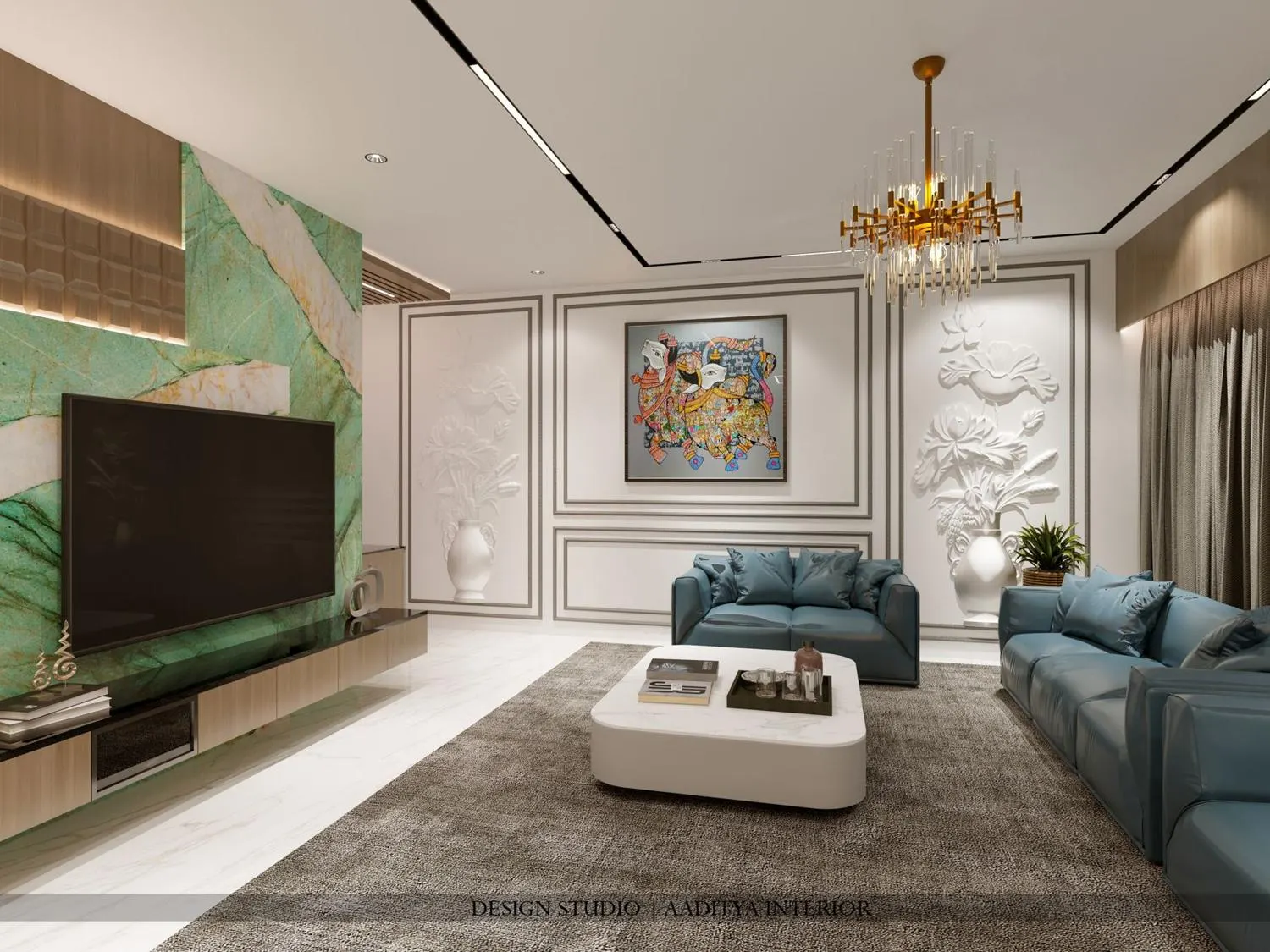
Timing is part of the saving too. A plain ceiling in one room is usually framed, boarded and jointed in a few days, but the putty and paint need dry weather and dust-free conditions to finish well. In an interior project the ceiling is framed after the electrical and AC piping are fixed and before the wardrobes arrive, and it gets its final coat of paint at the end with the walls. Doing it in that order avoids paying twice for the same patch.
Frequently asked questions
What is the cost of a false ceiling for a 10x10 room?
About ₹6,000–8,000 for plain painted gypsum at ₹60–80 per sq ft, about ₹7,600–12,800 with four downlights, and about ₹14,400–32,400 for a designer ceiling with a cove LED and four downlights, before GST (indicative October 2026).
How much does a false ceiling cost for a 12x12 bedroom?
About ₹8,640–11,520 for plain gypsum, ₹11,040–18,720 with six downlights, and ₹19,920–45,120 for a designer ceiling with about 40 running ft of cove LED and six downlights, before GST.
Is cove lighting worth it in a small bedroom?
In most bedrooms, yes: a cove gives soft indirect light for the evening, so the main lights can stay off. In a 10 × 10 ft room the strip adds about ₹4,800–9,600 for roughly 32 running ft. On a tight budget, a cove on only the headboard wall gives most of the effect for a fraction of the length.
Does the gypsum rate include painting?
In this site's bands, yes: ₹60–80 per sq ft covers the GI frame, 12.5 mm gypsum board, jointing, putty, primer and two coats of paint. Always check the quote, because some contractors price painting separately or leave the final coat for the painter.
How long does a false ceiling take for one bedroom?
Framing, boarding and jointing for a single 10 × 10 or 12 × 12 ft room usually take a few working days, and the putty and paint need dry conditions to finish well. In a full interior project the ceiling is framed after electrical and AC piping and gets its final coat at the end with the walls, so the room is not truly finished until then.
Sources & standards
- IS 2095 (Part 1) — Gypsum plaster boards: specification for plain gypsum boards used in false ceilings
- National Building Code of India 2016, Part 6 (structural design — loads) and Part 8 (building services — lighting and electrical installations)
- Gypsum board manufacturers' published ceiling-system guides (frame spacing, hangers, board fixing), described generically
- Bureau of Energy Efficiency — guidance on energy-efficient LED lighting
- Price ranges: indicative October 2026 estimates — gypsum ₹60–80 plain and ₹80–180 designer per sq ft; cove LED ₹150–300 per running ft; panel lights ₹400–1,200 each — confirm locally before budgeting