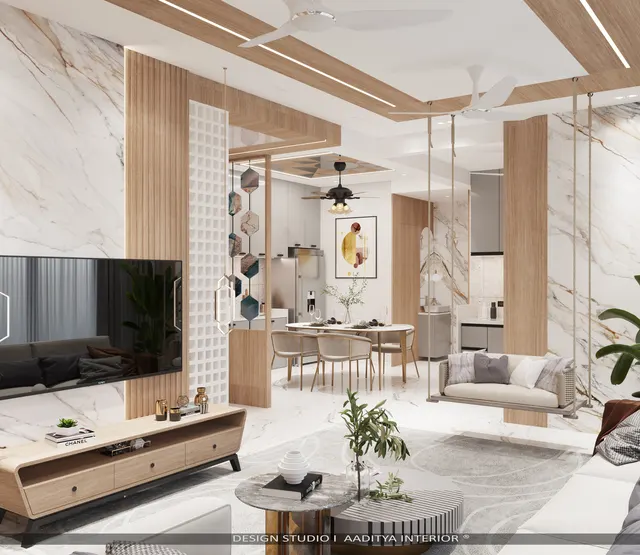
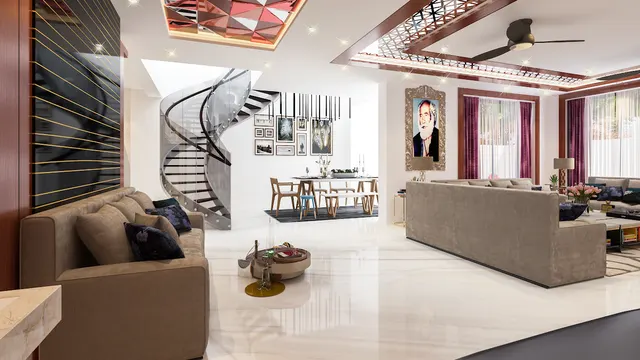
Ask any Indian family what their best furniture is made of and the answer is usually a timber name: the teak almirah from a grandparent's house, the sheesham dining table bought in the 1990s, the oak sideboard a younger couple saw in a European catalogue. Solid hardwood still carries a weight in Indian homes that plywood and laminate never quite match — it can be repaired, re-polished and handed down, and a well-made piece outlives the house it was bought for.
But the word "teak" or "sheesham" on an invoice tells a buyer much less than it seems to. Teak can mean slow-grown heartwood from old Central Indian or Burmese forests, or fast-grown plantation logs from West Africa or Latin America with wide sapwood and a fraction of the oil content. Sheesham can be dense, well-figured heartwood or pale, borer-prone sapwood stained to look dark. Oak can be white oak or red oak — two timbers that behave very differently with water. And all three fail the same way if they are not seasoned properly: joints open, tops split and drawers jam in the first monsoon.
This guide explains what makes a hardwood a hardwood, where teak, sheesham and oak came from in Indian furniture making, how each one actually behaves in a humid Indian room, what joinery dimensions and finishes suit them, and what they cost in October 2026 — per cubic foot and per finished piece — so that a buyer can judge a quotation instead of trusting a label.
What makes a hardwood a hardwood
Hardwood is a botanical term, not a strength rating. Hardwoods come from broad-leaved flowering trees (angiosperms) such as teak, sheesham, oak, sal, mango and rubberwood; softwoods come from conifers such as pine, deodar and spruce. Most hardwoods are denser and harder than most softwoods, but not all — balsa is technically a hardwood. What matters for furniture is the combination of density, grain, natural durability and stability, and these vary as much between hardwoods as between hardwood and softwood.
Every log has two zones. The heartwood is the darker, older centre, in which the cells have stopped carrying sap and are often filled with oils, resins or other extractives; it is the durable part. The sapwood is the paler outer band that was still living; it is softer, absorbs moisture faster and is the first part to be attacked by borers and termites. Good furniture timber is heartwood. A little sapwood on a hidden face is acceptable; a table top with a pale stripe down one edge is not. Plantation timber, cut young, carries a much higher share of sapwood than old-growth timber — which is the main reason it is cheaper.
The second variable is how the log is sawn. Flat-sawn (plain-sawn) boards are cut tangentially to the growth rings; they show the familiar cathedral grain, give the most usable width from a log and cost less, but they cup and move more across their width. Quarter-sawn boards are cut radially, with the rings roughly perpendicular to the face; they are straighter, more stable, show ray fleck in oak and cost more because they waste more of the log. Rift-sawn boards fall in between and give a straight, even stripe that suits modern furniture.
A short history of hardwood in Indian furniture
Indian carpenters have worked teak, sal, sheesham and rosewood for centuries — in temple doors, palace ceilings, carved havelis and the deep timber pillars of Kerala and Chettinad houses. Teak was prized above all because it resists water, termites and fungal decay better than almost any other common timber. It was so valued for shipbuilding that from the eighteenth century onward the shipwrights at the Bombay Dockyard built ocean-going ships in Malabar teak, and the British administration set about protecting and replanting teak forests. The teak plantation at Nilambur in Kerala, begun in the 1840s, is often described as the oldest teak plantation in the world.
Furniture as a separate category — chairs, tables, almirahs, beds on legs — spread widely in Indian homes in the colonial period. Anglo-Indian furniture combined European forms such as the planter's chair, the four-poster bed, the campaign chest and the dining table with Indian timbers and carving. Teak and rosewood dominated the better pieces; sheesham, abundant across the north Indian plains, became the everyday hardwood of Punjab, Uttar Pradesh and Rajasthan. In the decades after Independence, Jodhpur and its surroundings grew into a major centre for solid-wood furniture — much of it sheesham, mango and acacia — supplying both Indian homes and export markets.
Oak arrived differently. India has native oaks in the Himalaya, but they were never a major furniture timber. Oak in today's Indian homes is almost entirely imported — kiln-dried white and red oak from North America and Europe — and its popularity follows the Scandinavian, Japandi and modern minimal styles that favour light, open-grained wood. That difference matters: a timber that grew slowly in a temperate climate and was dried to suit an air-conditioned European home needs care when it moves into a Surat flat in July.
| Period | Dominant timbers | Typical pieces | What it teaches today |
|---|---|---|---|
| Before 1800 | Teak, sal, rosewood, jackwood, local hardwoods | Doors, pillars, chests, low seating, carved panels | Durable timbers in the right place; joinery, not glue |
| 1800s–1940s (colonial) | Teak, rosewood, sheesham | Planter's chairs, four-posters, almirahs, dining sets | Heavy sections and pegged mortise-and-tenon joints last |
| 1950s–1990s | Sheesham, teak, sal, later rubberwood | Dining sets, sofa frames, beds with box storage | Sheesham as the value hardwood of the plains |
| 2000s–2020s | Plantation teak, sheesham, mango, acacia, imported oak and ash | Modular plus solid-wood accent pieces | Mixing solid wood with engineered boards |
| 2020s onward | Certified plantation timber, reclaimed teak, oak and walnut veneers | Solid-wood statement pieces, veneered joinery | Traceability and seasoning matter more than the name |
Teak: the forgiving classic
Teak (Tectona grandis) is golden to mid-brown when freshly cut and darkens to a warm honey-brown with age and light. Its heartwood contains natural oils and silica, which is why it feels slightly greasy to the touch, resists water and termites well, and blunts saw blades faster than most timbers. Its density is moderate — typically around 600–700 kg/m³ when seasoned — so it is lighter than sheesham or oak for the same size, and it is among the most dimensionally stable of all furniture timbers: it shrinks and swells relatively little as humidity changes. That stability is the single biggest reason teak suits Indian homes, where indoor humidity can swing widely between the dry winter and the monsoon.
Grades of teak in the Indian market
Traders in India usually speak of teak by origin. Old-growth Burma teak and the Central Provinces (CP) teak of Madhya Pradesh and Maharashtra are the premium grades — slow-grown, dense, oily, with narrow growth rings and little sapwood. Nilambur and other South Indian forest teak sits close to them. Plantation teak, imported in large volumes from West Africa (often sold as Ghana or Ivory Coast teak), Latin America and elsewhere, is faster grown, paler, less oily and carries more sapwood. It is perfectly good for indoor furniture when it is properly seasoned and the sapwood is cut away — but it should be priced as plantation teak, not as CP or Burma teak. Old teak recovered from demolished buildings (reclaimed teak) is also traded; it is often excellent, well-seasoned timber, but has nail holes and old joints that must be worked around.
Where teak is the right choice
Teak is the right choice wherever water or weather is involved — main doors, window shutters, outdoor and verandah furniture, bathroom vanities, pool-side loungers — and for heirloom furniture where stability matters more than price. For a bedroom wardrobe or a TV unit, teak veneer on a plywood core gives the same look at a fraction of the cost, and that is how most teak is used in modern Indian interiors.
Sheesham: the hard-wearing value hardwood
Sheesham (Dalbergia sissoo), also called Indian rosewood in the furniture trade — though true Indian rosewood is a related species, Dalbergia latifolia — grows across the plains of north India and the Himalayan foothills. Its heartwood ranges from golden brown to deep brown with darker streaks, and its interlocked grain gives a lively figure that takes a polish beautifully. It is denser than teak, typically around 750–850 kg/m³ when seasoned, which makes it hard, heavy and very resistant to dents — a good timber for dining tables, chairs, beds and anything that takes knocks.
Sheesham's weaknesses are equally clear. Its sapwood is pale, soft and prone to borer attack, so furniture made with sapwood on show — often hidden under a dark stain — is a common problem. It moves more than teak with humidity, so it needs proper seasoning (preferably kiln drying to the right moisture content) and joinery that allows for movement: table tops fixed with buttons or slotted brackets, not screwed tight to the frame. And it is less naturally weather-resistant than teak, so it is best kept indoors or on covered verandahs.
Oak: the light, modern hardwood
Oak (Quercus) used in Indian furniture is nearly always imported, and comes in two main groups. White oak — American white oak and European oak — is pale tan to light brown, with a straight grain and, when quarter-sawn, the distinctive silver ray fleck. Its pores are blocked by growths called tyloses, which make it relatively resistant to water penetration; this is why it has long been used for barrels and boats. Red oak, mainly from North America, has a pinkish tone and open pores that let liquid pass along the grain, so it is less suitable for kitchens and bathrooms. Both are typically around 650–750 kg/m³ when seasoned — hard, strong and good for chairs and tables.
Oak's challenge in India is movement. Its shrinkage across the grain is relatively high, so a wide flat-sawn oak top taken from a dry, air-conditioned showroom into a humid, naturally ventilated room can cup or split. Designers handle this by choosing quarter-sawn or rift-sawn boards for tops, keeping solid panels narrow, using frame-and-panel construction, and acclimatising the timber in the room for at least one to two weeks before final machining or installation. Where the budget or climate does not suit solid oak, oak veneer on plywood or MDF gives the same look with much less movement.
Teak, sheesham and oak compared
The table and Fig. 2 compare the three timbers on the properties that matter in an Indian home. Densities are typical ranges for seasoned timber at about 12 per cent moisture content and vary with origin and growth rate; movement and durability are relative ratings drawn from common trade and reference descriptions, not laboratory values. They are a guide to choosing, not a substitute for buying from a reliable timber merchant.
| Property | Teak | Sheesham | White oak | Red oak |
|---|---|---|---|---|
| Colour | Golden to honey brown, darkens | Golden to deep brown, dark streaks | Pale tan to light brown | Light brown with a pink tone |
| Grain | Straight to slightly wavy, oily feel | Interlocked, lively figure | Straight; ray fleck when quarter-sawn | Straight, coarse, open pores |
| Typical density (seasoned) | ≈ 600–700 kg/m³ | ≈ 750–850 kg/m³ | ≈ 700–750 kg/m³ | ≈ 650–720 kg/m³ |
| Dent resistance | Moderate | High | High | High |
| Movement with humidity | Low — very stable | Moderate | Moderate to high | Moderate to high |
| Natural durability (decay, termites) | High (heartwood) | Moderate; sapwood vulnerable | Moderate | Low to moderate |
| Water and outdoor use | Excellent | Indoor and covered areas | Indoor; acceptable near water if sealed | Indoor and dry areas only |
| Best furniture uses | Doors, outdoor, heirloom pieces, vanities | Dining sets, beds, chairs, consoles | Modern tables, chairs, shelving | Chairs, frames, painted or stained work |
Other hardwoods in Indian furniture
Teak, sheesham and oak are the names most buyers ask for, but a lot of Indian furniture is made from other hardwoods, some of them excellent value. Knowing them helps in reading quotations and in choosing the right timber for hidden frames, painted pieces and budget furniture.
| Timber | Character | Good for | Watch out for |
|---|---|---|---|
| Sal (Shorea robusta) | Very strong, heavy, coarse; brown | Door frames, bed frames, structural members | Checks and moves; not for fine visible tops |
| Mango | Light brown, often figured; moderate weight | Budget and export-style furniture, painted and rustic pieces | Must be treated; prone to insects and fungal stain if not |
| Acacia (babool and imported acacia) | Hard, golden to dark brown, varied colour | Tables, chairs, serving boards, outdoor (treated) | Colour variation between boards; seasoning |
| Rubberwood (Hevea) | Pale, fine, even grain; plantation by-product | Ready-made furniture, painted and stained pieces, finger-jointed panels | Low natural durability — must be treated and kiln dried |
| Ash (imported) | Pale, straight, open grain like oak | Chairs, Scandinavian-style tables | Not durable outdoors; borer-prone if untreated |
| American walnut (imported) | Rich chocolate brown, fine grain | Luxury tables, consoles, bedside units | High price; usually used as veneer |
| Indian rosewood (Dalbergia latifolia) | Dark purple-brown, very dense | Carved and heirloom furniture, inlay work | Scarce, costly; legal source and paperwork essential |
Seasoning, moisture and termites: where furniture fails
Fresh-sawn timber can hold a large share of its own dry weight as water. As it dries it shrinks — more across the growth rings than along them, and very little along the length — and if it is made into furniture before it is dry, it keeps shrinking in the finished piece. Tops split, joints open, drawers stick and panels rattle. Seasoning is the process of drying timber slowly and evenly to a moisture content close to what it will meet in use. Air seasoning in stacks with spacers takes months; kiln seasoning does the same job in days to weeks under controlled heat and humidity, and is the better choice for furniture timber in most Indian cities.
Indian Standard IS 1141 sets out the code of practice for seasoning timber, and IS 287 gives the recommended moisture content for timber in different uses and climatic zones. For indoor furniture in most of India, that works out to roughly 10–14 per cent; drier inland cities sit at the lower end and humid coastal cities at the upper end. A simple pin-type moisture meter costs a few thousand rupees and lets a buyer or site supervisor check timber before the carpenter cuts it. Treatment against borers and termites — following IS 401 — matters most for sapwood, rubberwood, mango and other perishable timbers, and for any piece that will stand against an external wall or on a ground floor.
| Check | Target | How to verify | Why it matters |
|---|---|---|---|
| Moisture content | ≈ 10–14 % for indoor furniture (by zone) | Pin-type moisture meter, several boards, middle of the length | Wet timber shrinks after making: splits and open joints |
| Heartwood only on show | No pale sapwood on visible faces | Look at edges, undersides, drawer insides | Sapwood is softer and borer-prone |
| Seasoning method | Kiln-dried, with the supplier's note | Ask for the kiln batch or supplier invoice | Even drying, fewer internal stresses |
| Treatment | Anti-borer and anti-termite as per IS 401 | Supplier's treatment note; treat all cut ends | Protects perishable species and sapwood |
| Acclimatisation | 1–2 weeks in the room before finishing | Store flat with spacers, away from walls | Timber settles to the room's humidity |
| Grain and defects | No through-cracks, loose knots or worm holes | Visual check, both faces and ends | Defects become failures in thin sections |
Joinery and sizes for solid-wood furniture
Solid timber needs joinery that is strong across the grain and allows wide parts to move. The classic joints — mortise and tenon for legs and rails, dovetails for drawers, frame-and-panel for doors and sides, and buttons or slotted brackets to hold a top — exist precisely because wood moves. Screws and glue alone, or a top screwed rigidly through its width, will crack in an Indian monsoon. Fig. 3 shows the standard sizes for a 6-seater dining table and a dining chair in sheesham or teak.
| Piece | Key dimensions (mm) | Section sizes (mm) | Timber note |
|---|---|---|---|
| 6-seater dining table | 1800 × 900 top, 750 high | Top 28–32; legs 70–80 sq; apron 90–110 × 22–25 | Sheesham or teak; quarter or rift-sawn top boards if possible |
| 4-seater dining table | 1200 × 750 top, 750 high | Top 25–28; legs 60–70 sq | Any of the three; oak top only if the room is stable |
| Dining chair | Seat 420–460 high, 420–450 deep; back 850–900 | Legs 35–40 sq; rails 50–60 × 22 | Sheesham or oak — dense timbers resist wobble |
| King bed (for 1830 × 1980 mattress) | Frame ≈ 1930 × 2080; top of mattress 500–550 | Side rails 150 × 40; legs 75–100 sq | Teak or sheesham; slats in rubberwood or pine are fine |
| Coffee table | 1000–1200 × 500–600, 400–450 high | Top 25–40; legs 50–75 | Showcase timber: book-matched or live-edge pieces |
| Console or sideboard | 1200–1800 × 400–450, 750–850 high | Frame-and-panel carcass; panels 12–18 | Panels free to float in grooves |
How much timber a piece uses — and what it costs
Solid-wood furniture is quoted per piece, but the timber inside it is bought by volume — usually in cubic feet (cft) in India. Knowing the take-off makes it much easier to check a quotation. Fig. 4 works through a 6-seater dining table of the sizes in Fig. 3. The finished parts add up to about 0.079 m³, or 2.8 cft. Sawn timber is never used at 100 per cent: boards are bought oversize, planed, cut around knots, cracks and sapwood, and matched for grain, so a wastage factor of about 1.4–1.6 is normal for good work. The table therefore needs about 4–4.5 cft of sawn timber.
Timber prices in India vary by origin, grade, board size, moisture content and city, and they move with import costs and forest-department auctions. The ranges below are indicative October 2026 rates for seasoned, sawn furniture-grade timber bought from a timber merchant in a tier-2 city, excluding GST and transport. They should always be confirmed with a local supplier before budgeting.
| Timber (seasoned, sawn) | Indicative rate per cft (Oct 2026) | Dining-table timber (≈ 4–4.5 cft) | Note |
|---|---|---|---|
| Plantation teak (imported, e.g. West African) | ₹3,000–5,500 | ≈ ₹12,000–25,000 | Check sapwood share and kiln-drying |
| Old-growth / CP / Burma-grade teak | ₹6,000–12,000+ | ≈ ₹24,000–54,000 | Narrow rings, oily, little sapwood; scarce |
| Sheesham (heartwood) | ₹2,200–4,000 | ≈ ₹9,000–18,000 | Best value dense hardwood for indoor use |
| Imported white oak (kiln-dried) | ₹3,500–7,000 | ≈ ₹14,000–32,000 | Quarter-sawn at the top of the range |
| Imported red oak (kiln-dried) | ₹3,000–5,500 | ≈ ₹12,000–25,000 | Not for wet areas |
| Sal | ₹1,800–3,000 | Frames rather than tops | Strong; moves and checks |
| Mango / acacia (treated) | ₹1,000–2,200 | ≈ ₹4,000–10,000 | Budget furniture; treatment essential |
| Rubberwood (treated, kiln-dried) | ₹1,200–2,000 | ≈ ₹5,000–9,000 | Often supplied as finger-jointed panels |
Finished furniture is a different matter: the timber is often less than half of the price. The table below gives indicative October 2026 retail and carpenter-made ranges for common pieces in a mid-range finish. Carving, inlay, cane work, upholstery and premium polish move a piece above these bands; flat-pack or rubberwood furniture sits below them.
| Piece (finished, mid-range polish) | Sheesham | Plantation teak | Old-growth teak | White oak |
|---|---|---|---|---|
| 6-seater dining table (table only) | ₹45,000–90,000 | ₹55,000–1,10,000 | ₹1,20,000–2,50,000+ | ₹70,000–1,50,000 |
| Dining chair (each) | ₹6,000–14,000 | ₹7,000–16,000 | ₹15,000–35,000 | ₹9,000–22,000 |
| King bed (frame only) | ₹40,000–90,000 | ₹50,000–1,10,000 | ₹1,00,000–2,50,000+ | ₹70,000–1,60,000 |
| Coffee table | ₹15,000–40,000 | ₹18,000–45,000 | ₹35,000–90,000 | ₹20,000–55,000 |
| Three-seater sofa frame (wood only) | ₹25,000–55,000 | ₹30,000–65,000 | ₹60,000–1,40,000 | ₹35,000–80,000 |
Finishes: oil, PU, melamine and wax
The finish decides how a hardwood piece looks on the first day and how it survives the next twenty years. Indian homes are hard on furniture finishes: hot cups on dining tables, water rings, sunlight through west windows, oily hands and monsoon humidity. The right finish depends on the piece and on how much maintenance the household will accept.
| Finish | Look | Protection | Maintenance | Best for |
|---|---|---|---|---|
| Natural oil (teak oil, Danish oil, hard-wax oil) | Matte, open grain, very natural | Moderate; water rings if left wet | Re-oil every 6–12 months; easy spot repair | Teak, oak, outdoor and Scandinavian-style pieces |
| PU (polyurethane) lacquer, matte or gloss | Clear, even, from matte to high gloss | High against water, heat and scratches | Low; full refinish needs sanding | Dining tables, consoles, high-use pieces |
| Melamine polish | Satin to gloss, slightly plastic on thick coats | Moderate | Low; yellows over years | Budget and mid-range indoor furniture |
| French polish (shellac) | Deep, warm, traditional | Low; marks with heat and water | Skilled repolishing | Antique and heritage pieces |
| Wax over oil or shellac | Soft sheen | Low | Rewax regularly | Low-use display pieces |
| Exterior teak oil or marine varnish | Golden; silvers if left untreated | Weather and UV | Recoat yearly outdoors | Outdoor teak furniture and doors |
Where solid-wood furniture is going
Three shifts are changing how hardwood is used in Indian homes. The first is traceability. Buyers — especially hotels and export-oriented manufacturers — increasingly ask for certified plantation timber with chain-of-custody documentation, and the Indian furniture trade has steadily moved from forest timber to plantation teak, rubberwood, acacia and imported certified hardwoods. Rules on the international trade in some rosewood (Dalbergia) species have changed several times in recent years, so anyone exporting rosewood or sheesham furniture should check the current position before shipping.
The second is the split between structure and surface. Most visible wood in modern Indian interiors is now veneer on plywood or MDF, with solid hardwood kept for the pieces that are touched, sat on and handed down — dining tables, chairs, beds, doors and handrails. Aaditya Interior generally recommends exactly that mix: veneer for large flat joinery, solid wood where edges, joints and daily handling demand it. The third shift is in making: CNC routers cut joints precisely, so well-made solid-wood furniture is becoming more consistent; reclaimed teak from old buildings is being reused with pride rather than hidden; and engineered timbers such as finger-jointed panels and cross-laminated timber are blurring the line between solid wood and board.
Rules for buying hardwood furniture
- Ask for the species and the grade (for teak: plantation, CP/Burma-grade or reclaimed) written on the quotation and the invoice.
- Insist on heartwood on every visible face; check undersides, edges and drawer insides for pale sapwood.
- Ask how the timber was seasoned and check the moisture content with a meter — about 10–14 per cent for indoor furniture.
- Choose teak for anything near water or outdoors, sheesham for hard-wearing indoor furniture, and oak only where the room stays reasonably stable.
- Check the joinery: mortise and tenon for legs and rails, dovetails for drawers, buttons or slotted brackets for solid tops.
- Prefer quarter-sawn or rift-sawn boards for wide tops in oak and sheesham, and narrow glued-up boards over one wide board.
- Pick the finish for the use: PU for dining tables, oil for a natural look you are willing to maintain.
- Keep solid-wood furniture 50–100 mm off external walls, out of direct afternoon sun and away from AC outlets blowing straight at it.
Frequently asked questions
Which is better for furniture, teak or sheesham?
Teak is more stable, more water- and termite-resistant and better outdoors; sheesham is harder, more dent-resistant, has a livelier figure and costs less. For indoor dining tables, beds and chairs, well-seasoned sheesham heartwood is excellent value. For doors, outdoor furniture, bathroom vanities and heirloom pieces, teak is worth the extra cost.
Is sheesham wood good for humid cities like Mumbai or Surat?
Yes, if it is properly kiln-seasoned to the right moisture content and made with joinery that allows movement. Badly seasoned sheesham is the problem, not the species. Keep pieces away from damp external walls, use a sealed PU or good melamine finish, and avoid sapwood, which is the part most prone to borers.
How can I tell real teak from plantation teak?
Old-growth teak usually has narrower, closer growth rings, a darker and more even golden-brown colour, a noticeably oily feel and very little pale sapwood. Plantation teak is often paler, with wider rings, more colour variation and more sapwood on board edges. Both are real teak; the difference is in grade and price, so ask the supplier to state the origin in writing.
Does oak furniture work in Indian weather?
It works well in air-conditioned or otherwise stable rooms, especially when it is quarter-sawn or rift-sawn, acclimatised before making, and finished on all faces. In naturally ventilated rooms in humid cities, wide flat-sawn oak tops can cup or split; oak veneer on plywood is the safer route for large flat surfaces.
What is the price of teak wood per cubic foot in 2026?
Indicatively, in October 2026, seasoned plantation teak costs about ₹3,000–5,500 per cft and old-growth, CP or Burma-grade teak about ₹6,000–12,000 or more, excluding GST and transport. Prices vary widely with board size, grade, origin and city, so confirm locally before budgeting.
Sources & standards
- Bureau of Indian Standards — IS 287 (permissible moisture content for timber used for different purposes), IS 1141 (seasoning of timber — code of practice), IS 401 (preservation of timber — code of practice)
- Bureau of Indian Standards — IS 883 (design of structural timber in building) for species groupings and timber classification
- Forest Research Institute, Dehradun, and the Indian Plywood Industries Research and Training Institute — published timber and wood-science references
- Kerala Forest Department — Nilambur teak plantations and the Conolly's Plot
- CITES — listings and annotations for Dalbergia (rosewood) species; check the current Appendix II position before export
- Neufert Architects' Data — furniture dimensions for dining tables, chairs and beds
- Price ranges: indicative October 2026 estimates — confirm locally before budgeting