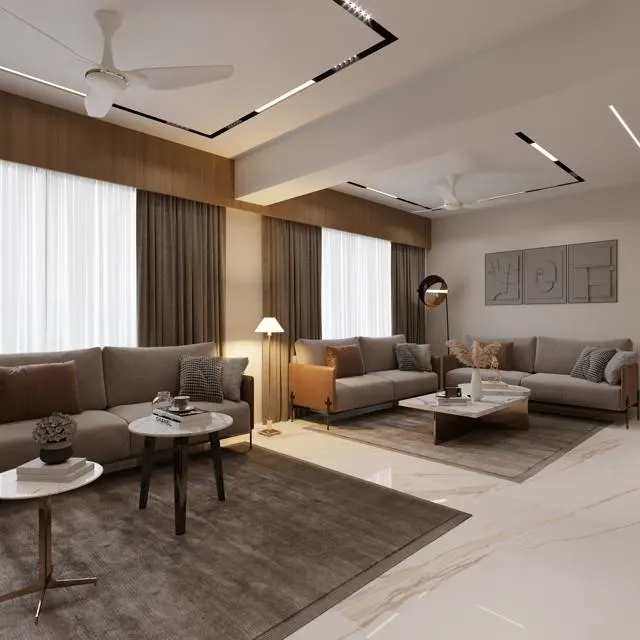
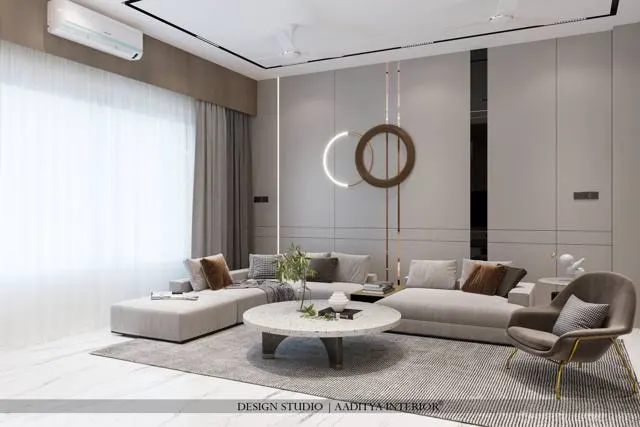
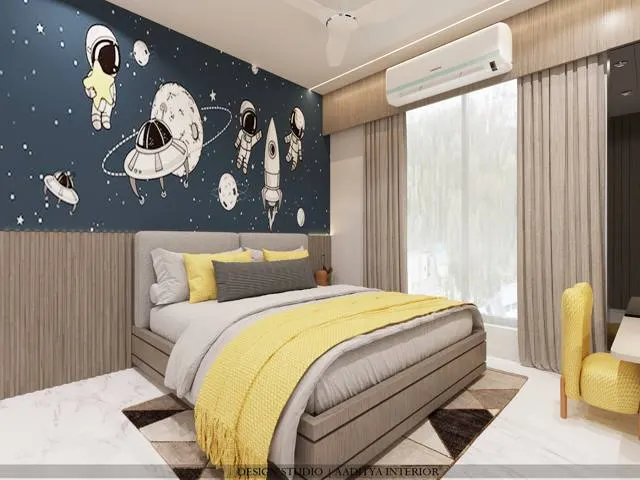
Vesu has become, over the last fifteen years, one of Surat's most sought-after residential addresses — a planned belt of newer apartment towers and bungalows along and off the Vesu-Abhva and VIP roads, close to good schools, hospitals and the city's spreading south-west growth. The flats here are mostly recent, which changes the interior conversation. An owner in an older part of the city often has to undo and repair before they can furnish; a Vesu owner usually starts with a reasonably sound builder-finished shell and wants to turn it into a complete, modular, move-in home. That shifts the cost question from restoration to specification: not what must be fixed, but how much finish to buy.
This guide answers the question most Vesu owners actually ask — what will a full home interior cost here — in the way a budget is really built: as a rate per square foot of carpet area, as a total for the common flat sizes, and as a line-by-line split across the big-ticket items of kitchen, wardrobes, ceilings, paint, flooring and lighting. All figures are indicative October 2026 ranges for the Surat market and must be confirmed with a local contractor before budgeting, because the same drawing can be built honestly at very different prices depending on board grade, finish and hardware. The aim is to let a homeowner read any Vesu quotation and know whether it is lean, fair or padded.
Two warnings up front, because they cause most budget shocks. First, always check which area a rate is quoted on — carpet, built-up or super built-up. The same work looks twenty to forty per cent cheaper when spread over super built-up area, and Vesu brochures often sell on the larger figure. Insist on carpet area, the honest RERA-declared number, for every comparison. Second, the headline interior rate almost never includes loose furniture, appliances, GST and design fees; these can add fifteen to twenty-five per cent, so a quote that looks complete rarely is. With those two guards in place, the numbers below are a reliable map.
What drives interior cost in Vesu
Interior cost is set by four levers, and understanding them makes every quotation readable. The first is area, measured honestly on carpet: a larger flat costs more in total but often less per square foot, because fixed items like the kitchen are spread over more space. The second is the specification level — basic, mid-range or premium — which is really a ladder of board grades, finishes and hardware brands rather than of visible design. The third is the quantity of fitted joinery: the more wardrobes, units, TV panels and ceilings, the higher the rate per square foot climbs. The fourth is finish choice, where the single steepest jump is from laminate to acrylic or PU on shutters.
Vesu specifically sits at the upper-middle of the Surat market. It is a newer, aspirational belt, so owners here more often choose mid-range to premium finishes than the city average, and the flats are generally in good structural condition, so little budget is lost to repair. Labour and material rates are Surat rates — comfortably below Mumbai or Delhi for the same specification — which is why a Vesu interior typically costs less per square foot than a metro one at the same finish level. The bands below reflect this: Surat tier-2 rates, applied to the mid-to-premium choices Vesu owners tend to make.
Rate bands: ₹ per sq ft of carpet area
The cleanest way to anchor a budget is the rate per square foot of carpet area for a complete interior — kitchen, wardrobes, other joinery, false ceilings, painting, basic lighting and fixed electrical, but excluding loose furniture, appliances, GST and fees. For Vesu in October 2026, basic work runs about ₹900–1,300 per sq ft, mid-range about ₹1,300–2,200, and premium about ₹2,200–3,800 and above. Most Vesu families settle in the mid-range, commonly landing around ₹1,500–1,900 per sq ft once a modular kitchen, wardrobes in every bedroom, ceilings and good lighting are included. The figure below draws the bands to scale.
These bands describe the complete fitted interior, not the design alone. Basic covers a functional home — commercial or MR-ply carcasses with laminate, gypsum ceilings in the main rooms, premium emulsion paint, standard lighting and a straight or L-kitchen. Mid-range steps up to BWR ply, laminate or membrane shutters with some acrylic, soft-close hardware, designer ceilings in the living and dining, layered lighting and wardrobes in every bedroom. Premium brings BWP ply at wet points, acrylic or PU shutters, branded Hettich, Hafele or Blum hardware, veneer and stone feature work, and full lighting design. The table turns the bands into what each level buys.
| Level | ₹ per sq ft carpet (Vesu) | Board and finish | What it typically includes |
|---|---|---|---|
| Basic | ₹900–1,300 | MR/commercial ply, laminate | Straight/L-kitchen, gypsum ceilings, paint, standard lights |
| Mid-range | ₹1,300–2,200 | BWR ply, laminate/membrane, some acrylic | Wardrobes in all rooms, designer ceilings, layered lighting |
| Premium | ₹2,200–3,800+ | BWP at sink, acrylic/PU, branded hardware | Veneer and stone features, full lighting design |
| Loose furniture (add) | ₹1–3 lakh+ | Sofa, dining, beds, chairs, rugs | Usually quoted separately |
| GST and fees (add) | About 15–25% | Taxes and design charges | Rarely in the headline rate |
Totals for Vesu flat sizes
Multiplying the rate by a realistic carpet area gives the figure owners really want. Vesu's stock is mostly 2BHK and 3BHK flats, with some larger units and bungalows. A compact 1BHK of around 450 sq ft carpet, where it exists, lands at roughly ₹4–6 lakh basic and ₹6–10 lakh mid-range. A 2BHK of around 700 sq ft carpet is the Vesu workhorse, costing about ₹6.5–9 lakh basic, ₹9–15.5 lakh mid-range and ₹15.5–27 lakh or more premium. A 3BHK of around 1,050 sq ft carpet, very common in Vesu's newer towers, runs about ₹9.5–14 lakh basic, ₹14–23 lakh mid-range and ₹23–40 lakh or more premium. Most families land comfortably inside the mid band. The table sets out the totals.
| Flat type (carpet) | Basic (₹ lakh) | Mid-range (₹ lakh) | Premium (₹ lakh) | Typical landing |
|---|---|---|---|---|
| 1BHK, ≈ 450 sq ft | 4.0–5.9 | 5.9–9.9 | 9.9–17+ | ₹7–9 lakh |
| 2BHK, ≈ 700 sq ft | 6.3–9.1 | 9.1–15.4 | 15.4–27+ | ₹11–15 lakh |
| 3BHK, ≈ 1,050 sq ft | 9.5–13.7 | 13.7–23.1 | 23.1–40+ | ₹16–24 lakh |
| 4BHK / bungalow, ≈ 1,600 sq ft | 14.4–20.8 | 20.8–35.2 | 35.2–61+ | ₹26–38 lakh |
| Add: loose furniture | 1.0–1.5 | 1.5–3.0 | 3.0–6.0+ | Sofa, dining, beds, rugs |
These totals exclude loose furniture, appliances, GST and design fees, which together add meaningfully to the final cheque. Loose furniture — sofa, dining set, beds not built in, accent chairs and rugs — adds roughly ₹1–1.5 lakh at basic level and ₹1.5–3 lakh or more at mid-range. Kitchen appliances (hob, chimney, oven, refrigerator) are a separate budget. GST applies on top, and a designer's fee, where charged, is usually a percentage of the work. A Vesu owner budgeting a mid-range 3BHK should therefore plan for the ₹14–23 lakh interior plus perhaps ₹3–5 lakh of furniture, appliances, tax and fees combined.
Where the money goes: the budget split
Within a Vesu interior, a few items dominate the budget, and knowing their share helps an owner spend where it matters. The modular kitchen and the wardrobes together usually take the largest slice — often forty to fifty per cent of a mid-range interior between them — because they carry the most board, finish and hardware. False ceilings and lighting take a steady share and transform how the home feels. Painting, flooring upgrades, the TV and foyer units, and electrical and miscellaneous work make up the rest. The figure below shows a representative split for a mid-range 3BHK, and the table gives the component rates that build it.
The component rates behind that split are the ones to check in any Vesu quotation, because they reveal whether a round total is honest. A modular kitchen's cabinetry runs about ₹1,340–1,800 per sq ft of cabinetry in BWR ply with laminate, rising to ₹2,200–3,500 at premium specification; a straight kitchen lands around ₹1.2–2 lakh, an L-shape ₹1.5–3 lakh and a U-shape ₹2.5–4 lakh. Wardrobes are priced per square foot of elevation: budget ₹750–1,200, mid-range ₹1,200–2,200 and premium ₹2,200–3,500. False ceilings run about ₹70–95 per sq ft for plain gypsum and ₹90–200 for cove and designer work. Painting in premium emulsion is about ₹20–35 per sq ft of painted area. The table collects these.
| Item | Basis | Indicative Vesu rate (Oct 2026) | Note |
|---|---|---|---|
| Modular kitchen cabinetry | Per sq ft of cabinetry | ₹1,340–1,800 (BWR+laminate); ₹2,200–3,500 premium | Countertop and appliances extra |
| Kitchen (whole) | Per layout | Straight ₹1.2–2 lakh; L ₹1.5–3; U ₹2.5–4 lakh | Cabinetry, shutters, basic hardware |
| Wardrobes | Per sq ft of elevation | ₹1,200–2,200 mid; ₹2,200–3,500 premium | Loft included; shutter finish named |
| Countertop | Per sq ft installed | Granite ₹110–180; quartz ₹250–600 | Sink and hob cutouts included |
| False ceiling | Per sq ft of ceiling | Gypsum ₹70–95; cove/designer ₹90–200 | Check heights against beams |
| Painting | Per sq ft painted area | Premium emulsion ₹20–35 | Putty, primer and two coats |
| Flooring (vitrified) | Per sq ft installed | ₹85–160 | Material plus laying |
A worked budget: mid-range Vesu 3BHK
Numbers settle best against a worked example. Take a common Vesu case: a 3BHK of about 1,050 sq ft carpet area, finished to a mid-range specification — BWR ply with laminate and some acrylic shutters, soft-close hardware, designer ceilings in the living and dining, layered lighting, and wardrobes in all three bedrooms. Built line by line at the component rates above, the fitted interior lands at roughly ₹16–20 lakh, within the mid-range band of about ₹1,500–1,900 per sq ft. The table breaks the budget into its blocks so an owner can see each number and check it against their own quotation.
| Line item (1,050 sq ft 3BHK, mid-range) | Indicative cost (₹ lakh) | Rate basis | What to check |
|---|---|---|---|
| Modular kitchen (L-shape, cabinetry) | 2.2–3.2 | ₹1,340–1,800 per sq ft cabinetry | BWP at the sink; hardware brand named |
| Kitchen countertop + dado | 0.25–0.45 | Quartz ₹250–600 per sq ft | Cutouts and edge profile included |
| Wardrobes, 3 rooms (≈ 120 sq ft elev.) | 1.8–2.6 | ₹1,200–2,200 per sq ft elevation | Loft included; shutter finish named |
| TV unit, foyer, study, misc joinery | 1.5–2.5 | Per piece, per drawing | Board and finish named line by line |
| False ceilings (≈ 550–650 sq ft) | 0.6–1.1 | Gypsum ₹70–95; designer ₹90–200 | Heights checked against beams |
| Painting, full home | 0.7–1.1 | Premium emulsion ₹20–35 per sq ft | Anti-fungal primer on external walls |
| Lighting, electrical, miscellaneous | 1.5–2.3 | Fittings plus wiring and labour | Warm 2700–3000 K; CRI 90+ in living |
| TOTAL (fitted interior) | 16.0–20.0 | ≈ ₹1,500–1,900 per sq ft carpet | Excludes loose furniture, appliances, GST, fees |
What is included, what is extra, and where quotes pad
The commonest Vesu budget shock is discovering what a headline rate leaves out. A fitted-interior rate normally includes kitchen and wardrobe joinery, other fixed units, false ceilings, painting and basic lighting and electrical. It normally excludes loose furniture, kitchen appliances, GST, design fees, and sometimes the countertop, the flooring if it is being changed, and premium lighting fittings. A quote that looks complete at ₹16 lakh can become ₹20 lakh once these are added, so an owner should list every exclusion in writing before signing. The table separates the usual inclusions from the usual extras for a Vesu interior.
| Usually included | Usually extra | Watch for |
|---|---|---|
| Kitchen and wardrobe joinery | Loose furniture (sofa, dining, beds) | Is the countertop in or out? |
| Other fixed units (TV, foyer) | Kitchen appliances | Chimney and hob often excluded |
| False ceilings | GST on the whole | Added at the end, not in the rate |
| Painting | Design and supervision fees | Percentage or lump sum? |
| Basic lighting and electrical | Premium or designer light fittings | Fittings versus wiring split |
| Basic hardware | Branded hardware upgrade | Hettich/Hafele/Blum adds per unit |
Padding, where it happens, tends to hide in three places. The area basis is the first: a rate on super built-up rather than carpet inflates the total silently. The board grade is the second: a quotation that says only "ply" without naming BWR or BWP lets a cheaper board be substituted. The hardware is the third: "soft-close" without a brand can mean a generic channel rather than a branded system that lasts. An owner who fixes the area basis, demands named board grades and names the hardware brand closes the three gaps where Vesu quotations most often drift from the drawing.
Rules for budgeting a Vesu interior
- Insist every rate is on carpet area, the RERA-declared figure, and keep all comparisons on that one basis.
- Fix the specification level first — basic, mid-range or premium — and price the whole home at that level consistently.
- Get an itemised BOQ naming board, IS grade, finish and hardware brand for every line, not a single lump sum.
- Budget loose furniture, appliances, GST and fees separately; they add roughly 15–25 per cent to the headline.
- Spend the premium on the kitchen carcass (BWP at the sink) and hardware, not only on shutter finish.
- Compare quotations line by line, not total against total, since a lower headline often hides a cheaper board.
- Check false-ceiling heights against beams before approving, so the design fits the actual slab.
- Keep lighting warm at 2700–3000 K with CRI 90+ in living and dining, and split fittings from wiring in the quote.
- Hold a small retention until snagging is done, and record every variation with its cost before it is executed.
Frequently asked questions
How much does a 2BHK interior cost in Vesu, Surat?
For a typical Vesu 2BHK of about 700 sq ft carpet area, expect roughly ₹6.3–9.1 lakh for basic interiors, ₹9.1–15.4 lakh for mid-range and ₹15.4–27 lakh or more for premium, indicative October 2026 and excluding loose furniture, appliances, GST and fees. Most families land between about ₹11 and ₹15 lakh. The figure depends far more on the board, finish and hardware chosen than on the design, so settle the specification level before comparing quotes.
Is Vesu more expensive to furnish than other parts of Surat?
The per-square-foot rates are Surat-wide rather than Vesu-specific — labour and material cost the same across the city. What makes a Vesu interior tend to cost more is choice, not location: the belt's newer, aspirational flats lead owners to pick mid-range to premium finishes more often than the city average. Because the flats are usually in good structural condition, little is lost to repair, so almost all the budget goes into visible, fitted interior rather than making good.
Why do two Vesu quotes for the same flat differ so much?
Usually because of three hidden differences: the area basis (a rate on super built-up looks far cheaper than on carpet for the same work), the board grade (unnamed "ply" can be a cheaper board than BWR), and the hardware (generic versus branded soft-close). Ask for an itemised BOQ naming board, IS grade, finish and hardware for every line, and compare the lines rather than the totals; the gap between quotes almost always lives in those three places.
What should I spend the premium on in a Vesu home?
Spend it where punishment and daily use concentrate rather than on surface glamour. In the kitchen, upgrade the carcass grade — BWP plywood at the sink — and the hardware brand, because steam, water and daily opening test the box and the hinges, not the shutter colour. In wardrobes, pay for soft-close hardware and good edge banding. Reserve acrylic or PU shutter finishes and veneer or stone feature work for the places eyes linger, after the hidden quality is paid for first.
Does the interior cost include loose furniture and appliances?
Almost never. A fitted-interior rate covers kitchen and wardrobe joinery, other fixed units, false ceilings, painting and basic lighting and electrical, but excludes loose furniture, kitchen appliances, GST and design fees. Budget roughly ₹1.5–3 lakh for mid-range loose furniture, a separate sum for appliances, and allow fifteen to twenty-five per cent on top for tax and fees, so a ₹16 lakh fitted interior may be a ₹20 lakh cheque all in.
Sources & standards
- Real Estate (Regulation and Development) Act, 2016 (RERA) — carpet area definition for honest rate comparison
- National Building Code of India 2016, Part 3 (General Building Requirements) — room sizes and heights
- Bureau of Indian Standards — IS 303 (plywood), IS 710 (marine plywood) — board grades referenced in quotations
- Surat and Gujarat market dealer and contractor listings for modular furniture, boards and finishes, October 2026 (indicative, excluding GST)
- Aaditya Interior and general Surat-market interior cost references — per sq ft rate bands and worked budgets
- Manufacturer rate ranges for modular kitchens, wardrobes, false ceilings and paint, described generically
- Price ranges: indicative October 2026 estimates — confirm locally before budgeting