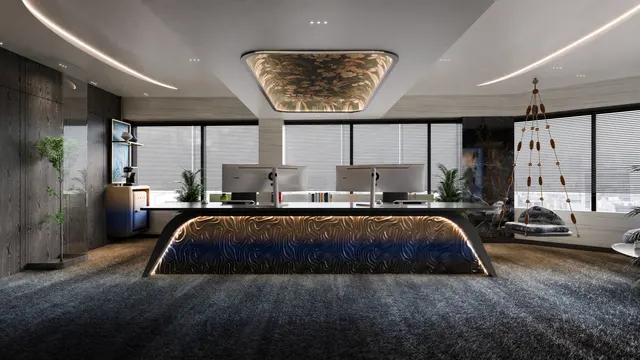
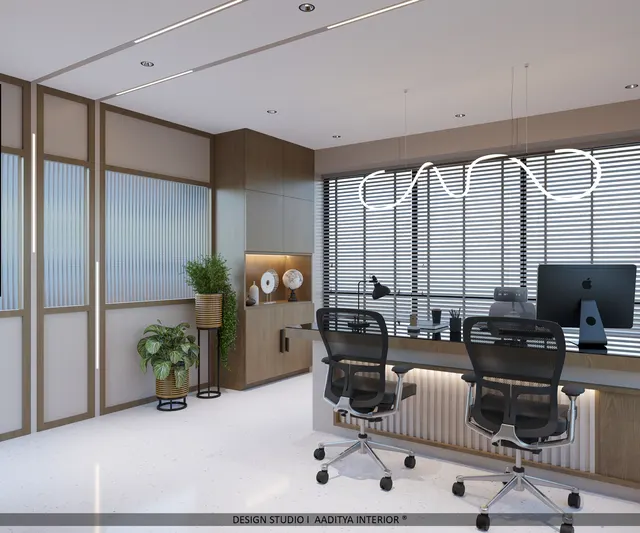
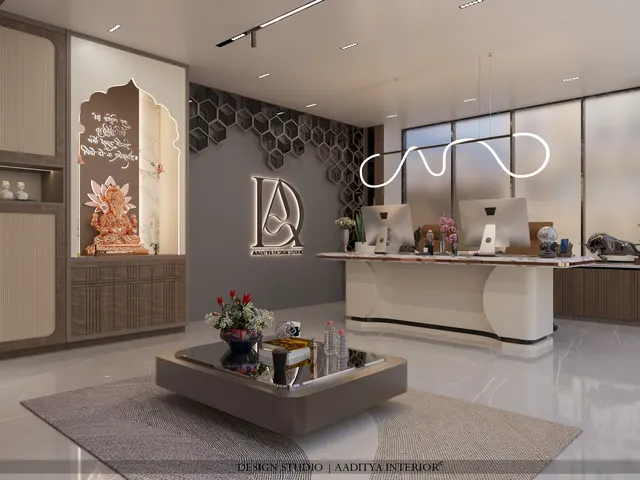
Surat runs on retail. From the textile markets of Ring Road and the diamond offices of Varachha to the furniture strips of Katargam and the electronics showrooms of Adajan, the city opens new shops faster than almost any tier-2 centre in India. Yet the first serious question every owner asks — how much will the fit-out cost — is also the one most often answered badly. A friend's contractor quotes a round figure, a neighbouring shop's rate is copied without checking its scope, and the budget is fixed before anyone has decided what the shop actually needs to do. The result is a fit-out that overspends on a flashy facade and underspends on the lighting and cooling that quietly decide whether customers stay.
A shop or showroom fit-out is not one cost; it is a stack of about eight trades that run in sequence, each with its own rate, and the total swings widely depending on how the shop is specified. The same 500 sq ft can be finished honestly for six lakh or luxuriously for eighteen, and both can be the right answer for different businesses. A high-footfall mobile shop lives or dies on bright, even light and fast billing; a jewellery showroom needs security, controlled lighting and a calm, premium feel; a textile showroom needs vast shelving and a cool interior for customers who browse for an hour. The cost follows the brief, not the other way round.
This article breaks the fit-out into its real parts. It gives the per-square-foot bands used in Surat in indicative October 2026 terms, a trade-by-trade split of where the money actually goes, a comparison across shop types, a realistic timeline, and a set of rules for cutting cost without making a shop look cheap. The figures are ranges for local verification, not quotations; a measured site, a drawing set and two or three competitive quotes remain the only way to fix a real budget.
What a shop fit-out actually covers
Fit-out is the work that turns a bare shell — four walls, a shutter, a rough floor and a single power point — into a working shop. It is distinct from the base building, which the developer hands over, and from the stock and the point-of-sale systems, which the business adds later. A clear scope is the single biggest cost-control tool an owner has, because an unclear one invites both padded quotes and expensive mid-project additions. The eight heads below appear in almost every retail fit-out, and the balance between them, more than the grand total, decides whether a shop works.
The eight heads are: civil and partitions (breaking, plastering, blockwork, waterproofing); flooring; false ceiling; electrical, data and lighting; air-conditioning and ventilation; joinery and display (shelving, counters, back-walls, cash desk); facade, shutter and signage; and furniture, decor and final finishes. A ninth head, often forgotten, is preliminaries and statutory — scaffolding, debris removal, a fire extinguisher and signage, a shop-and-establishment registration, and the GST that applies to the whole works contract. Leaving these out is the most common reason a fit-out finishes over budget.
How Surat's shopfronts got here: a short history
Retail interiors in Surat have changed faster in twenty years than in the previous hundred. The traditional shop was a simple gala — a rented bay in a market building with a shutter, open shelving to the ceiling, a raised gaddi where the owner sat, and a single tube light. Stock was the display; there was no fit-out to speak of. As the textile and diamond trades grew and air-conditioned malls arrived in the 2000s, expectations shifted. Customers who had seen branded showrooms wanted glass, bright even light and a cool interior, and standalone shops began to copy the mall look to compete.
The present-day Surat fit-out is a hybrid. It borrows the glass frontage, spot-lit displays and false ceilings of national retail chains, but delivers them through local contractors, local material markets and local labour rates, which keeps costs well below metro figures. The next shift, already visible in newer showrooms, is towards modular and reusable interiors — demountable display systems, plug-in lighting tracks and loose rather than built-in furniture — so a shop can be refreshed or relocated without demolishing everything. For an owner this history matters because it explains the price spread: the cheapest fit-outs still follow the old gala logic, while the dearest chase a national-brand finish.
The per-square-foot bands for Surat
Fit-out in Surat is quoted per square foot of carpet area, and the rate sorts into three grades. The grade is a scope definition, not a verdict on quality: a well-executed basic shop can out-perform a careless premium one. Basic covers a clean, functional interior — tiled or treated floor, plain false ceiling, adequate lighting, open or simple display, a split air-conditioner or two. Mid adds better flooring, designed lighting, a proper facade, custom display joinery and ducted or multiple units. Premium means feature facades, imported or branded finishes, integrated lighting and security, and furniture to match. The bands below are indicative October 2026 ranges for local verification.
| Grade | Indicative cost (₹/sq ft carpet) | What it buys | Typical shop |
|---|---|---|---|
| Basic / functional | ₹900–1,400 | Treated floor, plain ceiling, tube-and-panel lighting, open shelving, 1–2 split ACs, simple signage | Kirana, mobile accessories, stationery, hardware, small garment shop |
| Mid / designed | ₹1,400–2,200 | Vitrified floor, designed false ceiling, track and spot lighting, custom display joinery, glass facade, ducted or several ACs | Garment showroom, footwear, electronics, optical, salon |
| Premium / brand-grade | ₹2,200–3,500+ | Feature flooring and facade, layered and accent lighting, premium joinery with laminate-acrylic-veneer mix, security, loose designer furniture | Jewellery, premium apparel, furniture studio, flagship electronics |
| Shell upgrade only | ₹350–650 | Flooring, basic ceiling, paint and one circuit over an already-usable shell | Temporary outlet, pop-up, godown counter |
Two caveats keep these numbers honest. First, small shops cost more per square foot than large ones, because fixed items — the counter, the toilet, the facade, the electrical panel — are spread over fewer feet; a 250 sq ft shop can easily sit above the band while a 2,000 sq ft showroom sits below it. Second, the rate excludes stock, billing hardware, CCTV beyond basics, and the security deposit and rent that a leased space demands up front. A realistic project budget adds fifteen to twenty-five per cent to the bare fit-out rate for these.
Where the money actually goes
Owners picture the facade as the big spend, but on most Surat fit-outs the facade is only the eighth or ninth largest head. Joinery and display, electrical and lighting, and air-conditioning together usually take more than half the budget. The chart below shows a typical split for a mid-grade showroom; the exact proportions shift with shop type, but the shape is remarkably consistent. Understanding this shape is the key to cutting cost intelligently — trimming a head that is already small saves little, while a ten per cent saving on joinery or lighting is real money.
The trade-by-trade table below turns the chart into money for a mid-grade showroom of 600 sq ft at an all-in rate near ₹1,800 per sq ft — about ₹10.8 lakh of fit-out before preliminaries and GST. The rates per square foot are indicative October 2026 ranges; the shares are typical. Reading a quotation against this split quickly exposes a padded head or a missing one.
| Trade head | Typical share | Indicative rate (₹/sq ft) | What drives the cost up |
|---|---|---|---|
| Joinery and display | 16–20% | ₹350–800 of the all-in rate | Veneer and acrylic over laminate, curved or backlit units |
| Electrical and lighting | 18–22% | ₹250–550 | Track and spot fittings, dimming, feature pendants, heavy load |
| Civil and partitions | 12–16% | ₹150–350 | Breaking and rebuilding, waterproofing, mezzanine, toilet |
| HVAC and cooling | 10–14% | ₹120–350 | Ducted over split units, fresh-air, glass-facade heat load |
| Flooring | 8–12% | ₹120–300 | Large-format tiles, imported stone, raised or feature floor |
| False ceiling | 6–10% | ₹80–200 | Cove and designer gypsum over plain, acoustic tiles |
| Facade, shutter, signage | 8–12% | ₹150–400 | ACP and glass, backlit letters, rolling-grille upgrade |
| Furniture and decor | 6–10% | ₹100–300 | Loose designer seating, mirrors, planting, graphics |
How shop type changes the number
No two retail categories spend the same way, because each sells differently. A jewellery showroom spends on secure display, carefully controlled lighting that flatters metal and stone, a safe and strong-room, and a calm premium interior; its cost per square foot is the highest in retail. A textile or saree showroom spends on metres of shelving and pull-out display, strong even lighting so colours read true, comfortable seating and cooling for long browsing. An electronics or mobile shop spends on bright light, lockable glass counters and power for live demonstrations. A food or quick-service outlet spends more than any other on services — kitchen exhaust, drainage, gas, grease traps — and relatively little on decorative joinery. A furniture or interior studio spends on the floor and the lighting that show the products, and keeps its own shell deliberately simple.
| Shop type | Typical grade | Indicative ₹/sq ft | Cost concentrates in | Easy to overspend on |
|---|---|---|---|---|
| Jewellery / bullion | Premium | ₹2,200–3,500+ | Security, display lighting, safe, premium finishes | Imported stone, excessive gold-finish metal |
| Textile / saree / garment | Mid–premium | ₹1,400–2,500 | Shelving, pull-out display, seating, cooling | Over-elaborate ceiling, decorative facade |
| Electronics / mobile | Mid | ₹1,200–2,000 | Lighting, lockable counters, demo power, branding | Branded fixtures the OEM later supplies free |
| Footwear / optical / accessories | Mid | ₹1,300–2,100 | Wall display, mirrors, spot lighting | Marble floor where tile would do |
| Food / QSR / bakery | Mid–premium | ₹1,600–2,800 | Kitchen services, exhaust, drainage, seating | Front decor while the kitchen is under-built |
| Furniture / interior studio | Mid | ₹1,200–1,900 | Flooring, lighting, flexible display | Finishing the shell more than the products |
How long a fit-out takes
Time is money in a leased shop, because rent runs from the day the unit is handed over, not the day it opens. A realistic Surat fit-out for a mid-grade showroom of 500–800 sq ft runs about six to nine weeks from approved drawings to handover, assuming payments and decisions are not the bottleneck — which, in practice, they usually are. The timeline below is typical; small basic shops can finish in three to four weeks, while premium jewellery or food outlets with heavy services run to twelve weeks or more. Overlapping trades sensibly, not rushing any single one, is what keeps both the schedule and the quality intact.
A worked plan: a 450 sq ft showroom
To see the numbers in one place, consider a 450 sq ft standalone garment showroom finished to mid grade. The plan below dimensions the zones a small showroom needs — an entry and display front, a browsing floor with wall and island display, a trial room, a billing counter and a small store with a toilet. At a blended rate of about ₹1,800 per sq ft, the bare fit-out lands near ₹8.1 lakh; preliminaries, statutory charges and GST take the project to roughly ₹9.5–10 lakh. Aaditya Interior plans shops this way — zones and flow first, then the finish — so the budget follows a layout that works rather than a layout chasing a budget.
| Line item | Quantity basis | Indicative amount (₹) | Note |
|---|---|---|---|
| Civil, partitions, waterproofing | 450 sq ft | ₹1,00,000–1,40,000 | Trial room, store wall, toilet repair |
| Flooring (vitrified) | 450 sq ft | ₹60,000–1,00,000 | Large-format tile, skirting |
| False ceiling and paint | 450 sq ft | ₹70,000–1,10,000 | Gypsum with cove, emulsion walls |
| Electrical, lighting, data | whole shop | ₹1,60,000–2,40,000 | Track, spots, DB, points, CCTV basics |
| Air-conditioning | 2–3 TR | ₹1,20,000–1,80,000 | Split or cassette units |
| Display joinery and counter | running ft | ₹1,80,000–2,60,000 | Wall units, island, billing desk, trial room |
| Facade, shutter, signage | 6 m front | ₹90,000–1,60,000 | Glass front, backlit sign, grille |
| Preliminaries, statutory, GST | on works | ₹1,30,000–1,90,000 | Scaffolding, debris, fire kit, registration, tax |
Where retail fit-out is heading
The direction of travel is modular and reusable. Demountable display systems, slot-channel wall panels, plug-in lighting tracks and loose rather than built-in furniture let a shop change its look for a season or move to a new unit without demolition, which lowers the long-run cost of being in retail even if the first fit-out costs a little more. Energy is the other shift: LED lighting is now standard, inverter air-conditioners are replacing fixed-speed units, and owners increasingly ask for the running cost, not just the capital cost, because electricity is a shop's largest monthly overhead after rent and staff. The smartest Surat fit-outs already budget for both — a slightly higher first cost that buys a lower bill and an easier refresh.
Rules for controlling fit-out cost
- Write a clear scope and freeze it before quoting — mid-project additions are the single biggest cause of overruns.
- Protect lighting, cooling and display; trim the facade and the ceiling first, because customers remember the experience, not the cornice.
- Get the landlord's shell scope in writing — a warm shell can save 15–25 per cent, a bare shell cannot.
- Take at least three like-for-like quotes against the same drawing and bill of quantities, not against a verbal brief.
- Order long-lead items (facade glass, stone, display fittings, signage) in week zero to protect the opening date.
- Budget preliminaries, statutory charges and GST as a real head of 15–25 per cent, not as an afterthought.
- Choose finishes by where hands and feet actually touch — premium at the counter and entrance, standard on high walls and back store.
- Ask every quote for the running cost: LED loads and inverter AC pay back the extra capital within two to three years.
Frequently asked questions
How much does it cost to set up a shop in Surat?
For the interior fit-out alone, budget about ₹900–1,400 per sq ft for a basic shop, ₹1,400–2,200 for a mid-grade showroom and ₹2,200–3,500 or more for a premium one, in indicative October 2026 terms. On top of the fit-out, allow for the rent deposit, stock, billing hardware and the statutory registrations. A typical 500 sq ft mid-grade showroom lands around ₹9–12 lakh for the fit-out before stock.
Is a showroom more expensive than a shop?
Usually yes, because showroom is shorthand for a higher-finish retail space — designed lighting, custom display, a feature facade and better cooling — while shop can mean a simple functional outlet. The difference is one of grade, not of category; the same floor area can be finished as either. Expect a showroom to sit in the mid-to-premium bands and a basic shop in the lower one.
What is the cheapest way to fit out a shop without it looking cheap?
Spend on light and keep everything else simple. Bright, even, well-aimed lighting makes plain finishes look deliberate, while poor lighting makes expensive finishes look dull. Use good laminate rather than veneer, large plain tiles rather than patterned stone, and a clean painted facade with one strong backlit sign rather than an elaborate cladding. Put the quality where customers stand — the entrance, the counter and the main display.
Does the fit-out cost include GST?
Treat GST as separate unless a quotation states it is inclusive. A fit-out is a works contract and attracts GST on the whole value, so a figure quoted without tax understates the real outlay. Always confirm whether a per-square-foot rate is before or after tax, and keep GST in the project budget as part of the preliminaries-and-statutory head.
How long will my shop be closed for the fit-out?
For a new unit there is no closure — the shop opens when the fit-out finishes, typically three to four weeks for a small basic shop and six to nine weeks for a mid-grade showroom. For refitting a running shop, phase the work or do it in a short planned shutdown; a straightforward refresh of lighting, paint and display can often be done in one to two weeks of focused work.
Sources & standards
- Bureau of Indian Standards — National Building Code of India 2016, Part 4 (Fire and Life Safety) and Part 8 (Building Services) for retail premises
- Bureau of Indian Standards — IS 3646 (interior illumination) and SP 72, lighting levels for display and retail areas
- Energy Conservation Building Code (ECBC), Bureau of Energy Efficiency — lighting power and air-conditioning guidance for commercial buildings
- Gujarat Comprehensive General Development Control Regulations (CGDCR) — commercial use, shop-and-establishment and signage provisions
- Neufert, Architects' Data — retail and shop planning dimensions, counter and circulation clearances
- Time-Saver Standards for Building Types — store and showroom planning
- Price ranges: indicative October 2026 estimates — confirm locally before budgeting