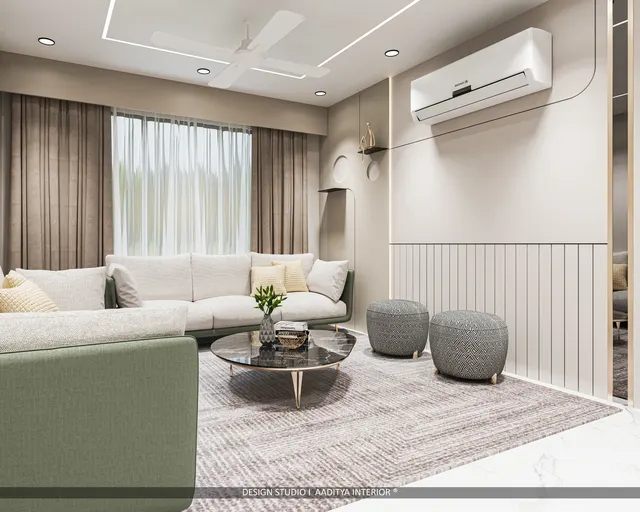
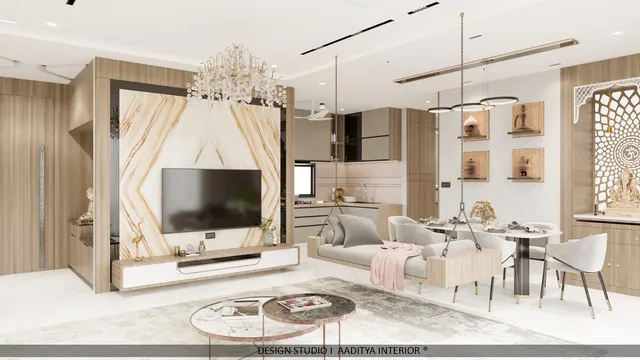
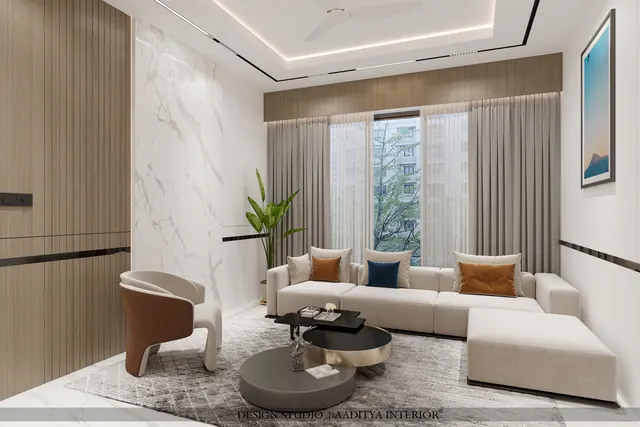
Jaipur is no longer only the walled Pink City that visitors photograph. The city has spread in every direction — south along Tonk Road and Jagatpura, south-west into Mansarovar and along Ajmer Road, west into Vaishali Nagar, north towards Sikar Road and Jhotwara — and new towers, gated villa schemes and independent houses keep appearing on its edges. Older colonies such as C-Scheme, Malviya Nagar, Bani Park and Raja Park are being renovated house by house. Almost every one of these homes needs interiors, and the first question every family asks is how much it will cost in Jaipur, and whether the quote in hand is fair.
Quotes vary as widely in Jaipur as in any Indian city. One firm quotes ₹8 lakh for a 2BHK, another ₹20 lakh, and a third gives a per-square-foot rate without saying which area it is applied to or what it includes. The confusion clears once three things are fixed: the area (carpet, not super built-up), the scope (what is and is not included) and the specification (board, shutter finish, hardware and ceiling design). With those pinned down, Jaipur's costs follow the same bands this blog uses for its other cost guides — and on like-for-like specifications they sit close to Vadodara and at or slightly below Ahmedabad and Surat. The differences come from local labour, transport and overheads, not from materials, which are priced on national markets.
This guide gives the 2026 per-square-foot bands, budgets for 1BHK to 4BHK flats and bungalows, a full line-item breakdown of a mid-range 2BHK that adds up, room-by-room costs on a plan, designer fee models, the costs that usually sit outside a quote, a realistic timeline and payment schedule, and the Jaipur-specific factors — dry heat, dust, cold winter nights, hard water and easy access to stone — that change what is worth specifying. All figures are indicative October 2026 ranges and should be confirmed with written quotations.
The 2026 rates at a glance
Interior rates are quoted per square foot of carpet area — the usable floor inside the walls — and that is the only area a per-square-foot interior rate should be applied to. Flats in Jaipur are often marketed on super built-up area, which can be 30–40 per cent larger than the carpet area, so a rate applied to the wrong figure inflates the budget by the same proportion. Independent houses and villas are usually discussed on built-up area; for interiors, measure the carpet area room by room. The bands below match the Vadodara bands in this blog's Gujarat cost guides and sit at or slightly below Surat and Ahmedabad. Board, laminate, hardware, quartz, gypsum and paint cost much the same across western and northern India, so any saving in Jaipur comes mostly from labour, local transport and smaller firm overheads; on a premium specification with imported finishes, the difference largely disappears.
| Home | Carpet area (typical) | Basic ₹750–1,100 / sq ft | Mid-range ₹1,150–1,800 / sq ft | Premium ₹2,000–3,300+ / sq ft |
|---|---|---|---|---|
| 1BHK | ≈ 500 sq ft | ₹3.8–5.3 lakh | ₹6–8.5 lakh | ₹10.5–16 lakh |
| 2BHK | ≈ 1,000 sq ft | ₹7.5–10.5 lakh | ₹12–17 lakh | ₹21–33 lakh+ |
| 3BHK | ≈ 1,250 sq ft | ₹9.5–13 lakh | ₹15–21.5 lakh | ₹26–40 lakh |
| 4BHK | ≈ 2,000 sq ft | ₹15–20.5 lakh | ₹24–34 lakh | ₹42–65 lakh |
| Bungalow or villa, incl. loose furniture | ≈ 3,000 sq ft | ₹23–32 lakh | ₹35–53 lakh | ₹60–98 lakh |
The flat budgets cover fitted furniture, ceilings, paint, bathroom fittings, electrical changes, lighting and soft furnishings at the stated level. They exclude loose furniture such as the sofa and dining set, appliances, GST unless stated, and design fees where design is charged separately. The bungalow row follows this blog's bungalow guides and includes a loose-furniture allowance, because in a bungalow the formal living, family lounge and dining furniture is a large, unavoidable part of the budget; it also includes the staircase, double-height walls and extra bathrooms that make bungalows 10–25 per cent dearer per square foot than flats of the same specification. Jaipur has a large stock of independent houses and villas, so this row is more relevant here than in cities dominated by towers.
Jaipur, Vadodara, Ahmedabad and Surat compared
| Home (carpet area) | Jaipur mid-range | Vadodara mid-range | Ahmedabad mid-range | Surat mid-range |
|---|---|---|---|---|
| 1BHK (≈ 500 sq ft) | ₹6–8.5 lakh | ₹6–8.5 lakh | Applied to ≈ 600 sq ft in that guide | ₹6.25–9 lakh |
| 2BHK (≈ 1,000 sq ft) | ₹12–17 lakh | ₹12–17 lakh | ₹12–17 lakh typical (₹12–20 lakh band) | ₹13–18 lakh |
| 3BHK (≈ 1,250 sq ft) | ₹15–21.5 lakh | ₹15–21.5 lakh | ₹15.5–22.5 lakh | ₹15.5–22.5 lakh |
| 4BHK (≈ 2,000 sq ft) | ₹24–34 lakh | ₹24–34 lakh | ₹24–40 lakh band | ₹25–36 lakh |
| Bungalow (≈ 3,000 sq ft, incl. loose furniture) | ₹35–53 lakh | ₹35–53 lakh | Not directly comparable — that guide excludes loose furniture | ₹36–56 lakh |
The comparison makes one point clearly: the city changes a budget by only a few per cent, while specification and scope change it by a factor of two or three. A Jaipur family with a premium specification will pay far more than a Surat family with a mid-range one. When comparing quotes from local firms with those from firms in Delhi NCR, Ahmedabad or Surat that work in Jaipur, compare the specification line by line rather than the city — and ask how travel, supervision and transport of factory-made furniture are charged, because those are the costs that actually change with distance.
How Jaipur's interiors got here
Jaipur was founded in 1727 by Maharaja Sawai Jai Singh II as a planned city, laid out on a grid of large blocks with broad bazaar streets, and its planning is usually credited to the architect Vidyadhar Bhattacharya. The walled city's buildings were finished in a terracotta-pink wash — the colour that gave the Pink City its name and that the city still maintains on its bazaar facades — and the Walled City of Jaipur was inscribed as a UNESCO World Heritage Site in 2019. Its havelis, the City Palace and the Hawa Mahal built in 1799 show the interior vocabulary the city is known for: lime plaster polished to a sheen (araish), painted walls and ceilings, mirror work, carved stone jaalis and deep, shaded courtyards that kept rooms cool in a hot, dry climate.
That craft base is still alive and still affordable compared with most Indian cities. Blue pottery, hand block printing from Sanganer and Bagru, carved stone, brass and handmade rugs are made in and around the city, and the marble and stone markets of Rajasthan — Kishangarh is one of India's largest stone trading hubs — are a short drive away. The modern interior market followed the same path as the rest of India: site carpenters building furniture in plywood and veneer gave way to designers producing drawings and 3D views, and then to factory-made modular kitchens and wardrobes. Today a typical Jaipur home mixes the two — modular furniture and gypsum ceilings for function, and a block-printed upholstery, a carved stone jaali or a blue-pottery basin for character.
A mid-range 2BHK in Jaipur, line by line
The 2BHK of about 1,000 sq ft carpet area is the commonest new home in the city's growing southern and western suburbs, so it is the clearest example of how a budget builds up. The table below is a complete mid-range specification: BWR plywood or HDHMR carcasses, laminate or membrane shutters, soft-close hardware from an established brand, a quartz or granite counter, gypsum ceilings with a cove in the living room, premium emulsion and mid-range bathroom fittings. Each line shows its rate basis so it can be checked against any quotation.
| Line item | Quantity basis | Mid-range (₹ lakh) | Rate basis (indicative Oct 2026) |
|---|---|---|---|
| Modular kitchen, L-shape (cabinetry) | ≈ 10–12 running ft base + wall units | 2.2–2.9 | L-shape ₹1.5–3 lakh; ≈ ₹1,340–1,800 per sq ft of cabinetry |
| Kitchen counter, quartz or granite | ≈ 40 sq ft | 0.15–0.25 | Quartz ₹250–600 per sq ft; local granite often at the lower end |
| Wardrobes, 2 bedrooms | ≈ 100 sq ft of elevation | 1.4–2.2 | ₹1,200–2,200 per sq ft, soft-close hardware |
| Beds with storage and side tables | 2 rooms | 1.55–2.0 | Indicative; upholstered headboards raise it |
| TV unit, crockery unit, foyer and shoe unit | 3–4 units | 0.95–1.5 | Indicative; panelled TV walls raise it |
| Pooja unit and utility storage | 2 units | 0.4–0.55 | Stone or CNC jaali and backlighting raise it |
| False ceiling | ≈ 600–700 sq ft | 0.5–0.75 | Gypsum ₹60–80; with cove ₹80–180 per sq ft |
| Painting, full home | ≈ 3,000–3,300 sq ft paintable | 0.6–0.95 | Premium emulsion ₹20–30 per sq ft |
| Bathroom fittings, 2 baths | 2 sets | 0.8–0.9 | ₹30,000–35,000 set + ≈ ₹8,000 labour each |
| Electrical changes and lighting | Points, panels, cove, fixtures | 0.95–1.25 | Cove LED ₹150–300 per running ft |
| Curtains, blinds, soft furnishings | ≈ 6–8 windows and doors | 0.8–1.2 | Indicative; block-print fabrics need lining against sun |
| Site work, minor civil and contingency | Protection, debris, plumbing tweaks, 10–15 % buffer | 1.7–2.55 | Provisional — measured on site |
| TOTAL | 1,000 sq ft carpet | 12.0–17.0 | ≈ ₹1,200–1,700 per sq ft |
The total lands inside the Jaipur mid-range band and matches the typical mid-range 2BHK in Vadodara and Ahmedabad, about ₹1 lakh below Surat's. Fitted furniture — kitchen, wardrobes, beds and the living-room units — is about half of the budget, and its cost depends far more on shutter finish and hardware than on the number of units. Changing every shutter from laminate (about ₹350–650 per sq ft finished) to acrylic (₹900–1,500) or PU (₹1,000–1,800) moves the home into the premium band without adding a single cupboard. The site-work and contingency line is deliberately generous, because a large share of Jaipur projects are independent houses and older flats, where opening a bathroom or rewiring a room almost always reveals work that was not visible at the estimate stage.
Fig. 2 places the same budget on a plan. The kitchen with its utility and counter is the most expensive room; the master bedroom costs more than the second bedroom mainly because of a larger wardrobe and a dressing unit; and the living room's fitted furniture — a TV unit, crockery unit, foyer and shoe unit and the pooja unit — is moderate, because the room's look depends on the ceiling, lighting and curtains, which sit in the shared lines. The room tags add up to about ₹6.65–9.4 lakh and the shared lines to about ₹5.35–7.6 lakh, giving the ₹12–17 lakh total. Totalling any quotation by room in the same way is a quick check: a full mid-range L-shaped kitchen priced well under ₹2 lakh, or a wardrobe priced far below ₹1,200 per sq ft of elevation, means something in the specification has quietly dropped.
Where the money goes
Across all three bands, the proportions of a full-home budget are remarkably stable. Fitted furniture takes roughly 40 per cent, finishes — ceilings, paint, wall treatments and bathroom fittings — about a quarter, electrical work and lighting about 12 per cent, soft furnishings about 10 per cent and labour and site work the rest. These are the same shares used in this blog's national per-square-foot guide and its other city guides. What moves a home between bands is not the share but the grade within each slice: the same 40 per cent buys laminate and standard hardware in one home and acrylic, PU and premium hardware systems in another. In Jaipur, the finishes slice is where local materials can stretch a budget — a stone-clad pooja wall or a polished lime-plaster feature wall can cost less here than in coastal cities, because the stone and the craftsmen are closer.
What designers charge in Jaipur
Design is charged in three common ways, and the same project can be priced very differently depending on which model is used. A per-square-foot fee multiplies an agreed rate by an agreed area; a lump sum fixes a fee for a defined scope; a percentage fee — commonly cited in the industry at about 8–12 per cent of project cost — rises and falls with what is spent. Many Jaipur firms, and firms from Delhi NCR and Gujarat that work in the city, also offer design-and-build, where design is included in a single price for design, materials and execution. None of these models is better in itself; what matters is that the deliverables, the number of site visits and revisions, and the area or cost basis are written down.
| Fee model | How it is calculated | Example on a 1,000 sq ft 2BHK | What to fix in writing |
|---|---|---|---|
| Per sq ft | Area × rate (e.g. ₹200–250 per sq ft, illustrative, design + supervision) | ≈ ₹2–2.5 lakh | Carpet or built-up area; supervision included or not |
| Lump sum | Fixed fee for a defined scope | Typically ₹1.5–3 lakh for comparable scope | Exact deliverables and revision rounds |
| Percentage | ≈ 8–12 % of project cost (industry convention) | ≈ ₹1.2–2 lakh on a ₹15 lakh project | What counts as project cost |
| Design-and-build | Design included in the execution price | Not shown separately | Line-item specification, not just a total |
| Design-only, client executes | Per sq ft or lump sum, no supervision | Lower fee; more client time | Drawing set, site visits, change policy |
On a 1,000 sq ft project the three main models tend to converge around ₹1.5–3 lakh for comparable scope. A much lower fee usually means fewer drawings, fewer site visits, or a design that is mostly a 3D image with little detailing; a much higher one should buy more — full working drawings, more supervision, custom furniture, craft coordination with stone carvers or block printers, or a well-known studio's time. For firms based in another city, ask how often a designer or supervisor will actually visit the site, and whether travel and stay are included or billed at actuals.
Costs outside the quote
Most budget surprises in Jaipur homes come from items that are not in the interior quote at all, or appear only as provisional sums. Listing them at the start keeps the budget honest. The allowances below are the same indicative ranges used in this blog's other cost guides; for a 2BHK flat they sit at the lower end, and for independent houses and renovations of older homes at the upper end.
| Item | Usual treatment in a quote | Indicative allowance (Oct 2026) | How to control it |
|---|---|---|---|
| Loose furniture (sofa, dining, chairs, rugs) | Excluded or a separate list | ₹1.5 / ₹2.5–3.5 / ₹5 lakh+ (basic / mid / premium, 3BHK) | Buy in phases; fitted storage first |
| Appliances | Excluded | Retail prices | Fix sizes before the kitchen is drawn |
| GST | Added on the invoice | Commonly 18 % on interior contracts and most materials | Ask whether every rate includes GST |
| Design fee | Separate unless design-and-build | Per sq ft, lump sum or ≈ 8–12 % | Deliverables and visits in writing |
| Electrical upgrades (rewiring older homes) | Often provisional | ₹30,000–70,000 | Load calculation before wiring starts |
| Plumbing changes | Per point | ₹15,000–40,000 | Freeze bathroom layouts early |
| Civil repairs and changes | Provisional sum | ₹20,000–45,000 per room opened | Measure after opening, at agreed rates |
| Society deposits, debris, permissions | Client-paid | ₹10,000–30,000 | Get the society's rules and deposit in writing |
Jaipur factors that change the specification
Jaipur's climate is hot and semi-arid. Summers are long, dry and very hot, with dust storms in the pre-monsoon months; the monsoon is short; and winter nights are distinctly cold compared with Gujarat or Mumbai. That pattern changes priorities more than it changes costs. Very dry air for most of the year followed by a humid monsoon makes solid wood and poorly balanced boards move, so balanced laminates on both faces and proper edge banding matter. Dust finds every gap, so shutters with tight reveals, brush or rubber seals on sliding windows, and closed rather than open shelving near windows reduce cleaning. West-facing rooms and top-floor flats heat strongly through walls and roof slabs. Groundwater in many parts of the city is hard, which leaves scale on taps, shower glass and kettle-white stains on dark sanitaryware.
| Factor | What it affects | Specification response | Cost effect |
|---|---|---|---|
| Dry heat and strong west sun | Comfort, AC load, fading of fabrics and veneers | Blackout-plus-sheer curtains, light finishes, colourfast laminate on sun-facing shutters | Small — mainly curtain choice |
| Top-floor and roof heat | Bedroom and living comfort | Insulation above the false ceiling; roof treatment with the society or owner | Moderate; best done during interiors |
| Dust storms and fine dust | Cleaning, sliding tracks, open shelves | Closed storage, seals on windows and wardrobe sliders, washable paint | Small — detailing decision |
| Very dry months then monsoon | Board movement, laminate bowing, solid wood cracks | BWR ply or HDHMR, balanced laminates, 2 mm edge banding, engineered rather than solid wood panels | Small — board grade decision |
| Hard water in many areas | Taps, shower glass, sanitaryware finish | Water softener or filter on the bathroom line, easy-clean glass coating, light-coloured sanitaryware | Moderate — softener is an extra line |
| Cold winter nights | Floors, bathrooms, bedroom comfort | Rugs, warmer floor finishes in bedrooms, geyser and heater points planned | Small — electrical planning |
| Local stone and craft | Feature walls, pooja, counters, flooring | Use local marble, granite, sandstone and craft where they suit the use | Often saves money on finishes |
The craft and stone point deserves emphasis. A carved sandstone jaali for a pooja unit, a marble floor inlay, an araish lime-plaster feature wall, block-printed curtains or a blue-pottery wash basin are features that cost a premium in most Indian cities but are close at hand in Jaipur. Used with restraint — one feature per room rather than everywhere — they give a home a sense of place for a modest share of the budget. Natural stone is heavy, so stone cladding and stone jaalis on upper floors need proper fixing into the structure, not just adhesive on plaster.
Timeline and payment schedule
A mid-range 2BHK or 3BHK with factory-made furniture typically takes 10 to 16 weeks from design sign-off to handover, plus two to four weeks of design before that. Renovations and independent houses take longer because demolition and services come first. The critical path runs through the factory: carcasses and shutters can only be cut after final site measurements are taken following civil and electrical changes. Ceilings, conduits and first paint coats happen on site in parallel. In Jaipur it is worth planning around the weather at both ends: very hot afternoons in May and June slow site work, dust storms make painting difficult, and in the short monsoon damp walls delay putty and paint.
| Stage | Typical duration | What must be decided before it starts |
|---|---|---|
| Concept and layout design | 1–2 weeks | Brief, budget band, furniture and appliance lists |
| Detailed design, 3D views, estimate | 1–2 weeks | Finishes, hardware brand, laminate codes, lighting plan, stone selections |
| Civil, plumbing and electrical changes | 2–3 weeks (longer in renovations) | Bathroom layouts, point positions, AC and heater locations |
| Site measurement and cutting lists | About 1 week | Final sizes; no more layout changes |
| Factory production | 4–6 weeks | Nothing — changes now cost money and time |
| False ceiling and first paint coats | 3–4 weeks, in parallel | Ceiling design, light positions |
| Installation of furniture | About 2 weeks | Appliances on site for cut-outs |
| Final paint, lights, curtains, cleaning, snags | 1–2 weeks | Curtain fabrics, final fixtures |
Where interior costs in Jaipur are heading
Three trends are shaping costs in the city. First, factory production continues to replace site carpentry, which narrows price differences between firms — and between Jaipur and other large cities — for the same specification, and shortens timelines, but makes late changes more expensive. Second, independent houses, villas and renovations remain a large share of work, and their budgets need bigger contingencies and more careful inspection before estimates than new flats do. Third, families are asking for climate-aware interiors: better curtains and blinds on west faces, insulation above top-floor ceilings, efficient LED lighting, dust-tight detailing and water treatment for bathrooms. These add modestly to the budget and reduce running costs and maintenance. Alongside them runs a revival of local craft in contemporary form — block-printed fabrics on modern sofas, slim stone jaalis in metal frames, lime plaster in place of texture paint — which Jaipur is unusually well placed to supply. Board, laminate and hardware prices move with national markets, so a quotation's validity period matters; most firms hold rates for 30–90 days.
Rules for budgeting interiors in Jaipur
- Apply every per-square-foot rate to carpet area only; convert any super built-up figure before comparing.
- Use the bands as a check: basic ₹750–1,100, mid-range ₹1,150–1,800, premium ₹2,000–3,300+ per sq ft of carpet area.
- Ask for a line-item quote with board grade, shutter finish, hardware brand and ceiling design for every unit.
- Total each quote by room and compare rooms, not just grand totals.
- Keep 10–15 % contingency — more for independent houses and renovations of older homes.
- List loose furniture, appliances, GST and design fees separately so they do not surprise you later.
- Detail for dust and dry air: closed storage, sealed sliders, balanced laminates and edge banding everywhere.
- Use local stone and craft for one or two features per room, fixed properly, rather than everywhere.
- Tie payments to milestones and hold the last 5–10 % until the snag list is closed.
Frequently asked questions
What is the interior design cost per sq ft in Jaipur?
In 2026, about ₹750–1,100 per sq ft of carpet area for basic interiors, ₹1,150–1,800 for mid-range and ₹2,000–3,300 or more for premium. Most complete homes with laminate finishes, branded soft-close hardware and gypsum ceilings land at about ₹1,200–1,700 per sq ft.
How much does a 2BHK interior cost in Jaipur?
For a 1,000 sq ft carpet-area 2BHK, roughly ₹7.5–10.5 lakh basic, ₹12–17 lakh mid-range and ₹21–33 lakh or more premium, excluding loose furniture, appliances, GST and separate design fees.
How much does a 3BHK interior cost in Jaipur?
For about 1,250 sq ft of carpet area: ₹9.5–13 lakh basic, ₹15–21.5 lakh mid-range and ₹26–40 lakh premium, before loose furniture and appliances.
Is interior work cheaper in Jaipur than in Delhi, Ahmedabad or Surat?
On the same specification, Jaipur is typically close to Vadodara and a few per cent below Ahmedabad and Surat, mainly because of labour and overheads; it is usually below Delhi NCR, as this blog's Delhi NCR guide shows. Board, laminates, hardware and quartz cost much the same everywhere, so specification and scope matter far more than the city. Local stone and craft can make some finishes cheaper in Jaipur.
How much do interior designers charge in Jaipur?
Fees are charged per square foot, as a lump sum or as a percentage of project cost (commonly about 8–12 per cent). On a 1,000 sq ft home the models typically converge around ₹1.5–3 lakh for comparable scope. Design-and-build firms often include design in the execution price.
How long does a full home interior take in Jaipur?
About 10–16 weeks from design sign-off for a 2BHK or 3BHK with factory-made furniture, plus two to four weeks of design. Independent houses and renovations take longer, and peak summer, dust-storm weeks and the monsoon can slow painting and deliveries.
Sources & standards
- Real Estate (Regulation and Development) Act, 2016 — definition of carpet area
- Bureau of Indian Standards — IS 303 (plywood), IS 710 (marine plywood), IS 2046 (decorative laminates) and IS 12406 (MDF), for specification grades
- Bureau of Indian Standards — National Building Code of India 2016, Part 8 (Building Services) for electrical and lighting planning
- Central Board of Indirect Taxes and Customs — GST rates applicable to works contracts and materials (confirm current rates)
- UNESCO World Heritage Centre — Jaipur City, Rajasthan (inscribed 2019): official description of the walled city's planning
- Jaipur Development Authority and Jaipur municipal bodies — local building and society information
- Aaditya Interior cost guides — Interior Design Cost in Vadodara, Ahmedabad and Delhi NCR (2026); 2BHK, 3BHK and Bungalow Interior Cost in Surat (2026); Hawa Mahal Jaipur: The Science of a Wind Palace
- Price ranges: indicative October 2026 estimates — confirm locally before budgeting