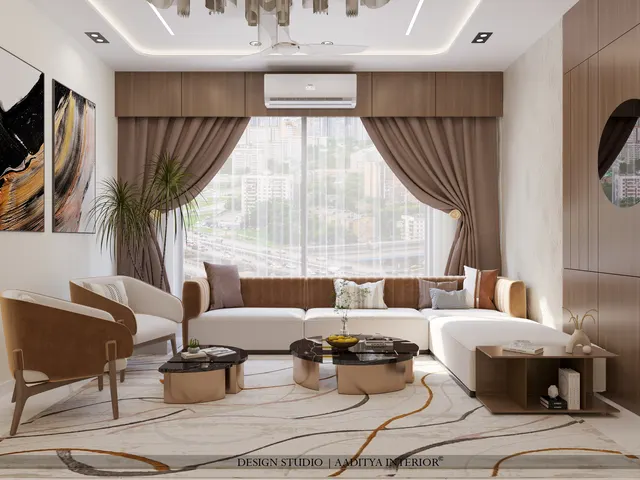
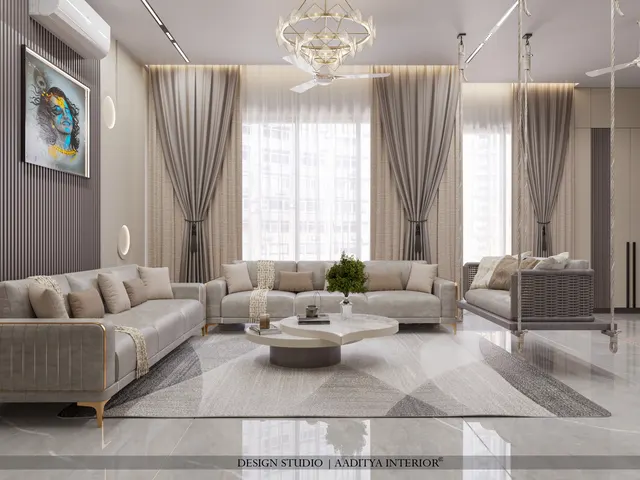
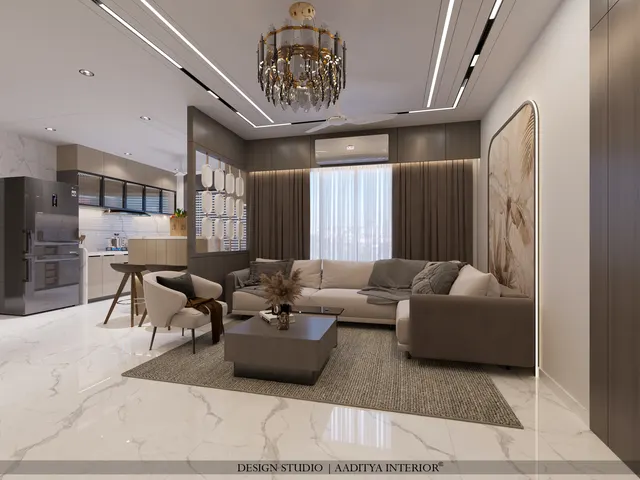
Walk into two flats with identical furniture and identical paint, and one can look like a showroom while the other looks like a waiting room. The difference is almost always the lighting. Expensive-looking homes are lit in layers — a soft general glow, focused task light where work happens, and small accents that pick out texture and art. Cheap-looking homes get one flat layer of light from a single source, usually at the wrong colour temperature, with no way to turn it down.
The frustrating part is that none of the seven mistakes below cost much to avoid. Most are decided at the false-ceiling and wiring stage, when adding one more light point or a dimmer costs a fraction of what a full rewire costs later. Indian homes add familiar traps: the single tube light inherited from the builder, a warm cove fighting a cool white panel in the same room, and bedrooms lit bright enough for surgery at 11 PM.
This guide names each mistake, explains exactly why the eye reads it as cheap, and gives the fix — with what it costs and the illuminance standards that say how much light each room actually needs.
The seven mistakes, each with its fix
| Mistake | Why it looks cheap | The fix |
|---|---|---|
| The single tube light | One flat, shadowless layer from the ceiling centre — the classic government-office look | Split into layers: ambient (cove or panels) plus task and accent points |
| Mixed colour temperatures | Warm cove (3000K) fighting cool panels (6500K) in one room reads as accidental | One colour temperature per room: 2700–3000K living/bedroom, 4000K kitchen/study |
| No dimmers | Full brightness at all hours — harsh at night, no mood control | Dimmers on bedroom and living-room circuits; warm-dim where budget allows |
| Over-lighting | Too many downlights on a grid — ceilings look like an airport runway | Fewer, better-placed points: IS 3646-1 expects only 200 lux (service) in dining rooms |
| No task lighting | Kitchen counters and study desks lit only by ceiling light — faces and work in shadow | Under-cabinet strips in kitchens; a dedicated desk or reading light in studies |
| Bare bulbs and visible sources | Naked bulbs and visible strip dots glare straight into the eye | Every source shielded: diffusers, profiles, shades, or hidden behind a lip |
| Ignoring the walls | Light only on the floor plane — walls stay dark and rooms feel smaller | Wash at least one wall: cove light, picture lights, or wall washers make rooms feel larger |
Mistake 1 — the single tube light
The builder hands over a flat with one tube-light point per room, and many homes never move past it. A single central source gives flat, shadowless light — the eye reads it as institutional because institutions are lit exactly this way. Faces look washed out, textures disappear, and the room has no depth.
The fix is layering, decided at wiring stage. Keep the central point but add a cove or perimeter strip for ambient glow, a reading or desk light for task, and one accent — a picture light, a wall washer, or a small spotlight on a textured wall. Three modest sources always beat one powerful one, and the total wattage is often lower.
Mistake 2 — mixed colour temperatures
This is the most common and most visible mistake in Indian homes: a warm 3000K cove fighting cool-white 6500K panels in the same living room, or a warm bedroom with a daylight-white tube in the attached bath. The eye cannot settle — nothing matches, wood looks grey under cool light and white walls look yellow under warm light, and the whole room feels accidental.
The rule is simple: one colour temperature per room, chosen for what the room does. Living rooms and bedrooms get warm white (2700–3000K, commonly cited) because it flatters skin, wood and textiles. Kitchens and studies get neutral 4000K because it keeps colours true for cooking and reading. Bathrooms match the bedroom they serve. When buying, check the Kelvin number printed on every box — never trust the word warm on the packaging alone.
Mistake 3 — no dimmers, and mistake 4 — over-lighting
A bedroom at full brightness at 11 PM is a design failure, not a brightness success. Without dimmers, every scene — dinner, conversation, winding down — gets the same harsh treatment. Dimmers on bedroom and living-room circuits are the cheapest luxury in interiors; warm-dim versions that shift warmer as they dim mimic sunset and flatter everything.
The opposite error is the downlight grid: sixteen downlights in a 12 × 12 ft room because the electrician spaced them by rule of thumb. IS 3646-1 (Part 1):1992, the Indian standard for interior illumination, sets the service illuminance for dining rooms at 200 lux and corridors at 100 lux — modest numbers. Bedrooms need even less for ambience. More points do not mean better light; they mean a runway ceiling and a higher electricity bill. Fewer, well-placed points with the right beam angle always win.
Mistakes 5, 6 and 7 — task light, bare sources, dark walls
Task lighting is the most functional of the three layers and the most skipped. A kitchen lit only from the ceiling puts the cook's own body between the light and the counter — IS 3646-1 expects 500 lux at food-preparation surfaces, which demands dedicated under-cabinet light, not a brighter ceiling. Study desks and reading chairs need their own focused source for the same reason: the ambient layer is for moving around, not for working.
Bare bulbs and visible strip dots glare straight into the eye, and the eye reads glare as cheapness instantly. Every source should be shielded — a diffuser on a panel, a shade on a pendant, a profile on a strip, or simply hidden behind a cove lip so only the effect is visible. And finally, wash at least one wall: light aimed at walls (cove uplight, picture lights, wall washers) makes rooms feel larger and more finished, because the eye judges a room by its brightest surfaces.
What the fixes cost
Almost every fix below is a wiring-stage or fixture decision, not a renovation. A dimmer on an existing circuit, one colour temperature standardised across a room's fixtures, a cove strip added where a tube light was — these are small line items against the cost of the false ceiling they sit in.
| Fix | Indicative cost (Oct 2026) |
|---|---|
| Add a cove LED strip (installed, with profile and driver) | ₹150–300 per running ft |
| Replace builder panels with warm-white panels | ₹400–1,200 per piece |
| Add a dining pendant at the right height | ₹2,000–15,000 per piece |
| Dimmer on bedroom / living circuits | Modest electrical item — decide at wiring stage |
| Standardise colour temperature across a room | Zero, if decided before buying fixtures |
The fixes, mistake by mistake
- Single tube light → three layers: keep the central point, add cove or perimeter ambient, a task light where work happens, one accent on art or texture.
- Mixed Kelvins → one colour temperature per room: 2700–3000K for living and bedrooms, 4000K for kitchen and study; check the Kelvin number on every box.
- No dimmers → dimmers on all bedroom and living-room lighting circuits, decided at wiring stage.
- Over-lighting → design to IS 3646-1 service levels (dining 200 lux, corridors 100 lux); fewer well-placed points beat a grid.
- No task light → under-cabinet strips for kitchen counters (500 lux zone), a dedicated reading or desk light for studies.
- Bare sources → shield everything: diffusers, shades, profiles, or hide the source behind a lip so only the effect shows.
- Dark walls → wash at least one wall per room; the eye judges a room by its brightest surfaces.
Sources & standards
- IS 3646 (Part 1):1992 — interior illumination ranges: corridors 50–100–150, dining 150–200–300, food preparation 300–500–750 lux, service illuminance = middle of range (Bureau of Indian Standards)
- NBC 2016, Part 3 — habitable-room ceiling height minimum 2.75 m (via NBC 2016 summary)
- Pendant mounting 700–860 mm above tabletop; table height 710–760 mm — commonly cited practice (lighting and furniture guides)
- CIBSE Code for Lighting — residential bathroom ~150 lux (cross-reference)
- IndiaMART / TradeIndia dealer listings, October 2026 — cove LED strip ₹150–300 per running ft; panels ₹400–1,200; pendants ₹2,000–15,000 (indicative)