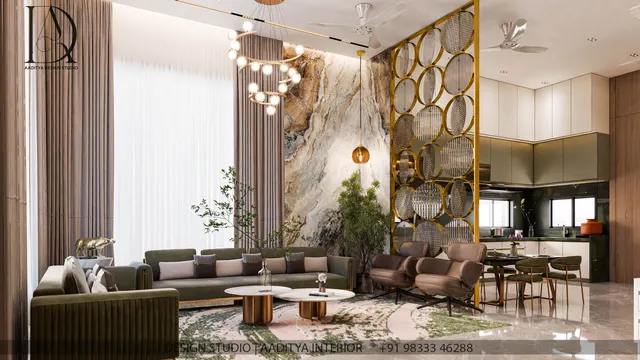
Some homes feel instantly relaxed: a white-painted cabinet with its edges worn to the wood, a faded rose-print cushion on a linen sofa, a small crystal chandelier over a scrubbed table, sunlight through a sheer curtain. That is shabby chic — a style that values comfort, softness and the beauty of things that have been used and loved over anything new and perfect. It is one of the most searched décor styles among Indian homeowners, especially for bedrooms, daughters' rooms and small apartments, because it is gentle, romantic and forgiving.
It is also one of the easiest styles to get wrong. Done carelessly, shabby chic looks either like a cheap themed set — everything pink, everything ruffled, everything fake-aged — or simply untidy. In Indian homes there are extra traps: heavy fabrics that collect dust in a dusty city, whitewashed boards that swell in the monsoon, distressed finishes on particle board that just look damaged, and imported ideas that ignore the antique and colonial furniture many Indian families already own.
This article explains where the style came from, what actually defines it, the palette and proportions that make it work, how to paint and distress furniture properly, wall, floor, fabric and lighting details with dimensions, room-by-room ideas, how to adapt it for Indian climate and maintenance, and a line-item cost for a living-room makeover.
Where shabby chic came from
The roots of shabby chic are in old European country houses. In English country homes, furnishings were often kept for generations: chintz curtains faded by the sun, painted cupboards wore at the edges, upholstery softened, and the result was admired as comfortable and unpretentious rather than shabby. In Sweden, the Gustavian style of the late eighteenth century produced elegant painted furniture in soft greys, whites and pale blues, much of it later worn by use. French provincial homes added painted armoires, carved chairs and toile fabrics. Shabby chic borrows from all three: painted wood, soft colours and an acceptance of wear.
The phrase itself appeared in British interiors writing in the 1980s to describe that worn, comfortable country-house look. It became a commercial style through the British-born designer Rachel Ashwell, who opened a store called Shabby Chic in California in 1989 selling slip-covered sofas, washed linens, faded florals and white-painted flea-market furniture. Through the 1990s and 2000s the look spread through magazines and mass-market furniture. In India, it found a natural partner in colonial-era and Anglo-Indian furniture — bentwood chairs, glass-fronted crockery cabinets, carved headboards, marble-topped tables — and in the lace curtains, painted almirahs and embroidered linens of older Goan, Parsi and Anglo-Indian homes.
What defines the style
Shabby chic is easy to recognise but easy to blur with its neighbours. Its essentials are few: a pale, light-filled shell; painted furniture with gentle, believable wear; faded florals and soft stripes on washed cotton and linen; one or two pieces of vintage glamour — a crystal chandelier, a gilt mirror, a carved headboard; and comfort everywhere. Everything should look as if it has been gathered over time rather than bought in a single visit. The table separates it from the styles it is most often confused with.
| Style | Palette | Furniture | Fabrics | Mood | Key difference from shabby chic |
|---|---|---|---|---|---|
| Shabby chic | White, cream, faded pastels (blush, mint, powder blue) | Painted and distressed, curvy, vintage | Washed cotton and linen, faded florals, ruffles in moderation | Soft, romantic, relaxed | — |
| French country | Warm creams, ochre, lavender, sage | Carved oak and walnut, natural or lightly painted | Toile, checks, linen | Rustic elegance | More natural wood and warmer earth tones |
| Vintage | Depends on the era | Genuine period pieces in original finish | Period prints | Collected, nostalgic | Not necessarily painted, pale or soft |
| Modern farmhouse | White, black, natural wood, greys | Simple, chunky, rustic | Plain linen, ticking stripes | Clean, practical | Straighter lines, black metal, far less ornament |
| English cottage | Stronger florals, greens, reds | Mixed wood, cosy upholstery | Chintz, patterned fabrics in quantity | Cosy, busy | More pattern and colour; less white |
A useful test: if the room looks pretty but nothing in it looks used, it is not yet shabby chic — it is simply pastel. If everything looks old and worn, it has tipped into neglect. The balance is a clean, fresh room in which a few pieces carry visible age.
The palette and how to proportion it
The base of shabby chic is white — but not a cold, blue-white. Warm whites, ivories, creams and very light greys form the walls, ceilings and most of the furniture. Over that sit faded pastels: blush pink, dusty rose, mint, duck-egg and powder blue, pale lavender and soft sage. Accents come from aged metals — antique brass, gilt, pewter, wrought iron painted cream — and from the natural colour of wood showing through worn paint. Strong, saturated colour is almost absent; even florals look as if they have been in the sun for a few summers.
| Role | Colours | Where it goes | Indian tip |
|---|---|---|---|
| Base (≈ 60 %) | Warm white, ivory, cream, pale grey | Walls, ceilings, large furniture, bed linen | Choose a washable matt or low-sheen emulsion; dust shows less on cream than on bright white |
| Secondary (≈ 30 %) | Blush, dusty rose, mint, duck-egg, powder blue, lavender | Upholstery, curtains, one feature wall, painted pieces | Two pastels per room is plenty |
| Accent (≈ 10 %) | Antique brass, gilt, pewter, cream-painted iron | Mirror frames, chandeliers, handles, lamp bases | Antique-finish brass is widely available in Indian hardware markets |
| Wood showing through | Teak, sheesham or pine tones under paint | Worn edges, tabletops, floors | Use real wood or veneered ply — distressed particle board looks damaged |
| Pattern | Faded florals, small checks, soft stripes, toile | Cushions, curtains, one wallpapered wall | Pastel block prints from Sanganer and Bagru suit the style well |
Painted and distressed furniture, done properly
Furniture is the heart of shabby chic, and the commonest mistake is distressing in the wrong places or on the wrong material. Real wear happens where hands, feet and objects touch: the edges of tabletops, the corners of drawers, around handles and knobs, the feet of chairs and cabinets, the front edge of shelves. Paint worn away from the middle of a door panel, or scratched evenly all over, looks fake. Worn edges reveal what is underneath, so distressing only works on solid wood or on veneered plywood or blockboard where a real timber layer shows through; on laminated particle board or MDF, sanding through the paint simply exposes a raw board edge.
A reliable process has six steps. Clean and lightly sand the piece to remove grease and gloss. Fill and repair any real damage. Apply a base coat in a colour you want to show at the worn edges — cream over wood, or a pastel under a white top coat. Apply one or two top coats; chalk-finish paints sold by speciality brands are popular because they need little preparation and sand easily, but a good matt furniture paint works as well. Once the paint has cured, sand back only the wear zones in Fig. 3 with 120–220 grit paper, varying the pressure so the wear looks natural. Finish with a furniture wax or a matt water-based clear coat, which protects the paint from Indian humidity, kitchen grease and frequent wiping.
Walls, ceilings and floors
Walls set the softness of the room. The classic shabby chic wall is painted panelling or moulding in white or cream — a dado of beaded boards or applied moulding boxes up to about 900–1050 mm, with plain painted wall above — or a single wall of faded floral or toile wallpaper. Limewash and soft texture finishes give a gently uneven surface that suits the style better than a glossy, perfectly smooth wall. Ceilings can carry a simple cornice and a ceiling rose for the chandelier, which this blog's French country guide prices with mouldings; deep coffered or heavily layered gypsum ceilings fight the relaxed mood.
| Element | Typical dimension | Material options | Indicative cost (Oct 2026) |
|---|---|---|---|
| Dado panelling or moulding boxes | 900–1050 mm high | Painted MDF or PU beading, beaded boards on ply | ₹150–400 per sq ft of wall |
| Chair rail / dado cap | 40–75 mm profile | PU, MDF or timber moulding | Included above or ₹150–300 per running ft |
| Picture rail | 300–400 mm below ceiling | PU or timber moulding | ₹150–300 per running ft |
| Cornice | 75–150 mm | POP, gypsum or PU | ₹150–300 per running ft |
| Skirting | 100–150 mm | Painted MDF, PU or timber | Usually in the moulding quote |
| Feature wallpaper (floral, toile) | One wall, ≈ 90 sq ft | Vinyl or non-woven paper | ₹60–250 per sq ft installed |
| Limewash or soft texture | Full room or one wall | Lime-based or textured paint | ₹40–150+ per sq ft |
| Premium emulsion, warm white | All other walls | Washable matt or low-sheen | ₹20–30 per sq ft |
Floors in the style are light and natural-looking: wide wood-look planks in pale or whitewashed tones, real timber where budgets allow, or vitrified tiles in matt creams. Patterned cement or encaustic-look tiles in faded colours suit kitchens, bathrooms and verandahs. Over hard floors, a faded rug — a flat-woven dhurrie in pastels, or a vintage-look printed rug — softens the room and is easy to wash or beat, which suits Indian dust better than deep-pile carpet.
Fabrics, lighting and accessories
Fabrics carry the style. Washed cotton, linen and cotton-linen blends in white, cream and pastels; faded florals, small checks and soft stripes; a little lace or broderie at the edges; quilted throws and bedspreads. Ruffles are part of the vocabulary, but a single ruffled edge on a pillow sham or a curtain valance is enough — ruffles everywhere turn a room into a costume. For Indian homes, the most important rule is washability. Loose slipcovers on sofas and chairs that come off and go into a washing machine, cotton curtains that can be washed every few months, and cushion covers rather than sewn-in cushions keep the look fresh despite dust and humidity. Mulmul and cotton voile make beautiful sheers; pastel block-printed cottons give an Indian accent that sits naturally with the style.
Lighting adds the touch of vintage glamour. A small crystal or glass-drop chandelier, or a wrought-iron one painted cream, over the dining table or in the bedroom; fabric-shaded table lamps with ceramic or turned-wood bases; and wall sconces with candle-style bulbs. Warm 2700–3000 K lamps suit the palette. Over a dining table, a chandelier usually hangs with its bottom about 750–900 mm above the tabletop; in a room people walk through, keep at least about 2100 mm clear below it. Accessories should be few and meaningful: an old gilt or painted mirror, ironstone or floral china in a glass-fronted cabinet, fresh or dried flowers in a pitcher, framed botanical prints, a birdcage or a basket — not every one of them in every room.
Room-by-room ideas
| Room | Anchor piece | Key sizes | Supporting elements | Avoid |
|---|---|---|---|---|
| Living room | Slip-covered sofa in white or pastel linen | Sofa seat 420–450 mm; coffee table 400–450 mm high | Painted console, faded rug, gilt mirror, glass-front cabinet | Matching furniture set; glossy laminates |
| Bedroom | Painted or upholstered curved headboard | Bed 1800 × 2000 (king) or 1500 × 2000 (queen); side tables 550–650 high | Wall lights, quilted bedspread, ruffled pillow sham, dado panelling | Heavy canopy fabric in a dusty city |
| Dining | Painted or scrubbed-top table with mismatched chairs | Table 750 mm high; 600 mm per seat | Small chandelier 750–900 above table, crockery cabinet | Glass top over a distressed table |
| Kitchen | Painted shaker-style shutters in cream or duck-egg | Standard 850–900 mm counter, 600 deep | Open shelf of china, brass knobs, patterned tiles | Distressed finish near the sink and hob |
| Girl's or kids' room | White-painted bed and study | Study desk 720–750 high | Blush and mint, bunting, washable rugs | Too much pink; fragile antiques |
| Balcony or verandah | Painted iron chairs and a small table | Bistro table ≈ 600 Ø | Pots of flowers, cotton cushions brought in when it rains | Untreated wood outdoors |
In Aaditya Interior's experience, the style works best in Indian homes as one strong idea per room rather than a complete theme across the house. A shabby chic bedroom next to a calmer modern living room, or a shabby chic dining corner in an otherwise neutral home, keeps the softness while letting the rest of the house serve everyday family life.
Adapting shabby chic to Indian climate and life
The style was born in cool, damp northern Europe and dry coastal California. Indian homes face heat, dust, monsoon humidity, termites, hard water and constant use, so the specification has to change even if the look does not.
| Indian condition | Risk to the look | Specification response |
|---|---|---|
| Dust in cities | Pale fabrics and ruffles turn grey; open shelves collect dust | Washable slipcovers, glass-fronted cabinets instead of open shelving, flat-woven rugs |
| Monsoon humidity | Painted boards swell, paint flakes, mould on fabrics | BWR/BWP ply or solid wood, sealed paint, good ventilation, dehumidifier in closed rooms |
| Termites | Old and reclaimed furniture brings infestation | Inspect and treat reclaimed pieces before they come home; anti-termite treatment for built-in work |
| Strong sun | Fabrics and wallpapers fade too fast and unevenly | Sheers plus lined curtains on west and south windows; UV-stable fabrics |
| Kitchen grease and frequent wiping | Distressed paint gets sticky and grimy | Matt water-based clear coat; no distressing near hob and sink |
| Children and pets | Fragile antiques and white upholstery | Slipcovers, sturdy painted pieces, save delicate finds for high shelves |
What a shabby chic living room costs
Shabby chic is one of the more affordable styles, because it rewards repainting and reusing what a family already owns. The example below is a makeover of a 12 × 15 ft living room in an existing home: walls repainted, one feature wall of panelling and one of wallpaper, existing furniture repainted and distressed, a few vintage or reclaimed pieces, slipcovers, curtains, lighting and soft furnishings. Wall prices follow this blog's wall-finish and French country guides; furniture refinishing, slipcovers and reclaimed pieces are new indicative ranges.
| Line item | Basis | Low (₹) | High (₹) |
|---|---|---|---|
| Premium emulsion, warm white | ≈ 450 sq ft × ₹20–30 | 9,000 | 13,500 |
| Dado moulding on one wall | ≈ 60 sq ft × ₹150–400 | 9,000 | 24,000 |
| Floral or toile wallpaper on one wall | ≈ 90 sq ft × ₹60–250 | 5,400 | 22,500 |
| Repaint and distress existing furniture | 3 pieces × ₹4,000–12,000 (new indicative range) | 12,000 | 36,000 |
| Vintage or reclaimed pieces (console, side tables, mirror) | Lump sum (new indicative range) | 25,000 | 80,000 |
| Sofa slipcovers or reupholstery in cotton-linen | Lump sum (new indicative range) | 15,000 | 45,000 |
| Curtains and sheers, 2 windows | Lined cotton plus mulmul sheers | 12,000 | 35,000 |
| Lighting — chandelier and 2 lamps | Pendants ₹2,000–15,000 each; chandelier more | 10,000 | 45,000 |
| Rug, cushions, throws and accessories | Flat-woven rug, covers, frames | 12,000 | 40,000 |
| TOTAL | 12 × 15 ft living room | 1,09,400 | 3,41,000 |
The total of roughly ₹1.1–3.4 lakh excludes a new sofa, flooring changes, electrical rewiring and GST. The widest ranges are in the vintage pieces and lighting, where genuine antiques and good crystal cost far more than reproductions; the narrowest are in paint, which is also where the style gets most of its effect. Prices are indicative October 2026 estimates and should be confirmed locally.
Where the style is heading
Shabby chic today is calmer than the ruffle-heavy look of the 1990s. Designers are mixing it with modern pieces — a distressed cabinet beside a clean-lined sofa, a crystal chandelier in an otherwise simple room — and using more natural textures such as linen, rattan, limewash and terracotta alongside the pastels. Sustainability suits the style naturally: it rewards restoring old furniture, buying second-hand and choosing washable natural fabrics. In India, the most interesting direction is the use of inherited and local pieces — a grandparent's teak almirah repainted in duck-egg, block-printed quilts, brass from local markets — which gives the look an authenticity that imported reproductions cannot.
Rules for shabby chic that does not look shabby
- Keep the shell light: about 60 % warm white and cream, 30 % pastel, 10 % aged metal.
- Use one or two pastels per room and keep florals within the same family.
- Distress only where hands and feet would wear the piece — edges, handles, feet — and only on wood or veneered ply.
- Mix in genuine old or reused pieces; a room of new fake-aged furniture looks like a showroom.
- Make every fabric washable: slipcovers, cotton curtains, removable cushion covers.
- Use glass-fronted cabinets instead of open shelves in dusty cities.
- Add one or two pieces of vintage glamour — a chandelier or gilt mirror — not ten.
- Seal painted furniture with wax or a matt clear coat, and keep distressed finishes away from sinks and hobs.
Frequently asked questions
What is shabby chic interior design?
It is a style that combines white and pastel colours, painted and gently worn furniture, faded floral fabrics and a few vintage pieces to create a soft, comfortable, lived-in look. Its roots are in English and European country houses, and it was popularised as a commercial style from the late 1980s.
Is shabby chic suitable for Indian homes?
Yes, with adaptations: washable fabrics and slipcovers, closed or glass-fronted storage against dust, moisture-resistant boards or solid wood, sealed paint finishes, and termite treatment for reclaimed furniture. It pairs naturally with inherited colonial and Anglo-Indian furniture.
How do I make furniture look shabby chic?
Clean and lightly sand the piece, apply a base coat, then one or two top coats of a matt or chalk-finish paint. After the paint cures, sand lightly at edges, corners, around handles and on the feet with 120–220 grit paper, then seal with wax or a matt clear coat. Avoid dry-sanding old paint that may contain lead.
What colours are used in shabby chic?
Warm whites, ivory and cream as the base, with faded pastels — blush, dusty rose, mint, duck-egg, powder blue and lavender — and accents of antique brass, gilt and pewter. Strong, saturated colours are rarely used.
What is the difference between shabby chic and French country?
French country uses more natural and carved wood, warmer earth tones such as ochre and lavender, and rustic fabrics like toile and checks. Shabby chic is paler and softer, with more painted and distressed furniture, washed whites and faded florals.
How much does a shabby chic bedroom or living room cost?
Indicatively in October 2026, a 12 × 15 ft living-room makeover using existing furniture costs about ₹1.1–3.4 lakh, covering paint, a panelled wall, wallpaper, furniture refinishing, a few vintage pieces, slipcovers, curtains, lighting and accessories. A bedroom of similar size costs in the same range, depending on the headboard and lighting.
Sources & standards
- Bureau of Indian Standards — IS 303 (plywood for general purposes) and IS 710 (marine plywood), for moisture-resistant boards
- Bureau of Indian Standards — IS 3646 (Part 1), interior illumination, for lighting levels
- Ministry of Environment, Forest and Climate Change — Regulation of Lead Contents in Household and Decorative Paints Rules, 2016; BIS IS 15489 (plastic emulsion paint)
- Neufert, Architects' Data — furniture, dining and bedroom dimensions
- Time-Saver Standards for Interior Design and Space Planning — mouldings, panelling and furniture sizes
- Aaditya Interior guides — French Country and Parisian Interior Design, and wall finish and feature wall guides (companion articles for finish rates)
- Price ranges: indicative October 2026 estimates — confirm locally before budgeting