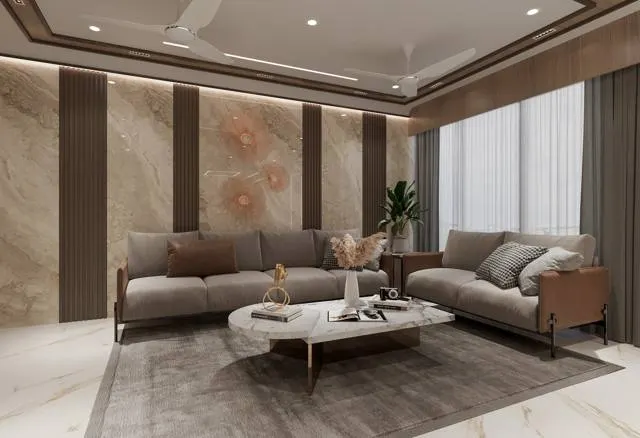
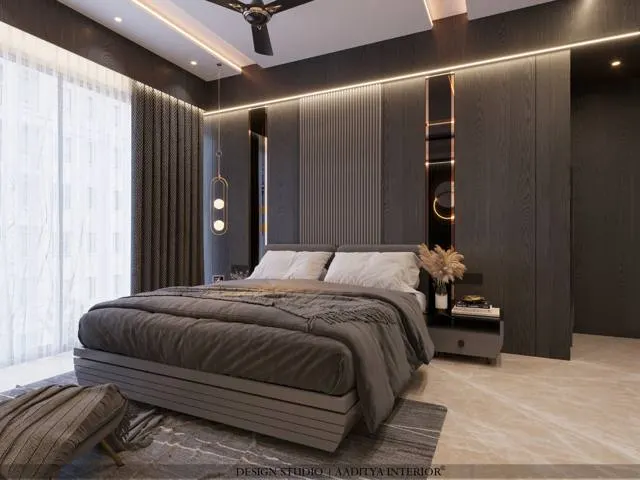
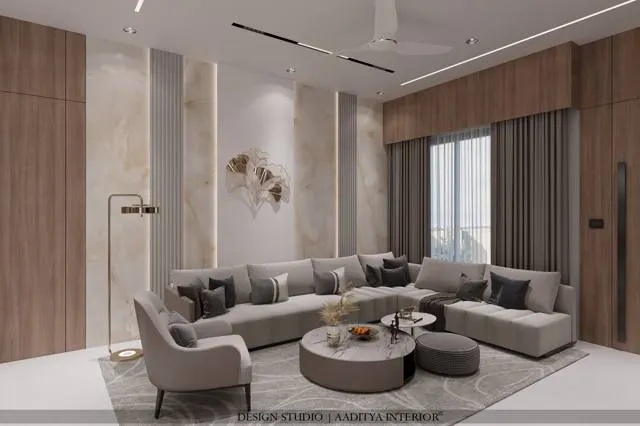
Wallpaper is one of the fastest ways to change a room. A single feature wall behind a bed, a sofa or a dining table can be transformed in a day, with no smell of paint and no dust from texture work. It is also one of the most misunderstood items in an interior quotation. Homeowners compare the price of one roll in a showroom with the price per square foot of paint and conclude that wallpaper is either surprisingly cheap or shockingly expensive — and both conclusions are usually wrong, because a roll is not a square foot, and the roll price is only part of the cost.
The real cost of a wallpapered wall depends on how many rolls the wall actually consumes, which in turn depends on the wall height, the roll length, the pattern repeat and the wastage at every cut. It also depends on the installer's labour, the condition of the wall underneath and whether the wall needs putty, primer or damp treatment first. A wall that looks like it needs two rolls on paper can need three or four in practice. And wallpaper on a damp wall, however expensive, will fail within months.
This article explains roll sizes, the main types of wallpaper sold in India and their indicative October 2026 prices per roll, how to calculate the number of rolls for any wall, what installation and preparation cost, and what a real feature wall or a full room costs at the end. The per-square-foot figures are kept consistent with the wallpaper costs used in this site's other guides.
A short history of wallpaper
Decorated paper on walls has a long history. Hand-painted papers were made in China centuries ago, and in Europe block-printed wallpapers became fashionable from the seventeenth and eighteenth centuries as a cheaper alternative to tapestries and painted panelling. Industrial printing in the nineteenth century made wallpaper affordable to ordinary households, and designers such as William Morris turned it into an art form with patterns that are still reproduced today.
In India, wallpaper went through its own cycle. Imported and locally printed papers were popular in many urban homes in the 1990s and 2000s, then fell out of favour as plastic emulsions, texture paints and wall panels improved and as poorly installed papers peeled in humid cities. Over the last decade it has returned strongly, driven by better products — breathable non-woven bases, scrubbable vinyl surfaces, and digitally printed murals that can be made to any wall size. Today wallpaper is a mainstream feature-wall option in Indian homes, hotels, cafés and offices.
Roll sizes: what one roll really covers
Most wallpaper sold in India follows the European standard roll: about 0.53 m wide and 10 m long (often 10.05 m), giving about 5.3 m² — the familiar "57 sq ft roll" quoted by many dealers. Some designer and commercial papers come in wide rolls of about 1.06 m by 10 m (about 10.6 m², roughly 114 sq ft), and some collections come in different lengths. Custom murals are printed to order for the exact wall and priced per square foot, often supplied in numbered panels.
The nominal coverage of a roll is never the area it will actually cover. Every drop — a vertical strip cut from the roll to run from ceiling to skirting — needs about 50 mm extra at the top and bottom for trimming, and patterned papers waste more because each drop must be aligned to the pattern of the drop beside it. The leftover piece at the end of a roll is often too short to use. In practice, a 57 sq ft roll commonly covers about 40–50 sq ft of wall, and less on tall walls.
Types of wallpaper and price per roll
Wallpaper in India is sold in a wide price range — from imported budget PVC rolls sold online to designer collections from international studios. The material of the base and the surface decides durability, washability and ease of installation; the brand and print decide most of the rest of the price. The ranges below are indicative October 2026 retail prices per standard roll of about 57 sq ft, excluding GST and installation; murals are per square foot of printed area.
| Type | Construction | Indicative price (Oct 2026) | Washability | Best for | Watch out for |
|---|---|---|---|---|---|
| Budget PVC / vinyl roll | Thin vinyl on paper base | ₹1,200–2,500 per roll | Wipeable | Rentals, short-term refreshes | Thin, shows wall defects; seams may lift |
| Paper (uncoated) | Printed paper | ₹2,000–5,000 per roll | Not washable | Low-touch walls, ceilings | Tears when wet; stains |
| Non-woven | Cellulose and polyester fibres; breathable | ₹2,500–8,000 per roll | Wipeable to washable | Most living rooms and bedrooms | Needs paste-the-wall method |
| Vinyl on non-woven | Vinyl surface on non-woven base | ₹3,000–8,000 per roll | Scrubbable | Children's rooms, dining, corridors | Less breathable — wall must be dry |
| Textile, grasscloth, silk-look | Natural fibres or fabric on paper base | ₹8,000–25,000+ per roll | Dust only | Luxury bedrooms, hotel suites | Visible seams by nature; stains |
| Fabric-backed commercial vinyl | Heavy vinyl on woven backing, often wide | Usually priced per metre or sq ft by project | Very scrubbable | Hotels, offices, hospitals | Specify fire classification |
| Custom digital mural | Printed to size on non-woven or vinyl | ≈ ₹80–200 per sq ft printed and installed | Depends on base | Feature walls, children's rooms, cafés | Image resolution; lead time |
How many rolls does a wall need?
The roll count is calculated in drops, not in square feet. The method below is the one experienced installers use, and it gives a reliable count for any wall. It works for standard 0.53 × 10 m rolls; for wide rolls, use the wider strip width and the same logic.
- Measure the wall width and divide by the roll width (0.53 m), then round up. This is the number of drops.
- Measure the wall height and add about 100 mm for trimming at top and bottom. This is the drop length.
- For patterned papers, round the drop length up to the next whole multiple of the pattern repeat printed on the label.
- Divide the roll length (about 10 m) by the drop length and round down. This is the number of drops per roll.
- Divide the number of drops by the drops per roll and round up. This is the number of rolls.
- Add one roll for a large job or a large pattern repeat, and buy every roll from the same batch number.
| Wall (width × height) | Drops (0.53 m) | Drops per standard roll | Rolls needed | Nominal roll area bought |
|---|---|---|---|---|
| 10 × 9 ft (3050 × 2750 mm) | 6 | 3 | 2 | 114 sq ft for 90 sq ft of wall |
| 12 × 9 ft (3660 × 2750 mm) | 7 | 3 | 3 | 171 sq ft for 108 sq ft |
| 12 × 10 ft (3660 × 3050 mm) | 7 | 3 | 3 | 171 sq ft for 120 sq ft |
| 14 × 10 ft (4270 × 3050 mm) | 9 | 3 | 3 | 171 sq ft for 140 sq ft |
| 16 × 10 ft (4880 × 3050 mm) | 10 | 3 | 4 | 228 sq ft for 160 sq ft |
| 12 × 11 ft double-height-style wall (3660 × 3350 mm) | 7 | 2 | 4 | 228 sq ft for 132 sq ft |
| Bedroom 12 × 14 ft, all four walls, 9 ft high, less door and window | ≈ 26 | 3 | 9–10 | ≈ 513–570 sq ft for ≈ 400 sq ft |
Two patterns stand out in the table. First, wall height matters more than width: as soon as the drop length exceeds about one third of the roll length (about 3.25–3.3 m including trim), each roll yields only two drops and the roll count jumps. Tall walls in bungalows and double-height living rooms are where wide rolls or custom murals often become cheaper per square foot. Second, small walls waste proportionally more — a feature wall typically buys 30–60 per cent more paper than its area, while a full room wastes less because offcuts can be used above doors and below windows.
Installation and wall preparation costs
Wallpaper installation in India is usually charged per roll for standard rolls and per square foot for murals and wide-width commercial wallcoverings. Indicative October 2026 labour is about ₹300–600 per standard roll for straightforward walls, with higher rates for tall walls requiring scaffolding, ceilings, many cut-outs, textile papers or small jobs where the installer's visit itself is the main cost. Many dealers quote supply and installation together, which is convenient but should be broken down so that rolls and labour can be compared between quotes.
Wall preparation is where cheap jobs fail. The wall must be dry, smooth, clean and sound. New plaster must be fully cured; damp patches must be traced and fixed first; old flaking paint must be scraped; cracks and dents must be filled and sanded; and the surface should be sealed with a suitable primer or sealer so the paste does not soak in unevenly and the paper can be removed later without tearing the wall. Where putty and primer are needed, budget roughly ₹5–10 per sq ft — about the share that putty and primer take in a standard emulsion paint job.
| Cost item | Indicative rate (Oct 2026) | When it applies |
|---|---|---|
| Installation labour, standard roll | ₹300–600 per roll | Straight walls, normal height |
| Installation, murals and wide rolls | Often quoted per sq ft; higher than standard | Panels must align precisely |
| Putty touch-up and primer or sealer | ≈ ₹5–10 per sq ft | Uneven, patched or freshly plastered walls |
| Damp treatment | Quoted separately after diagnosis | Any sign of damp, salt or efflorescence |
| Removal of old wallpaper | Often similar to hanging labour | Re-papering over old paper is not advised |
| Scaffolding or tower | Per job | Walls above about 3.3 m, staircases |
| GST and delivery | As applicable | Check whether the quote includes them |
What a wallpapered wall really costs
Putting rolls, labour and preparation together gives the installed cost per square foot of wall, which is the fair way to compare wallpaper with paint, texture or panelling. This site's wall-finish guides use an indicative installed range of about ₹60–250 per sq ft of wall for wallpaper in October 2026. Mainstream rolls of ₹2,500–8,000 on a typical feature wall land inside that band; budget rolls can bring the cost below it; textile and designer papers sit above it. For comparison, premium emulsion paint runs about ₹20–30 per sq ft and texture finishes about ₹40–150+.
| Project | Rolls | Roll cost | Labour and prep (approx.) | Indicative total | Per sq ft of wall |
|---|---|---|---|---|---|
| Feature wall 12 × 9 ft (108 sq ft), budget roll | 3 | ₹3,600–7,500 | ₹1,500–3,000 | ≈ ₹5,100–10,500 | ≈ ₹47–97 |
| Feature wall 12 × 9 ft (108 sq ft), mainstream non-woven | 3 | ₹7,500–24,000 | ₹1,500–3,000 | ≈ ₹9,000–27,000 | ≈ ₹83–250 |
| Bed-back wall 14 × 10 ft (140 sq ft), mainstream | 3 | ₹7,500–24,000 | ₹1,600–3,200 | ≈ ₹9,100–27,200 | ≈ ₹65–194 |
| Custom mural 12 × 9 ft (108 sq ft) | — | Printed per sq ft | Included or quoted | ≈ ₹8,600–21,600 | ≈ ₹80–200 |
| Full bedroom, four walls (≈ 400 sq ft) | 9–10 | ₹22,500–80,000 | ₹5,000–10,000 | ≈ ₹27,500–90,000 | ≈ ₹69–225 |
| Designer textile, 12 × 9 ft wall | 3 | ₹24,000–75,000+ | ₹2,500–5,000 | ≈ ₹26,500–80,000+ | ≈ ₹245–740+ |
Where wallpaper works — and where it fails
Wallpaper is at its best on dry, smooth internal walls that people look at more than they touch: the wall behind a bed, a sofa, a dining table or a reception desk; a study niche; a ceiling tray; a children's room where a washable vinyl or mural adds character. It is at its worst on walls that are damp, on walls splashed with water, near cooking heat, and in rooms without ventilation in humid cities.
| Location | Suitability | Recommended type | Precautions |
|---|---|---|---|
| Bedroom feature wall | Excellent | Non-woven, textile, mural | Avoid walls shared with bathrooms if any sign of damp |
| Living room behind sofa or TV | Excellent | Non-woven or vinyl on non-woven | Plan TV brackets and wiring before papering |
| Dining area | Good | Scrubbable vinyl | Keep away from wash basin splash |
| Children's room | Good | Scrubbable vinyl, mural | Low-height zones get crayons — choose washable |
| Kitchen | Poor near cooking | Only away from hob and sink | Heat, grease and steam lift seams |
| Bathroom | Avoid; powder room only | Vinyl in a well-ventilated powder room | Never in shower or wet areas |
| External walls in coastal or humid cities | Risky | Breathable non-woven after damp check | Moisture behind vinyl causes mould |
| Hotels, offices, clinics | Good | Fabric-backed commercial vinyl | Check fire classification required by authority |
Life expectancy depends on the product and the room. In a dry bedroom or living room, a good non-woven or vinyl wallpaper commonly lasts many years — often five to ten or more — before the owner tires of the design. Failure usually comes from moisture, poor wall preparation or seams lifting in rooms with strong air-conditioning drafts or direct sun. Most quality non-woven papers are designed to be strippable dry, which makes redecorating easier than with older paper types.
Where wallcoverings are heading
Three developments are changing the category. Digital printing has made custom murals affordable, so a wall can carry a landscape, a map, a brand story or a child's artwork printed to the exact dimensions. Peel-and-stick self-adhesive wallpapers have grown quickly for rentals and small refreshes; they are convenient but usually thinner and less durable than pasted papers, and they can pull off paint when removed. And performance wallcoverings — acoustic fabrics, antibacterial vinyls for healthcare, wallcoverings with tested fire ratings, and PVC-free or low-emission products — are moving from commercial projects into homes.
The fundamentals will not change: a dry, sound, primed wall; an honest roll count; a skilled installer; and a product chosen for the room. Wallpaper rewards preparation more than almost any other finish.
Rules for budgeting and installing wallpaper
- Count rolls in drops, not square feet: wall width ÷ 0.53 m, and drops per roll from the wall height plus 100 mm.
- Read the pattern repeat on the label and round each drop up to it; large repeats need an extra roll.
- Buy all rolls from one batch number, and keep one spare roll or the offcuts for repairs.
- Fix damp before papering — no wallpaper survives a damp wall, however expensive.
- Prepare the wall: cured plaster, filled cracks, sanded putty and a primer or sealer.
- Ask for separate prices for rolls, labour, preparation and GST so quotes can be compared.
- Use scrubbable vinyl in children's rooms and dining areas; non-woven or textile where touch is light.
- Avoid wet areas, cooking zones and unventilated rooms in humid cities.
- For walls taller than about 3.25 m, compare wide rolls and custom murals before buying standard rolls.
Frequently asked questions
What is the price of one wallpaper roll in India?
Indicative October 2026 prices: budget rolls about ₹1,200–2,500, mainstream non-woven and vinyl rolls about ₹2,500–8,000, and designer, textile or grasscloth rolls from about ₹8,000 to ₹25,000 or more. A standard roll is about 0.53 × 10 m, or 57 sq ft.
How many square feet does one wallpaper roll cover?
Nominally about 57 sq ft for a standard roll. After trimming and pattern matching, it usually covers about 40–50 sq ft of wall, and less on walls taller than about 3.25 m, where each roll gives only two drops.
How many wallpaper rolls do I need for a 10 × 10 ft wall?
A 10 ft (3050 mm) wide wall needs six drops of 0.53 m. At 10 ft (3050 mm) height, each drop is about 3150 mm with trim, so a roll gives three drops and the wall needs two rolls for a plain paper — three if the pattern repeat is large.
What are wallpaper installation charges?
About ₹300–600 per standard roll in October 2026 for normal walls, more for murals, tall walls, ceilings and textile papers. Wall preparation with putty and primer adds about ₹5–10 per sq ft where needed, and damp treatment is extra.
Is wallpaper cheaper than paint?
No. Premium emulsion costs about ₹20–30 per sq ft, while installed wallpaper is about ₹60–250 per sq ft of wall. Wallpaper competes with texture paint and wall panels for feature walls, not with paint for whole rooms.
Sources & standards
- EN 233 — Wallcoverings in roll form: specification for finished wallpapers, wall vinyls and plastics wallcoverings
- EN 259 — Wallcoverings in roll form: heavy duty wallcoverings
- EN 15102 — Decorative wall coverings: roll and panel form products
- EN 13501-1 — Fire classification of construction products and building elements
- Bureau of Indian Standards — National Building Code of India 2016, Part 4 (fire and life safety) for interior finishes in commercial buildings
- Manufacturer hanging instructions for non-woven, paper and vinyl wallcoverings, described generically
- Price ranges: indicative October 2026 estimates, consistent with this site's wall-finish guides — confirm locally before budgeting