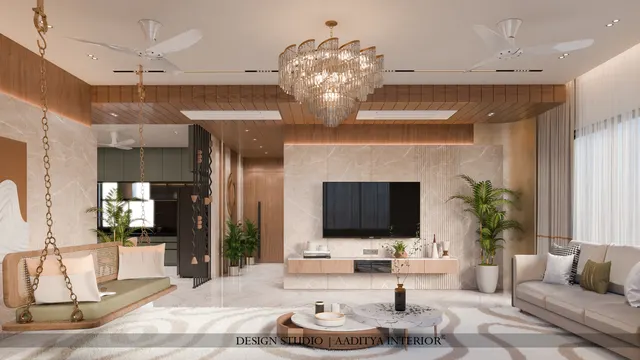
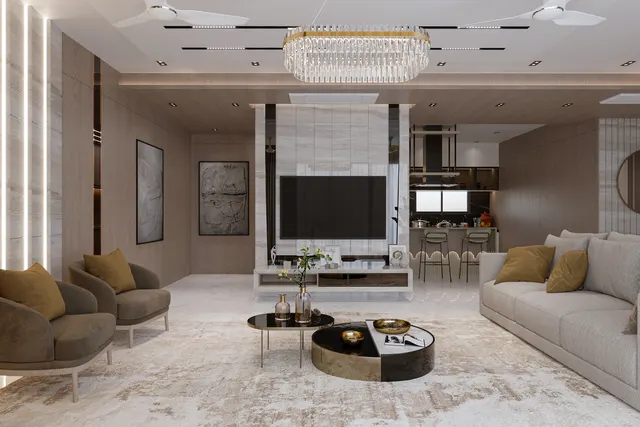
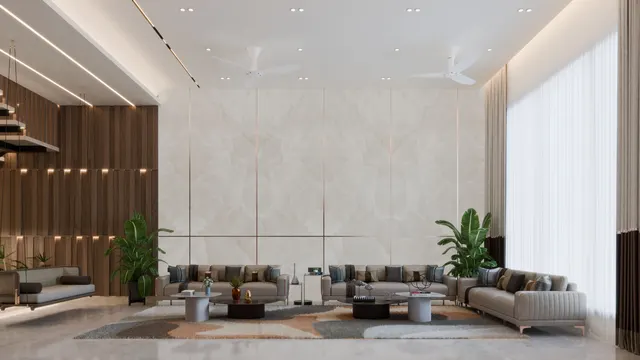
Bharuch and Ankleshwar sit together on the Narmada in south Gujarat, a short drive apart, and they form a single home-building market with its own character. Ankleshwar's long-established industrial estates and Bharuch's older trading town have drawn a large working and professional population, and the flats, row houses and bungalows they buy need fitting out just as much as homes in Surat or Vadodara do. Yet when a family here asks what their interiors will cost, the honest answer — it depends — is rarely useful, and the quotes they collect often differ so wildly that the number stops meaning anything. The problem is almost always that different firms are pricing different scopes, finishes and quantities under the same word, "interior".
The cure is to price interiors the way the trade actually does: per square foot of carpet area for the fitted work, at a basic, mid-range or premium level, with the big loose items quoted separately. Once a homeowner understands that framework, the scatter of quotes resolves into a pattern, and it becomes possible to see which firm is cheaper because it is genuinely efficient and which is cheaper because it has quietly dropped the wardrobes, thinned the ply or left out the lighting. Bharuch and Ankleshwar rates run a little below the big-metro figures of Surat or Ahmedabad, reflecting local labour and overheads, but the structure of the costing is identical.
This guide lays out that structure for the two towns: what the word interior should include, the three cost levels per square foot, what different homes from a 1BHK to a bungalow typically land at, item-by-item rates for kitchens, wardrobes, ceilings and the rest, a worked example for a mid-range 3BHK, and the lines that quietly sit outside most quotes. All figures are indicative October 2026 estimates and should be confirmed with a local contractor before budgeting, but they are consistent with the rates this blog uses for nearby Gujarat cities.
Why Bharuch and Ankleshwar are their own market
It is tempting to borrow Surat or Ahmedabad numbers wholesale, but the twin towns differ in ways that move the price. Local carpentry and labour rates are typically a little lower than in the larger cities; material has to be brought in, which can nudge some finishes up; and the mix of housing leans towards mid-sized flats, row houses and self-built bungalows rather than the high-rise premium stock of a metro. The net effect is that fitted-interior rates per square foot usually sit a notch below the big-city bands, while premium and imported finishes cost much the same everywhere because the material, not the labour, dominates their price. A sensible budget starts from local rates and adjusts for the specific home, rather than copying a Surat quote line for line.
The industrial character of Ankleshwar in particular shapes the market in a useful way. A large share of buyers are working professionals and managers fitting out company-provided or newly bought flats on a defined budget and a tight timeline, which rewards firms that can quote cleanly, build to a schedule and avoid surprises. That tends to pull the market towards well-specified mid-range work rather than either bare-bones fit-outs or extravagant premium ones. For a homeowner this is good news: the most common, best-understood product in the two towns is exactly the comfortable mid-range home, so rates for it are competitive and the quality on offer is generally sound when the scope is written down clearly.
What a home interior actually includes
When a firm quotes a complete home interior, the figure normally covers the fitted work that is built into the home: the modular kitchen cabinetry, wardrobes in the bedrooms, false ceilings, wall panelling and feature walls, the television and crockery units, painting, and the lighting and electrical points that go with all of this. It usually does not cover the loose furniture a family buys and can take away — sofas, dining sets, beds, mattresses and chairs — nor appliances, curtains and soft furnishings, nor statutory items like taxes and design fees, unless the quote says so. Reading a quote is therefore mostly a matter of checking which side of that line each item falls on, because the same home can look cheap or dear depending only on what the number silently leaves out.
Cost per square foot: the three levels
The clearest way to think about a whole-home interior is as a rate per square foot of carpet area, read at one of three levels. Basic covers a sound, simple fit-out in commercial-grade boards and laminate; mid-range, where most families land, adds wardrobes in every room, designer ceilings and layered lighting in better boards; premium brings acrylic and veneer finishes, stone features, branded hardware and a full lighting design. The table gives the Bharuch and Ankleshwar bands. They are indicative October 2026 figures and sit a little below large-metro rates; the finish and the quantity of joinery move a home within these bands far more than the town does.
| Level | ₹ per sq ft carpet (Bharuch / Ankleshwar) | Board and finish | What it typically includes |
|---|---|---|---|
| Basic | ₹850–1,250 | MR / commercial ply, laminate | Straight or L-kitchen, gypsum ceilings, paint, standard lights |
| Mid-range | ₹1,250–2,100 | BWR ply, laminate / membrane, some acrylic | Wardrobes in all rooms, designer ceilings, layered lighting |
| Premium | ₹2,100–3,600+ | BWP at sink, acrylic / PU, branded hardware | Veneer and stone features, full lighting design |
| Loose furniture (add) | ₹1–3 lakh+ | Sofa, dining, beds, chairs, rugs | Usually quoted separately |
Most Bharuch and Ankleshwar families end up near the middle of the mid-range band, around ₹1,400 to ₹1,800 per square foot of carpet area, for a comfortably finished home with good wardrobes, a proper modular kitchen, designer ceilings in the main rooms and decent lighting. Going materially below the basic band almost always means dropping scope — fewer wardrobes, no ceilings, thinner boards — rather than finding a bargain, and it is worth asking a suspiciously low quote exactly what it has left out.
What different homes cost
Multiplying the per-square-foot band by a home's carpet area gives a realistic total for the fitted interior, before loose furniture and appliances. The table below does this for the common home sizes in the two towns, using representative carpet areas; a specific home's area should be used for a real budget. The right-hand column gives the band most families actually land in once the mix of basic and mid-range choices settles out.
| Flat type (carpet) | Basic (₹ lakh) | Mid-range (₹ lakh) | Premium (₹ lakh) | Typical landing |
|---|---|---|---|---|
| 1BHK, ≈ 450 sq ft | 3.8–5.6 | 5.6–9.5 | 9.5–16+ | ₹6.5–8.5 lakh |
| 2BHK, ≈ 700 sq ft | 6.0–8.8 | 8.8–14.7 | 14.7–25+ | ₹9–14 lakh |
| 3BHK, ≈ 1,050 sq ft | 8.9–13.1 | 13.1–22.1 | 22.1–38+ | ₹14–22 lakh |
| Row house, ≈ 1,250 sq ft | 10.6–15.6 | 15.6–26.3 | 26.3–45+ | ₹17–26 lakh |
| Bungalow, ≈ 1,600 sq ft | 13.6–20.0 | 20.0–33.6 | 33.6–58+ | ₹22–34 lakh |
These totals cover the fitted interior only. A family furnishing from scratch should add roughly ₹1 to ₹3 lakh or more for loose furniture — sofa, dining set, beds and chairs — plus appliances, curtains and soft furnishings, and should allow for taxes and design or supervision fees where applicable. Reading a quote against this table quickly shows whether a number is realistic: a 3BHK offered as a complete, furnished home for well under the basic band is almost certainly leaving large items out.
Item-by-item rates
Behind the per-square-foot band sit the individual item rates, and knowing them lets a homeowner check a quote line by line and see where the money is going. The kitchen and wardrobes are almost always the two largest items, because they are the most cabinetry-intensive; ceilings, flooring and paint are priced per square foot of their own area and add up quietly across a whole home. The table gives indicative Bharuch and Ankleshwar rates for October 2026.
| Item | Basis | Indicative rate (Oct 2026) | Note |
|---|---|---|---|
| Modular kitchen cabinetry | Per sq ft of cabinetry | ₹1,250–1,700 (BWR+laminate); ₹2,100–3,300 premium | Countertop and appliances extra |
| Kitchen (whole) | Per layout | Straight ₹1.1–1.8 lakh; L ₹1.4–2.8; U ₹2.3–3.8 lakh | Cabinetry, shutters, basic hardware |
| Wardrobes | Per sq ft of elevation | ₹1,100–2,000 mid; ₹2,100–3,300 premium | Loft included; shutter finish named |
| Countertop | Per sq ft installed | Granite ₹100–170; quartz ₹230–560 | Sink and hob cutouts included |
| False ceiling | Per sq ft of ceiling | Gypsum ₹65–90; cove / designer ₹85–190 | Check heights against beams |
| Painting | Per sq ft painted area | Premium emulsion ₹20–32 | Putty, primer and two coats |
| Flooring (vitrified) | Per sq ft installed | ₹80–150 | Material plus laying |
False ceilings and lighting are the quiet middle of the budget — never the largest item, but present in every room and easy to overspend on if a designer ceiling is run everywhere. The sensible rule is to reserve the shaped, coved and layered ceilings for the living and dining areas, where people gather and look up, and to keep bedrooms and utility spaces to a simple flat gypsum ceiling or a plain peripheral cove. The section below shows the typical drop a false ceiling needs and why the room's clear height has to be checked against the beams before the ceiling level is fixed.
A worked example: a mid-range 3BHK
To show how the item rates roll up into a total, the table below builds a mid-range 3BHK of about 1,050 square feet carpet in Bharuch or Ankleshwar, line by line. It uses an L-shaped kitchen, wardrobes in three bedrooms, designer ceilings in the main rooms and good lighting, in BWR ply with laminate and some membrane shutters — the specification most families settle on. The total lands inside the mid-range band from the earlier table, which is the cross-check that the line items and the per-square-foot rate agree.
| Line item (1,050 sq ft 3BHK, mid-range) | Indicative cost (₹ lakh) | Rate basis | What to check |
|---|---|---|---|
| Modular kitchen (L-shape, cabinetry) | 2.0–3.0 | ₹1,250–1,700 per sq ft cabinetry | BWP at the sink; hardware brand named |
| Kitchen countertop + dado | 0.22–0.42 | Quartz ₹230–560 per sq ft | Cutouts and edge profile included |
| Wardrobes, 3 rooms (≈ 120 sq ft elev.) | 1.6–2.4 | ₹1,100–2,000 per sq ft elevation | Loft included; shutter finish named |
| False ceilings (≈ 550–650 sq ft) | 0.5–1.0 | Gypsum ₹65–90; designer ₹85–190 | Heights checked against beams |
| Painting, full home | 0.65–1.0 | Premium emulsion ₹20–32 per sq ft | Anti-fungal primer on external walls |
| TV unit, crockery, foyer, misc. | 1.2–2.0 | Lump sum by design | Scope listed item by item |
| TOTAL (fitted interior) | 14.0–18.5 | ≈ ₹1,350–1,750 per sq ft carpet | Excludes loose furniture, appliances, fees |
The example makes the earlier point concrete: two-thirds of the spend sits in the kitchen and wardrobes, because they carry the most cabinetry, and that is where a saving or a splurge changes the total most. A family wanting to trim the budget trims there first — a simpler shutter finish, a straight kitchen instead of an island — rather than cutting ceilings or paint, which are small shares of the whole.
It is worth noting what the total deliberately leaves out, because that is where a budget most often slips. The fourteen-to-eighteen-lakh figure is the fitted interior only; it does not carry the sofa, the dining set, the beds and mattresses, the chairs, the appliances or the curtains, which together can easily add two to four lakh more for a family starting from scratch. Nor does it carry taxes, any design or supervision fee, or the civil and plumbing changes that a renovation of an older Bharuch flat may need. A realistic all-in budget takes the fitted figure, adds a clear line for loose items and appliances, and keeps a contingency of roughly five to ten per cent for the decisions that always surface once work begins on site. Writing these three lines down separately — fitted work, loose and appliances, and contingency — keeps the headline number honest and stops the budget from being quietly overrun by items that were never really part of the original quote in the first place.
What is included and what is extra
The commonest cause of a blown budget is not a dishonest rate but a silent exclusion, so it is worth laying out plainly what a fitted-interior quote usually covers and what almost always sits outside it. Reading a quote against this list, and asking for anything missing to be added in writing, turns a headline number into a number a family can actually plan around.
| Usually included | Usually extra | Watch for |
|---|---|---|
| Kitchen and wardrobe cabinetry | Loose furniture (sofa, dining, beds) | Whether appliances are in or out |
| False ceilings and cove lighting | Appliances (hob, chimney, oven) | Countertop material and brand |
| Painting and basic electrical points | Curtains, blinds and soft furnishings | Hardware and channel brand named |
| TV and crockery units | Taxes and design / supervision fees | Civil changes and plumbing shifts |
How to keep the cost down
- Price everything per square foot of carpet area so competing quotes compare like with like.
- Fix the finish level — basic, mid-range or premium — before collecting quotes, and hold firm to it.
- Concentrate the budget on the kitchen and wardrobes, where most of the cabinetry cost sits.
- Use premium finishes only on the surfaces people touch and see closely; keep the rest simple.
- Keep ceilings simple in secondary rooms; reserve designer ceilings for the living and dining areas.
- Get every exclusion — appliances, loose furniture, taxes, fees — written into the quote before signing.
- Insist on BWP ply at the sink and in wet zones even on a tight budget; it prevents expensive failures.
- Phase the loose furniture over time rather than financing everything at once, since it can be added later.
Frequently asked questions
How much does a 2BHK interior cost in Bharuch or Ankleshwar?
A mid-range 2BHK of about 700 square feet carpet typically lands around ₹9–14 lakh for the fitted interior at roughly ₹1,250–2,100 per square foot, with most families near ₹1,400–1,800. A basic fit-out can be done for less and a premium one costs considerably more. Loose furniture and appliances are extra (indicative October 2026).
Why are the rates lower than Surat or Ahmedabad?
Local labour and overheads in the twin towns run a little below the big metros, which pulls the fitted-interior rate per square foot down a notch. Premium and imported finishes cost much the same everywhere, because their price is set by the material rather than the labour, so the gap narrows at the top end.
What is the biggest single cost in a home interior?
The kitchen and the wardrobes, because they carry the most cabinetry, which is priced per square foot of its own area. Together they usually account for well over half the fitted-interior budget, so that is where any saving or splurge changes the total most.
Does the quote include loose furniture and appliances?
Usually not. A fitted-interior quote normally covers the built-in work — kitchen, wardrobes, ceilings, units, painting and electrical points — but excludes sofas, dining sets, beds, chairs, appliances, curtains, taxes and design fees unless it specifically says otherwise. Always get the exclusions written down.
How can I compare two very different quotes?
Reduce both to a rate per square foot of carpet area for the same scope and finish level, then line up the item rates and the exclusions. A quote that is cheaper per square foot is usually either genuinely efficient or quietly thinner in scope or board; the item-by-item comparison shows which.
Sources & standards
- Bureau of Indian Standards — IS 303 (plywood for general purposes), IS 710 (marine plywood) and IS 2202 (wooden flush door shutters)
- National Building Code of India 2016, Part 3 (Development Control Rules and General Building Requirements) — room sizes and carpet-area definitions
- Ernst Neufert, Architects' Data — kitchen, wardrobe and storage dimensions and planning
- Manufacturer standard ranges for modular kitchen and wardrobe hardware, boards and laminates (sheet size 2440 × 1220 mm), described generically
- Aaditya Interior project costing experience across south Gujarat, used to set indicative local ranges
- Price ranges: indicative October 2026 estimates for Bharuch and Ankleshwar — confirm with a local contractor before budgeting