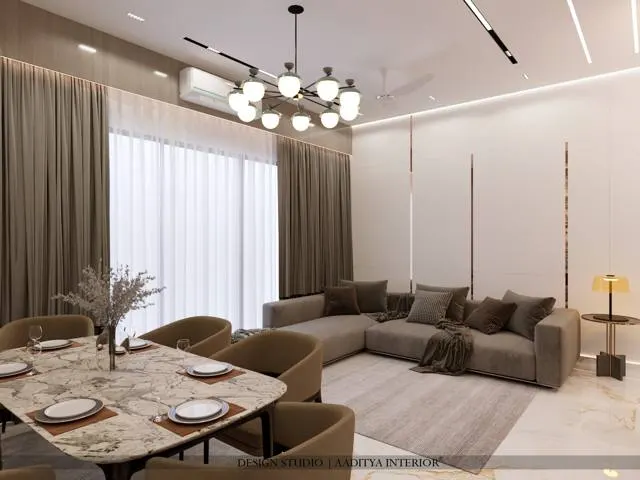
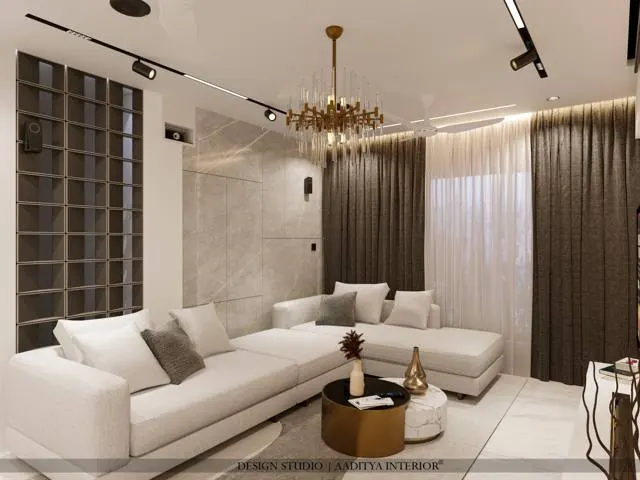
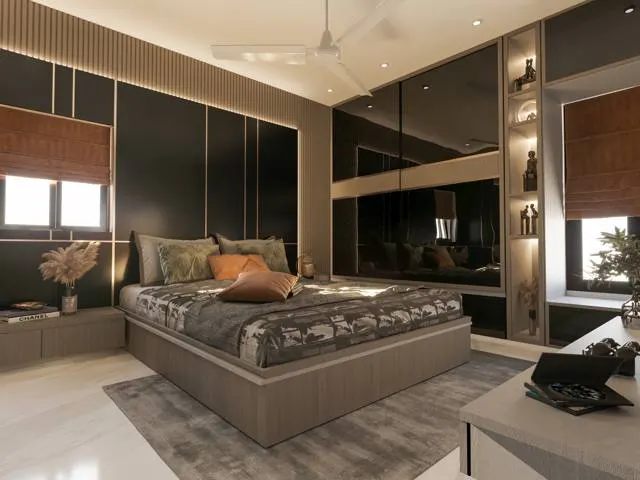
Art Deco is having a long moment in Indian interiors. Fluted panels, arched mirrors, curved velvet sofas, brass inlay in marble floors, scalloped headboards and fan-shaped motifs appear in apartments, restaurants and salons across the country. Much of it is lovely. But a lot of it is a costume — gold-coloured trims on every edge, a sunburst mirror, an emerald wall and a velvet chair, assembled without the discipline that made the original style so powerful. The result looks expensive for a year and dated soon after.
India has a special claim on this style. Mumbai, then Bombay, built one of the world's great collections of Art Deco buildings in the 1930s and 1940s, and the Victorian Gothic and Art Deco Ensembles of Mumbai were inscribed as a UNESCO World Heritage Site in 2018. Palaces in Jodhpur and Indore were furnished in high Deco, and Deco grilles, gates, terrazzo floors and stepped parapets spread to ordinary houses and cinemas in many Indian towns. Designing Art Deco in India is therefore not borrowing a foreign look; it is continuing a local chapter.
This article explains where Art Deco came from and what defines it, looks at its Indian history, breaks the style down into geometry, materials, colour and light, and gives the dimensions, details and indicative October 2026 costs needed to design a convincing modern Deco interior in an Indian flat or bungalow.
Where Art Deco came from
Art Deco takes its name from the Exposition Internationale des Arts Décoratifs et Industriels Modernes, held in Paris in 1925, where French designers and manufacturers showed a new decorative language of luxury and modernity. The name itself became widely used only in the 1960s, when historians and collectors revived interest in the period; at the time, people spoke of 'style moderne' or simply of modern decoration. The style drew on many sources at once: the fragmented geometry of Cubism, the vivid colours of the Ballets Russes, the excitement over ancient Egypt after the opening of Tutankhamun's tomb in 1922, the stepped forms of Mesoamerican temples, and above all the speed and polish of the machine age — aircraft, ocean liners, motor cars and skyscrapers.
French designers such as Émile-Jacques Ruhlmann, with his superbly crafted veneered furniture, Jean Dunand with lacquer, and René Lalique with moulded glass defined the luxurious early phase. In the United States, Deco became the language of skyscrapers such as the Chrysler Building in New York, of cinemas, hotels and department stores. Through the 1930s, a sleeker variant known as Streamline Moderne emerged, with rounded corners, horizontal speed lines, porthole windows and chrome — design inspired by ships and trains. By the end of the Second World War, Deco had largely given way to modernism, but it has returned repeatedly since, most recently in the curved, brass-detailed interiors of the 2010s and 2020s.
| Style | Period | Signature forms | Materials | How to tell it from Art Deco |
|---|---|---|---|---|
| Art Nouveau | c. 1890–1910 | Flowing plant tendrils, whiplash curves, asymmetry | Wrought iron, stained glass, carved wood | Organic and asymmetric; Deco is geometric and symmetrical |
| Art Deco | c. 1920–1940 | Sunbursts, stepped forms, chevrons, fans, strong symmetry | Brass, lacquer, figured veneer, marble, terrazzo, mirror | — |
| Streamline Moderne | 1930s–1940s | Rounded corners, horizontal speed lines, portholes | Chrome, glass block, smooth render | Sleeker and less ornamental; the late branch of Deco |
| Mid-century modern | c. 1945–1970 | Tapered legs, organic simple forms, open plans | Teak, plywood, fibreglass | Lighter and less glamorous; little ornament |
| Hollywood Regency | 1930s and revivals | Lacquer, mirror, bold colour, theatrical glamour | Lacquer, mirror, velvet, gilt | More decorative and eclectic; less geometric |
| Modern Deco (revival) | 2010s–now | Arches, fluting, curved sofas, brass lines | PVD steel, veneer, quartz, velvet, terrazzo | Uses Deco forms with simpler, lighter backgrounds |
Bombay Deco and Art Deco in India
Bombay's Art Deco grew out of a building boom on newly reclaimed land in the 1930s. Along Marine Drive and on the western edge of the Oval Maidan, rows of reinforced-concrete apartment buildings went up in a confident new style, facing the older Victorian Gothic public buildings across the maidan — the juxtaposition that UNESCO recognised in 2018. Cinemas such as the Regal, the Eros and the Liberty brought Deco to a mass audience, with streamlined facades, sunburst motifs, decorative grilles and glamorous lobbies. Office buildings, hospitals and housing colonies across the city adopted the style, and it spread to other Indian cities through cinemas, bungalows and apartment blocks.
Indian Deco adapted the style to the climate and to local taste. Buildings gained deep balconies and 'eyebrow' sunshades over windows to cut the glare, rounded corners and ship-like railings that echoed the sea front, and Indian motifs — lotuses, elephants, deities and local flora — sometimes appeared in place of European ornament. Inside, the typical Bombay Deco flat had high ceilings, terrazzo or patterned tile floors, teak doors and windows, and geometric grilles. In the princely states, Deco became a statement of modernity: Umaid Bhawan Palace in Jodhpur, completed in 1943, has extensive Art Deco interiors, and Manik Bagh in Indore was designed in the 1930s by the German architect Eckart Muthesius as a modernist palace with furniture by leading European designers. Their lesson is that Deco works in India when it respects the climate — shade, cross-ventilation and cool floors — rather than fighting it.
The geometry of Deco
Deco is first a system of geometry, and the motifs are its vocabulary. The sunburst radiates lines from a point or a semicircle. The stepped or ziggurat form rises in tiers, as in a skyscraper's setbacks. The chevron and zigzag bring rhythm and movement. The fan or scallop repeats a quarter- or half-circle. And the speed line — three parallel bands — gives horizontal movement in Streamline work. Behind all of them is symmetry: Deco rooms are almost always organised around a central axis, with matching elements either side.
The proportions matter. A sunburst mirror or headboard reads clearly at 900–1500 mm across; smaller ones look like souvenirs. Stepped forms work best with three equal tiers — two looks accidental, five looks fussy. Chevrons and fans need a module large enough to be seen from across the room: a fan of 150 mm radius on a rug or a tile, 300–400 mm on a wall panel or headboard. Fluting, which Deco borrowed from classical columns, reads well at a pitch of about 25–50 mm on furniture and 40–75 mm on walls. And curves need generous radii: a 150 mm radius on a counter corner looks timid; 300–600 mm on a sofa, a bar or a mirror looks like Deco.
Materials: then and now
Original Deco interiors were defined by rich, polished, often exotic materials: macassar ebony and burr walnut veneers, lacquer, shagreen, ivory, silver and gold leaf, polished brass and chrome, etched and mirrored glass, marble and terrazzo. Several of these are now unavailable, illegal or impractical — ivory obviously, many tropical hardwoods from uncertain sources, and real lacquer at Ruhlmann's level of craft. Modern Deco keeps the effect with materials that are sustainable, available and durable in Indian conditions.
| Original Deco material | Modern equivalent in India | Typical use | Indicative cost, October 2026 |
|---|---|---|---|
| Polished brass and bronze | Solid brass strip, or PVD-coated stainless steel in gold, champagne or bronze | Inlay lines, trims, handles, furniture legs | PVD trim profile ≈ ₹300–900 per running ft; brass floor inlay ≈ ₹150–450 per running ft installed |
| Figured veneers (ebony, burr walnut) | Natural or recon veneer, book-matched; walnut, eucalyptus, smoked oak | Wall panelling, wardrobes, bars, TV walls | Natural veneer ≈ ₹600–1,100 per sq ft of shutter |
| Lacquer | High-gloss PU paint, or acrylic in deep colours | Cabinet fronts, bar units, side tables | PU ≈ ₹1,000–1,800; acrylic ≈ ₹900–1,500 per sq ft |
| Mirrored and etched glass | Clear, bronze or antique mirror; fluted or reeded glass | Panels, arched mirrors, cabinet doors | Mirror panel ≈ ₹150–400 per sq ft fixed; glass shutters ≈ ₹700–1,400 |
| Terrazzo | Cement terrazzo in situ, epoxy terrazzo, or terrazzo tiles | Floors, bathroom vanities, tabletops | In-situ cement ≈ ₹200–450; epoxy ≈ ₹600–1,200 per sq ft (indicative) |
| Marble | Indian or imported marble; quartz for counters | Floors with inlay, bars, consoles, bathrooms | Indian marble ≈ ₹150–600; imported ≈ ₹500–3,000+ per sq ft material |
| Velvet and mohair | Performance velvet (polyester), cotton velvet | Sofas, chairs, headboards | ≈ ₹600–2,000 per metre of fabric |
| Shagreen and parchment | Embossed leatherette, textured laminate or wallpaper | Small panels, trays, furniture tops | Varies widely; use in small areas |
Two specification points save a lot of disappointment. First, brass. Solid brass inlay is beautiful and ages to a warm, darker tone unless it is polished or lacquered; many clients expect it to stay bright gold, and it will not without care. PVD-coated stainless steel holds its colour much better and is the practical choice for trims and handles in kitchens, bathrooms and humid coastal cities. Decide which is wanted — living patina or constant shine — before ordering. Second, gloss. A Deco room needs some shine, but high-gloss surfaces in Indian homes show dust and fingerprints and reflect every light; keep gloss to a few pieces — a bar, a side table, a mirror — and use satin or matte finishes for large areas.
Colour, light and pattern
Deco colour schemes are bold but controlled. Classic combinations include black, ivory and gold; emerald or bottle green with brass; navy or midnight blue with champagne; and warm schemes of terracotta, blush and bronze. The rule that keeps them working is proportion: a light or mid-tone base on most surfaces, a deep colour on one dominant element — a wall, a sofa, a ceiling, a set of cabinets — and metal used as line and accent, not as a surface. In Indian homes, where daylight is strong and rooms are often smaller than European ones, a deep colour on every wall makes the room close in quickly.
| Palette | Base (≈ 60 %) | Dominant colour (≈ 30 %) | Accent (≈ 10 %) | Works well in |
|---|---|---|---|---|
| Classic | Ivory or warm white walls, light terrazzo or marble floor | Black lacquer or charcoal furniture | Brass and gold lines | Living rooms, foyers |
| Emerald | Warm white, oak or walnut | Emerald or bottle-green velvet or wall | Brass, white marble | Living and dining rooms, bars |
| Midnight | Pale grey or ivory | Navy or midnight blue cabinetry or ceiling | Champagne or brushed brass | Bedrooms, studies |
| Sunset | Cream and blush plaster | Terracotta or rust upholstery | Bronze, smoked glass | Bedrooms, dressing areas |
| Monochrome | White and pale grey | Black and white geometric floor or wall | Chrome or nickel | Bathrooms, small foyers |
Lighting is where Deco shows its theatrical side. The period loved indirect light: uplighters and wall sconces that throw light onto the ceiling, glass shades in fan and shell forms, illuminated coves following stepped ceilings. In a modern scheme, that translates into a stepped or tiered cove ceiling with warm 2700–3000 K LED strips, a pair of fan or tiered sconces either side of a symmetrical feature, and one statement pendant or chandelier on the room's central axis. Downlights should be few and discreet; a grid of spots flattens the glamour that Deco depends on. Dimming is essential, because the same room should feel bright for daytime and glowing at night.
A Deco feature wall and a brass-inlaid floor
Two elements carry the style in most modern Deco homes: a symmetrical feature wall — in the living room, behind a bed or as a bar — and a floor with a geometric pattern picked out in brass or contrasting stone. Fig. 3 shows a living-room feature wall built on a strong central axis: a stepped niche framed by fluted panels, a fan-motif panel above, brass lines at the steps and a low curved console. Fig. 4 shows how a brass-inlaid floor is laid out and detailed.
The wall works because of its discipline. Everything is symmetrical about the centre line. The fluted side panels, 900 mm wide, give rhythm and frame the composition. The central niche steps up in three equal tiers of 200 mm, and only those step edges and the console edge carry brass — about five running metres of metal on a 3.6 m wall. The fan above the niche repeats the step geometry in a curve. The console is low and curved, in dark lacquer or PU, so the eye reads the wall as one composed object rather than a collection of features. A television, if needed, can sit in the niche with the backlight around it, or on the console with the niche holding art.
A brass-inlaid floor is the most permanent Deco element in a home, so it deserves the most care in setting out. The pattern should be centred on the room's main axis — usually the line from the entrance to the focal wall — not on the nearest tile joint, and it should relate to the furniture: a medallion under the dining table or the foyer console, not half-hidden by a sofa. In stone, the groove is cut by waterjet or router and the brass strip bedded in epoxy before the whole floor is ground and polished flush. In in-situ terrazzo, brass strips are set into the bed before the terrazzo mix is poured, and they double as the movement joints that terrazzo needs. Thin strips of 2–3 mm read as elegant lines; strips of 5 mm and more read as bold graphics and suit larger rooms.
Furniture, rooms and budgets
Deco furniture is low, solid and curved, with rounded or stepped profiles, tapered or plinth bases, and rich upholstery. A curved three-seater sofa of about 2100–2400 mm in velvet, a pair of tub or fan-back chairs, a round or racetrack coffee table with a stone or lacquer top, and a cabinet or bar with fluted or veneered doors and brass handles make a complete Deco living room. Scale matters as much as style: curved sofas use more floor space than straight ones of the same seating capacity, so measure the room before falling for a dramatic semicircle.
| Room | Key Deco moves | Typical dimensions | Indicative cost of the Deco elements (October 2026) |
|---|---|---|---|
| Living room (≈ 250 sq ft) | Symmetrical feature wall, curved sofa, stepped cove, pair of sconces | Wall 3000–3600 wide; sofa 2100–2400; cove drop 150–250 | ≈ ₹3–8 lakh, excluding the rest of the interior |
| Foyer | Inlaid floor medallion, arched mirror, console | Medallion 900–1600 Ø; mirror 900 × 1800 | ≈ ₹60,000–2.5 lakh |
| Bedroom | Fan or scalloped upholstered headboard, mirrored side tables, sconces | Headboard 1800–2100 wide, 1200–1500 high | ≈ ₹1–3.5 lakh |
| Dining | Racetrack table, fan-back chairs, statement pendant on axis | Table 1800 × 900 to 2100 × 1000 | ≈ ₹1.5–5 lakh |
| Bar unit | Lacquer or veneer, fluted glass doors, mirror back, brass rail | 1200–1800 wide, 450–550 deep | ≈ ₹1.2–4 lakh |
| Bathroom | Black and white geometric tiles, round mirror, brass or PVD fittings | Mirror 600–900 Ø | Tiles and fittings by brand; PVD prices above chrome |
These figures cover only the elements that make a room read as Deco — feature panelling, special finishes, inlay and statement furniture — on top of the ordinary costs of carcasses, ceilings, wiring and paint covered in this site's cost guides, where complete mid-range homes land at roughly ₹1,400–1,800 per sq ft of carpet area. A Deco home with veneer, PU lacquer, brass inlay and custom upholstery typically sits in the upper part of the mid-range band or in the premium band; one that concentrates Deco in a living-room wall, a foyer floor and a few pieces of furniture can stay in the mid-range.
Avoiding the costume and where Deco is heading
The commonest failure in Indian Deco interiors is excess. Gold trims on every shutter, a different motif on every wall, mirrors in every room and velvet on every seat produce a hotel-lobby pastiche that tires quickly. The cure is the same discipline the original designers used: one axis, one motif family, one dominant colour, brass as line rather than surface, and plenty of calm, light background. A second failure is copying the look of a photograph without the craft — fluting with uneven pitch, brass strips with visible joints, curved sofas with lumpy upholstery. Deco is unforgiving of poor workmanship because its geometry makes every error visible, so the budget is better spent on fewer, perfectly made elements.
Looking ahead, Deco is likely to remain part of the Indian design vocabulary rather than vanish as a trend, because it suits the Indian love of craft, symmetry and celebration. What is changing is the execution: CNC routing and waterjet cutting have made fluting, fans and inlay affordable; PVD finishes have made metal accents durable; and designers are blending Deco geometry with Indian crafts such as brass inlay work, terrazzo and handloom upholstery, echoing what Bombay's builders did in the 1930s. As with the fluting and arch trends flagged elsewhere on this site, the safest approach is to build the permanent shell — floors, ceilings, carcasses — in timeless forms and let the more fashionable Deco gestures live in furniture, lighting and soft furnishings that can change.
Rules for a modern Art Deco interior
- Organise each room around one clear axis and keep the main elements symmetrical about it.
- Choose one motif family — fan, step, sunburst or chevron — and repeat it at two or three scales.
- Use brass or PVD as thin lines and small accents, never as large gold surfaces.
- Keep about 60 per cent of surfaces light and calm, 30 per cent in one dominant deep colour and 10 per cent in metal and accent.
- Size motifs to be read from across the room: sunbursts 900–1500 mm, fans 300–400 mm on walls, flutes 40–75 mm pitch on walls.
- Use generous curves — 300–600 mm radii on sofas, bars, mirrors and counters.
- Light indirectly with coves and sconces at 2700–3000 K, one statement fitting on axis, and dimming everywhere.
- Decide between living brass (patina) and PVD (constant colour) before ordering, and choose PVD in wet and coastal areas.
- Spend on workmanship: even flutes, invisible inlay joints and well-made upholstery matter more than more features.
Frequently asked questions
What are the main features of Art Deco interior design?
Strong symmetry, bold geometric motifs such as sunbursts, stepped or ziggurat forms, chevrons and fans, generous curves, and rich polished materials — brass, lacquer, figured wood veneer, marble, terrazzo, mirror and velvet — in confident colour schemes such as black, ivory and gold or emerald and brass, lit with indirect light and statement fittings.
What is the difference between Art Deco and Art Nouveau?
Art Nouveau, roughly 1890–1910, is organic and asymmetric, built on flowing plant forms and whiplash curves. Art Deco, roughly 1920–1940, is geometric and symmetrical, built on sunbursts, steps, zigzags and machine-age polish. Deco curves are drawn with a compass; Nouveau curves grow like vines.
Is Art Deco suitable for small Indian apartments?
Yes, if it is concentrated. Use one Deco feature — a symmetrical TV or bed wall, an arched mirror, a fluted cabinet or an inlaid foyer floor — with a few curved furniture pieces, light walls and brass as thin lines. Avoid deep colour on every wall and large mirrored surfaces in small rooms.
Brass or PVD gold — which is better for Art Deco interiors?
Solid brass is warmer and ages to a soft patina unless polished or lacquered; it suits floors, furniture details and dry rooms where patina is welcome. PVD-coated stainless steel holds a constant gold, champagne or bronze colour and resists humidity, which makes it the better choice for kitchens, bathrooms, handles and coastal cities.
Why does Mumbai have so many Art Deco buildings?
Large areas of land were reclaimed and built up in the 1930s and 1940s, just when Art Deco was the fashionable modern style. Apartment buildings along Marine Drive and the Oval Maidan, cinemas and offices were designed in it, and the Victorian Gothic and Art Deco Ensembles of Mumbai were inscribed as a UNESCO World Heritage Site in 2018.
Sources & standards
- UNESCO World Heritage Centre — Victorian Gothic and Art Deco Ensembles of Mumbai (inscribed 2018)
- Victoria and Albert Museum — Art Deco collections and the 1925 Paris Exposition Internationale des Arts Décoratifs et Industriels Modernes
- Umaid Bhawan Palace, Jodhpur (completed 1943) — published histories of the palace and its Art Deco interiors
- Bureau of Indian Standards — National Building Code of India 2016, Part 5 (Building Materials) and Part 8 (Building Services), Section 1 (Lighting)
- Manufacturer ranges for PVD-coated stainless steel profiles, veneers, PU finishes and terrazzo — typical specifications, described generically
- Price ranges: indicative October 2026 estimates — confirm locally before budgeting