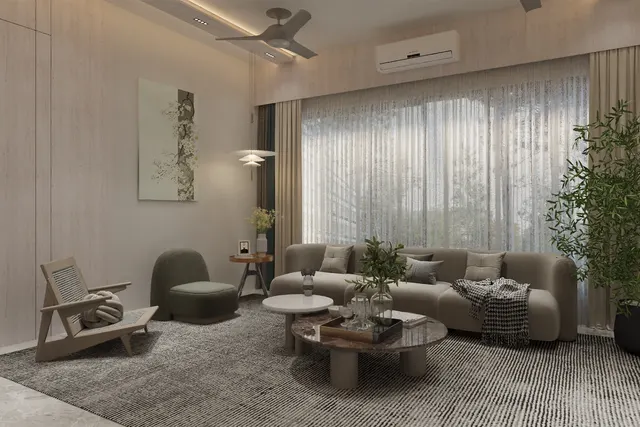
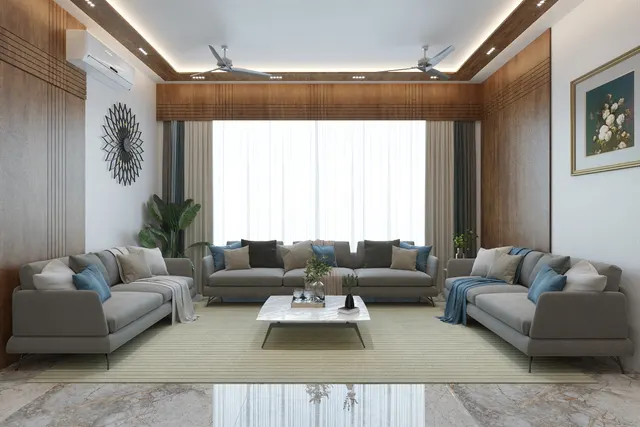
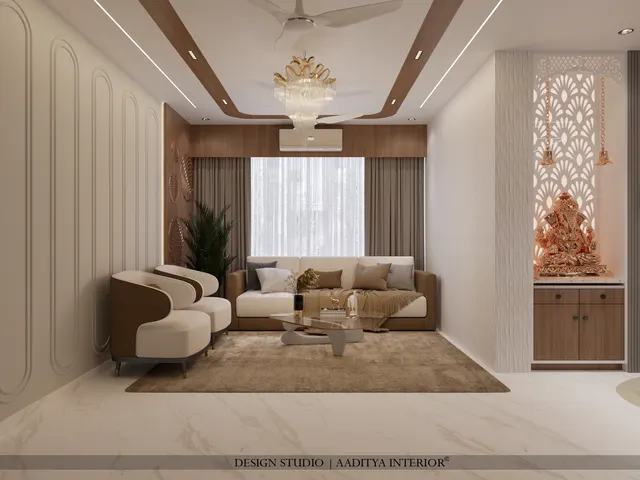
After a decade of grey, white and high-gloss, Indian homes are turning warm again. Walls are being painted in sand, clay and muted terracotta; floors are going back to handmade tiles, Kota stone and matt finishes; sofas are covered in rust, ochre and oatmeal; and lamps glow amber rather than white. Designers call it earthy interior design, and it has quickly become one of the most requested looks in Indian apartments and villas.
It is also one of the easiest looks to get wrong. An earthy room can feel calm, grounded and timeless — or it can look brown, dull and muddy, like a room left in shadow. The difference lies in a handful of decisions most people never make deliberately: the undertone of each colour, how light or dark the walls are, how much of the room is given to strong colour, what kind of light falls on it after sunset, and whether the materials are real and textured or flat and printed. Earth tones depend on texture and light more than any other palette.
This article explains where the earthy palette comes from — including India's own long tradition of building with earth — then sets out the colours with their light reflectance values, the materials and their indicative October 2026 costs, lighting rules, room-by-room schemes, construction details for terracotta floors and clay or lime walls, and the mistakes to avoid. Prices are kept consistent with this site's Mediterranean, wabi-sabi and lime-plaster guides.
What makes an interior earthy
Earthy interior design takes its palette and its materials from the ground: the colours of sand, clay, baked earth, ochre and stone, and the textures of handmade tile, plaster, wood, jute and cotton. It is warm rather than cool, matt rather than glossy, and textured rather than smooth. Where beige minimalism uses safe, neutral colours to disappear, an earthy interior uses natural colours to be felt — the wall should look as if it has been made, not just painted.
Three principles define the look. First, warm undertones: every colour, from the palest sand to the darkest umber, leans towards red or yellow rather than blue or green. Second, texture over pattern: interest comes from the grain of limewash, the variation in handmade tiles, the weave of jute and the figure of wood, not from printed motifs. Third, a quiet range of value: most of the room sits in light to middle tones, with dark accents used sparingly, so the space stays bright despite its warmth. In practice that means a sand or clay-white base, terracotta or ochre as the warm middle, and umber, deep brown or charcoal as the small accent.
India's long history of building with earth
Earthy design is fashionable now, but in India it is very old. For most of the country's history, ordinary homes were built of earth: mud walls, mud plaster, floors of compacted earth finished with a wash of cow-dung and clay that was renewed regularly, and roofs of thatch or clay tiles. In Kutch, the round bhunga houses are plastered with mud and decorated inside with lippan — raised clay relief work set with small mirrors — that turns a simple earthen wall into a glittering surface. Across rural Gujarat, Rajasthan and Madhya Pradesh, women still repaint mud walls and floors with clay and lime before festivals, sometimes with painted or relief motifs.
Fired earth — terracotta — has an equally long history. Bengal is famous for its terracotta temples, especially in Bishnupur, whose brick walls are covered in carved terracotta panels showing scenes from epics and everyday life. Clay roof tiles were made by local potters across India, and in the second half of the nineteenth century the Basel Mission's tile works on the west coast popularised the interlocking clay tile now known as the Mangalore tile, still seen on roofs from Kerala to Gujarat. In the twentieth century, architects such as Laurie Baker showed that exposed brick and terracotta could be both economical and beautiful, and today research centres continue to develop compressed stabilised earth blocks and rammed-earth walls. The modern earthy interior is, in a sense, India remembering its own materials.
| Tradition | Region (examples) | Material and technique | What a modern interior can borrow |
|---|---|---|---|
| Lippan (mud-and-mirror relief) | Kutch, Gujarat | Clay relief on mud plaster, mirrors set in | A clay-relief feature panel or pooja back wall |
| Lipai (mud and cow-dung floor wash) | Rural India widely | Clay-and-dung wash renewed regularly | Matt, warm, hand-finished floor tones |
| Terracotta temple panels | Bishnupur, West Bengal | Carved and fired clay panels on brick | Terracotta wall tiles and relief panels |
| Mangalore clay roof tiles | West coast, Kerala to Gujarat | Pressed and fired interlocking tiles | Clay-tile ceilings, verandah roofs, cladding |
| Exposed brick and jaali | Kerala (Laurie Baker) and elsewhere | Brick laid open, unplastered | Brick-slip feature walls, terracotta jaali |
| Lime and mud plasters | Across India | Breathable plasters, often hand-polished | Limewash and clay-look finishes |
The earthy palette: colours, undertones and LRV
Light reflectance value (LRV) is the most useful number for an earthy scheme. It measures how much visible light a colour reflects, from 0 for pure black to 100 for a perfect white, and paint manufacturers print it on their shade cards. Earth tones span the whole range — from pale sand around 65–75 to deep umber below 15 — and the LRV of the main wall colour decides how bright the room will feel more than the hue does. In Indian homes, where many flats have deep plans and light from one side, Aaditya Interior recommends keeping the main wall colour at an LRV of about 55–70 and using darker earth tones as accents. The values below are indicative ranges for typical shades of each family; check the exact figure on the manufacturer's card.
| Colour family | Typical look | Indicative LRV | Best use | Pair with |
|---|---|---|---|---|
| Sand / clay-white | Warm off-white with yellow-pink undertone | ≈ 65–80 | Main walls and ceilings in most rooms | Wood, linen, terracotta accents |
| Oatmeal / stone | Light greige-beige, slightly warm | ≈ 55–70 | Main walls in bright rooms; joinery | Sand, rust, black metal |
| Clay / adobe | Soft pink-brown | ≈ 35–50 | Feature walls, bedroom headboard walls | Cream, olive, brass |
| Ochre / turmeric | Earthy yellow | ≈ 35–55 | Accent walls, cushions, rugs | Indigo, sand, dark wood |
| Terracotta / rust | Baked orange-red | ≈ 15–30 | Floors, one wall, upholstery, pottery | Sand, white lime, green plants |
| Sienna / brick | Deeper red-brown | ≈ 12–25 | Brick slips, leather, accents | Cream, cane, olive |
| Umber / cocoa | Deep brown | ≈ 6–15 | Small accents, joinery details, frames | Sand, ochre, brass |
| Olive / sage (earth green) | Muted yellow-green | ≈ 20–45 | Contrast accent, kitchen shutters | Terracotta, sand, wood |
Materials: the earth you can touch
An earthy palette in flat, smooth paint is only half the style. The materials carry the rest: surfaces that show the hand that made them, that age gently, and that catch light across their texture. The good news for Indian homes is that most of these materials are local, familiar to craftsmen and, used with restraint, affordable. The table gathers the main ones with indicative October 2026 costs drawn from this site's material guides; all should be confirmed locally.
| Material | Where it works | Indicative cost (Oct 2026) | Watch out for |
|---|---|---|---|
| Premium matt emulsion in sand or clay shades | All main walls and ceilings | ₹20–30 per sq ft all-in | Choose warm undertones; test samples at night |
| Limewash or lime-look mineral finish | One feature wall per room, arches, reveals | ₹40–150+ per sq ft | Needs a skilled applicator; breathable primer |
| True lime plaster (2–3 coats) | Heritage-style walls, bathrooms with care | ≈ ₹90–220 per sq ft | Slow; specialist mason |
| Handmade terracotta floor tile | Living, dining, verandahs, bedrooms | Material ≈ ₹50–150 per sq ft; laying ₹25–40; sealing ≈ ₹15–30 | Porous; seal and maintain; softer than vitrified |
| Terracotta-look matt vitrified or porcelain | Kitchens, bathrooms, high-traffic floors | Material ₹60–120+ per sq ft; laying ₹25–40 | Avoid gloss; choose varied faces |
| Kota stone (honed or leather finish) | Floors, kitchen platforms, steps | ≈ ₹70–150 per sq ft | Seal against oil stains |
| Microcement in sand or clay tones | Seamless floors, bathroom walls, counters | ≈ ₹250–600 per sq ft | Needs a stable, crack-free base and a skilled team |
| Jute, cotton dhurrie or wool-blend rug | Living and bedroom floors | ≈ ₹4,000–25,000 for 2400 × 1600 to 3000 × 2000 mm | Jute sheds and stains; dhurries wash well |
Wood, cane and textiles
Wood is the bridge between earth tones and comfort. Medium-toned woods — teak, sheesham, mango wood, oak-look veneers — sit naturally with terracotta and sand; very orange finishes can clash with terracotta, and very dark wood can make a small earthy room feel heavy. Cane and rattan add the open texture of Indian verandah furniture. Textiles should be natural or natural-looking: cotton, linen, khadi, jute and wool, in solid colours or simple woven patterns, with block prints and kantha as occasional accents rather than everywhere. Brass, aged bronze and black iron work better as metals than chrome or bright gold.
Light: why earth tones go muddy, and how to stop it
Earth tones are warm colours, and they need warm, good-quality light to look right. Under cool white light of 5000–6500 K, sand turns grey, terracotta turns brown and clay turns pink-grey. Under low-quality LEDs with poor colour rendering, reds in particular look dull, because cheap LEDs render saturated reds weakly. This site's lighting guides recommend 2700–3000 K for living and bedroom spaces in the evening, and fittings with a colour rendering index (CRI) of 90 or above where colour matters. For an earthy scheme, those two numbers make the difference between a glowing room and a muddy one.
The direction of light matters too. Textured finishes — limewash, clay, handmade tile — come alive when light grazes across them from the side or from above, revealing their surface; light from straight in front flattens them. A wall-washer, a cove at the top of the feature wall, or a pair of wall lights on either side of a textured headboard wall are worth more in an earthy room than an extra ceiling panel. In daylight, rooms facing north receive cooler, even light, in which sand and clay can read slightly grey; rooms facing west receive hot, orange evening light, in which terracotta can become overwhelming. Lighter, slightly warmer base tones suit north light, and a cooler sand with less red suits west-facing rooms.
Room-by-room earthy schemes
The palette works differently in each room because each room has a different job, different light and different exposure to water, oil and wear. The schemes below are starting points that keep the base light and place the strong colour where it helps.
| Room | Base (≈ 60 %) | Warm middle (≈ 30 %) | Accent (≈ 10 %) | Practical note |
|---|---|---|---|---|
| Living room | Sand walls, white or sand ceiling | Clay limewash feature wall, wood, terracotta-tone rug | Umber or olive cushions, black iron lamp | Keep the TV wall mid-tone so the screen does not glare |
| Bedroom | Oatmeal or sand walls | Clay or terracotta headboard wall, linen bedding | Deep brown side tables, brass lamps | Darker headboard walls feel cosy; keep 2700 K lamps |
| Kitchen | Sand or off-white shutters | Terracotta-look or clay-tone backsplash tiles, wood | Olive or umber handles and accents | Use wipeable, low-porosity finishes near the hob |
| Dining | Sand walls | Wooden table, terracotta pendants or tableware | Dark wood chairs or a single ochre wall | A warm pendant at 700–800 mm above the table |
| Bathroom | Sand-tone matt tiles | Terracotta-look floor, microcement or clay-tone wall | Bronze or black fittings | Avoid true porous terracotta in shower zones |
| Pooja space | Clay-white wall | Clay relief or lippan-style panel, wood | Brass diyas and bells | Backlight the relief panel with warm light |
| Balcony and verandah | Sand exterior paint | Terracotta floor or pots, cane seating | Green plants as the accent | Seal terracotta outdoors against moss |
Details: terracotta floors and clay or lime walls
Handmade terracotta tiles are the most characterful earthy floor, but they behave differently from vitrified tiles. They are porous, so they absorb water, oil and stains unless sealed; they vary in size and colour from tile to tile, so they need wider joints; and they are softer, so they wear and patinate over time. They suit living rooms, bedrooms, verandahs and dining areas well, provided they are laid on a sound, level base, sealed with a penetrating sealer and finish appropriate for the location, and maintained. In kitchens and bathrooms, a terracotta-look matt vitrified or porcelain tile gives the colour with far less maintenance.
Walls are where most earthy schemes find their texture. A limewash or lime-look mineral finish over well-prepared plaster is the most common choice, costing about ₹40–150 or more per sq ft for a feature wall; true lime plaster in two or three coats, at about ₹90–220 per sq ft, gives a deeper, more breathable surface. Modern clay plasters — natural clay with sand and fibres — are available from specialist suppliers and give a soft, matt, slightly irregular surface; they are suitable for dry interior walls and should be priced locally. Whatever the finish, the substrate must be sound, dry and free of salts, and the system must stay breathable: sealing a lime or clay wall under a plastic paint traps moisture and defeats its purpose.
Earth materials and the Indian climate
Earthy materials suit much of India for good reasons. Lime and clay finishes are vapour-open: they let moisture pass through rather than trapping it behind a plastic film, which helps walls dry after the monsoon and reduces peeling. Clay finishes can also absorb and release some moisture from the room air, helping to buffer swings in humidity, although the effect depends on thickness and should not be expected to replace ventilation or air-conditioning. Terracotta and stone floors stay cool underfoot in hot weather. In Surat, Mumbai, Chennai or Kolkata, where humidity is high for much of the year, these properties make earthy finishes practical as well as attractive.
They also need care. Porous terracotta and unsealed clay stain more easily than vitrified tile and plastic paint; terracotta outdoors can grow moss in shaded, damp corners; and lime and clay walls should not be scrubbed hard. White salts — efflorescence — on new terracotta or brick are common in the first months and usually brush off once the material dries out, but persistent salts point to damp that must be fixed. Choosing the right material for each location — true terracotta and clay in dry living spaces, terracotta-look vitrified tiles and microcement in wet zones — keeps the look without the maintenance burden.
Common mistakes in earthy interiors
The most common mistake is too much brown. A room with brown walls, a brown floor, brown furniture and brown curtains loses depth and feels dark, especially in Indian flats lit from one side. The second is ignoring undertone: mixing a pink clay, a yellow ochre and a grey-beige without a plan makes each look wrong next to the other. The third is lighting with cool white panels, which turns warm colours grey. The fourth is fake texture — glossy printed wood-look laminates, shiny terracotta-look tiles and polyester "jute" — which undermines a style whose whole point is honest material. The fifth is using one tone for everything: an earthy room needs contrast of value, from pale sand to deep umber, to stay alive.
| Mistake | What it looks like | Fix |
|---|---|---|
| All mid-brown | Dark, flat, muddy room | Base walls at LRV 55–70; dark tones as 10 % accents |
| Clashing undertones | Pink clay beside yellow ochre beside grey-beige | Pick one undertone family; test samples side by side |
| Cool white light | Sand turns grey, terracotta turns brown | 2700–3000 K, CRI 90+ fittings |
| Glossy imitations | Shiny 'terracotta' tiles, printed wood | Matt, textured finishes; real materials where touched |
| Porous materials in wet zones | Stained, mossy terracotta in showers | Terracotta-look vitrified or microcement in wet areas |
| No contrast | Everything the same middle tone | Add pale ceilings, a white lime surface or a dark accent |
Where earthy design is heading
The earthy look is likely to outlast a typical trend because it rests on durable ideas: natural materials, local craft, comfort and climate sense. Its next stage is already visible. Designers are pairing earth tones with more green — olive, moss, sage — as part of biophilic interiors; clay plasters and lime are becoming more widely available from specialist suppliers; and architects are again building with compressed stabilised earth blocks and rammed earth, materials developed and promoted in India by centres such as the Auroville Earth Institute. Low-carbon thinking favours materials that need less energy to make, and fired terracotta, local stone, lime and earth fit that brief better than many imported finishes. The style is turning from a colour palette into a material philosophy.
Rules for an earthy interior that works
- Keep the main wall colour light — LRV about 55–70 — and use terracotta, ochre and umber as accents.
- Choose one undertone family (pink-clay or yellow-ochre) and test every sample side by side.
- Follow roughly 60 % base, 30 % warm middle and 10 % dark accent across the whole room.
- Give each room one textured feature surface — limewash, clay, terracotta or brick — not four.
- Light at 2700–3000 K with CRI 90+, and graze textured walls from a cove or wall-washer.
- Use real terracotta and clay in dry living spaces; use terracotta-look matt tiles in wet zones.
- Keep lime and clay walls breathable — never seal them under plastic emulsion.
- Prefer matt, natural textiles and metals: cotton, linen, jute, cane, brass, bronze and iron.
Frequently asked questions
What colours are earth tones?
Earth tones are colours found in soil, clay, stone and plants: sand, beige, clay, ochre, terracotta, rust, sienna, umber and brown, along with muted greens such as olive and sage. They share warm undertones and low to moderate saturation.
Will an earthy colour scheme make a small flat look dark?
Not if the base stays light. Keep walls and ceilings in pale sand or clay-white with an LRV of about 55–70 or higher, use darker earth tones only on one feature surface and in furnishings, and light the room with warm, high-CRI fittings. Small flats can carry earthy schemes well this way.
Are terracotta floor tiles good for Indian homes?
Yes, in living rooms, bedrooms, dining areas and verandahs, provided they are sealed and maintained. They are cool underfoot and age attractively. In kitchens, bathrooms and other wet or oily areas, a matt terracotta-look vitrified or porcelain tile is more practical.
What goes well with terracotta walls?
Sand and cream for contrast, white lime or off-white ceilings, medium wood, cane, linen, olive or sage greens, deep indigo, brass and black iron. Avoid cool greys and chrome, which make terracotta look harsh.
Is earthy interior design the same as boho or Mediterranean?
They overlap. Bohemian interiors add more pattern, layering and colour; Mediterranean interiors add arches, lime walls and specific regional motifs. Earthy design is the broader idea underneath — warm natural colours and materials — and can be calm and modern without the extra pattern or architecture.
Sources & standards
- Bureau of Indian Standards — IS 3951 (hollow clay tiles for floors and roofs) and IS 654 (clay roofing tiles, Mangalore pattern)
- Bureau of Indian Standards — National Building Code of India 2016, Part 8 (Building Services — lighting and natural ventilation)
- Auroville Earth Institute — compressed stabilised earth blocks and earth architecture resources
- Laurie Baker Centre for Habitat Studies — writings on brick, terracotta and cost-effective construction
- Archaeological Survey of India — terracotta temples of Bishnupur, West Bengal
- Paint manufacturers' shade cards — light reflectance values (LRV) for interior emulsions
- Price ranges: indicative October 2026 estimates — confirm locally before budgeting