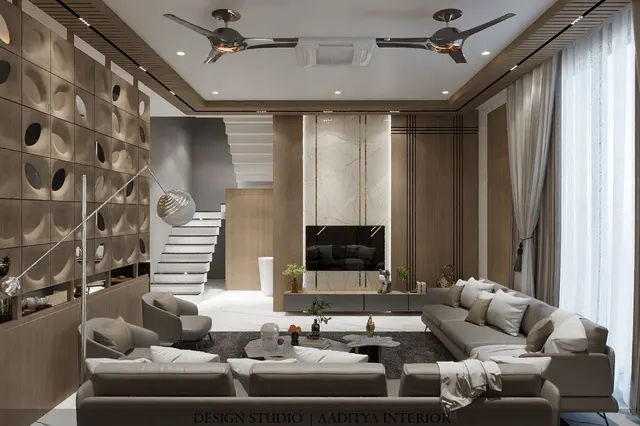
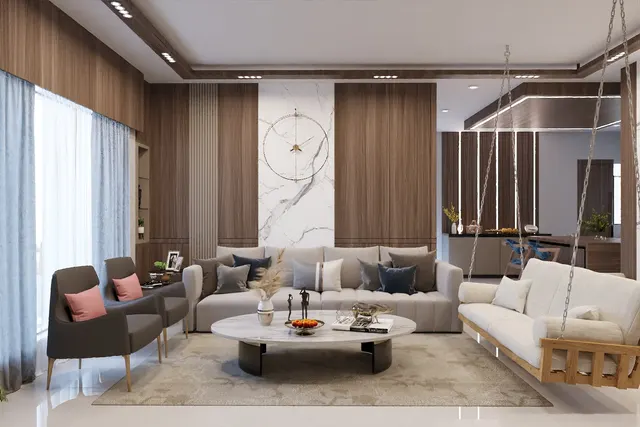
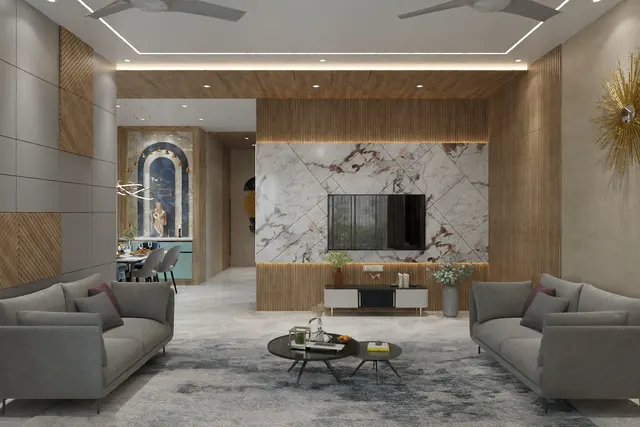
Cane is back. It appears in wardrobe shutters and crockery units, in the backs of dining chairs, in pendant lights, headboards and room dividers, and in almost every Pinterest board for a modern Indian, tropical or Japandi home. It brings exactly what many modern interiors lack: texture, lightness, a handmade quality and air. In a humid Indian climate, a woven shutter that lets a wardrobe breathe is also genuinely useful.
It also disappoints people, and usually for avoidable reasons. Webbing sags within a year because it was stapled instead of splined into a groove. A cane lounge chair left on a sunny balcony goes brittle and splits. A wardrobe with open-weave cane shutters fills with dust. A 'rattan' outdoor set turns out to be thin PVC strips that crack after one summer. Much of the confusion begins with the words themselves: cane, rattan and wicker are used interchangeably in Indian shops, but they mean different things, and the difference matters when choosing what goes where.
This article untangles the three terms, traces their history from colonial verandahs to modern apartments, explains the weaves and webbings available, gives dimensioned details for cane shutters and chairs, compares natural and synthetic options, and sets out indicative October 2026 costs consistent with the cane prices used elsewhere on this site.
Rattan, cane and wicker: three different things
Rattan is a plant — or rather a group of plants. It is the name for climbing palms, most of them in the genus Calamus, which grow in tropical forests of Asia, Africa and Australasia, including India's North-East, the Western Ghats and the Andaman and Nicobar Islands. Rattan stems are long, slender and solid, unlike bamboo, which is a grass with hollow stems. The stems are harvested, cleaned, dried and graded. Thick poles become furniture frames: they can be bent with heat or steam into curves and hold their shape when cooled.
Cane, strictly, is the glossy outer skin of the rattan stem, stripped off in narrow strands. Those strands are what is woven into chair seats and sheet webbing; they are strong, smooth and naturally shiny. The inner core of the stem, left after the skin is removed, is sold as reed or core — round or flat — and is used for baskets and wicker weaving, because it is softer and takes stain and paint more easily. In everyday Indian use, 'cane furniture' usually means rattan furniture, and 'cane webbing' means the woven sheet made of cane strands.
Wicker is not a material at all. It is a technique: weaving pliable materials around a frame. Wicker can be made from rattan core, willow, bamboo strips, seagrass, water hyacinth, paper cord, or synthetic resin strands. A 'wicker chair' may therefore be natural rattan, or it may be polyethylene on an aluminium frame. The label alone does not say.
| Material | What it is | Strengths | Weaknesses | Typical uses |
|---|---|---|---|---|
| Rattan (pole) | Solid stem of climbing palms (mainly Calamus) | Strong, bendable with heat, light | Splits if dried out; mould if kept damp | Chair and sofa frames, swings, beds |
| Cane (skin strands) | Glossy outer skin of rattan, stripped | Smooth, strong in tension, naturally shiny | Sags when wet; brittle in hot, dry air | Hand-caned seats, sheet webbing, binding |
| Rattan core / reed | Inner pith of the stem | Soft, takes stain and paint | Less durable than cane skin | Wicker baskets, lamp shades, weaving |
| Bamboo | Hollow-stemmed giant grass | Fast-growing, stiff, cheap | Splits at nodes; insect-prone if untreated | Blinds, frames, screens, ceilings |
| Synthetic wicker (PE/HDPE resin) | Extruded plastic strands woven like wicker | Weather- and UV-resistant if stabilised | Looks less natural; cheap PVC cracks | Balcony, terrace and poolside furniture |
| Seagrass, water hyacinth, jute | Natural fibres woven as wicker | Soft, earthy texture | Absorb moisture; indoor only | Baskets, poufs, rugs, lamp shades |
A short history: verandah chairs to Bauhaus to Chandigarh
Woven furniture is ancient — baskets, stools and chests of reed, rush and willow were used in early civilisations around the world — and rattan has been worked for centuries across South and South-East Asia, including in the cane and bamboo craft traditions of North-East India. What changed in the nineteenth century was trade. Rattan was exported in large quantities from South-East Asia to Europe and America, where Victorian wicker furniture became fashionable for conservatories, porches and summer houses.
At the same time, woven cane became an industrial material. The bentwood chairs of Michael Thonet's company, above all the No. 14 chair of 1859, combined steam-bent beech with a woven cane seat, and were produced in enormous numbers for cafés and homes. In the 1920s, Bauhaus-trained designer Marcel Breuer paired tubular steel with cane in his cantilevered Cesca chair (1928), showing that cane could sit comfortably beside modern industrial materials. In colonial India, cane and rattan furniture — easy chairs, planter's chairs with extended arms, cane-seated dining chairs — became standard in bungalows and clubs, because they were light, cool to sit on and well suited to heat and humidity.
After independence, cane found a new modernist life in Chandigarh, where Pierre Jeanneret and his team designed teak-and-cane chairs and furniture for the new capital's offices, courts and homes in the 1950s and 1960s. Those simple chairs, once discarded as government furniture, are now collected internationally and endlessly reproduced. Their lesson is the one that matters for modern interiors: cane works best in a clear, honest frame, used where its lightness and breathability are an advantage.
| Period | Where | What it contributed | Lesson for today |
|---|---|---|---|
| Ancient onwards | Many cultures; rattan crafts in South and South-East Asia | Baskets, stools, mats and screens | Weaving is a structural system, not decoration |
| 1859 onwards | Thonet bentwood chairs, Europe | Cane seats in mass production | Cane seat on a solid frame is durable and repairable |
| 1800s–1900s | Victorian wicker; colonial India | Verandah chairs, planter's chairs, cane-seated dining chairs | Suits heat and humidity in shade |
| 1928 | Breuer's Cesca chair, Bauhaus circle | Cane with tubular steel | Cane pairs well with modern materials |
| 1950s–60s | Chandigarh — Pierre Jeanneret | Teak-and-cane chairs and furniture | Honest frame, simple geometry, local craft |
| 2010s–now | Global and Indian interiors | Cane webbing shutters, lights, headboards; synthetic outdoor wicker | Detail the frame and choose natural vs synthetic by location |
Weaves and webbings
Most cane in modern interiors arrives as pre-woven sheet webbing, sold in rolls and cut to size. The most popular pattern is open mesh — often called radio weave, hexagonal or octagonal weave — in which cane strands cross in three or four directions and leave regular open holes, typically around 10–15 mm across. It lets light and air through and gives the familiar airy look. Closed weave (and tighter patterns such as a basket or herringbone weave) has very small or no openings; it gives more privacy and lets less dust through, but reads more solid. Hand caning, in which a craftsman weaves individual strands through holes drilled in the frame in the traditional 'seven-step' pattern, is used for seats of good chairs and restoration; it is slower and costlier but very strong and repairable.
| Weave | Openness | Privacy and dust | Best uses | Notes |
|---|---|---|---|---|
| Open mesh (radio, hex) | High — openings about 10–15 mm | Low privacy; dust passes through | Crockery and TV unit shutters, headboards, pendant lights, partitions | The classic look; back with glass or fabric in wardrobes if dust matters |
| Closed weave / basket weave | Low — very small openings | Good privacy; less dust | Wardrobe shutters, bedside drawers, cabinet doors | Reads warmer and more solid |
| Hand caning (seven-step) | Medium | Moderate | Chair seats and backs, heritage restoration | Strong and repairable; costlier |
| Rattan core wicker (basket weave) | Varies | Varies | Baskets, lamp shades, side tables | Can be stained or painted |
| Synthetic resin wicker | Varies | Varies | Outdoor seating, planters, poolside | Choose UV-stabilised PE/HDPE on aluminium frames |
Detailing a cane shutter that stays tight
The single biggest cause of saggy cane shutters is fixing. Webbing that is stapled or glued to the back of a frame will loosen as it absorbs and loses moisture through the seasons. The traditional and most reliable method is the groove-and-spline detail: a narrow groove is routed into the frame around the opening; the webbing, soaked in warm water for about 30–60 minutes to make it pliable, is laid over the opening and pressed into the groove; a tapered reed or rattan spline is glued and tapped in to lock it; and the excess is trimmed. As the cane dries, it shrinks slightly and pulls taut like a drum skin.
An alternative for modern joinery is to frame the webbing between a rebate and a screwed or pinned bead on the back of the shutter, after soaking and stretching. It is less traditional but allows the cane panel to be replaced without damaging the frame, which is useful in rental homes and commercial projects. Either way, the frame must be stiff enough not to twist: a shutter made of a thin board with a large hole cut in it will warp as the cane tightens.
| Element | Typical dimension | Why |
|---|---|---|
| Shutter width | 450–600 mm | Keeps the cane span short enough to stay taut |
| Frame stiles and rails | 50–75 mm wide, 18–25 mm thick | Stiff enough not to twist as the cane tightens |
| Mid-rail | 60–80 mm, about every 900–1200 mm of height | Prevents sag on full-height doors |
| Groove for spline | ≈ 5–6 mm wide × 6–10 mm deep | Matches common spline sizes; check with the supplier |
| Groove set-back from opening | ≈ 12–20 mm | Leaves enough timber to hold the spline |
| Webbing roll width | ≈ 450–900 mm (18–36 in) | Decides the largest single panel |
| Back-up layer in wardrobes | 2–3 mm clear acrylic or fine fabric | Stops dust while keeping the look |
| Hinges | Soft-close concealed; 3 hinges above about 1500 mm height | Frame shutters are lighter than solid ones but longer |
Cane furniture dimensions
Cane and rattan furniture follows the same ergonomic dimensions as any other furniture, but the materials encourage lower, deeper, more relaxed seats. A cane lounge chair of about 700 × 750 mm footprint with a seat height of 380–420 mm is typical; a cane-seated dining chair needs the standard 450–470 mm seat height for a 750 mm table. Because a woven seat flexes, add a firm cushion of 50–75 mm on lounge chairs for daily use, and specify a seat frame with a stretcher or cross-rail to resist racking.
| Item | Typical dimension | Indicative October 2026 cost | Watch out for |
|---|---|---|---|
| Cane or rattan lounge chair | ≈ 700 × 750 mm, seat 380–420 mm | ₹8,000–25,000 | Cane sags if left in sun and rain |
| Hanging egg chair (cane or synthetic) | ≈ Ø 900–1050 mm, hung on a rated hook | ₹12,000–45,000 | Ceiling fixing must be engineered into the RCC slab |
| Cane-seated dining chair | Seat 450–470 mm high, 420–480 mm wide | ₹6,000–18,000 | Check the frame joints, not just the cane |
| Cane webbing headboard | Bed width + 0–300 mm; top 1100–1300 mm | ₹15,000–50,000 | Frame it; do not lean the bare panel on the wall |
| Rattan pendant light | Ø 300–600 mm | ₹2,500–15,000 | Use LED lamps; keep heat away from cane |
| Mooda stool | Ø 350–450 mm, 400–450 mm high | ₹1,500–15,000 | Reed or cane, leather top, size |
| Re-caning a chair seat and back | — | ₹2,000–15,000 | Hand-woven costs more than pre-woven sheet |
Where cane works in a modern Indian home
In the living and dining room, cane is most effective in small doses: the shutters of a crockery unit or sideboard, a pair of lounge chairs, a pendant over the dining table. One cane element per sightline is usually enough; a room where the TV unit, chairs, lights and ceiling are all cane quickly looks like a theme restaurant. Pair it with plain surfaces — limewash or matt emulsion walls, a light timber or terrazzo-look floor, linen or cotton upholstery — so the weave remains the texture that the eye notices.
In bedrooms, cane shutters on the wardrobe let clothes breathe, which is a real advantage in humid cities where closed laminate wardrobes can smell musty after the monsoon. A practical compromise is to use cane on the upper shutters or on one section of the wardrobe and keep solid shutters elsewhere, so that not every garment is exposed to dust. A framed cane headboard, a cane bedside table and a woven pendant soften a room full of hard joinery. In kitchens, cane works on wall-cabinet shutters away from the hob and sink, and in a pantry or crockery section; keep it well away from steam, oil and flame.
In commercial interiors — cafés, boutique hotels, resorts and spas — cane and rattan are popular because they signal warmth and a tropical, handmade quality. Here durability matters more: specify thicker webbing, hardwood or metal frames, replaceable panels, and synthetic wicker wherever furniture will be moved, stacked or used outdoors. In hotel rooms, cane on a wardrobe or a luggage-rack screen gives character without risking the bed or seating, which take the hardest wear.
Natural vs synthetic for balconies and outdoors
Natural cane and rattan are indoor materials. They tolerate shade and occasional humidity, but direct sun dries the fibres until they crack, and rain soaks them until they sag and grow mould. A covered verandah or a deep, shaded balcony can host natural cane furniture if cushions and pieces are brought in during the monsoon. For exposed terraces, poolsides and open balconies, synthetic wicker is the practical choice: polyethylene (PE or HDPE) strands, ideally UV-stabilised, woven over a powder-coated aluminium frame that will not rust.
Synthetic wicker varies enormously in quality. Cheap products use thin PVC strips on mild steel frames; the PVC turns brittle and chalky in Indian sun and the steel rusts at the welds. Better products use thicker, solid or half-round HDPE strands, aluminium frames, stainless-steel fixings and quick-dry outdoor foam in cushions. Indicatively in October 2026, a two-seater synthetic wicker balcony set with a small table costs about ₹35,000–1.2 lakh, and a good poolside lounger ₹15,000–45,000, depending on quality.
| Location | Natural cane / rattan | Synthetic PE wicker | Recommendation |
|---|---|---|---|
| Air-conditioned living or bedroom | Good; may dry out | Possible but looks less natural | Natural, with occasional damp wiping |
| Naturally ventilated room in humid city | Good; ventilates wardrobes | Not needed | Natural, with a clear protective finish |
| Covered verandah or deep balcony | Acceptable with care | Good | Natural if fully shaded and kept dry; otherwise synthetic |
| Open balcony or terrace | Poor — sun and rain damage | Good if UV-stabilised on aluminium | Synthetic |
| Poolside, coastal | Poor | Good with stainless fixings | Synthetic, with quick-dry cushions |
| Bathroom | Poor in wet zones | Possible for baskets | Avoid natural cane near showers |
Care in Indian climates
Natural cane is happiest in moderate humidity and shade. In the long, humid monsoon of Surat, Mumbai or Kochi, the risk is mould and sagging; in the dry heat of an air-conditioned room in a Rajasthan or Delhi summer, the risk is brittleness and splitting. Dust weekly with a soft brush or a vacuum brush attachment; wipe occasionally with a cloth dampened in mild soapy water and dry quickly; in very dry, air-conditioned rooms, an occasional light damp wipe helps keep the fibres supple. Keep cane away from direct sun through windows, and away from heaters, halogen lamps and diya flames.
Most natural cane is finished with a clear lacquer, PU or melamine coat at the factory or by the carpenter. A thin, flexible clear finish protects against moisture and dirt; heavy, thick coats crack as the cane moves and are best avoided on webbing. Painted cane is possible but loses some of the material's charm and needs repainting. If a webbing panel is damaged, replace the panel rather than the whole shutter — which is another reason to specify a removable spline or bead detail.
- Ask whether a product is natural rattan and cane, or synthetic — and check the frame material.
- Use natural cane indoors or in fully shaded, covered spaces; choose UV-stabilised PE wicker on aluminium outdoors.
- Specify groove-and-spline or bead fixing for webbing — never staples alone.
- Keep unsupported webbing panels to about 450–600 mm wide and add mid-rails on full-height doors.
- Back open-weave wardrobe shutters with acrylic or fabric where dust is a concern.
- Buy webbing for a whole project in one batch so the colour matches.
- Keep cane out of direct sun and rain, and away from diyas, heaters and hot lamps.
- Hang egg chairs and swings only from hooks engineered and anchored into the RCC slab.
Where cane is heading
Cane's revival has moved beyond furniture. Designers now use webbing in ceiling panels, wall cladding, room dividers, lighting and even facades of hospitality projects, often combined with metal frames, terrazzo and limewash. Indian manufacturers are offering pre-framed cane panels in standard shutter sizes, which reduces the risk of poor site detailing. Alongside this, there is renewed interest in the cane and bamboo crafts of North-East India and Kerala, and in sustainably harvested rattan, since rattan is a forest product whose wild supply needs careful management. Synthetic wicker will continue to dominate outdoors; inside, natural cane's honest, breathable texture remains hard to imitate.
Frequently asked questions
What is the difference between cane and rattan?
Rattan is the plant — a climbing palm with a solid stem used for furniture frames. Cane is the thin, glossy outer skin stripped from the rattan stem and woven into chair seats and webbing. In Indian shops the two words are often used interchangeably.
Is cane furniture durable?
Yes, if it is used indoors or in full shade, kept dry and not exposed to strong sun. A well-made cane chair on a solid frame can last for decades, and the woven seat can be re-caned when it wears.
Do cane wardrobe shutters collect dust?
Open-weave cane lets dust through. In dusty cities, choose a closed weave or back the webbing with clear acrylic or fine fabric, and dust the shutters weekly with a soft brush.
Can cane furniture be used on a balcony?
Only on a deep, covered balcony with no direct sun or rain, and with cushions brought in during the monsoon. For open balconies and terraces, UV-stabilised synthetic wicker on an aluminium frame is far more durable.
How much do cane shutters cost in India?
Indicatively in October 2026, cane mesh in a solid frame costs about ₹800–1,800 per sq ft of shutter, depending on the frame material, the weave, the finish and the hardware.
Sources & standards
- Food and Agriculture Organization of the United Nations (FAO) — non-wood forest products: rattan, its species and uses
- International Bamboo and Rattan Organisation (INBAR) — publications on rattan resources and processing
- Kerala Forest Research Institute — research on rattans of the Western Ghats
- Vitra Design Museum and major design-museum collections — Thonet No. 14 chair (1859) and Marcel Breuer's Cesca chair (1928)
- Chandigarh Capitol Complex (UNESCO World Heritage, part of the Architectural Work of Le Corbusier) and documentation of Pierre Jeanneret's furniture
- Neufert, Architects' Data — seating dimensions and furniture clearances
- Bureau of Indian Standards — IS 1659 (block boards) and IS 303 (plywood) for frames and carcasses
- Price ranges: indicative October 2026 estimates — confirm locally before budgeting